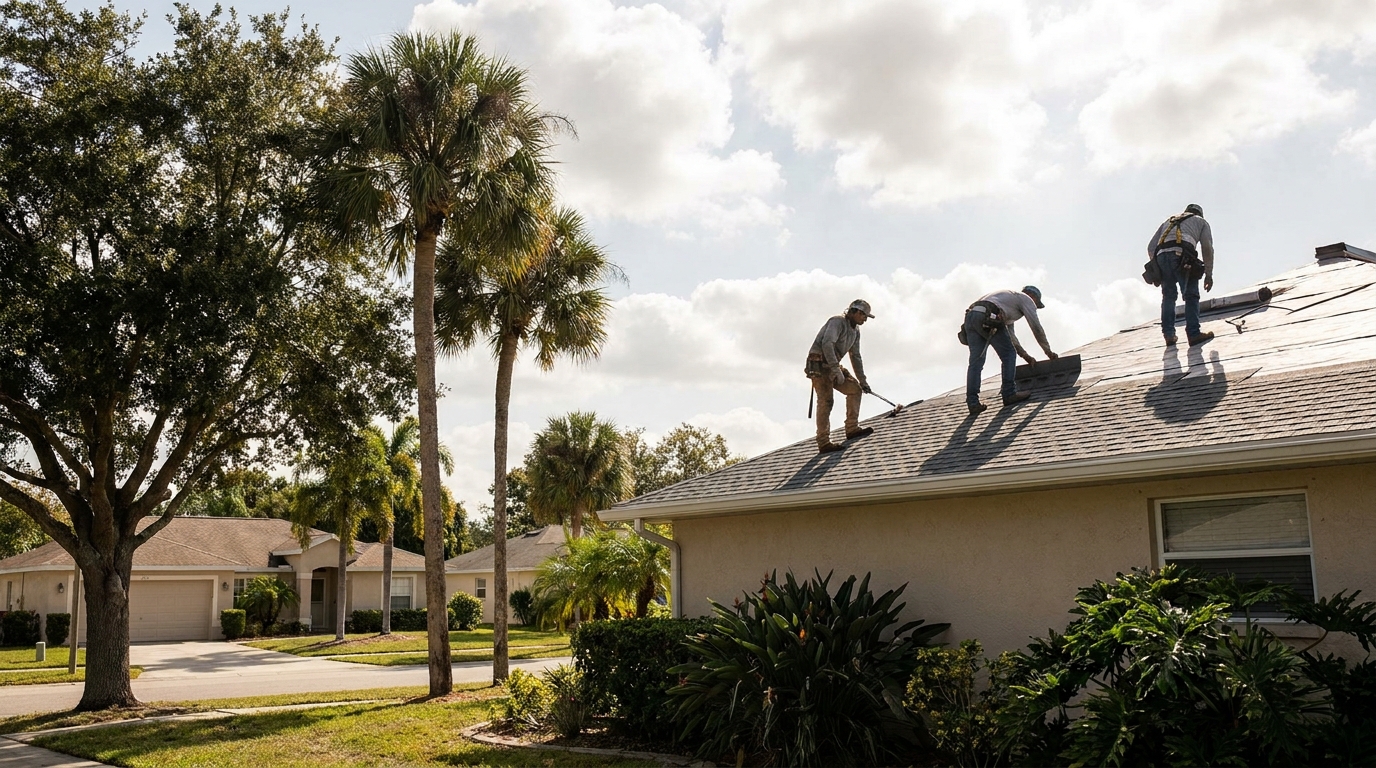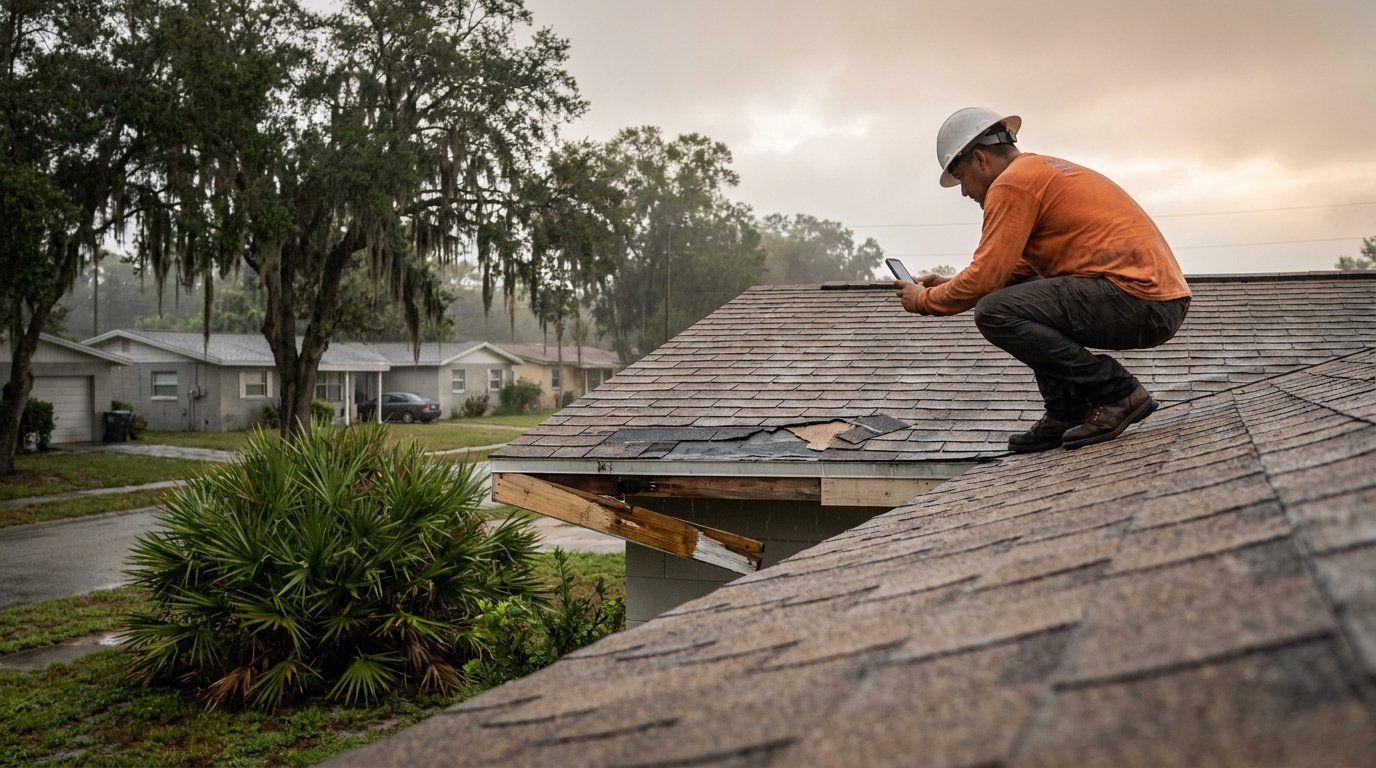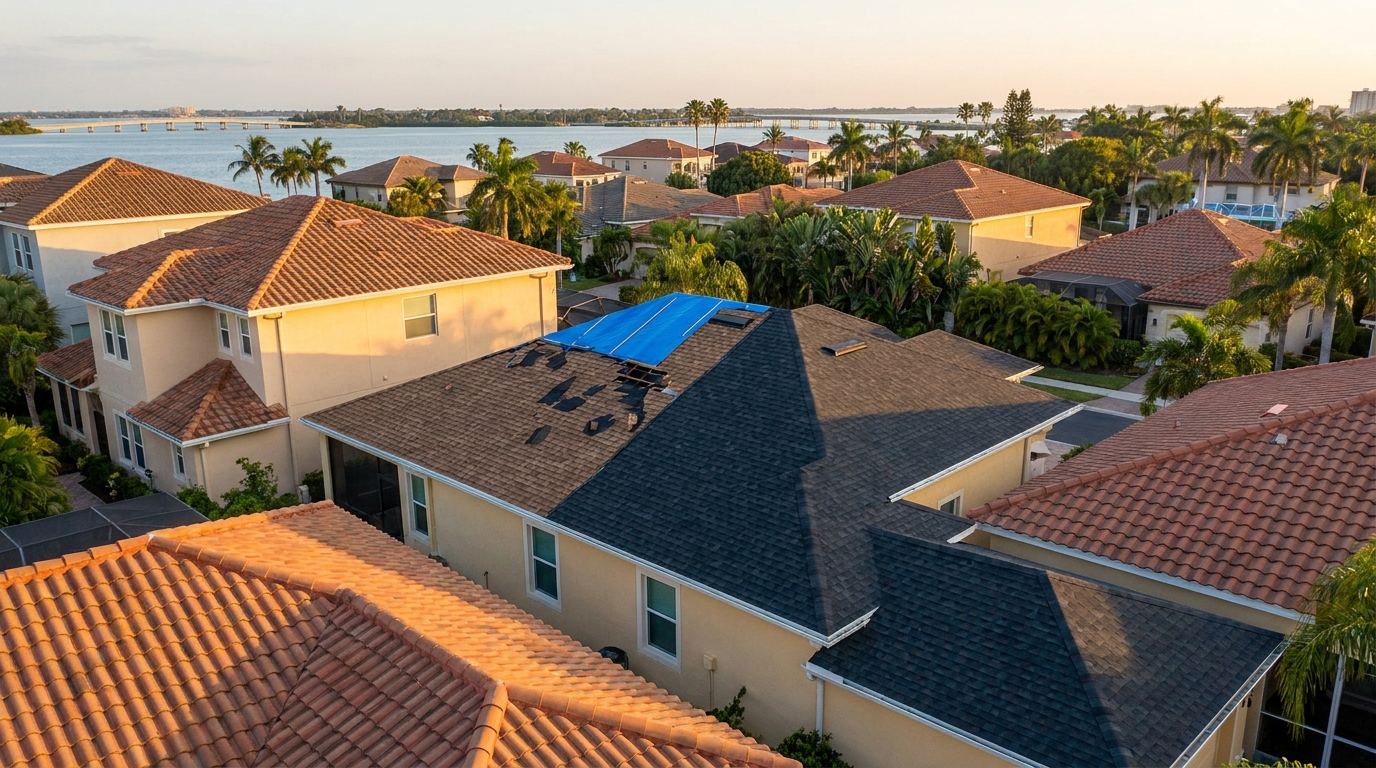
After a hurricane hits Pinellas County, the honest answer is this: repair works when damage is localized, the deck is dry and sound, and less than roughly 25% of the roof surface is compromised. Replacement becomes the smarter call when wind uplift has broken the deck-to-truss connection, water has saturated the underlayment, or Florida's 25% rule triggers a full re-roof by code. The right choice depends on damage pattern, roof age, and what your insurer will actually cover.
Below is the same decision framework we use at SCM Roofing, LLC when inspecting storm-damaged homes from Snell Isle to Pasadena — the specific thresholds, structural signs, and insurance considerations that separate a $2,500 repair from a full tear-off.
What damage level actually justifies a full roof replacement in St Petersburg?
Replacement is justified when wind or water has compromised more than roughly 25% of the roof surface, when the decking is delaminated or rotted, when trusses have shifted, or when the existing roof is already past 15 years old on asphalt shingle. Anything less — isolated missing shingles, a few lifted ridge caps, one damaged vent — is almost always a repair.
Hurricanes rarely leave roofs in a tidy middle ground. What we see across St. Pete after a Cat 2 or Cat 3 event is either scattered surface damage (repair territory) or systemic failure — uplift, deck movement, saturated insulation (replacement territory).
The tell isn't always visible from the street. A roof can look intact from the driveway in Old Northeast while the underlayment beneath is soaked and the plywood is separating from the rafters. That's why post-hurricane roof assessment in St. Pete requires attic inspection, moisture readings, and often a drone or walk-on inspection — not just a curbside glance.
How does Florida's 25% rule change the repair-or-replace decision?
Florida Building Code historically required a full roof replacement when repairs affected more than 25% of the roof area within any 12-month period. Legislative changes in recent years softened this for roofs built or replaced to the 2026 code or later — those may be repaired without triggering a full replacement. For older St. Pete homes, the 25% threshold still often applies.
This matters more here than almost anywhere else in Florida. Much of the housing stock in neighborhoods like Historic Kenwood, Crescent Lake, and Shore Acres predates the 2026 code overhaul. If your roof is older and a storm damages more than a quarter of it, your local Pinellas County permit office will likely require a full re-roof — not a patch.
Confirm the exact current interpretation with your permitting authority or a licensed contractor before assuming a repair is code-compliant. It's the single most common source of insurance disputes we see.
What structural signs point to replacement rather than repair?
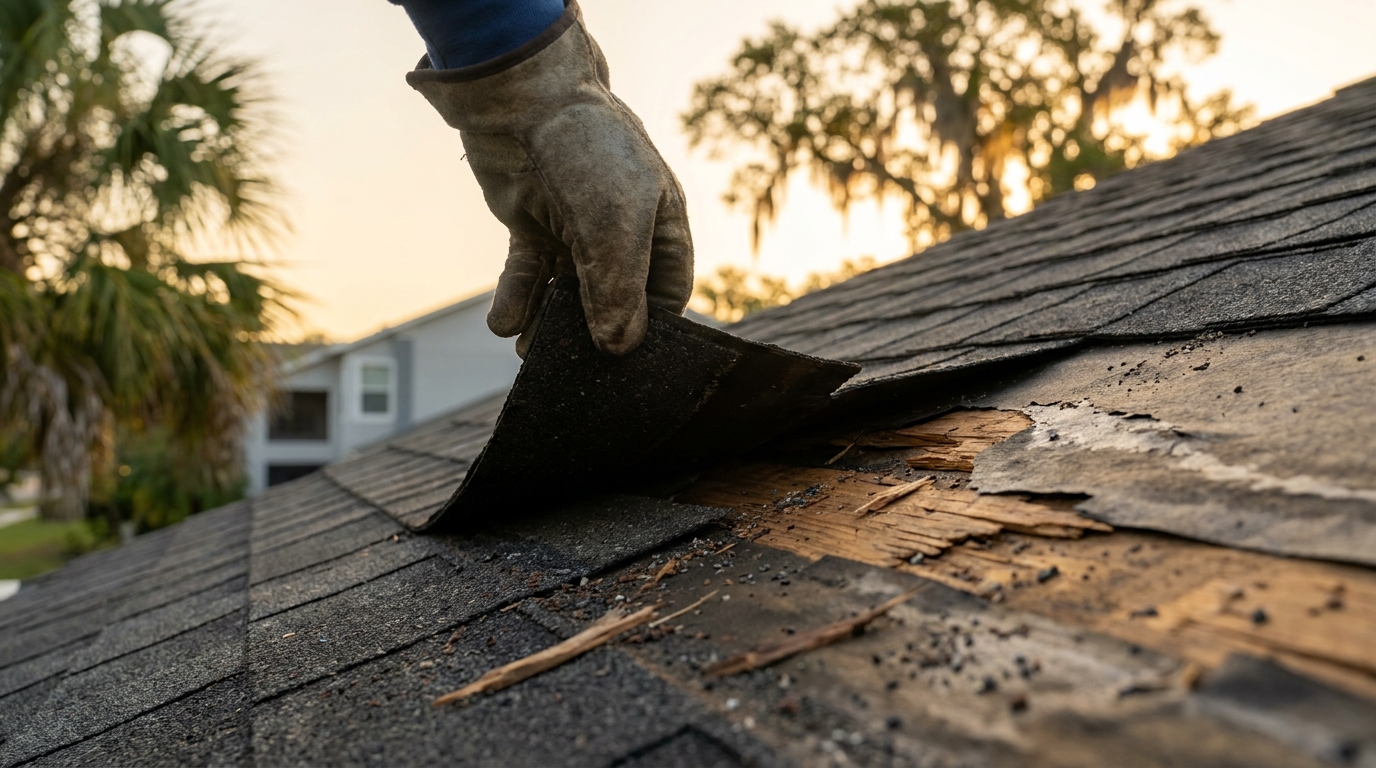
Replacement becomes necessary when you see sagging ridgelines, visible daylight through the deck, widespread nail pops, delaminated plywood, saturated insulation, or truss movement at the gable ends. Any one of these signals damage beyond the shingle layer. Cosmetic damage stays repairable; structural damage does not.
The checklist we walk through on every post-storm inspection
- Deck integrity — is the plywood or OSB still firm underfoot, or spongy?
- Fastener condition — are nails backed out, sheared, or corroded from salt intrusion?
- Underlayment — is it torn, bunched, or visibly wet at seams?
- Flashing — chimney, valley, and skylight flashing separated or bent?
- Attic — water staining on rafters, damp insulation, or daylight visible?
- Soffit and fascia — blown out or pulled loose, which often indicates uplift forces reached the structure?
How do you compare repair vs replacement costs and lifespan in St. Pete?
Repairs typically run $500 to $4,500 depending on scope; a full asphalt shingle replacement on a St. Petersburg home commonly ranges from $12,000 to $28,000, with tile and metal running higher. Repairs extend life by 2-8 years on an aging roof; replacement resets the clock 25-30 years and often reduces windstorm insurance premiums.
| Factor | Repair | Full Replacement |
|---|---|---|
| Typical cost range (St. Pete, 2026) | $500 - $4,500 | $12,000 - $28,000+ |
| Added roof life | 2-8 years | 25-30 years (architectural shingle) |
| Permit required | Sometimes | Always (Pinellas County) |
| Insurance premium impact | Minimal | Often reduces windstorm premium |
| Best for | Isolated damage, roof under 10 years old | Widespread damage, roof over 15 years, code triggers |
| Timeline | 1-3 days | 2-5 days for average home |
How does insurance factor into the storm roof damage decision in St. Petersburg?
Florida insurers now inspect roof age aggressively. If your roof is under 15 years old and damage is documented within the policy's hurricane claim window, most carriers pay for like-kind repair or full replacement based on damage percentage. Older roofs may only receive actual cash value — depreciated payout — even if damage is severe.
Two practical moves after a hurricane: document everything before any tarping (photos, video, dated), and get a licensed roofer's written damage assessment before the adjuster arrives. Adjusters work fast, and a homeowner without independent documentation often ends up under-compensated.
SCM Roofing, LLC is GAF Master Elite Certified — a designation held by roughly 2% of roofing contractors nationally — and we routinely coordinate directly with adjusters on claims across Pinellas County. That certification also unlocks manufacturer warranties that carry weight in insurance negotiations.
When should you repair even if replacement seems tempting?
Repair when the roof is under 10 years old, damage is confined to one slope or area, the deck is dry, and no code trigger applies. A well-executed repair on a young roof preserves the manufacturer's warranty and avoids the higher deductible many Florida wind policies apply to full replacements. Not every storm-damaged roof needs to come off.
We've inspected homes in Jungle Terrace and Bayway Isles where the homeowner assumed a full replacement was inevitable — and the actual fix was a targeted repair for under $3,000. Honest assessment matters more than upsell instinct.
Frequently asked questions
How soon after a hurricane should I get my roof inspected in St. Petersburg?
Within 7-14 days if possible, and always before your insurance claim deadline. Most Florida hurricane policies require notice of loss within a specific window, and hidden water damage compounds quickly in St. Pete's humidity. Even if the roof looks fine from the ground, schedule a professional inspection — attic moisture and lifted shingles are often invisible from below.
Does the Florida 25% roof rule still apply in 2026?
The rule was modified by state legislation and now generally exempts roofs built or previously replaced under the 2026 or later Florida Building Code from the automatic full-replacement trigger. Older roofs may still be subject to the 25% threshold. Because interpretation varies by permitting jurisdiction, confirm the current rule with Pinellas County or St. Petersburg building officials before scoping a repair.
Will my insurance drop me if I only repair a hurricane-damaged roof?
Not automatically, but Florida insurers increasingly inspect roof age and condition at renewal. A repair on a roof over 15 years old may satisfy the immediate claim but trigger non-renewal at the next policy period. A full replacement on an aging roof often stabilizes insurability and can reduce windstorm premiums by a measurable margin.
Can I file a hurricane claim if damage shows up months later?
Florida law provides a window to file hurricane damage claims, but the sooner the better — insurers increasingly deny claims where damage progression suggests delayed reporting. If you suspect a prior storm caused damage that's only now visible (interior stains, sagging ceilings), document it and file promptly with photos dated to the earliest visible sign.
What roofing material holds up best in St. Petersburg hurricanes?
Standing seam metal and concrete tile carry the highest wind ratings, often exceeding 150 mph when properly installed. Architectural asphalt shingles rated to 130 mph are the most common choice and perform well when installed to Florida's high-velocity hurricane zone standards with proper nailing patterns and starter strips. Installation quality matters as much as material.
Do I need a permit for hurricane roof repairs in St. Petersburg?
Yes for most work beyond minor shingle replacement. Pinellas County and the City of St. Petersburg require permits for structural repair, decking replacement, and any full re-roof. A licensed contractor pulls the permit; homeowners who skip this step often face insurance and resale complications later. Always confirm your contractor is state-licensed and insured before signing.
The bottom line
After a hurricane, the repair-or-replace question rarely has a gut-feel answer. It comes down to damage percentage, roof age, code triggers, insurance posture, and what the deck looks like underneath the shingles. A quick inspection by a licensed roofer usually settles it in under an hour.
Homeowners in St. Petersburg who want a straight assessment — repair when repair makes sense, replacement when it truly doesn't — can reach SCM Roofing, LLC at https://scmroofingfl.com for a free post-storm inspection. Our 4.9-star rating across 239 Google reviews reflects the approach: honest scope, GAF Master Elite installation, and clear communication with your insurance carrier from claim to close-out.