A Tampa roofer helps with a roof insurance claim by documenting damage, producing a repair or replacement estimate, meeting the carrier's adjuster on-site, and executing permitted work to code once coverage is decided. What a roofer in Florida cannot do is negotiate the claim itself — that is public-adjuster territory, and the line is drawn by state statute. Understanding where the roofer's role begins and ends is what keeps a claim moving.
What does a Tampa roofer actually do during an insurance claim?
A Tampa roofer handles the construction side of a roof insurance claim: inspecting the damage, photographing and measuring it, writing a scope and estimate for repair or replacement, meeting the insurer's field adjuster on the roof, and then performing the permitted work after coverage is decided. The roofer does not negotiate the settlement or represent the policyholder — that function is reserved for licensed public adjusters under Florida law.
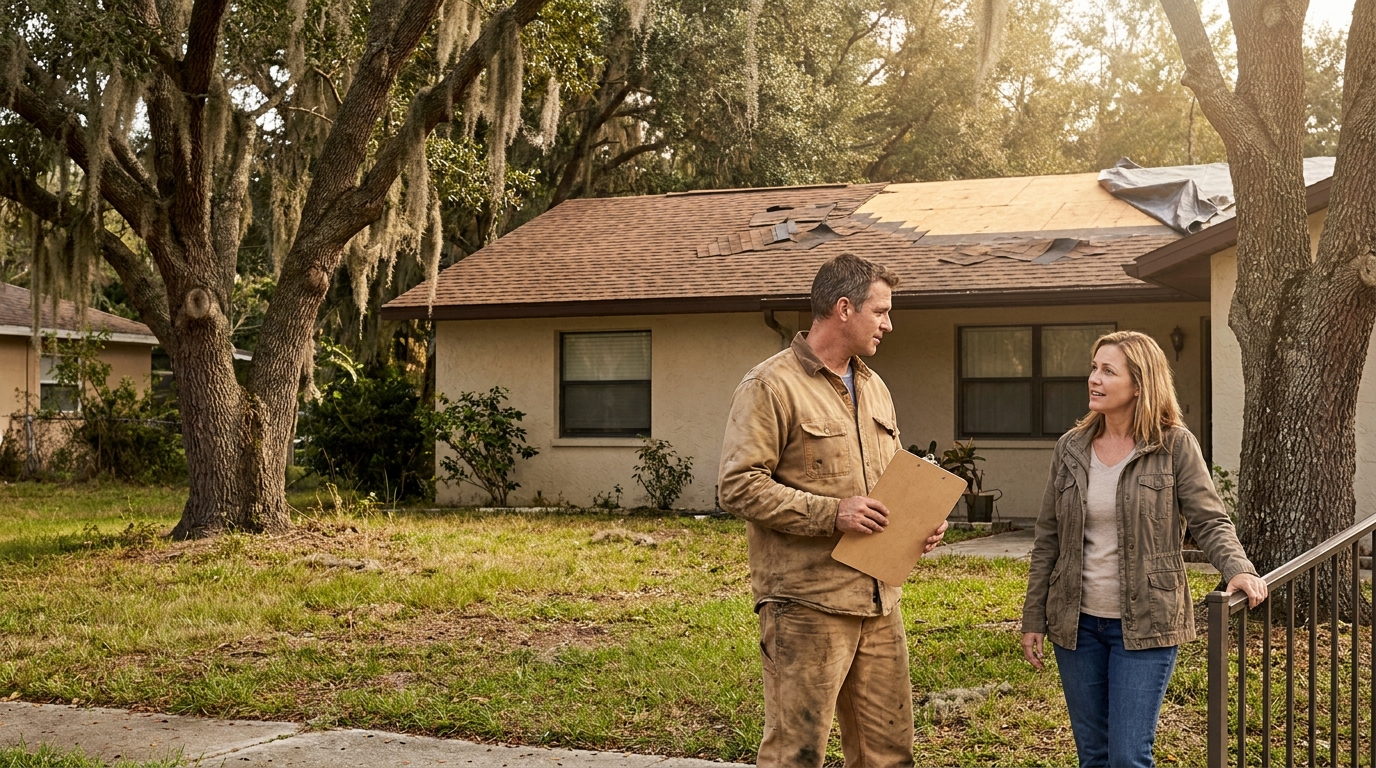
In practice, the roofer is the technical witness. When an adjuster climbs a Tampa roof after a storm, the contractor is the one pointing out lifted shingles, fractured tile, crushed drip edge, exposed underlayment, and water paths into the deck. A clear, well-documented scope from a credentialed roofer gives the adjuster something concrete to agree or disagree with — which usually produces a faster, cleaner coverage decision than a homeowner negotiating alone.
SCM Roofing, LLC operates in this role across Tampa's residential and commercial roofs, performing leak inspections, storm damage assessments, and emergency repairs when a roof fails after a wind event.
How does the roof insurance claim process work in Tampa in 2026?
The Tampa roof claim process runs in five stages: document the damage, notify the insurer promptly per the policy, host the adjuster inspection, receive the coverage decision, then permit and complete the repair or replacement. Reasonable emergency measures like tarping are allowed before the carrier responds, but permanent repairs should wait for insurer guidance. Each stage has a role for the roofer, the homeowner, and — if used — a licensed public adjuster.
- Damage documentation. Dated photos from the ground and roof, interior water-stain photos, and a written description of the storm event. A roofer's inspection adds measurements, material identification, and deck-level findings a homeowner can't safely gather.
- Prompt notice to the insurer. Florida policies carry notice deadlines; miss them and coverage arguments get harder. File with the policy number and a short description of damage.
- Adjuster inspection. The carrier sends a field adjuster. Having the roofer present during that inspection — walking the roof together — is where scope disagreements get resolved before they become denials.
- Coverage decision. The insurer issues a scope of loss and payment, often with a depreciation holdback released after work is completed.
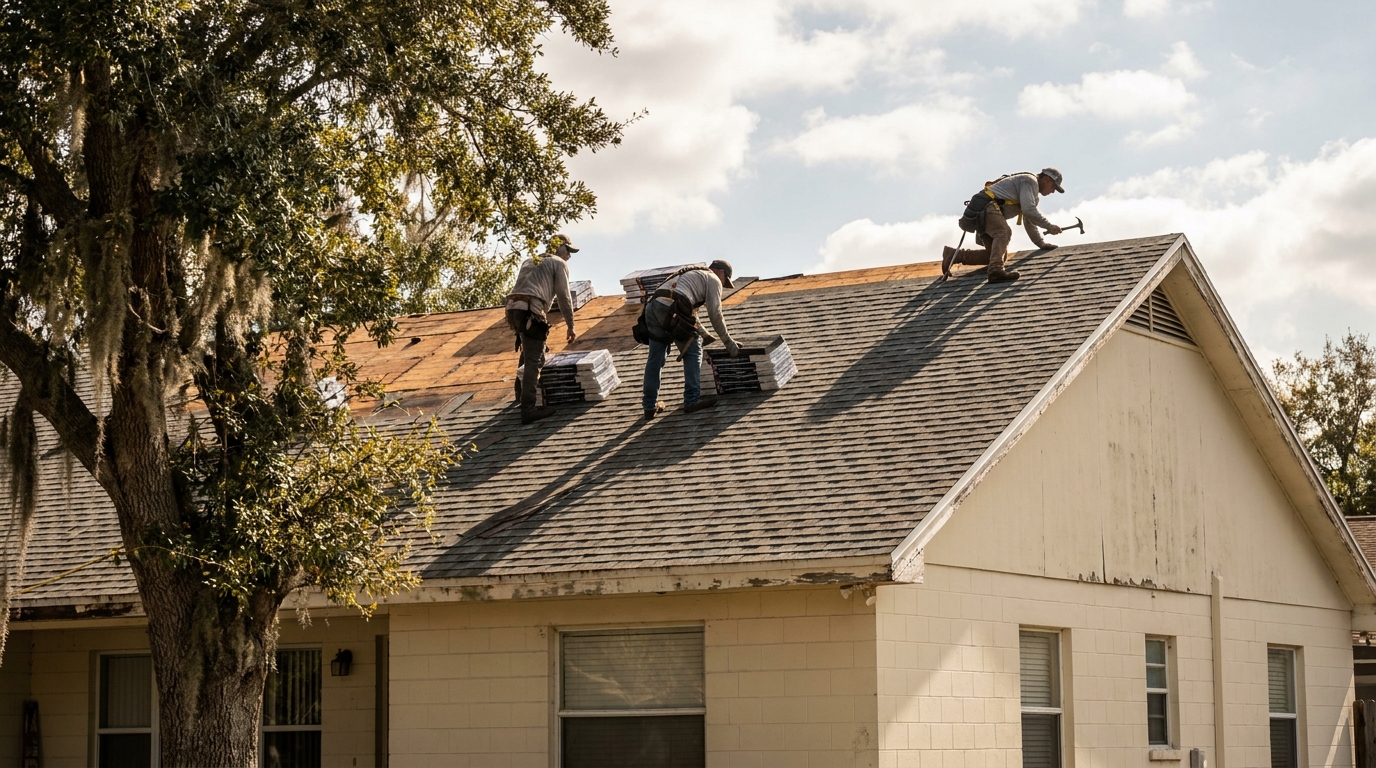
- Permitted repair or replacement. The roofer pulls the permit, performs the work to current building code, and provides the final invoice and inspection documents the carrier needs to release depreciation.
Why is roof documentation so important for Tampa claims?
Documentation matters because the insurer's coverage decision is built on what can be proven about the damage, the roof's prior condition, and the cause of loss. A roof age of 15 years is a common cutoff Florida insurers use when evaluating coverage eligibility, so a contractor's measured, photographed inspection — showing material, condition, and storm-specific damage — often decides whether the carrier pays, partially pays, or denies.
Good documentation includes drone or ladder photos of each roof slope, close-ups of impact marks and wind creasing, interior ceiling and attic photos, moisture readings where relevant, and a written scope tied to line items the adjuster's software recognizes. For tile and metal roofs — common across Tampa neighborhoods from South Tampa bungalows to suburban two-stories — material identification matters, because replacement with a discontinued profile often triggers larger-scope coverage.
SCM Roofing does not roof over existing layers; the old material comes off down to the deck before a new system goes on. That matters for claims because deck condition is frequently where carriers and contractors disagree, and the only way to see it accurately is a tear-off inspection.
What's the difference between a roofer and a public adjuster in Florida?
In Florida, a roofing contractor inspects, estimates, and builds; a public adjuster negotiates the claim and represents the policyholder in dealings with the insurer. The two roles are separated by statute. A roofer cannot legally perform public-adjusting functions — including negotiating the settlement amount or interpreting policy coverage — without holding a Florida public adjuster license. Hiring both, when a claim is complex, is common.
Florida Statutes § 626.854(11) caps public adjuster fees at up to 20% of the settlement for standard claims, and up to 10% for claims arising from a governor-declared state of emergency during the year after the declaration. For a homeowner, that fee is the tradeoff for having a licensed negotiator on their side of the table.
| Role | Can inspect roof | Can estimate repair | Can negotiate claim | Fee basis |
|---|---|---|---|---|
| Licensed roofing contractor | Yes | Yes | No | Contract price for construction |
| Licensed public adjuster | Limited | No | Yes | Up to 20% standard; up to 10% in declared emergency |
| Homeowner | Yes | No (not accepted by carrier) | Yes (self-represented) | None |
Why does the Tampa insurance market make this harder in 2026?
Carriers that remain are stricter on roof age, condition, and wind mitigation — meaning a sloppy claim is a denied claim.
That environment has two practical effects for Tampa homeowners. First, carriers scrutinize roof condition harder, and installing a new roof can reduce Florida homeowners insurance premiums by 20 to 40 percent, so a correctly handled claim-to-replacement sequence has real downstream value.
There is a cautiously positive signal: recent tort reforms are working through the market, and conditions are beginning to soften as a result. Market softening does not help a homeowner whose claim is being underpaid today — but it does mean carriers are slightly more responsive to well-documented, legitimate claims than they were two years ago.
What should Tampa homeowners look for in a roofer handling an insurance claim?
Look for an active Florida state license, local Tampa jurisdictional experience, willingness to meet the adjuster on-site, a tear-off (not overlay) scope, a written estimate using line items carriers recognize, and clear separation from any claim-negotiation role. Verify the license number directly with the Florida DBPR before signing anything — this is the single step that filters out out-of-area storm-chasers who show up after hurricanes.
Credentials to weigh: Florida certified vs. registered contractor status, manufacturer certifications like GAF Master Elite (held by only about 2–3% of roofing contractors nationwide), and years of specific Tampa Bay roofing experience. SCM Roofing's owner, Scott Marone, graduated from the University of Florida's Construction Management program and holds both a Florida State General Contractor's license and a Roofing Contractor's license; the company's state contractor license number is CCC1331132 and it carries 25+ years of experience in the roofing industry.
A note on jurisdiction: a Tampa mailing address might sit in the City of Tampa, unincorporated county territory, or another municipality — each with its own permitting rules. A roofer who works these jurisdictions daily knows which authority to file with before the first truck arrives.
I’ve had the opportunity to work with Robbie with SCM Roofing llc on several projects, and what really stands out to me is not only the quality of their workmanship, but their communication and professionalism.They are responsive, honest, and keep you informed throughout the entire process. They answer questions, follow through on what they say they’re going to do, and make it easy to know where things stand. That kind of communication makes a huge difference, especially when you’re managing a project and need a roofing contractor you can depend on.Their work speaks for itself, but it’s the combination of quality, reliability, and clear communication that truly sets Certified Roofers apart. I’m always comfortable having them involved in my projects and would absolutely recommend them to anyone looking for a roofing company they can trust.April McManusRebuilding Together Greater Florida
Frequently asked questions
Can my Tampa roofer file the insurance claim for me?
No. In Florida, filing and negotiating a roof insurance claim is a public-adjusting function, and only a licensed public adjuster or the policyholder themselves can perform it. A roofing contractor can inspect your roof, produce a damage report and estimate, and attend the adjuster inspection — but the homeowner (or a licensed public adjuster acting on their behalf) is the one who files and negotiates with the carrier.
Should I get a roof inspection before or after I call my insurance company?
Ideally before, if the damage isn't actively leaking. A roofer's inspection gives you a factual basis — photos, measurements, scope — to describe when you report the claim, which helps the carrier assign an appropriately experienced adjuster. If water is actively entering the home, call the insurer immediately and get emergency tarping done; permanent repairs should wait for insurer guidance.
Do I need a permit for roof repairs after a storm in Tampa?
Usually yes for anything beyond minor patching. The City of Tampa generally requires a permit for roof-covering work exceeding a set square-footage threshold, and other local jurisdictions in the area have their own requirements. After a governor-declared emergency, expedited permitting may be available, but code compliance is not waived. Confirm the authority having jurisdiction based on your property's actual location, not the mailing address.
How much does a public adjuster cost in Florida?
Florida Statutes § 626.854(11) caps public adjuster fees at up to 20 percent of the claim settlement for standard claims. Whether the cost is worth it depends on claim complexity, dispute likelihood, and whether the carrier's initial scope looks materially short of the actual damage.
Will a new roof actually lower my Tampa homeowners insurance premium?
Typically yes. Installing a new roof can reduce Florida homeowners insurance premiums by 20 to 40 percent, with the exact savings depending on roof age, material, and wind mitigation features documented on an inspection report. Many Florida insurers apply a 15-year roof age cutoff for coverage eligibility, so a replacement often restores insurability on top of lowering the premium.
What if my insurance company denies the roof claim?
A denial isn't necessarily the end of the claim. Common next steps include requesting a written denial explanation, having a licensed public adjuster review the carrier's scope, obtaining a reinspection with a detailed contractor report, invoking the policy's appraisal clause, or consulting an insurance attorney. Recent tort reforms changed Florida's litigation landscape, so legal advice specific to the current rules matters.
Working with a Tampa roofer on your claim
The homeowners who come out of Tampa roof claims cleanest tend to share a pattern: they document early, notify the carrier promptly, use a credentialed local roofer to produce the technical scope and meet the adjuster, and bring in a licensed public adjuster when the claim is genuinely contested. The roofer's job is to make the damage impossible to misread and the repair impossible to fault — not to negotiate the check.
Readers in Tampa who want this handled professionally can reach SCM Roofing, LLC at (855) 726-7663 or https://scmroofingfl.com to schedule a roof inspection and claim-support consultation.