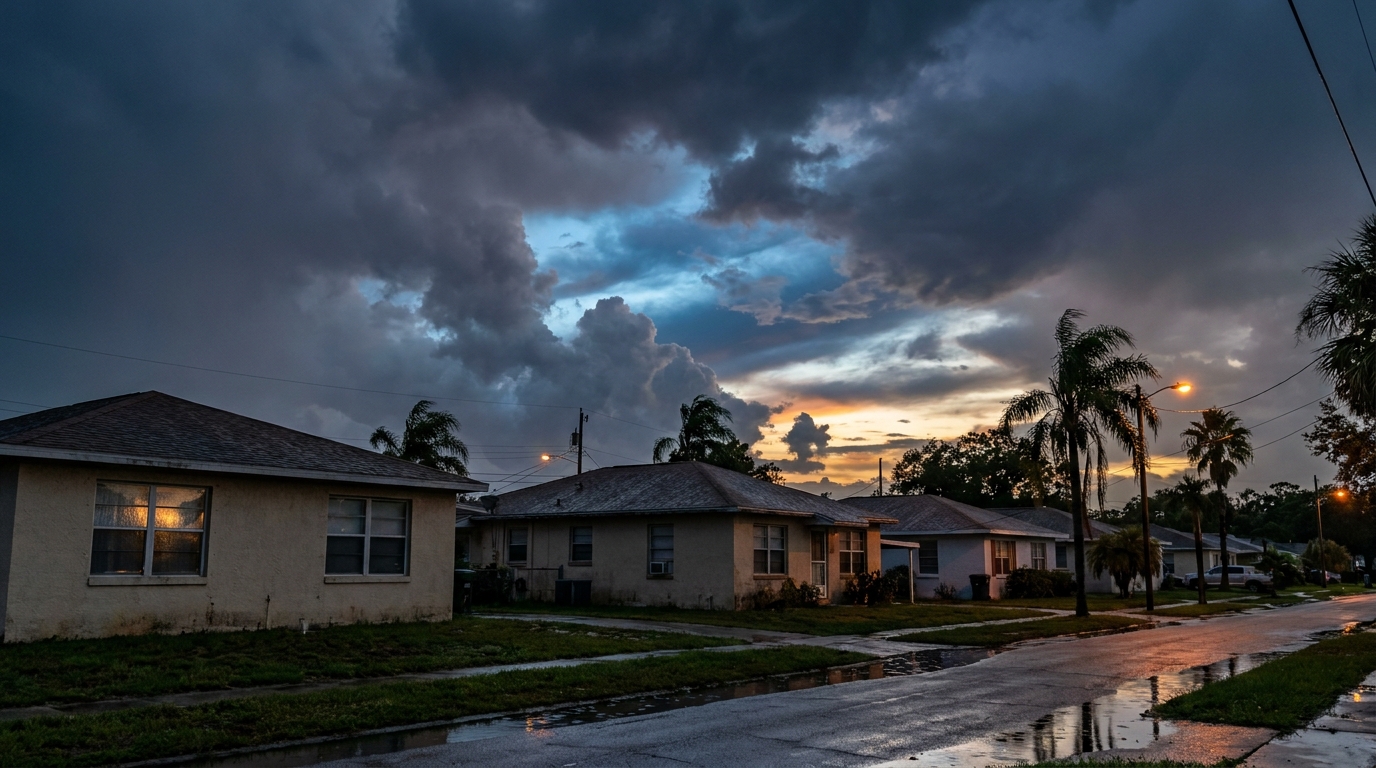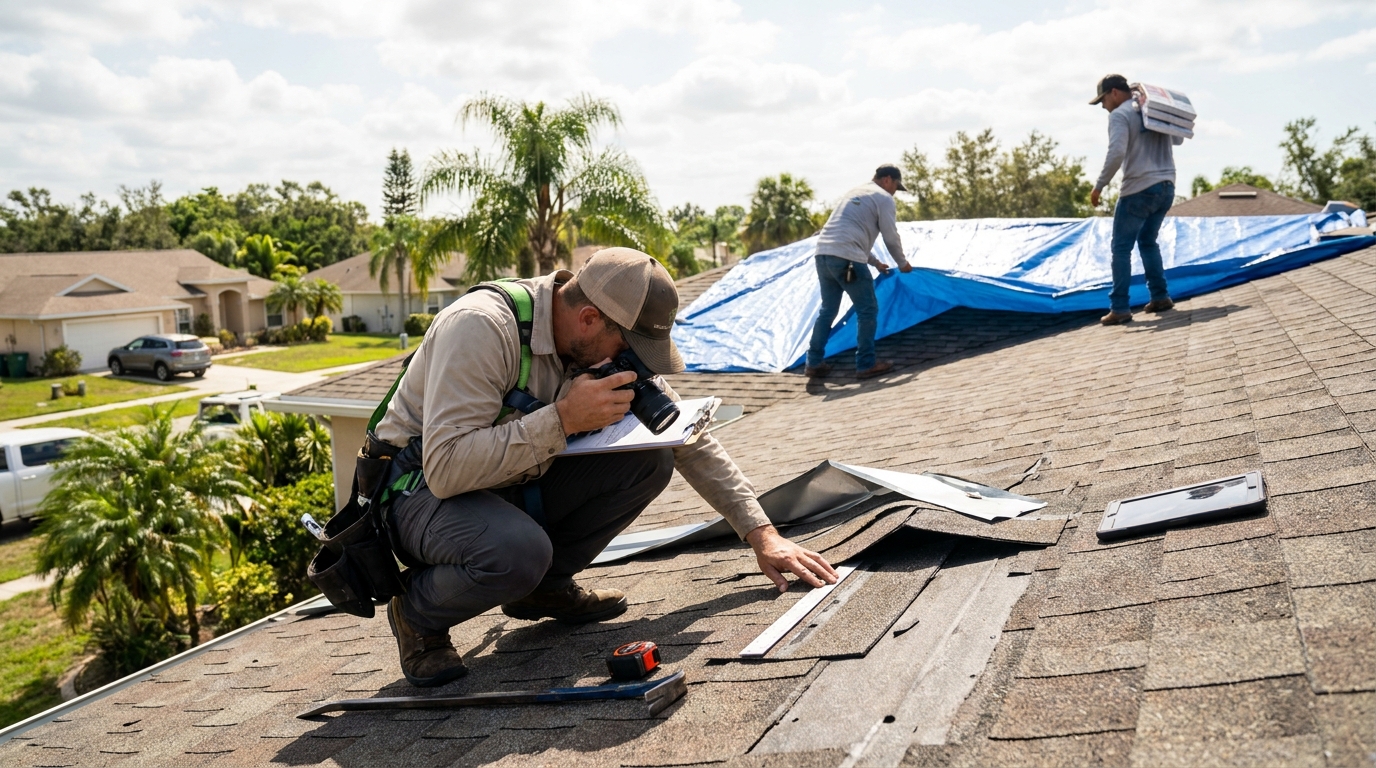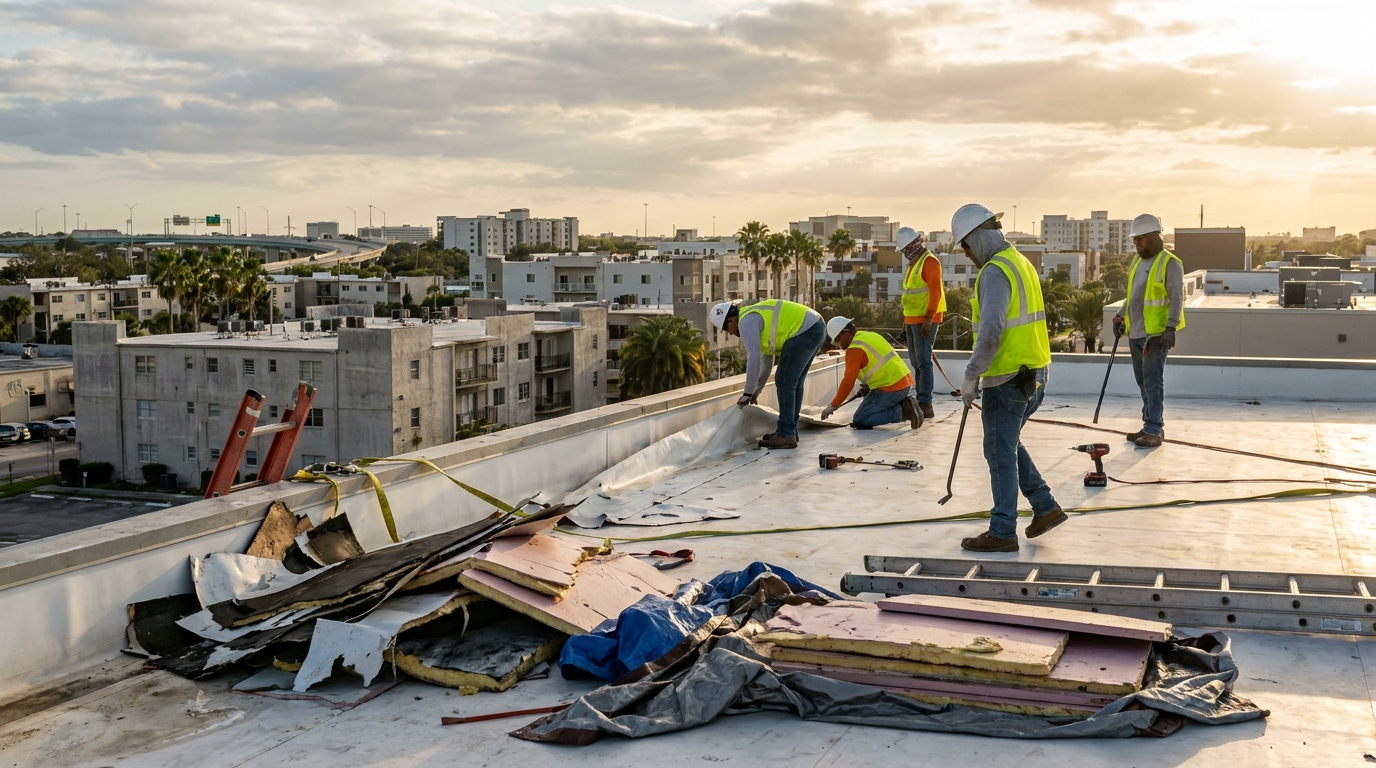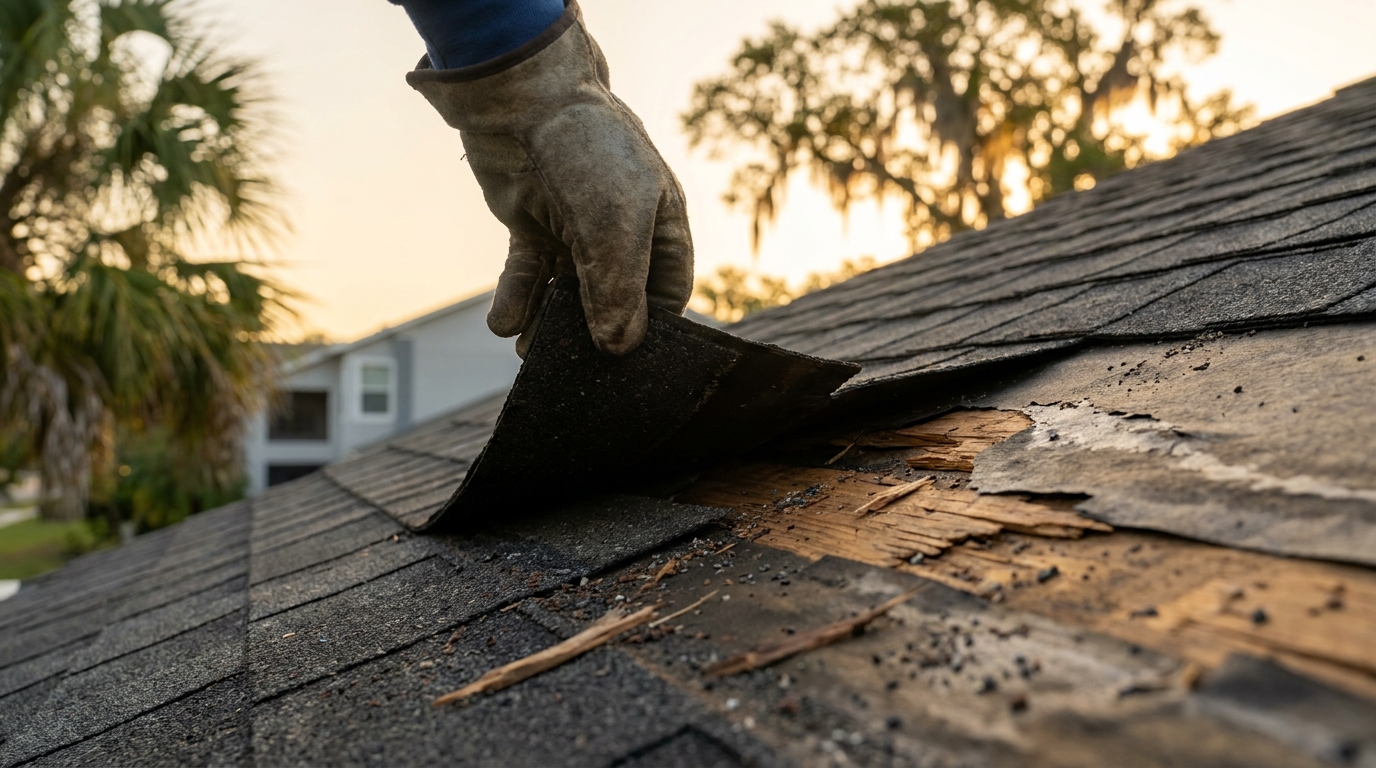
After a hurricane damages your roof near Tampa, call in this order: (1) a licensed local roofing contractor for emergency tarping and a documented damage report, (2) your insurance carrier to open a claim within the Florida statutory window, (3) the assigned adjuster to coordinate a joint inspection, and (4) either City of Tampa Construction Services or Hillsborough County Development Services to confirm permitting for permanent repairs. The order matters — calling the insurer before you have a contractor on-site often delays tarping and worsens interior damage.
Who should you call first after a hurricane damages your roof in Tampa?
Call a licensed local roofing contractor first — before the insurance company. A contractor can deploy emergency tarping and board-up the same day (permitted immediately without a permit under Florida Statutes § 553.7922), photograph the damage before rain causes secondary loss, and give you a written damage assessment you can hand to your adjuster. That documentation shapes the entire claim.
Florida law allows temporary protective measures — tarping, temporary waterproofing, shoring — without a permit right after a declared storm. That's your window to stop water intrusion in neighborhoods from South Tampa and Hyde Park to Brandon and Riverview, where wind-driven rain after a Gulf system can soak a Bahama-shuttered bungalow in an afternoon. SCM Roofing, LLC handles this emergency response phase throughout the Tampa Bay area.
When should you call your insurance company after storm roof damage near Tampa?
Call your insurer within days of the loss — and always within the statutory window. Under Florida Statutes § 627.70132, a policyholder must give notice of a hurricane or windstorm claim within 1 year of the date of loss, and any supplemental claim must be noticed within 18 months. Missing those deadlines can bar the claim entirely, regardless of how legitimate the damage.
Before you dial the carrier, have three things ready: your contractor's written damage report, dated photos of every affected slope, and your policy number. A specific, documented claim — "three-tab shingle loss on the south-facing slope, exposed decking at the ridge, interior staining in the primary bedroom ceiling" — moves faster than a general "my roof is damaged" call.
What does the insurance adjuster do, and how should you coordinate the visit?
The adjuster is the carrier's field representative who inspects the damage, writes a scope of loss, and estimates payment. Your job is to make sure they see everything. Coordinate a joint inspection where your roofing contractor is on the roof at the same time as the adjuster — measurements, photos, and code-upgrade obligations all get negotiated on the spot rather than in follow-up emails weeks later.
A contractor who knows Florida code will flag issues an adjuster might miss on a walkthrough: partial shingle loss that triggers the Florida Building Code Existing Building § 706.1.1 "25% rule," secondary-water-barrier requirements under Florida Statutes § 553.844 when work touches deck sheathing, and the code-compliance upgrades that flow from those triggers. If the adjuster's initial scope misses these, you're negotiating a supplement later.
When do you need a permit, and who issues it — Tampa or Hillsborough County?
Permanent roof repair or replacement in Florida requires a building permit under Florida Statutes § 553.79. The issuing authority depends on where the property sits: City of Tampa Construction Services handles permits inside city limits, while Hillsborough County Development Services handles unincorporated areas — including large stretches that feel like Tampa but are technically county jurisdiction. Confirm which applies before signing a contract.
Two Tampa-specific rules to know:
- City of Tampa exemption: roof covering repair or replacement of 500 square feet or less may qualify for a permit exemption. Anything larger, any full reroof, or work touching other regulated systems requires a permit from City of Tampa Construction Services.
- Unincorporated Hillsborough County: roof repair and reroofing is permit-required by default through Hillsborough County Development Services. Expedited or emergency procedures may be available after a Governor-declared disaster, but no procedure waives code compliance.
Under Florida Statutes § 553.7922, local governments can implement expedited permitting after a declared disaster, and emergency work can often begin before the permit is formally issued — with the application required to follow within the timeframe the emergency order specifies. During the declared emergency period, local governments are also restricted from raising permit or inspection fees for storm-related work.
What is the 25% rule and why does it change your repair scope?
The 25% rule — Florida Building Code Existing Building § 706.1.1 — requires that when 25% or more of a roof section is repaired, recovered, or replaced within a 12-month period, the entire affected section must be brought into full compliance with current code. In practice, a partial repair on a Tampa home with older underlayment can trigger a full-section replacement plus secondary water barrier, drip edge, and fastening upgrades.
This is where insurance conversations get complicated. If your storm damage covers, say, 30% of the rear slope, code requires the whole slope brought current — and Florida policies typically include an "Ordinance or Law" endorsement that covers the code-triggered scope, but only if it's identified and claimed. A contractor who documents the 25% trigger during the joint adjuster inspection protects you from paying the code-upgrade delta out of pocket.
Who actually performs the permanent repair, and what should you verify?
Permanent roofing work must be performed by an appropriately licensed contractor and passes local inspection regardless of whether emergency authorization was granted for the initial tarping. That means verifying: an active Florida roofing contractor license, general liability and workers' comp insurance, and manufacturer certification for the shingle or tile system being installed.
Manufacturer certification matters more than most Tampa homeowners realize. GAF Master Elite status unlocks enhanced system warranties that a non-certified installer cannot offer. SCM Roofing, LLC is GAF Master Elite Certified.
Tampa hurricane roof call order at a glance
| Step | Who to Call | Timeframe | Purpose |
|---|---|---|---|
| 1 | Licensed local roofing contractor | Same day / within 24-48 hours | Emergency tarping, damage documentation, written report |
| 2 | Your insurance carrier | Within days; no later than 1 year (Fla. Stat. § 627.70132) | Open the claim, get a claim number, schedule adjuster |
| 3 | Assigned adjuster (joint with contractor) | Typically 1-4 weeks after claim filing | Scope of loss, code-trigger review, initial estimate |
| 4 | City of Tampa or Hillsborough County | Before permanent work begins | Permit for permanent repair; inspection scheduling |
| 5 | Contractor (permanent repair) | Once permit issued and scope agreed | Code-compliant reroof or repair, final inspection |
| Supplemental | Insurance carrier (if new damage found) | Within 18 months of loss (Fla. Stat. § 627.70132) | Supplemental claim notice |
Frequently asked questions
Do I need a permit to tarp my roof after a hurricane in Tampa?
No. Temporary emergency protective measures — tarping, board-up, shoring, temporary waterproofing — are generally allowed immediately after a hurricane without a permit under Florida Statutes § 553.7922, because they are not considered permanent construction. Permanent repair or replacement is a separate step that does require a permit from either City of Tampa Construction Services or Hillsborough County Development Services depending on jurisdiction.
How long do I have to file a hurricane claim in Florida?
Under Florida Statutes § 627.70132, a policyholder must provide notice of a hurricane or windstorm claim to the insurer within 1 year of the date of loss. Supplemental claims — additional damage discovered later — must be noticed within 18 months of the date of loss. Missing either deadline can bar recovery, so file promptly even if the full damage scope isn't yet known.
Does the City of Tampa waive permit fees after a hurricane?
Not automatically, but during a Governor-declared hurricane emergency, Florida Statutes § 553.7922 restricts local governments from increasing building permit or inspection fees for storm-related work in the affected area during the emergency period. Fee structures vary by declaration, so confirm the current emergency order and any local administrative policies directly with City of Tampa Construction Services before assuming a specific fee amount.
My roof is only partially damaged — will insurance pay for a full replacement?
Sometimes, because of code. The Florida Building Code Existing Building § 706.1.1 "25% rule" requires that when 25% or more of a roof section is repaired, recovered, or replaced within 12 months, the entire section must be brought to current code. If your policy includes an Ordinance or Law endorsement, that code-triggered scope is typically covered — provided the trigger is documented during the adjuster inspection.
Do I need to call my insurance company before or after the contractor?
Call the contractor first for emergency tarping and documentation, then call the insurance company within days to open the claim. This order gives you a written damage report and dated photos to reference on the carrier call, which speeds claim setup and adjuster assignment. Waiting on the insurer before stopping water intrusion often causes secondary interior damage that complicates the claim.
How do I know if my property is in the City of Tampa or unincorporated Hillsborough County?
Property jurisdiction can be confirmed through the Hillsborough County Property Appraiser's parcel lookup, which shows the taxing and permitting authority for each address. Some neighborhoods that carry a Tampa mailing address actually fall under unincorporated Hillsborough County jurisdiction, which means Hillsborough County Development Services — not City of Tampa Construction Services — issues the roof permit. Verify before your contractor pulls the permit.
Getting the sequence right
The single biggest mistake Tampa homeowners make after a hurricane is calling in the wrong order — insurer first, no documentation, no tarp, and by the time the adjuster arrives the ceiling has collapsed. Contractor first, then insurer, then joint adjuster inspection, then permit, then permanent repair. That sequence protects your home from secondary damage and protects your claim from being under-scoped.
Homeowners in Tampa who want this handled professionally from the emergency-tarp call through the final permitted inspection can reach SCM Roofing, LLC at https://scmroofingfl.com to get the process started. Bringing a GAF Master Elite Certified contractor into the sequence early — before the adjuster visit — is what keeps the code triggers, the supplemental claim window, and the permanent repair scope aligned.