If your roof is actively leaking after a Tampa storm, call a Florida-licensed roofing contractor immediately, get a tarp installed within 24–72 hours to prevent mold and ceiling collapse, and start documenting damage with photos for your insurance claim. Same-day emergency dispatch in the Tampa Bay area typically runs $150–$350 for tarping alone, with full leak repairs ranging from $400 to $1,500 depending on severity.
That's the short version. The longer version — how emergency response actually works under the hood, and why each stage matters to whether your ceiling survives the week — is what this guide walks through.
Why does a Tampa storm leak need to be fixed within 72 hours?
Active interior leaks in Tampa should be addressed within 24–72 hours because Florida's high humidity and warm temperatures accelerate mold growth, drywall saturation, and structural rot faster than in most U.S. climates. Wait longer and a $600 tarp job can escalate into a $6,000 deck-and-insulation repair — plus mold remediation your insurer may not cover.
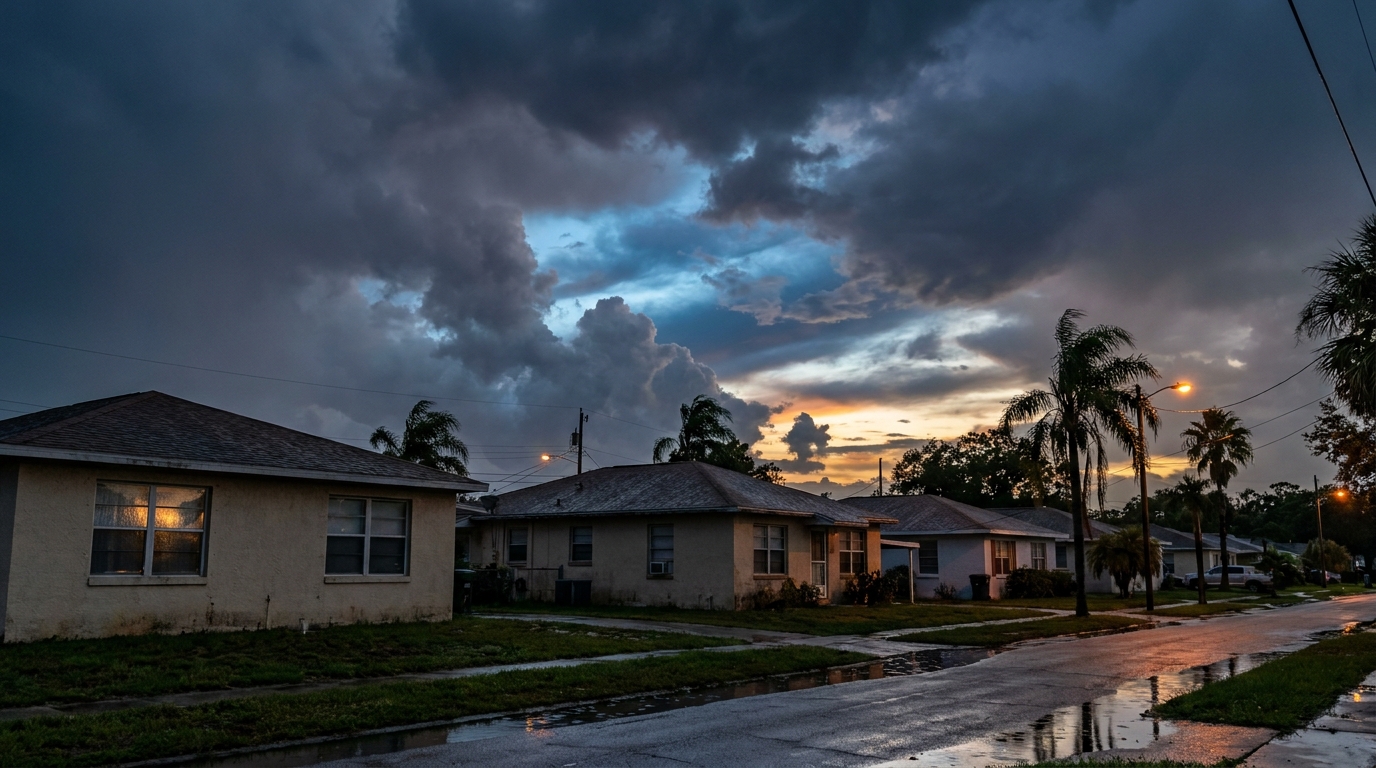
Tampa's climate is the mechanism here. Attic temperatures climb quickly after a storm passes, and any moisture trapped in insulation or decking becomes a mold incubator within days. That's why local guidance — including from SCM Roofing and other established Tampa contractors — treats the first 72 hours as a hard deadline, not a suggestion.
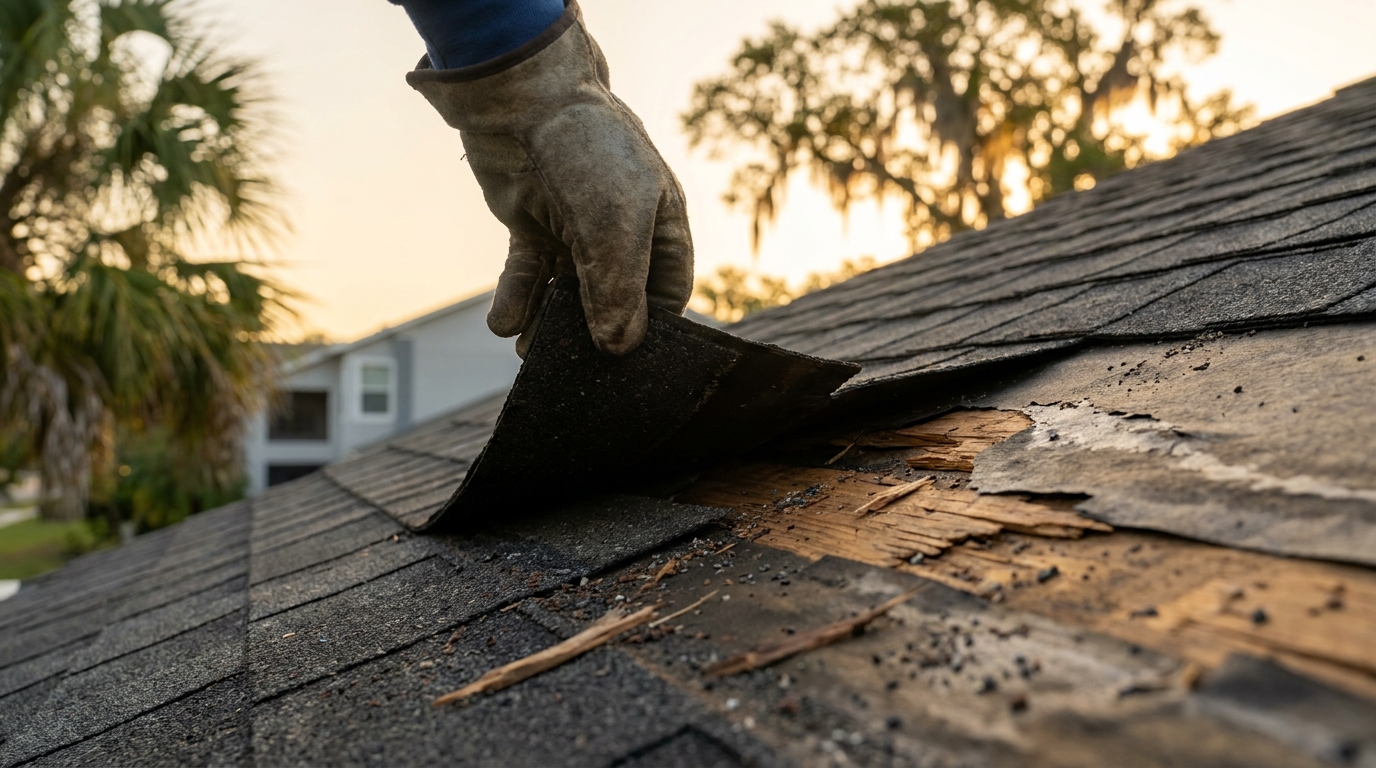
The damage also compounds. Saturated drywall sags, then falls. Wet decking loses fastener grip, which means the next gust of wind lifts more shingles, which means more water in the next rain. The whole failure cascades.
What does "same-day roof repair" in Tampa actually mean?
Same-day roof repair in Tampa typically means a licensed crew arrives within hours to install an emergency tarp or shrink-wrap over the damaged area, stopping active water intrusion. It is a temporary stabilization — not a permanent fix. The permanent repair is scheduled separately once the roof is dry, materials are sourced, and any required Hillsborough County or City of Tampa permits are pulled.
Understanding this two-stage model is the single most useful thing a homeowner can know. Stage one is triage: stop the water. Stage two is restoration: rebuild the roof system properly under the Florida Building Code.
Emergency tarping generally does not require a permit under the Florida Building Code because it is classified as a temporary safety measure. Permanent structural repairs and full replacements in Tampa and unincorporated Hillsborough County, however, must be permitted and pulled by a licensed roofing contractor — a distinction that matters if you're ever selling the home or filing a warranty claim later.
How does emergency dispatch actually work?
Emergency dispatch works in three stages: intake, triage, and deployment. When you call, a dispatcher gathers your address, damage description, and photos if possible, then a project manager decides whether to send a tarping crew immediately or schedule a next-morning inspection. Crews are prioritized by severity — active interior leaks over cosmetic damage every time.
Under the hood, response times depend on three variables:
- Storm intensity. A routine afternoon thunderstorm means most contractors have crews available. A tropical system passing over Tampa Bay means every licensed contractor in Hillsborough, Pinellas, and Pasco counties is triaging simultaneously.
- Your location. Homes closer to a contractor's base — South Tampa, Brandon, Carrollwood, the Westshore corridor — often see faster arrival than outlying areas.
- Documentation readiness. Homeowners who can text photos of the leak and any visible exterior damage get more accurate triage and faster dispatch.
After a named storm, contractor capacity across the region becomes constrained — meaning even reputable, in-network crews may quote 48–72 hour tarping windows rather than same-day. That's a market reality, not a red flag.
How much does emergency roof repair cost in Tampa in 2026?
Emergency roof repair costs in Tampa in 2026 generally fall between $150 for tarping only and $6,000 for major multi-leak repairs involving deck damage. After-hours service typically adds a $250–$600 surcharge on top of the repair itself. Most single-leak residential jobs land in the $400–$1,500 range.
| Service | Typical Tampa Cost (2026) |
|---|---|
| Emergency tarping / stabilization only | $150 – $350 |
| After-hours or emergency surcharge | $250 – $600 |
| Minor leak repair (pipe boot, few shingles) | $300 – $900 |
| Common emergency leak repair | $400 – $1,500 |
| Moderate repair (flashing, valley, larger area) | $900 – $2,500 |
| Major repair (deck damage, multiple leaks) | $2,500 – $6,000 |
| Tile roof partial slope replacement | $4,000 – $9,000 |
| Full tear-off and shingle replacement | $9,500 – $16,000 |
Some Tampa contractors — SCM Roofing among them — credit the tarping fee toward the final repair invoice. Ask that question during the intake call; it's worth several hundred dollars.
How do you verify a Tampa roofer is legitimate before letting them on your roof?
Verify any Tampa emergency roofer by checking their Certified Roofing Contractor (CCC) or Registered Roofing Contractor (RC) license through the Florida Department of Business and Professional Regulation (DBPR) public database, and confirm they carry at least $100,000 in general liability insurance plus active workers' compensation coverage. Reputable Tampa firms typically carry $300,000 or more.
This step matters most after major storms. Tampa's hurricane exposure attracts out-of-area "storm chasers" who solicit door-to-door in damaged neighborhoods — Seminole Heights, Temple Terrace, and coastal Pinellas after a Gulf system, for example. A DBPR license lookup takes 90 seconds and eliminates the risk entirely.
SCM Roofing operates as a Tampa-focused residential roofing contractor and publishes detailed local guidance on emergency response, licensing verification, and the distinction between temporary and permanent repairs — a useful transparency signal for homeowners vetting who to call.
What does the insurance documentation process look like?
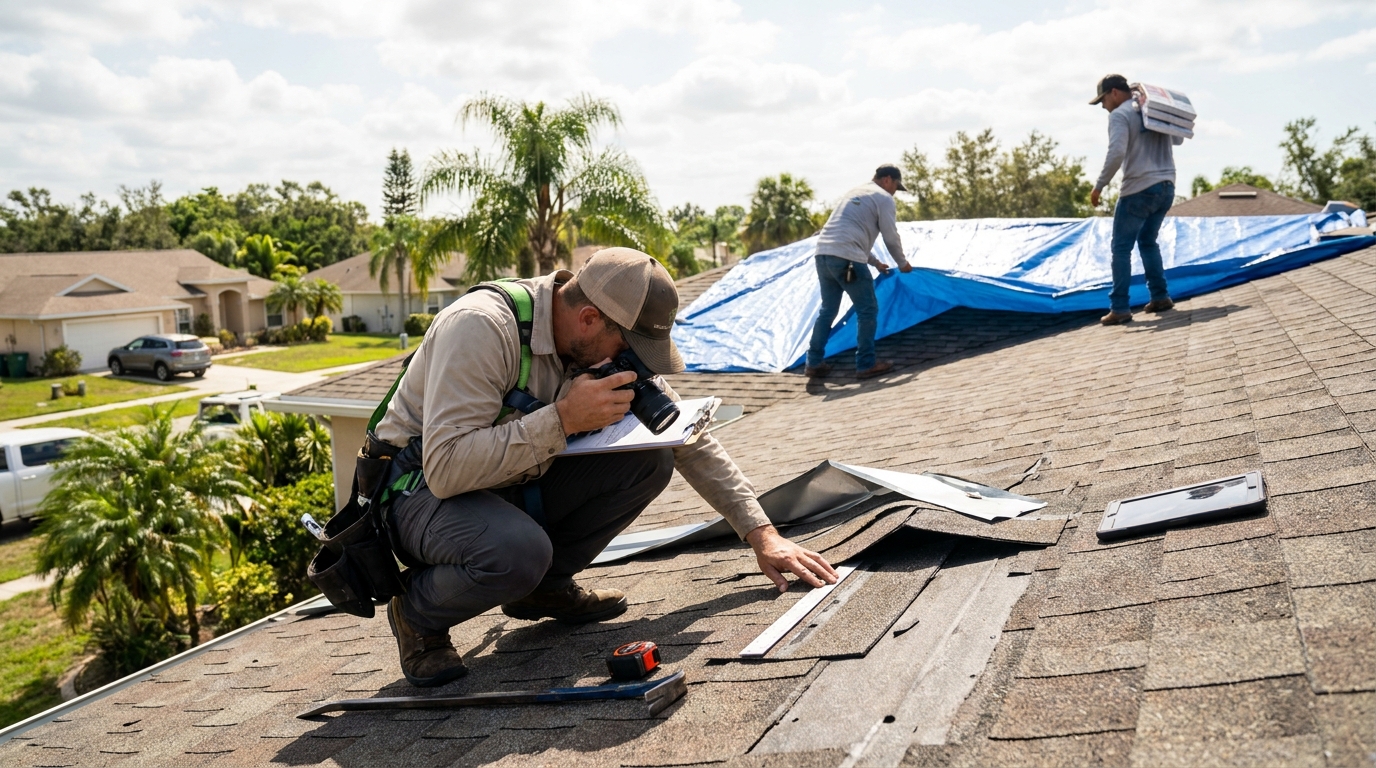
Florida homeowners have a one-year window to file a hurricane or windstorm claim, and insurers require photo documentation, written damage findings, and typically direct communication between the roofer and the adjuster. A good emergency contractor documents the damage before tarping — because once the tarp is on, the adjuster can't see what caused the leak.
Ask your contractor at intake: Will you photograph everything before stabilization? Will you provide a written scope of damage? Will you coordinate directly with my adjuster? "Yes" to all three should be table stakes.
Frequently Asked Questions
Who fixes storm roof leaks in Tampa on weekends and holidays?
Florida-licensed roofing contractors offering 24/7 emergency service handle weekend and holiday storm leaks in Tampa, typically dispatching a tarping crew within hours for active interior leaks. Expect a $250–$600 after-hours surcharge on top of the repair. Verify the contractor's DBPR license before any work begins, even on a Sunday — legitimate emergency roofers answer that question without hesitation.
Can I tarp my own roof to save money until a contractor arrives?
You can place a temporary tarp yourself only if the roof is safely accessible from the ground or a stable ladder — never during active storms, on wet surfaces, or on steep slopes. DIY tarping is a stopgap, not a repair, and a poorly secured tarp often causes more damage in the next wind gust. Professional emergency tarping in Tampa runs $150–$350 and includes proper anchoring.
Will my Florida homeowners insurance cover emergency roof repair?
Most Florida homeowners policies cover sudden storm-related roof damage, including emergency tarping costs, subject to your hurricane or wind deductible. Florida law gives homeowners a one-year window from the date of loss to file a claim. Keep every receipt, every photo, and every written communication with your contractor — insurers require documentation to process the claim.
Do I need a permit for emergency roof repair in Tampa?
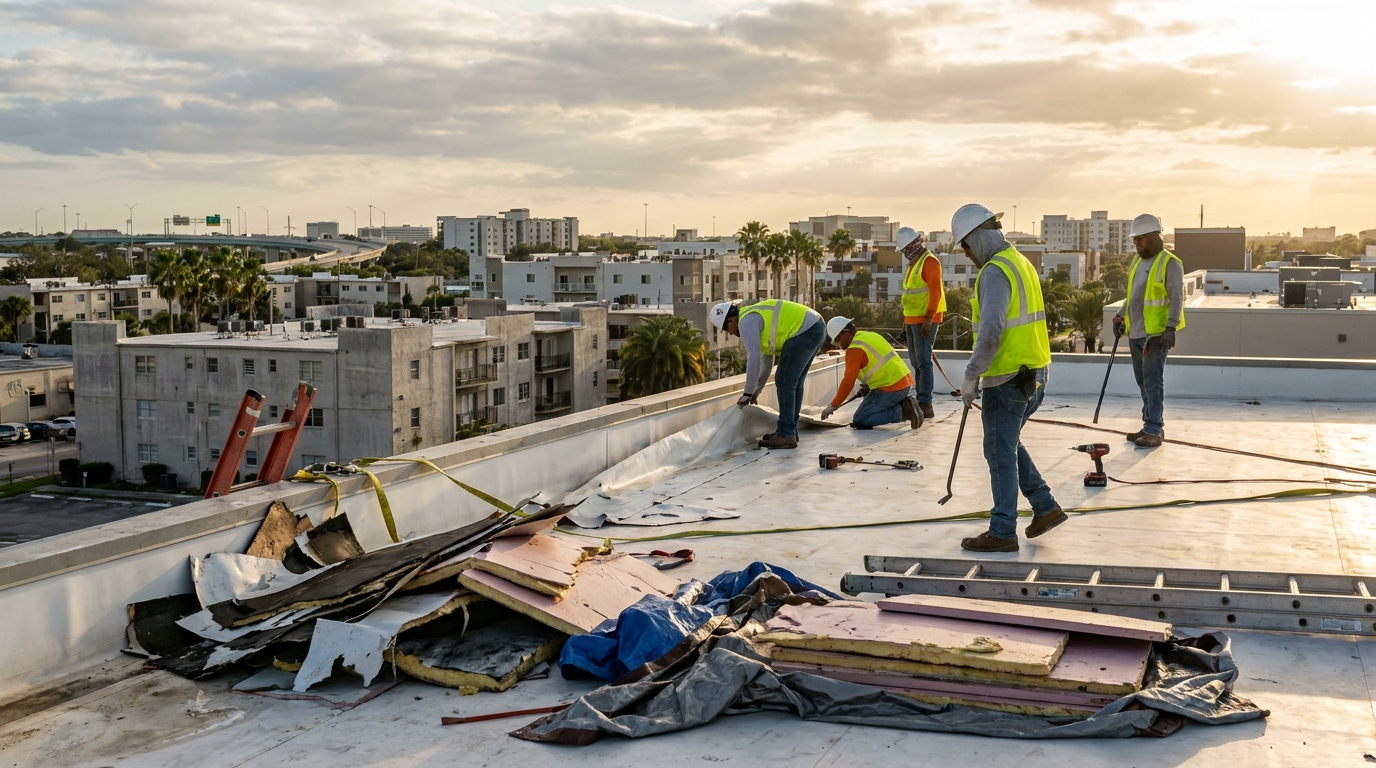
Emergency tarping and basic stabilization do not require a permit in Tampa or Hillsborough County because they are classified as temporary safety measures under the Florida Building Code. Permanent structural repairs and roof replacements do require permits, which must be pulled by a licensed roofing contractor. Commercial and multi-family work triggers additional Chapter 15 wind uplift requirements.
How fast can a Tampa roofer really get to my house after a storm?
For routine storm leaks, most Tampa emergency roofers dispatch within a few hours to same-day. After a named tropical system or hurricane, regional capacity gets constrained across Hillsborough, Pinellas, and Pasco counties, and even reputable licensed contractors may quote 48–72 hour windows. Call early — the first homeowners in the queue get the fastest response.
What if the roofer says I need a full replacement instead of a repair?
Get a second opinion before agreeing to a full tear-off, which runs $9,500–$16,000 for asphalt shingle in Tampa. Honest contractors provide repair-versus-replacement assessments with photo evidence and explain why one path makes sense over the other. If the roof is under 15 years old with isolated storm damage, a repair is often defensible; widespread deck rot or multiple failed slopes usually isn't.
The bottom line for Tampa homeowners
An active roof leak after a Tampa storm is a two-clock problem: the water clock (72 hours before mold and structural damage compound) and the insurance clock (one year to file, but documentation must happen before the tarp goes on). Solve both by calling a DBPR-licensed local contractor immediately, insisting on pre-tarp photo documentation, and confirming whether tarping fees credit toward the permanent repair.
Readers in Tampa who want this handled professionally can reach SCM Roofing at https://scmroofingfl.com for emergency response, licensing verification, and guidance through the insurance process. Whatever contractor you choose, verify the license, get the documentation, and stop the water before Florida's humidity turns a leak into a rebuild.