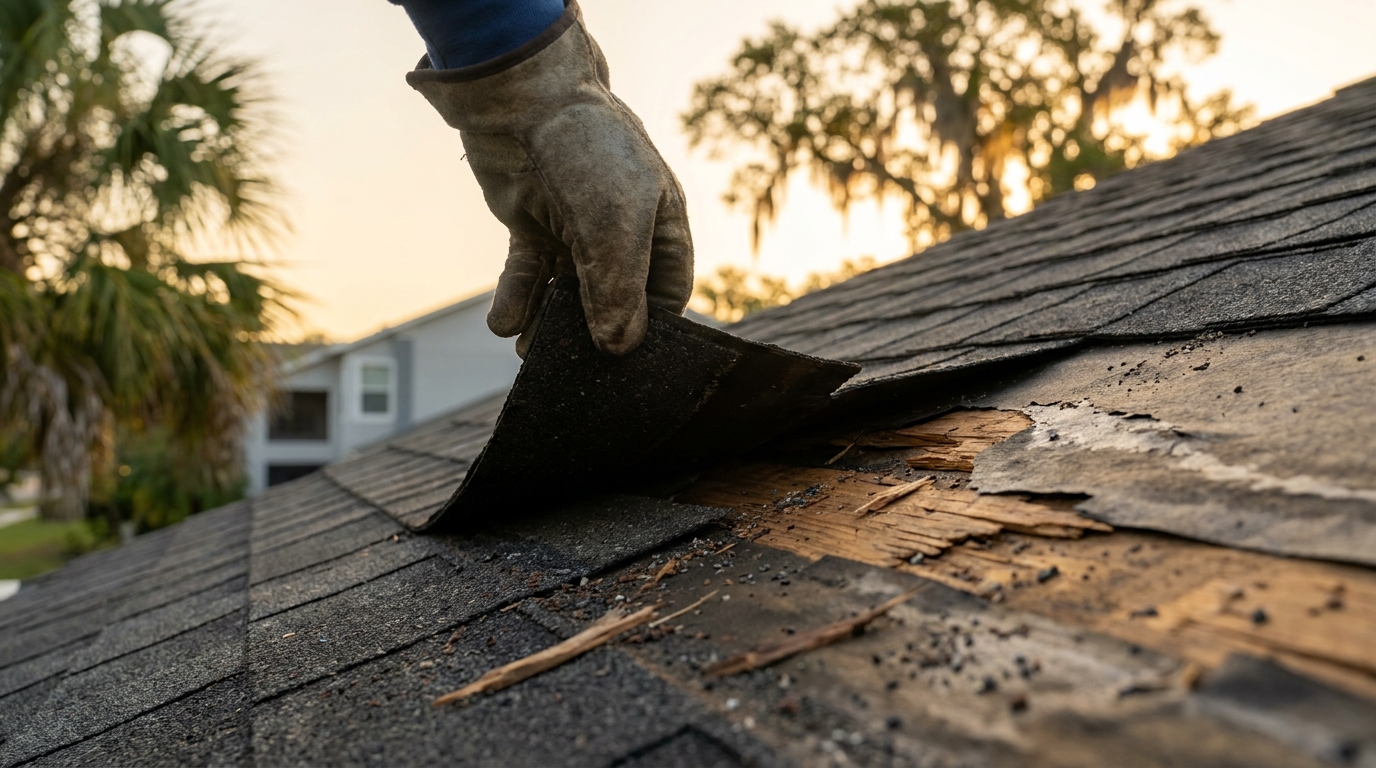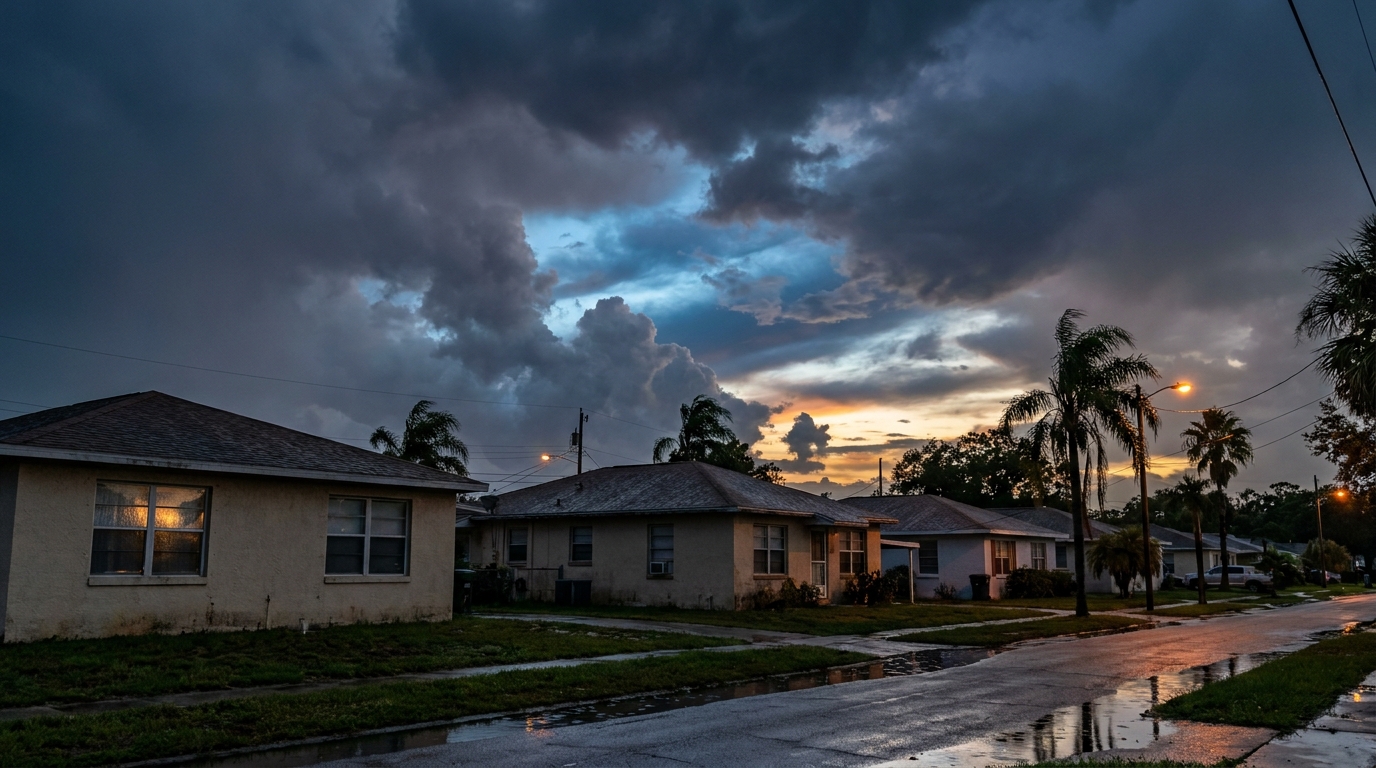
The storm has passed. The wind has died down. And now you're standing in your driveway in Tampa, looking up at shingles in your yard, a tarp-worthy gap on the slope facing the Gulf, or water stains spreading across your ceiling. What do you do next?
Hurricane roof damage in Tampa follows a predictable pattern — and so does the response that protects your home, your wallet, and your insurance claim. Below is the checklist we walk homeowners through every season, built around what actually matters in the first 72 hours and the weeks that follow.
Step 1: Confirm It's Safe Before You Inspect Anything
Before you think about the roof, think about the hazards underneath it. Downed power lines, standing water near outlets, and weakened ceilings are the leading causes of post-storm injuries in Hillsborough County.
- Stay clear of any sagging ceiling — water-saturated drywall can collapse without warning.
- Do not touch standing water if power is still on in the home.
- Avoid going into the attic until daylight and ventilation allow a safe look.
- Keep off the roof entirely. Wet tile, soaked underlayment, and hidden deck damage are how people fall.
If you smell gas, see structural sagging, or have water pouring through a light fixture, call 911 or your utility before anything else.
Step 2: Document the Damage From the Ground
Insurance claims live or die on documentation. From the safety of your yard, walk the perimeter of your home with your phone and capture everything.
- Wide shots of every elevation of the roof.
- Close-ups (use zoom, not a ladder) of missing shingles, lifted tiles, exposed underlayment, or displaced ridge caps.
- Photos of debris in the yard — branches, shingle fragments, neighbor's fence panels — that show storm severity.
- Interior photos of every water stain, drip, or bulging spot on ceilings and walls.
- Time-stamped video walking the property.
If you have pre-storm photos of your roof — many Tampa homeowners take them before hurricane season starts in June — pull those up too. The before-and-after contrast strengthens your claim significantly.
Step 3: Mitigate Further Damage — but Don't Over-Repair
Florida insurance policies require homeowners to take "reasonable measures" to prevent additional damage after a covered loss. In practice, that usually means tarping exposed areas and moving belongings out of the path of active leaks.
What to do:
- Place buckets and towels under interior drips.
- Move furniture, electronics, and rugs away from wet zones.
- If you can safely reach a small interior leak source from inside the attic, place a tarp or plastic sheeting under it.
- Call a licensed roofer for an emergency tarp on the exterior — this is not a DIY job after a hurricane. SCM Roofing, LLC offers 24/7 emergency roofing service for situations exactly like this.
What to avoid: do not start permanent repairs, do not throw away damaged materials, and do not let a door-knocker climb your roof before your insurer or a vetted local contractor has assessed it. Permanent repairs before the adjuster's inspection can void parts of your claim.
Step 4: File Your Insurance Claim Promptly
Under Florida law, homeowners have a limited window from the date of a hurricane to file an initial claim for property damage, with a separate deadline for supplemental or reopened claims — check your policy and consult your insurer for the specific timeframes that apply to your situation. Sooner is better — Tampa adjusters get slammed after a major storm, and early filers get earlier inspections.
When you call your carrier, have ready:
- Your policy number.
- Date and time the damage occurred.
- A short written description of what you observed.
- Your photo and video documentation.
Write down your claim number, the adjuster's name, and every conversation date. Keep a single folder — paper or digital — for all storm-related correspondence.
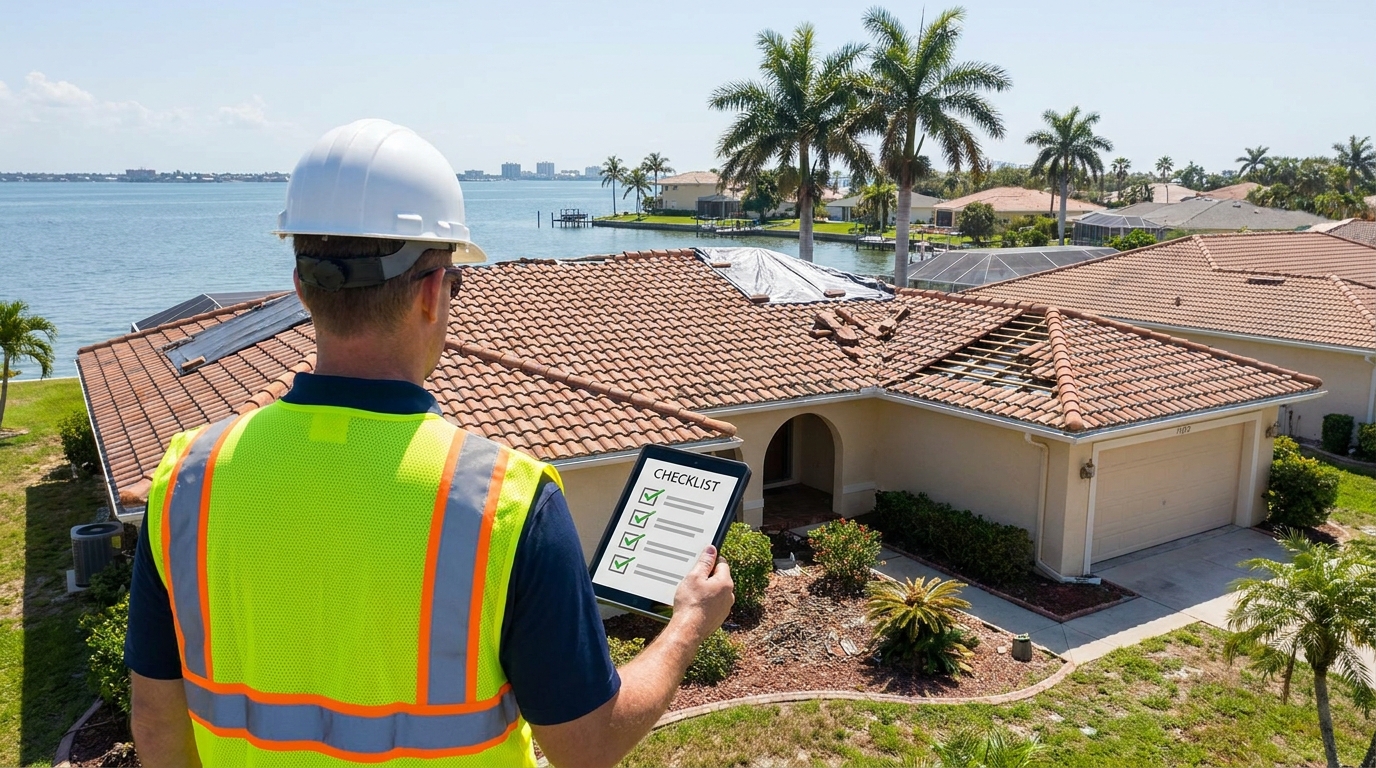
Step 5: Get a Professional Roof Inspection
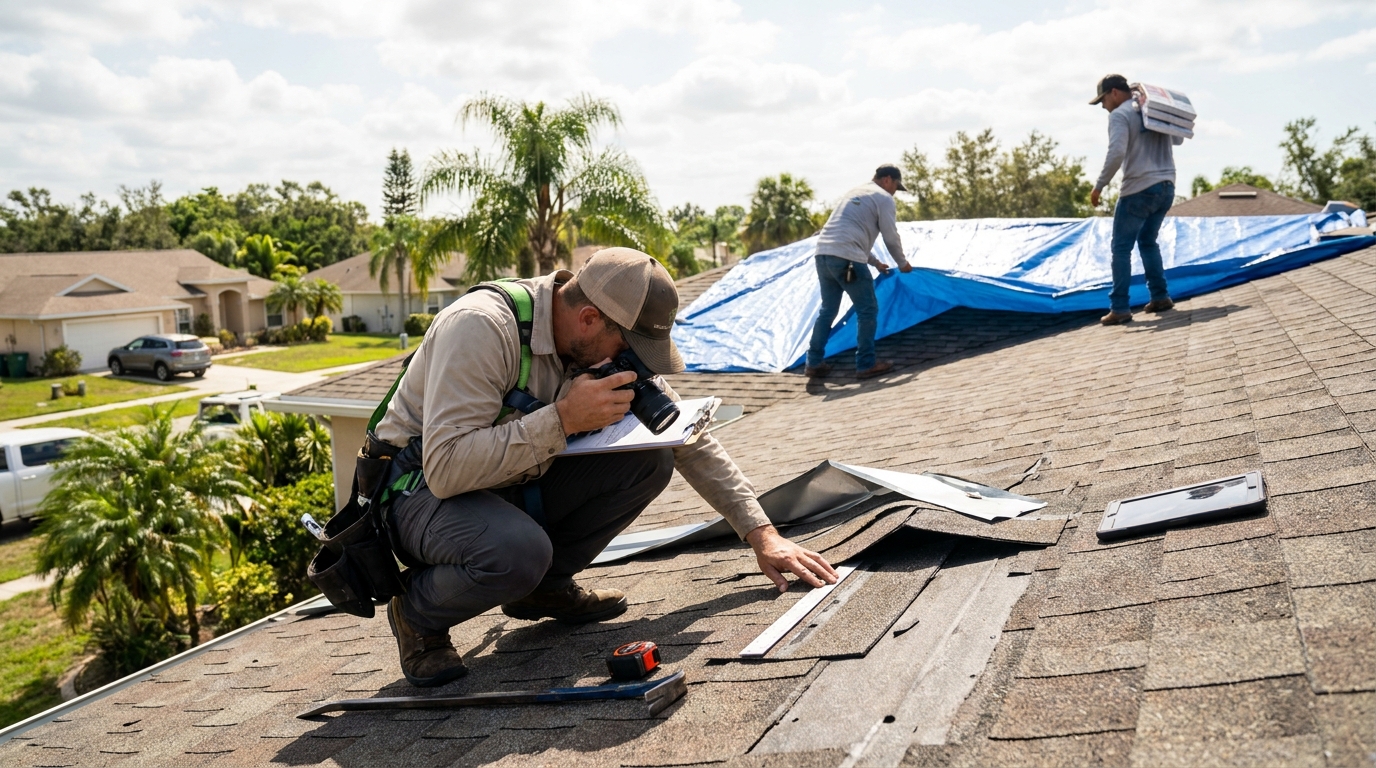
Insurance adjusters are generalists. A licensed Florida roofing contractor will spot damage an adjuster may miss — lifted nail heads, fractured tile, compromised flashing around chimneys and vents, and granule loss that signals shortened roof life.
Schedule the inspection before the adjuster arrives if possible, or arrange for your roofer to be on-site during the adjuster's visit. Homeowners across South Tampa, Carrollwood, Brandon, and Westchase routinely tell us the joint inspection is what got missing damage added to their claim.
A few things to look for when choosing who inspects your roof:
- A current Florida roofing contractor license (verify at MyFloridaLicense.com).
- Local Tampa Bay address and phone number — not an out-of-state caravan that arrived with the storm.
- Manufacturer certifications such as GAF Master Elite, which require ongoing training and proven workmanship.
- Willingness to provide a written, itemized scope.
SCM Roofing, LLC is GAF Master Elite Certified — a distinction earned by only about 2–3% of roofing contractors nationwide — and is based in the Tampa Bay area, which is one reason homeowners frequently call us for post-storm assessments. SCM Roofing's inspection includes a structural assessment, roofing material condition review, past workmanship review, and an attic and interior check, with photo documentation and a written report of prioritized repair recommendations. Customers consistently praise SCM Roofing's exceptional customer service and quality materials — that kind of track record is exactly what to look for when comparison shopping after a hurricane.
Step 6: Beware of Storm Chasers
Within 48 hours of any named storm hitting Tampa, out-of-state crews flood neighborhoods from Davis Islands to New Tampa offering same-day roof repair. Some are legitimate. Many are not.
Red flags:
- Door-to-door solicitation with pressure to sign immediately.
- Out-of-state license plates and no local office.
- Requests for large upfront cash payments.
- Offers to "waive your deductible" — this is illegal in Florida.
- Vague contracts with no scope, no materials list, and no warranty terms.
Florida law makes it illegal for a contractor to pay, waive, or rebate an insurance deductible. If someone offers it, they're telling you they're willing to break the law on your behalf — which is a preview of how the rest of the job will go.
Step 7: Understand Florida's 25% Roof Replacement Rule (and Its Recent Changes)
For years, Florida's building code required a full roof replacement if more than 25% of the roof was damaged or being repaired, even if the rest of the roof was sound. Legislative changes have modified that rule for roofs built or replaced to the current Florida Building Code — in many cases, only the damaged portion now needs replacement.
Whether your specific Tampa home qualifies depends on when the roof was last permitted and inspected. A qualified local roofer can pull permit history and tell you exactly which rule applies before you commit to a scope of work.
Step 8: Get the Permit and Do It Right
Any roof repair or replacement in the City of Tampa or unincorporated Hillsborough County requires a permit. Reputable contractors pull it under their license — never under yours. If a contractor asks you to pull an owner-builder permit for a job they're performing, walk away.
Permitted work is inspected, documented, and tied to your property record — which matters when you sell, when you renew insurance, and when the next hurricane rolls up Tampa Bay.
Frequently Asked Questions
How fast should I get a roof inspection after a hurricane in Tampa?
Within the first week if possible. Hidden moisture under shingles or tile leads to deck rot and mold quickly in Tampa's humidity — every extra week of delay raises the repair scope.
Will my insurance cover a full roof replacement?
It depends on your policy, your deductible (Florida hurricane deductibles are separate and usually higher), the age of your roof, and the extent of damage. A licensed contractor inspecting alongside the adjuster gives you the best shot at a fair settlement.
What if my roof looks fine from the ground?
Get it inspected anyway. Wind uplift, lifted fasteners, and cracked tiles often aren't visible from below. Damage you don't document within your claim window typically isn't covered later.
Can I choose my own roofing contractor or do I have to use my insurer's?
In Florida, you choose the contractor. Your insurer can recommend one, but the decision is yours.
Does SCM Roofing, LLC help with insurance documentation after storm damage?
Yes. SCM Roofing, LLC provides hurricane roof repair services that include emergency storm damage repair and insurance documentation support. Their inspection delivers photo documentation and a written report you can submit directly to your insurer or share with the adjuster during a joint inspection. Contact SCM Roofing, LLC at (855) 726-7663 or visit https://scmroofingfl.com to schedule a free inspection.
How do I verify a Tampa roofing contractor's license before hiring them after a storm?
Visit MyFloridaLicense.com and search the contractor's name or license number. SCM Roofing, LLC holds Florida state contractor license CCC1331132, held by owner Scott Marone, who holds both a Florida State General Contractor's license and a Roofing Contractor's license. Always verify before signing anything, especially in the rushed post-storm environment when storm chasers are active.
The Bottom Line for Tampa Homeowners
Hurricane roof damage in Tampa is stressful, but the path forward is straightforward: stay safe, document everything, file promptly, hire a licensed local roofer, and avoid anyone who shows up uninvited offering shortcuts. The homeowners who do well after storms are the ones who slow down for the first 48 hours, gather their evidence, and choose a contractor based on credentials rather than urgency.
SCM Roofing, LLC — rated 4.9 stars from 239 Google reviews as of April 2026 — offers free roof inspections and free estimates with no obligation. Homeowners in Tampa and across Hillsborough County who want a professional eye on storm damage can reach SCM Roofing, LLC at (855) 726-7663 or at https://scmroofingfl.com for a free inspection and a written assessment they can share with their insurer.
"