Filing a roof insurance claim in Florida means working within a specific set of state deadlines: you generally have one year from the date of loss to report a claim, 18 months for supplemental claims, and your insurer must acknowledge the claim within 7 days and pay or deny it within 60 days. For St Petersburg homeowners — where Gulf humidity, wind-driven rain, and hurricane season shape almost every claim — knowing those rules matters as much as knowing your roof.
Here is the Florida-specific process, step by step, updated for 2026.
Step 1: Document the Damage Before You Call Anyone
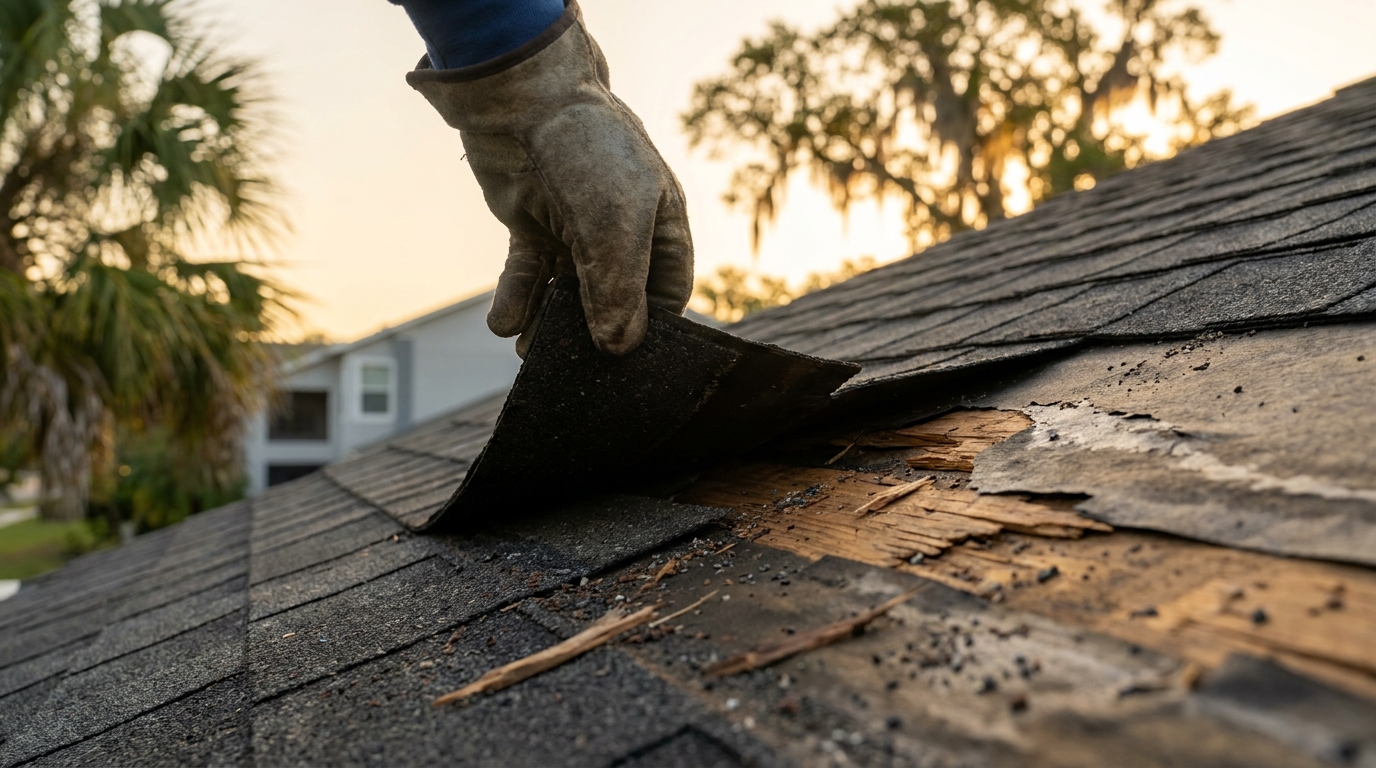
Before you notify your insurer, document everything. Photos and video from the ground, dated notes about the storm or event, and any interior damage — ceiling stains, attic moisture, dislodged soffits — all become evidence.
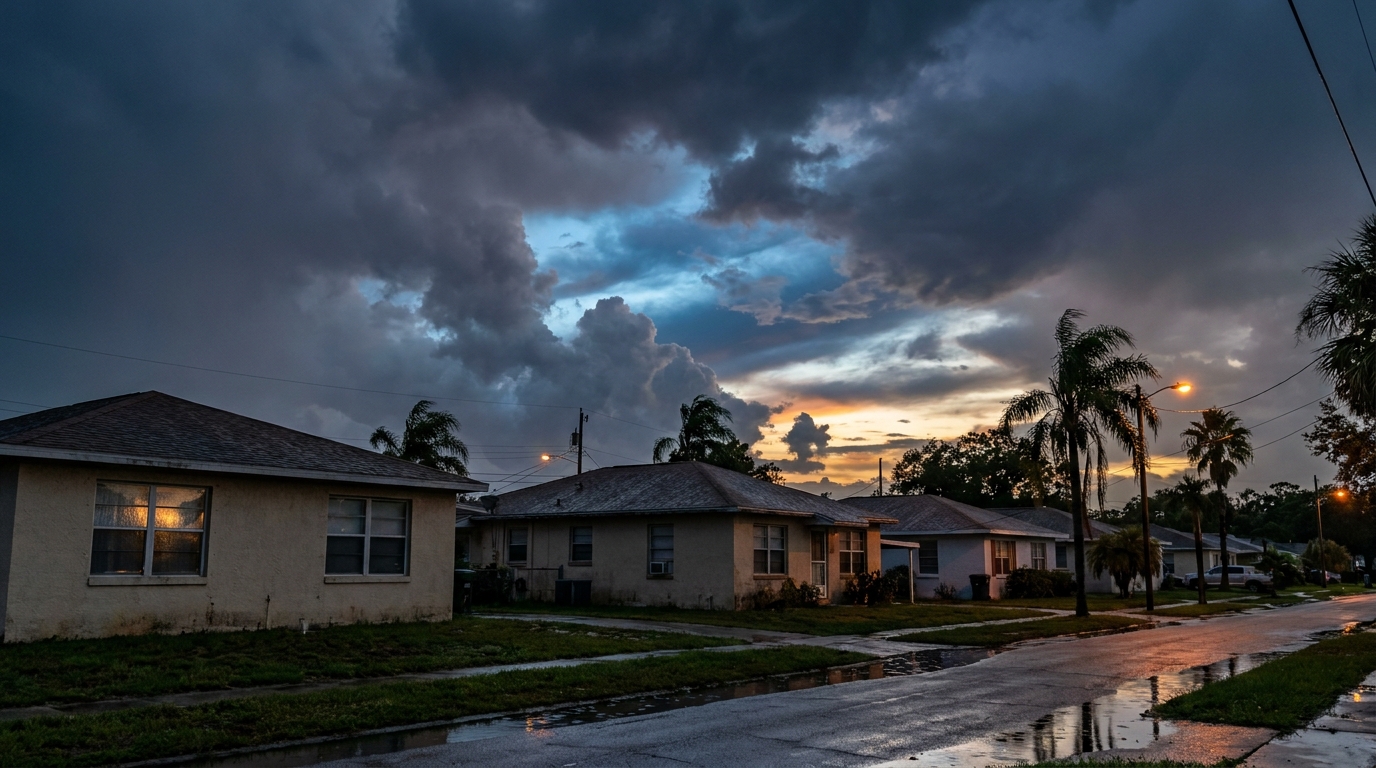
In St Petersburg, damage often traces back to a specific weather event: a named storm crossing Tampa Bay, a summer squall off the Gulf, or wind-driven rain during hurricane season. Note the date. For hurricane losses, Florida law measures your filing deadline from the date the hurricane first made landfall in Florida or first caused damage to your property, per Fla. Stat. § 627.70132.
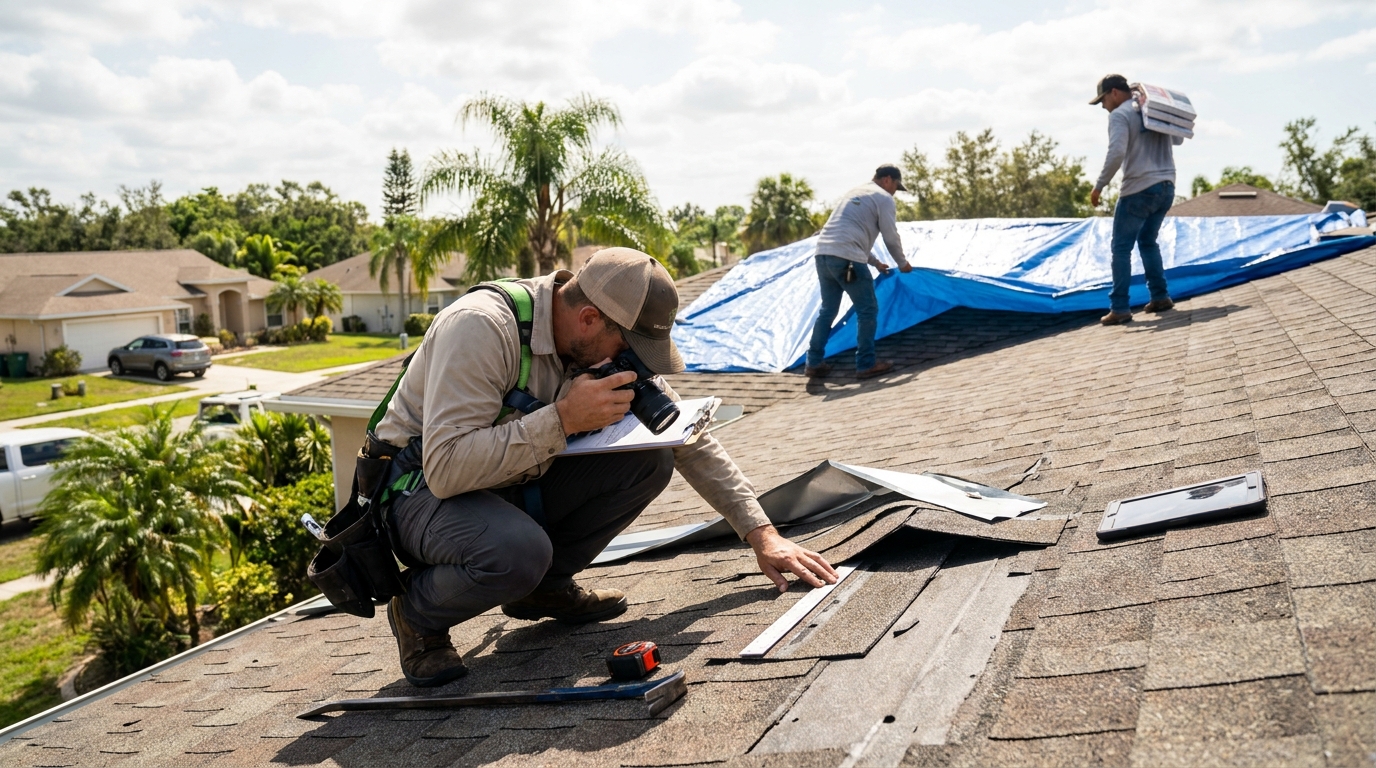
Do not climb the roof yourself. Older neighborhoods like Historic Old Northeast and Snell Isle have steep-pitch roofs and second-story elevations where a fall is a real risk. A licensed roofing contractor can perform a documented inspection safely and produce the kind of report an adjuster will actually read.
Step 2: Know Your Florida Filing Deadlines
Under Fla. Stat. § 627.70132, effective for claims governed by the current statute:
- Initial claims and reopened claims must be reported within 1 year after the date of loss.
- Supplemental claims — additional damage discovered after the initial claim — must be reported within 18 months after the date of loss.
- Hurricane claims use the date the hurricane first made landfall in Florida or first caused damage to the covered property as the starting point.
These windows are shorter than what older Florida policies allowed, and they are strict. Miss them and the insurer has a straightforward basis to deny.
Step 3: Notify Your Insurance Company in Writing
File the claim directly with your insurer — by phone to start the clock, then in writing to create a paper trail. Include your policy number, the date of loss, a description of the damage, and your documentation.
Once the insurer receives notice, Fla. Stat. § 627.70131 sets the following obligations:
- Acknowledgement: The insurer must acknowledge receipt of the claim within 7 days, unless payment is issued within that period or the delay is caused by factors beyond the insurer's control.
- Inspection: If a physical inspection is required, it must occur within 30 days after the insurer receives notice, subject to statutory exceptions.
- Payment or denial: The insurer must pay or deny the claim within 60 days after receiving notice, again subject to factors beyond the insurer's control.
Keep every letter, email, and voicemail. If your carrier misses one of these windows without a valid statutory reason, you have grounds to escalate.
Step 4: Understand What SB 2-A Changed About AOBs
You cannot sign over your roof insurance benefits to a contractor. Under SB 2-A, codified at Fla. Stat. § 627.7152, any post-loss assignment of benefits (AOB) on a residential or commercial property insurance policy issued or renewed on or after January 1, 2026 is void, invalid, and unenforceable.
This is the single biggest procedural change from the pre-reform era, and it catches St Petersburg homeowners off guard constantly. If a roofer hands you a contract that assigns your claim proceeds directly to them, that assignment has no legal effect on a post-2026 policy. The state eliminated it to curb the litigation abuse that had destabilized Florida's property insurance market.
, but at this point in 2026, the overwhelming majority of active policies have renewed at least once under the new rule.
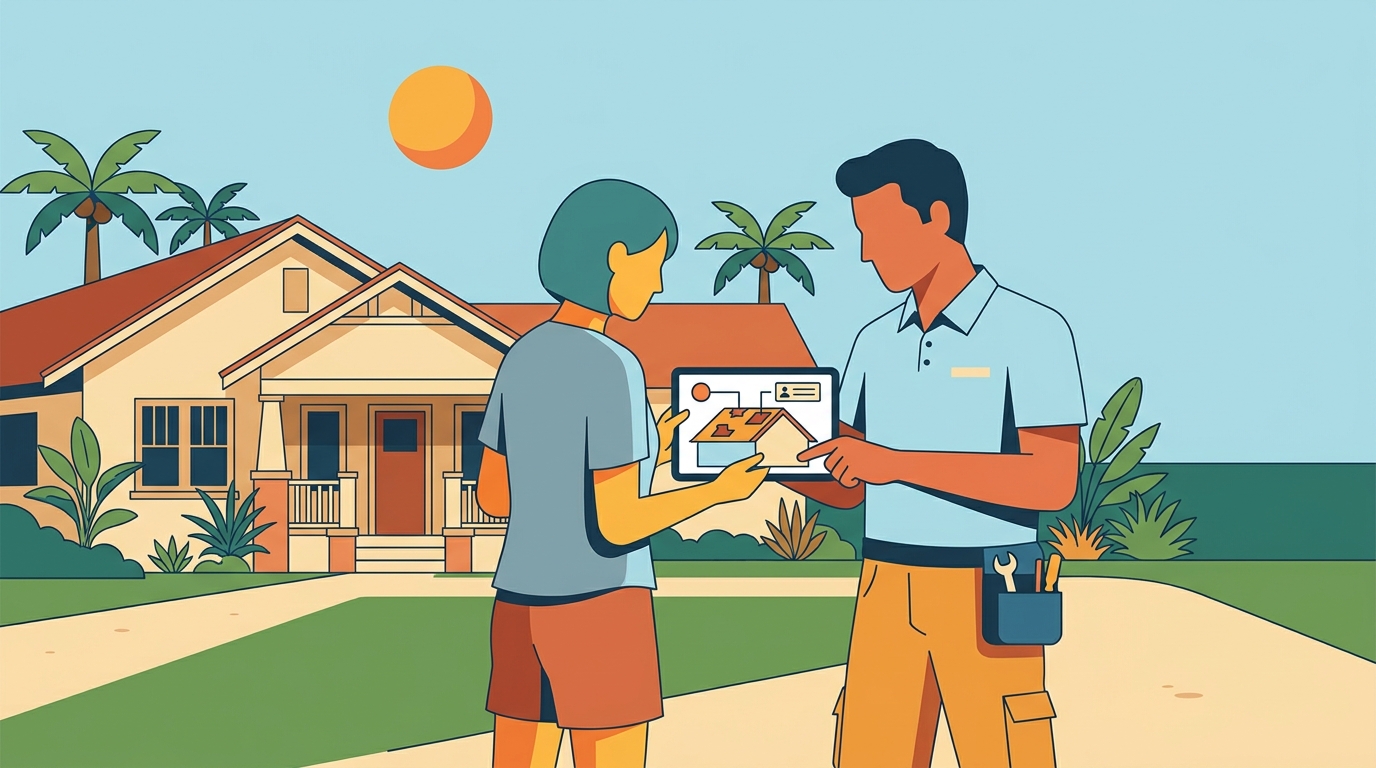
What this means practically: you — the policyholder — stay in control of the claim. A reputable roofer works alongside you, not in place of you. SCM Roofing, LLC, for example, provides documentation and estimates that support the claim while leaving the insurance relationship where the statute puts it: with the homeowner.
Step 5: Get an Independent Roof Inspection
An independent inspection from a licensed Florida roofing contractor gives you a second, documented opinion to compare against the insurer's adjuster. Adjusters have limited time and often move fast; a contractor who works on Pinellas County roofs every week sees things a general adjuster may miss — lifted shingles from a specific wind vector, hidden decking rot from Gulf humidity, damaged flashing around chimneys and skylights.
Because St Petersburg sits on a peninsula, roofs here take on wind, salt air, and UV exposure that inland Florida homes don't. Roof assemblies that meet current Florida Building Code wind requirements — including High-Velocity Hurricane Zone-adjacent standards enforced through Pinellas County building officials — may still show event-specific damage that requires expert eyes to identify.
Step 6: Review the Insurer's Determination
Once the insurer issues its decision within the 60-day window, review it carefully against your documentation and your contractor's report. Approvals may still underpay. Denials may cite exclusions that don't actually apply to your damage.
If you disagree, you have options: request a re-inspection, file a supplemental claim (within the 18-month window if new damage is found), invoke your policy's appraisal clause, or file a complaint with the Florida Department of Financial Services, which oversees insurer compliance alongside the Office of Insurance Regulation.
Step 7: Complete the Roof Repair or Replacement
Once the claim is approved, use a licensed, insured Florida roofing contractor who will pull the proper permits through the City of St Petersburg or Pinellas County, depending on your address. Florida requires permitting for most roof replacements, and unpermitted work can create title and future-claim problems.
Ask about wind mitigation features — secondary water barriers, upgraded fasteners, hip-roof geometry credits — that can lower future premiums. In a coastal market like this one, mitigation credits often pay for themselves.
Frequently Asked Questions
How long do I have to file a roof insurance claim in Florida?
One year from the date of loss for an initial or reopened claim, and 18 months for a supplemental claim, under Fla. Stat. § 627.70132. Hurricane claims run from the date the hurricane first made landfall in Florida or first caused damage to your property.
How long does my Florida insurer have to pay or deny my claim?
Sixty days after receiving notice of the claim, under Fla. Stat. § 627.70131, unless factors beyond the insurer's control prevent timely action. The insurer must also acknowledge the claim within 7 days and complete any required physical inspection within 30 days.
Can I assign my roof claim to my contractor in Florida?
What if my insurer misses the 60-day deadline?
You may have grounds to escalate, including a complaint to the Florida Department of Financial Services, unless the delay was caused by factors beyond the insurer's control as recognized under the statute. Document every communication so you can show the timeline.
Should I file before hurricane season?
File as soon as you identify damage — waiting can complicate causation and push you against the one-year deadline. If damage traces to a prior hurricane, the clock started when the storm made landfall or first caused damage in Florida, not when you noticed the leak.
The Bottom Line
Florida's roof claim process rewards homeowners who move quickly, document thoroughly, and understand that the statutory deadlines run in both directions — on you and on your insurer. The AOB prohibition means you remain the decision-maker; a good roofing contractor supports your claim rather than replacing you in it.
Homeowners in St Petersburg, FL who want a documented roof inspection and a straightforward estimate to support a claim can reach SCM Roofing, LLC at https://scmroofingfl.com for a free estimate. The information above reflects Florida statutes as of 2026 and is a general guide, not legal advice — policy-specific terms may add requirements, and a licensed Florida attorney or public adjuster is the right resource for disputed claims.