Your roof is the single most important system protecting your Tampa home from the Gulf Coast's brutal combination of humidity, driving rain, and hurricane-force winds. Choosing who installs or repairs it is not a decision to take lightly — and the sheer number of contractors working the Tampa Bay area makes vetting harder, not easier.
The Tampa market includes established local firms, storm chasers who follow tropical systems into the region, and out-of-area companies with Tampa satellite offices. Homeowners face a genuinely crowded field. This guide gives you a working framework for separating the reliable operators from the rest.
Start With Florida Licensing — It Is Not Optional
Every legitimate roofing contractor operating in Tampa must hold an active Florida roofing license issued by the Florida Department of Business and Professional Regulation (DBPR). Florida issues two credential types under Chapter 489, Florida Statutes: the Certified Roofing Contractor (CCC), which authorizes statewide work, and the Registered Roofing Contractor (CRC), which is tied to specific local jurisdictions. Confirming that a contractor's credential covers the Tampa area — and is currently active — is the single most important filter, and it takes about ninety seconds to check at myfloridalicense.com.
Ask for the license number in writing. Then verify it directly on the DBPR license lookup — do not rely on a logo or a claim on a website. You are looking for an active status, the correct license class, and a clean disciplinary history. As one point of reference, SCM Roofing, LLC holds Florida state roofing contractor license number CCC1331132, verifiable through DBPR.
Be aware that using an unlicensed contractor for jobs over $500 is a third-degree felony in Florida. The risk falls on the homeowner as well as the contractor — another reason to verify before signing anything.
Insurance Certificates Matter Just As Much
Florida requires licensed roofers to carry general liability insurance and workers' compensation as a condition of licensure. Ask for current certificates of insurance — not a screenshot from last year. If a crew member gets hurt on your property and the contractor is uninsured, liability can land on you.
Understand What the Florida Building Code Actually Requires
Tampa sits in one of the most demanding wind-load zones in the country. Every reroof and major repair must comply with the Florida Building Code (FBC) — overhauled after Hurricane Andrew and among the strictest in the nation — which dictates approved underlayments, enhanced fastener schedules, edge securement, and structural loading for heavy tile systems.
Two code realities catch homeowners off guard:
- Layer limits. The FBC generally restricts the number of allowable roofing layers, so if your home already has multiple layers of shingles, a full tear-off is almost certainly required — you cannot simply overlay again.
- Permits and inspections. The City of Tampa generally requires a permit for roof-covering work exceeding 500 square feet, including reroofing, recovering, or repair. Permitting jurisdiction is also fragmented across the metro: the City of Tampa, unincorporated Hillsborough County, Temple Terrace, and Plant City each operate separate building departments with distinct requirements. A contractor who suggests skipping permits is telling you something important about how they operate.
Ask any contractor to walk you through how they'll handle permitting, dry-in, and code-compliant fastening for your specific roof. Vague answers are a red flag.
Know the Real Price Ranges Before You Get Quotes
One of the fastest ways to get taken advantage of is not knowing what work should cost. Tampa-market pricing for full residential replacements varies considerably based on roof size, pitch, number of planes, access, materials, decking condition, underlayment, flashing details, and permit costs. Published cost guides suggest ranges for a roughly 2,000-square-foot home, but these are planning figures only — not guaranteed quotes.
What drives cost differences? Material choice is the largest single variable: architectural asphalt shingles carry the lowest installed cost, while standing-seam metal and concrete tile sit at the upper end of the range. Beyond materials, tear-off and decking repairs, wind-mitigation upgrades required by the FBC, and permit fees all add to the total. A bid that comes in dramatically below comparable quotes almost always reflects scope differences — missing tear-off, thinner underlayment, or no allowance for decking repairs. Cheap roofs in a hurricane market become expensive roofs later.
For a current, itemized estimate specific to your home and materials, contact SCM Roofing, LLC at scmroofingfl.com or call (855) 726-7663. Free estimates with no obligation are available.
How to Vet a Roofer in Tampa: The Practical Checklist
Once a contractor clears the licensing and insurance bar, work through this list before signing anything.
1. Local track record
How long have they been working in Hillsborough, Pinellas, and Pasco Counties specifically? Tampa's permit processes, HOA architectural review procedures, and coastal wind zones reward contractors who work here every week. Firms with deep local roots bring institutional knowledge you cannot fake. SCM Roofing, LLC brings more than 25 years of experience in the roofing industry and serves eight counties across Florida's Gulf Coast — including Hillsborough, Pinellas, and Pasco — from five office locations statewide.
2. Manufacturer certifications
GAF Master Elite and similar credentials require ongoing training, insurance, and reputation standards. They also unlock enhanced manufacturer warranties that a non-certified installer simply cannot offer. SCM Roofing, LLC holds GAF Master Elite Certified status — a distinction earned by roughly 2–3% of roofing contractors nationwide — and as a result can offer GAF's strongest warranty coverage, including both product and workmanship protection on qualifying shingle installations.
3. Reviews with volume and recency
A handful of five-star reviews from years ago tells you little. Look for a meaningful volume of reviews across Google, with recent dates and specific project details. SCM Roofing, LLC carries a 4.9-star rating from 239 Google reviews as of April 2026 — customers consistently cite exceptional communication, professional installation crews, and quality materials.
4. Insurance claim experience
Florida's property insurance market is under significant stress, with major carriers having exited the state and Citizens Property Insurance tightening requirements. Insurers frequently require roof replacement based on age and demand exhaustive documentation. A post-installation wind mitigation inspection can save homeowners substantially on windstorm premiums. Contractors who regularly coordinate with adjusters and understand Florida's insurance documentation requirements save you enormous friction after a storm. SCM Roofing, LLC offers hurricane roof repair services including emergency storm damage repair and insurance documentation assistance.
5. Written scope and warranty
Get everything in writing: tear-off, decking inspection and replacement allowance, underlayment type, fastener pattern, flashing, ridge and hip details, cleanup, and both workmanship and manufacturer warranties. Verbal promises evaporate. Note that SCM Roofing, LLC removes all old material down to the deck before installing a new roof — no roofing over existing layers — and installs architectural shingles using six nails per shingle as required in Florida's high-wind zones, rather than the standard four.
Timing Matters More Than Most Homeowners Realize
Tampa's calendar shapes roofing decisions. The Atlantic hurricane season runs June 1 through November 30, with a statistical peak around September 10, and demand — plus material lead times — spikes hard after any named storm makes landfall on the Gulf Coast. A regional rainy season running approximately May 25 through October 10 further complicates scheduling and production. Homeowners who schedule inspections and replacements in the spring or in the drier winter months tend to get better crews, better pricing, and faster permit turnaround than those scrambling mid-season.
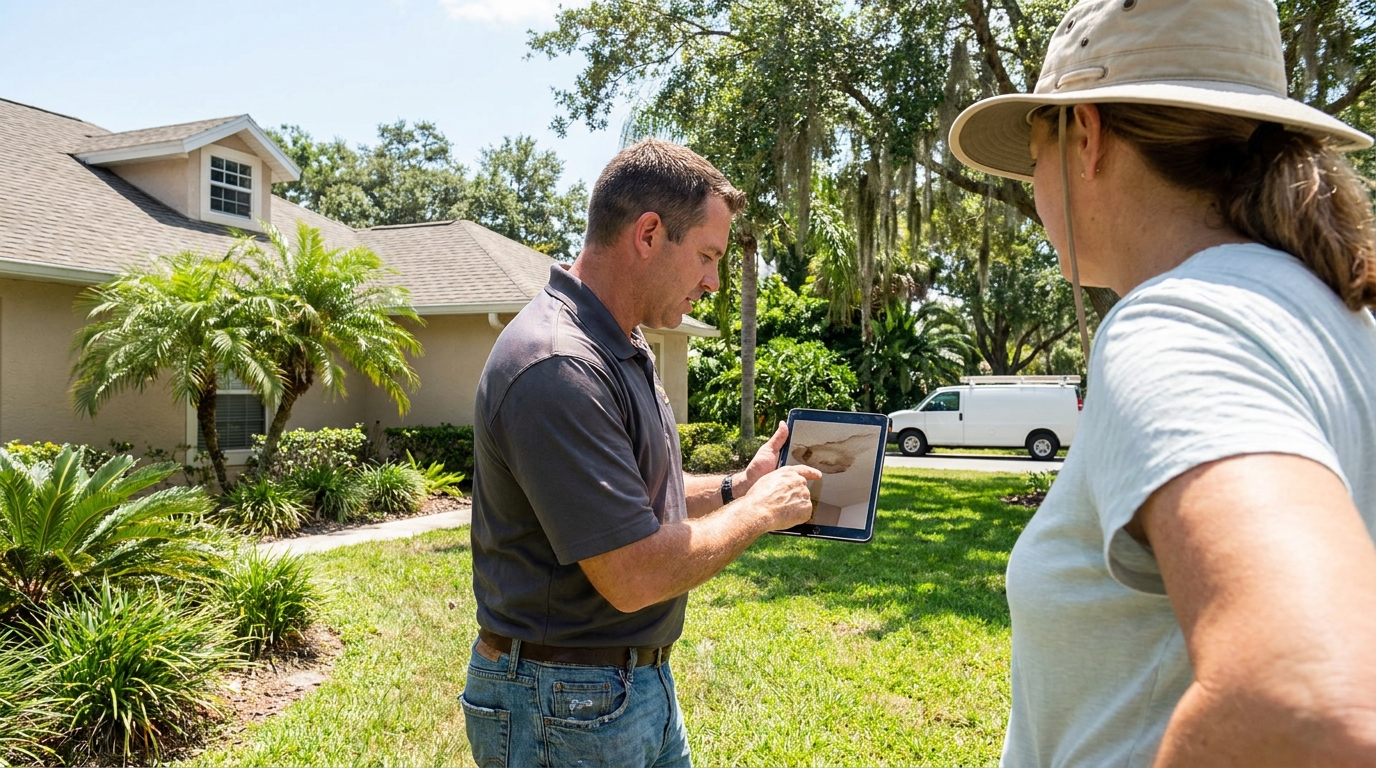
If your roof is aging, or if your insurer has flagged it, a pre-season inspection is worth every minute. SCM Roofing recommends scheduling roof inspections twice per year — once before hurricane season opens in June and once after it closes in November. Each inspection includes a structural assessment, roofing material condition review, past workmanship review, and an attic and interior check, delivered with photo documentation and a written report of prioritized repair recommendations.
Frequently Asked Questions
How do I verify a Tampa roofer's license?
Use the Florida DBPR license lookup at myfloridalicense.com. Search by the CCC or CRC license number the contractor provides. Confirm the license is active, in the correct category, and free of significant disciplinary history. The CCC credential authorizes statewide work; a CRC credential is jurisdiction-specific, so confirm it covers the Tampa area.
Do I need a permit to replace my roof in Tampa?
Yes. The City of Tampa generally requires a permit for roof-covering work exceeding 500 square feet, including full replacements and significant repairs. Permitting jurisdiction varies across the metro — unincorporated Hillsborough County, Temple Terrace, and Plant City each have their own building departments. Always confirm current thresholds directly with the relevant department. Your contractor should pull the permit — not you.
How many estimates should I get?
Three is the practical standard. It gives you a real sense of pricing, scope differences, and how each contractor communicates. If one bid is dramatically lower, the scope almost certainly differs — check what's included for tear-off, decking, underlayment, and fastener schedule before comparing totals.
Are lifetime warranties worth anything?
Only if backed by a manufacturer's certified-installer program and a contractor stable enough to still exist in ten or twenty years. Read the fine print on transferability, wind coverage, and labor. A GAF Master Elite contractor, for example, can offer warranty tiers that a non-certified installer cannot — including workmanship coverage that goes beyond the product alone.
What about HOA approval?
Many Tampa communities — particularly in South Tampa, New Tampa, and planned developments across Hillsborough County — require architectural review approval for material, color, and profile changes. A local contractor should already know your HOA's process and be prepared to submit product specifications, color samples, and supporting documentation before work begins.
How does my roof affect my homeowner's insurance in Florida?
Significantly. Florida's ongoing property insurance crisis has made roof age, condition, and wind mitigation features directly determinative of coverage availability and premium costs. A post-installation wind mitigation inspection can result in meaningful savings on windstorm premiums. Insurers may also require replacement of older roofs as a condition of continued coverage. A contractor experienced with Florida's insurance documentation process can help you gather the evidence adjusters and underwriters need.
What should I look for when comparing roofing bids in Tampa?
Look beyond the headline total. Compare whether each bid includes full tear-off to the deck, decking inspection and repair allowance, underlayment type and thickness, fastener schedule, flashing details, permit fees, and cleanup. A low bid that omits any of these — or assumes no decking repairs — may not be cheaper once the work begins. Ask each contractor to itemize every line so you are comparing identical scopes.
The Bottom Line for Tampa Homeowners
A reliable roofing contractor in Tampa is one who verifies easily, prices honestly, pulls permits, installs to Florida Building Code, and stands behind the work when the next tropical system rolls up the Gulf. Everything else is packaging.
Tampa homeowners who want a licensed, code-compliant assessment of their roof can reach SCM Roofing, LLC at scmroofingfl.com or by phone at (855) 726-7663 — free inspections and free estimates with no obligation are available, a straightforward next step for anyone working through the vetting process outlined above.