If you own a home anywhere from South Tampa to New Tampa, you already know the drill: hurricane season runs June 1 through November 30, and the Gulf Coast gives you a narrow window to get your roof ready. The question isn't whether a storm will test your home this year — it's whether your roof is in shape to handle it when one does.
This checklist walks through what hurricane roofing preparation in Tampa actually involves, from the inspection steps you can do this weekend to the structural details a professional should verify before the first named storm forms in the Gulf.
Why Tampa Roofs Need Hurricane-Specific Prep
Tampa's combination of intense UV exposure, daily summer thunderstorms, salt air along the bay, and the constant threat of tropical systems puts roofs through more stress than almost any other U.S. market. Asphalt shingles age faster here. Sealant strips dry out. Fasteners corrode. By the time a Category 2 brushes the coast, a roof that looked fine in March can shed shingles in a 90 mph gust.
Florida's building code — strengthened significantly after Hurricane Andrew and updated again in recent code cycles — requires specific wind-uplift ratings, secondary water barriers, and re-nailing of the roof deck when more than 25% of a roof is replaced. Hillsborough County permits and inspects this work, and skipping the permit step can complicate your insurance claim after a storm. That's worth knowing before any contractor tells you a job is "too small to pull a permit on."
Your Tampa Hurricane Roof Checklist
1. Schedule a Pre-Storm Roof Inspection
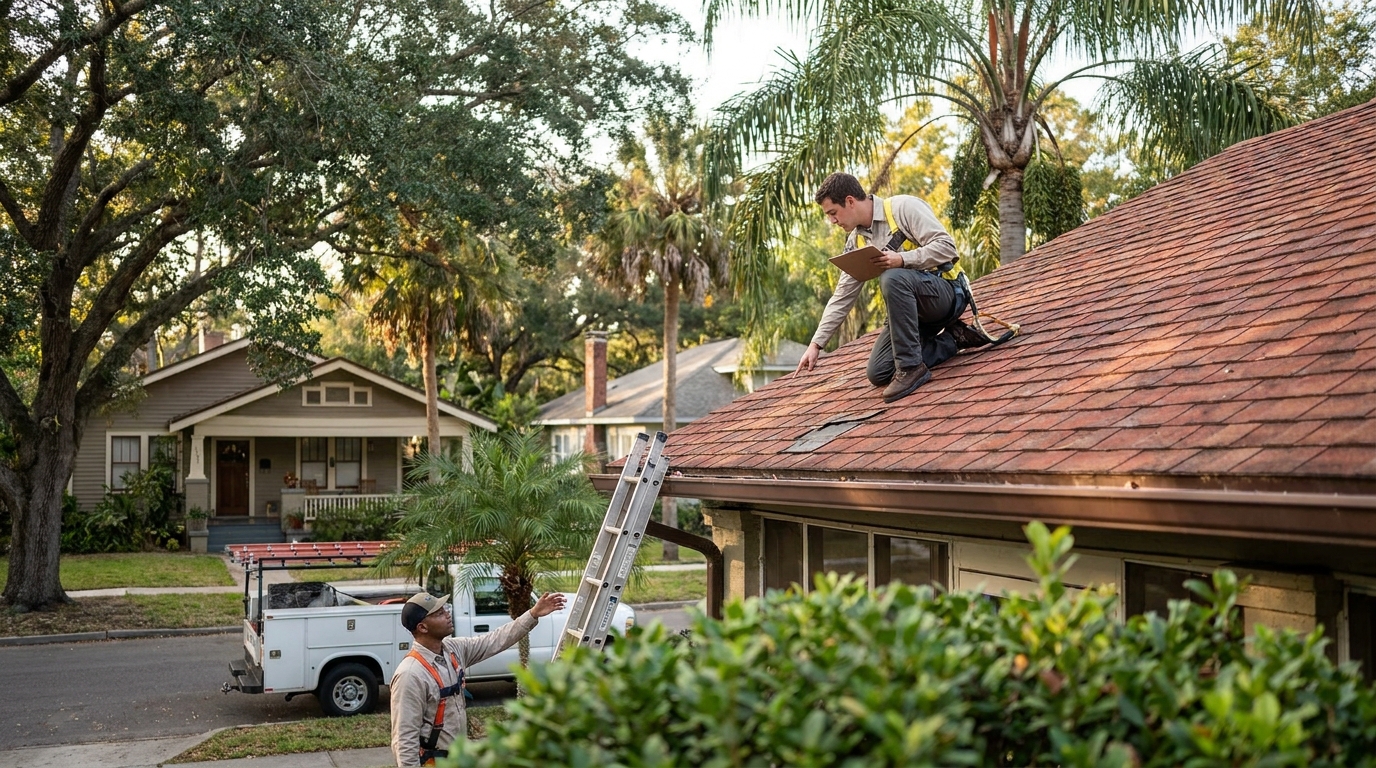
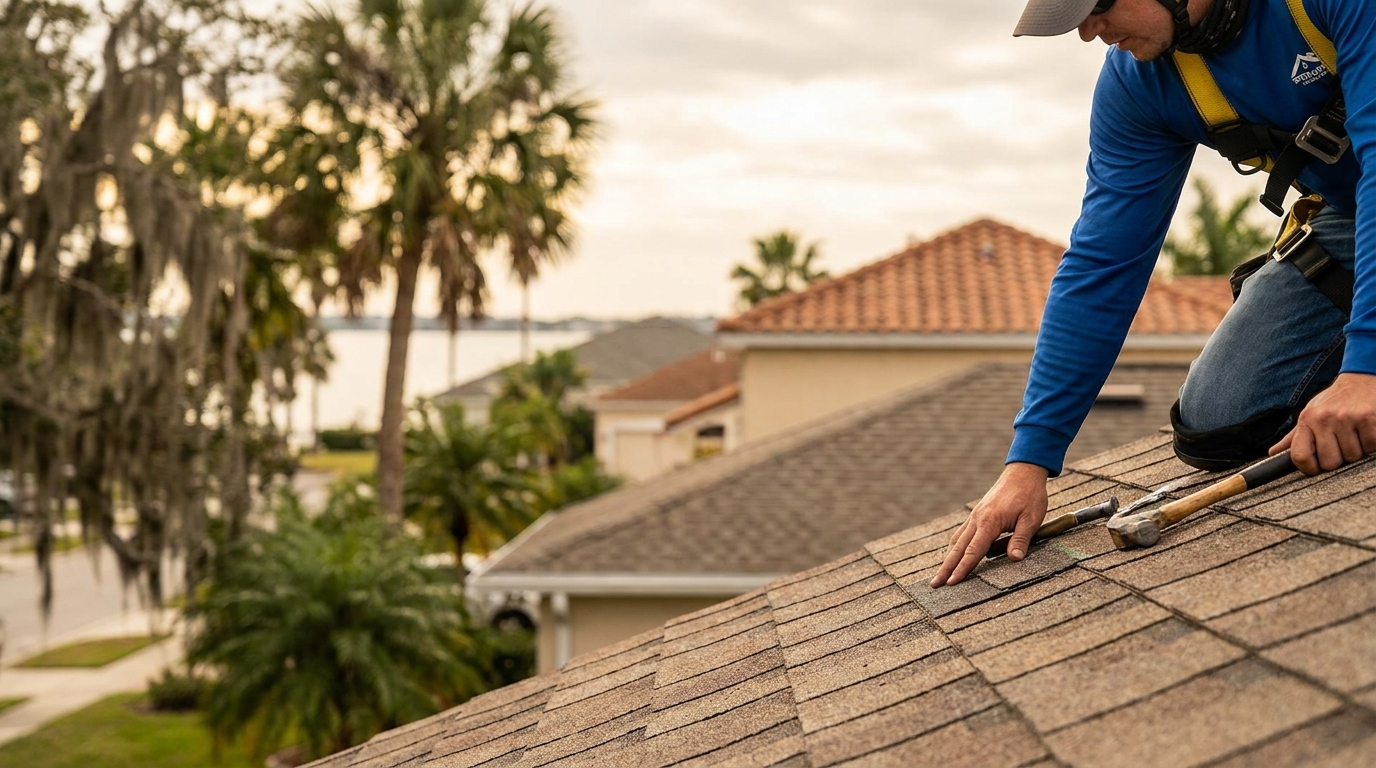
The single most important item on this list is a thorough pre-storm roof inspection — ideally completed by late May, before the season opens. A good inspector will get on the roof (not just look from the ground or a drone) and check:
- Shingle condition, granule loss, and lifted or curling edges
- Sealant strip bonding on every course
- Flashing around chimneys, skylights, vents, and wall transitions
- Soft spots in the decking, especially around valleys
- Soffit and fascia integrity (these are often the first failure point in high wind)
- Ridge vent and roof vent attachment
- Gutter fastening and downspout drainage paths
Many Tampa roofing companies, including SCM Roofing, offer free inspections this time of year. If you haven't had eyes on your roof since last hurricane season, this is the place to start.
2. Replace Aging or Damaged Shingles Now
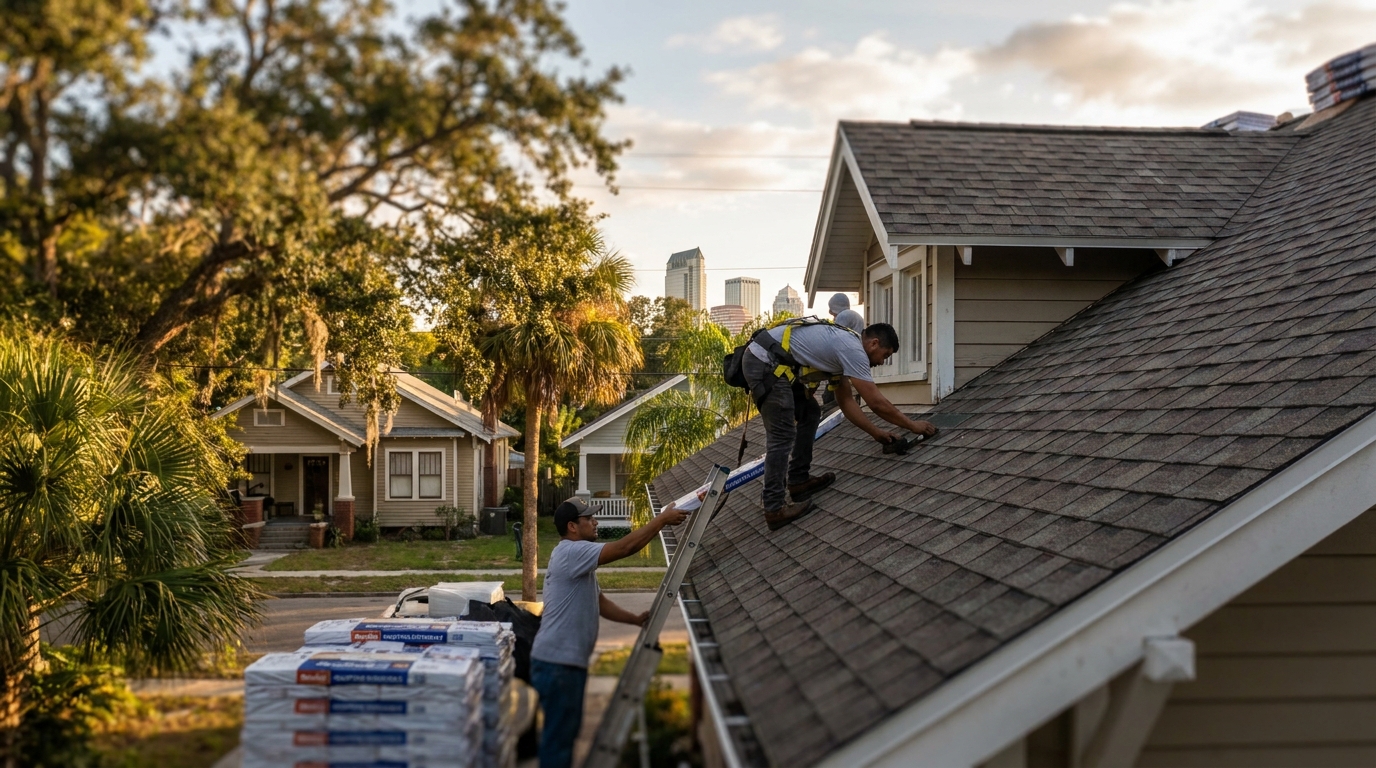
If your roof is past 15 years old and wearing 3-tab shingles, you're working on borrowed time. Architectural shingles rated for 130 mph wind uplift (or higher) are the current standard for new installations in Hillsborough County, and the difference in storm performance is significant. Don't wait until you see daylight through the attic — by then, water damage has usually already started.
3. Check and Reinforce Roof-to-Wall Connections
Older Tampa homes — particularly the 1950s and 60s block houses common in Seminole Heights, Palma Ceia, and parts of Town 'N' Country — were built before modern hurricane strapping requirements. A wind mitigation inspection will tell you whether your roof is attached with clips, single wraps, or double wraps. Upgrading these connections can meaningfully reduce uplift risk and, in many cases, lower your wind insurance premium.
4. Clear Drains, Gutters, and Surrounding Trees
Standing water on a low-slope section is one of the fastest ways to fail a roof during a tropical system that stalls and dumps 10+ inches of rain — which, around Tampa Bay, happens more often than people remember. Clear gutters and downspouts, confirm scuppers drain freely, and trim back any branches within six feet of the roof. Live oaks and laurel oaks are beautiful neighborhood trees, and they're also the source of half the debris damage we see after every storm.
5. Document Everything Before the Season
Take dated photos of your roof from multiple angles, save your most recent inspection report, and keep a copy of any roofing permits and wind mitigation reports somewhere accessible (cloud storage, not just the file cabinet). If you do file a claim later, this documentation is the difference between a smooth settlement and a months-long argument with an adjuster.
6. Know Your Insurance Wind and Hurricane Deductibles
Florida policies typically carry a separate hurricane deductible — often 2%, 5%, or 10% of dwelling coverage — that only triggers when the National Hurricane Center names a storm affecting your area. Pull your policy now and confirm the number. A $400,000 home with a 5% hurricane deductible means $20,000 out of pocket before insurance pays a dollar. That changes how you think about preventive repairs.
What to Do If a Storm Is Already in the Forecast
Once a system enters the Gulf with Tampa in the cone, your options narrow fast. Reputable roofers stop scheduling new work 48–72 hours before landfall to focus on emergency tarping for existing clients. If you have a known issue — a missing shingle, exposed flashing, a soft spot — get it addressed before the cone tightens, not after.
For temporary protection, a properly installed tarp (anchored with furring strips into the decking, not just weighted down) can buy you time. It's not a repair, and it won't hold through sustained tropical-storm-force winds, but it can prevent interior water damage during the first wave of rain bands.
Frequently Asked Questions
How often should I have my roof inspected in Tampa?
At minimum, once a year — and ideally before hurricane season each spring. Tampa's climate ages roofs faster than the national average, and small issues found in May are far cheaper than emergency repairs in September.
Does homeowners insurance cover hurricane roof damage in Florida?
Generally yes, but subject to your separate hurricane deductible and the roof's condition at the time of loss. Insurers increasingly inspect roof age and condition before renewal, and policies for roofs over 15–20 years old can be harder to obtain or may carry roof-specific limitations. A current inspection report helps on both fronts.
What's the difference between a wind mitigation inspection and a regular roof inspection?
A wind mitigation inspection documents specific construction features — roof shape, deck attachment, roof-to-wall connections, opening protection, and secondary water resistance — for insurance discount purposes. A roof inspection evaluates current condition and remaining service life. Many Tampa homeowners benefit from both.
Can I file an insurance claim for an older roof that fails in a hurricane?
You can file, but outcomes vary based on policy language, roof age, maintenance history, and the specific cause of damage. This is another reason pre-season documentation matters — proving the roof was in sound condition before the storm strengthens your position.
Getting Help Before the Season Starts
The Tampa homeowners who fare best in hurricane season are the ones who treated May as preparation month, not June. A pre-storm inspection, a few targeted repairs, and current documentation can turn what would have been a catastrophic claim into a minor one — or prevent the damage entirely.
Homeowners in Tampa who want this handled professionally can reach SCM Roofing, LLC at https://scmroofingfl.com for a free inspection and estimate. The company is GAF Master Elite Certified and works throughout Hillsborough County, and its 4.9★ rating across more than 230 Google reviews reflects the kind of communication and follow-through that matters most when the forecast turns serious.