The right roofing company in Tampa, FL is a licensed, insured contractor with verifiable local experience, a working knowledge of the Florida Building Code, and a track record of standing behind hurricane-rated installations after the storm passes. Everything else — pricing, materials, warranty terms — flows from that foundation.
Tampa's roofing market is crowded, and for good reason. Between Gulf Coast hurricane exposure, year-round humidity, and intense UV that quietly shortens the life of every shingle, roofs here work harder than roofs in most of the country. This guide walks through what actually separates a reputable Tampa roofer from the truck that showed up in your driveway the day after a storm.
Start With the License — Then Verify It
Every legitimate roofing contractor in Florida holds a state-issued license, and you can verify it in about two minutes. The two license types you'll see most often on Tampa roofs are CCC (Certified Roofing Contractor) and CGC (Certified General Contractor), both issued through the Florida Department of Business and Professional Regulation (DBPR).
Reputable local firms publish their license numbers openly. Bill Shields Roofing on East 7th Avenue lists license #CCC056926. Reese Roofing, out of Brandon, publishes CGC1538138 and CCC1334825. JA Edwards of America Roofing lists CGC1534283 and CCC1334804. If a company can't or won't give you a license number, that's the end of the conversation.
Confirm the license is active, confirm it belongs to the entity actually signing your contract, and confirm the contractor carries both general liability and workers' compensation coverage. Ask for certificates naming you as the certificate holder — a courtesy any established Tampa contractor will provide without pushback.
Look for Real Tampa Bay Experience
Local experience matters more in Tampa than in almost any market in the country, because the failure modes here are specific: wind uplift, wind-driven rain intrusion, saturated underlayment from tropical systems, and heat degradation on south-facing slopes. A roofer who has spent decades working across Hillsborough, Pinellas, and Pasco counties has seen how each of those failures presents — and, more importantly, how to prevent them on the next install.
Longevity is a reasonable proxy. Bill Shields Roofing has been family-run since 1950, now in its third generation. Bay to Bay Roofing has more than 30 years in the Tampa Bay area. That kind of tenure means the company has weathered multiple named storms and the insurance cycles that follow them — and is still around to honor warranties.
SCM Roofing, LLC works within that same local context, focusing on roof systems built specifically for Gulf Coast conditions rather than the boilerplate specs a national chain might apply anywhere.
Understand the Florida Building Code — At Least the Parts That Affect You
The Florida Building Code (FBC) is what turns a "good" roof into a code-compliant one, and Tampa contractors work under some of the strictest wind-load and uplift requirements in the country. That's not bureaucratic overhead — it's the reason roofs in South Tampa and along the Pinellas coast are still on the house after a Category 2 blows through.
The FBC dictates specific requirements for:
- Wind-load and uplift resistance ratings on shingles, tile, and metal panels
- Underlayment type and attachment (self-adhered underlayments are common on Tampa reroofs)
- Flashing details at valleys, penetrations, and wall intersections
- Fastening patterns — nail count, nail placement, and ring-shank requirements in high-wind zones
Roof replacements and most major repairs require permits from either the City of Tampa or Hillsborough County building department, plus inspections at defined stages. A contractor who suggests skipping the permit to "save you money" is a contractor to walk away from. Unpermitted work becomes your problem at resale, at insurance renewal, and after the next claim.
Manufacturer Certifications Are a Useful Filter
GAF Master Elite status is the credential you'll see most often on quality Tampa roofers — it's held by less than a small fraction of roofing contractors nationally and requires ongoing training, licensing verification, and insurance minimums. Firms that carry it locally include JA Edwards of America Roofing, Baldwin Roofing Company (also a GAF Gold Elite Commercial Contractor), and Arry's Roofing Services in nearby Tarpon Springs, which holds GAF President's Club recognition and a 4.8 Google rating across 1,709 reviews.
Certification isn't the only marker of quality, and plenty of excellent Tampa roofers work with other manufacturers. But when you see Master Elite or a similar tier-one certification, it means the manufacturer has vetted the contractor's licensing, insurance, and installation record — work you'd otherwise have to do yourself.
What Roofs Actually Cost in Tampa Right Now
Residential roof replacement in Tampa generally runs between $8,000 and $25,000 or more, according to pricing guidance published by a local Tampa Bay roofer. The range is wide because the variables are wide:
- $8,000 – $12,000: Smaller home, standard architectural asphalt shingles, simple roof geometry
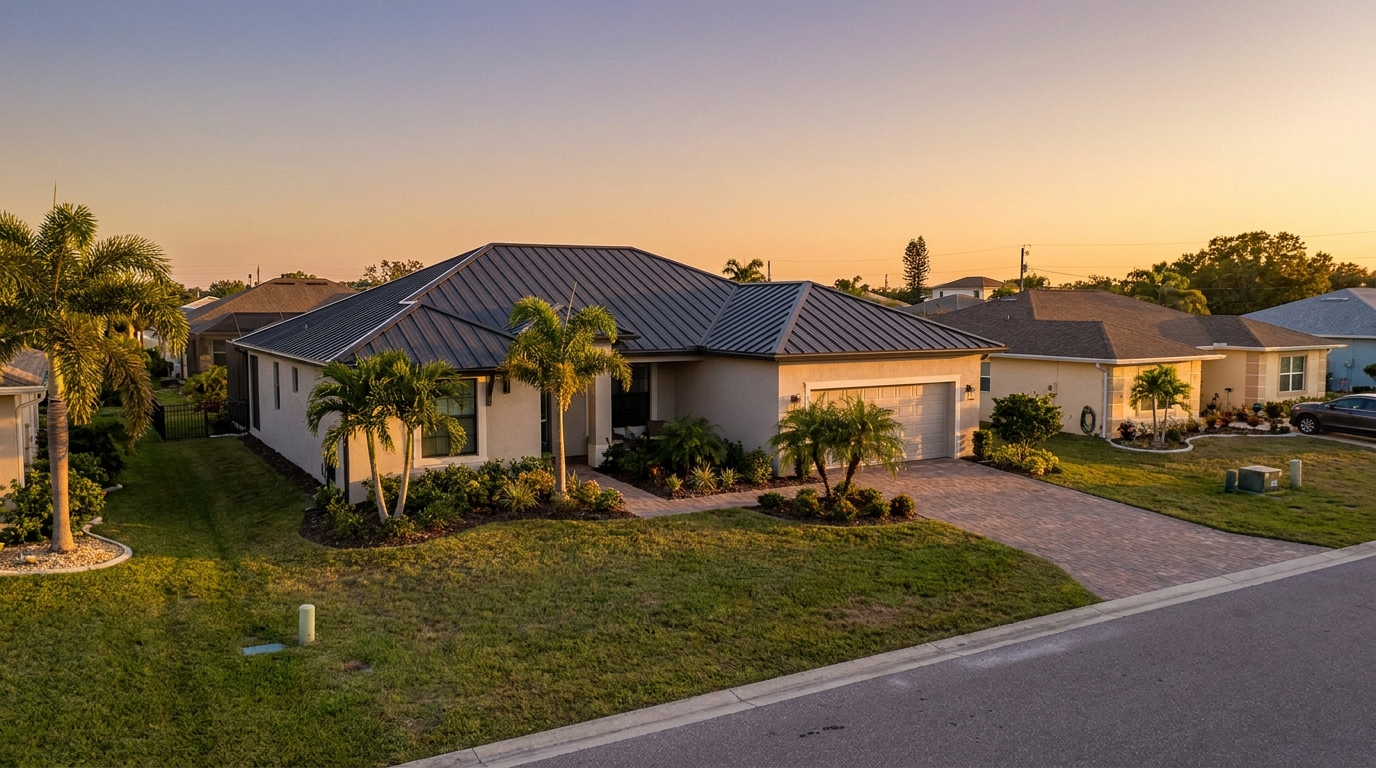
- $20,000 – $25,000+: Larger home, tile or premium metal, complex roofline with multiple valleys, dormers, and penetrations
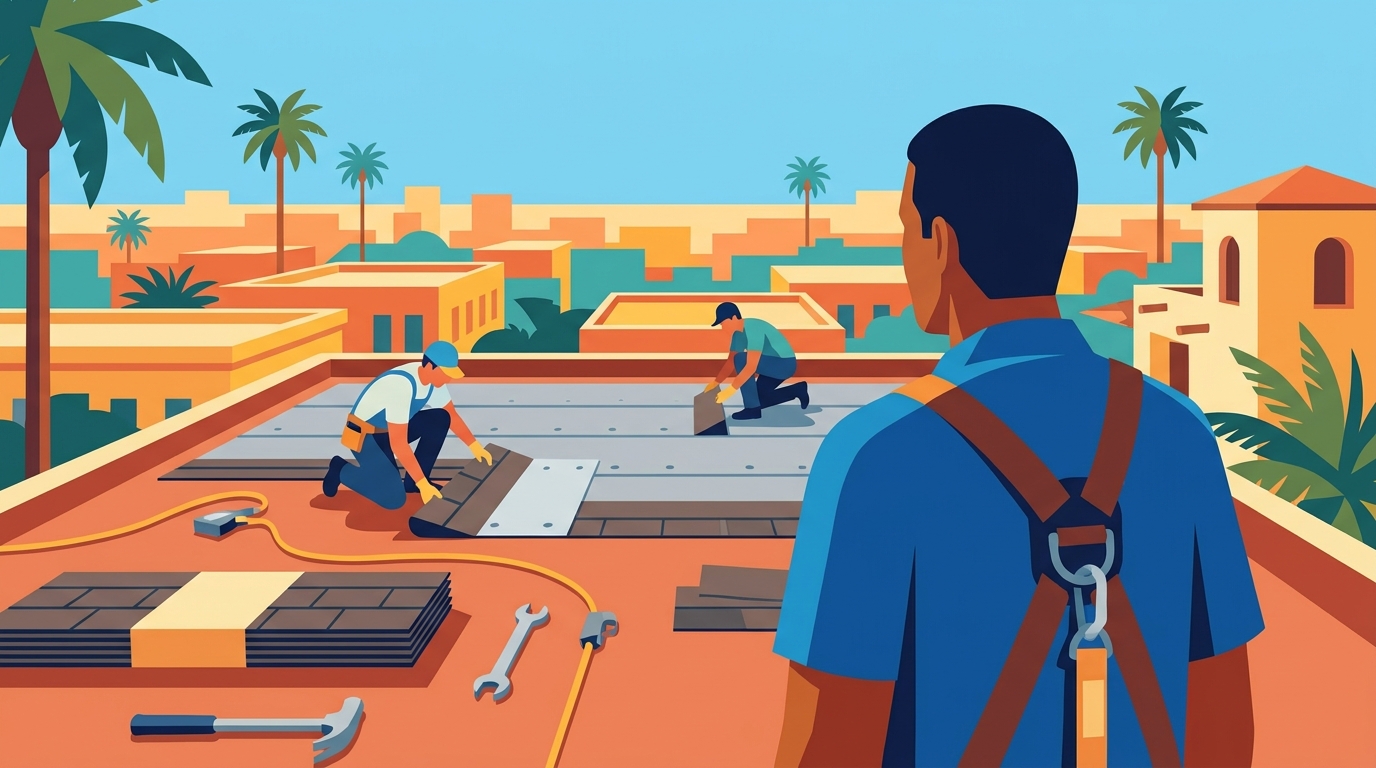
Commercial and flat roof systems — TPO, modified bitumen, elastomeric coatings — vary too widely by square footage and system type to quote in ranges. Any commercial estimate should come from a site visit, not a phone call.
A quote that comes in dramatically below the market floor usually means something is missing: cheaper underlayment, a shorter warranty, fewer fasteners per shingle, or a subcontractor crew the company you signed with will never meet. Bids in the same ballpark, itemized in similar language, are the ones worth comparing.
The Storm Chaser Problem
After every major storm, out-of-state crews descend on Tampa Bay to sign contracts, collect deposits, and leave. Some do adequate work; many don't; either way, they're gone when the warranty claim shows up two years later. The tells are consistent:
- Out-of-state license plates and no local office you can visit
- Door-knocking within 48 hours of a storm
- Pressure to sign an "assignment of benefits" before an adjuster has seen the roof
- Deposits demanded in cash or by wire before permits are pulled
- Vague or missing license numbers on the contract
The counter-signal is simple: a physical Tampa-area address, a Florida license you can look up on DBPR, and a willingness to walk you through the insurance claim without taking control of it.
Insurance Claim Support Matters More Here Than Almost Anywhere
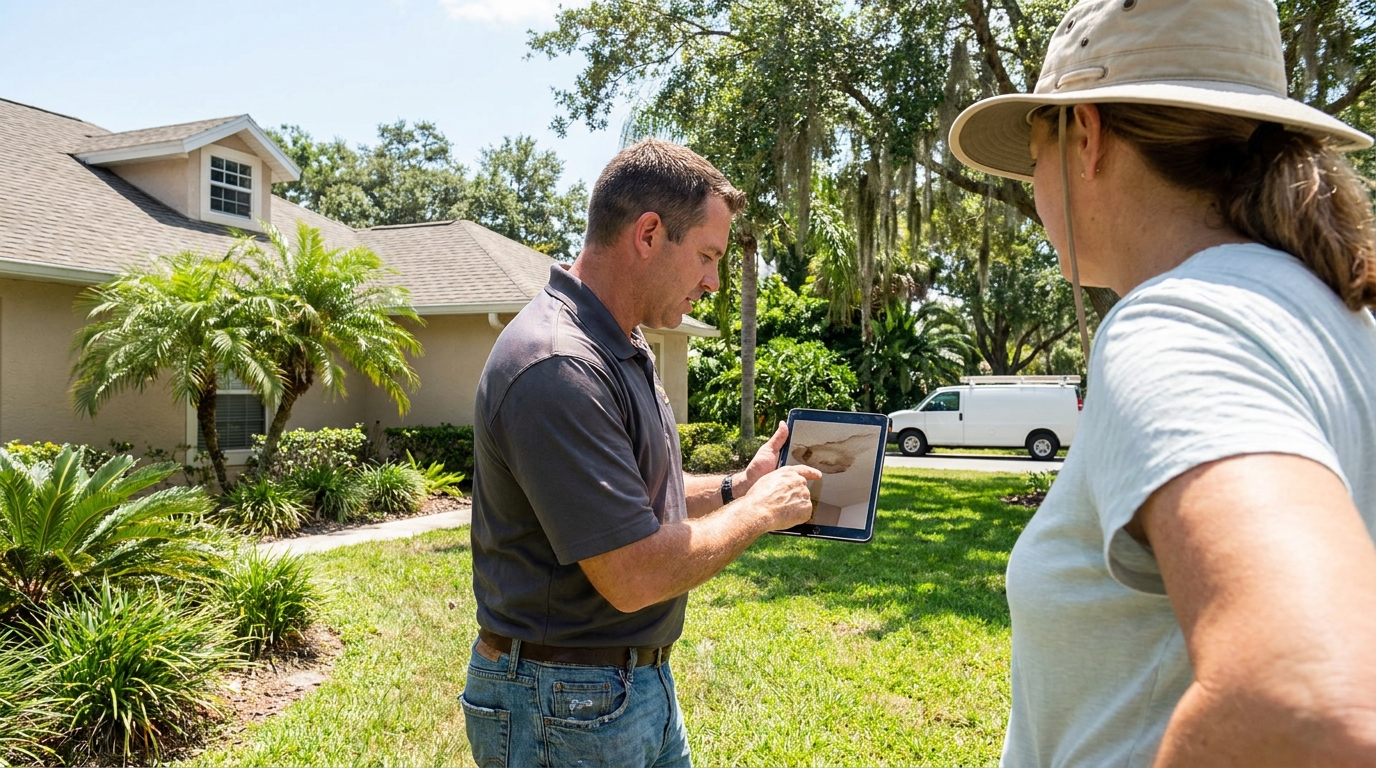
Given hurricane and tropical storm exposure, most Tampa homeowners will file at least one roof claim during ownership. Contractors experienced in adjuster coordination, damage documentation, and code-upgrade coverage can materially change the outcome — not by inflating claims, but by making sure legitimate damage is documented properly the first time.
Ask any prospective contractor how they handle claims, whether they meet the adjuster on site, and how they document code-required upgrades (which are often reimbursable under Florida policies). "We'll handle everything, just sign here" is not the answer you want. "We coordinate with your adjuster and document the scope, but you stay in control of the claim" is.
Frequently Asked Questions
How long does a roof replacement take in Tampa?
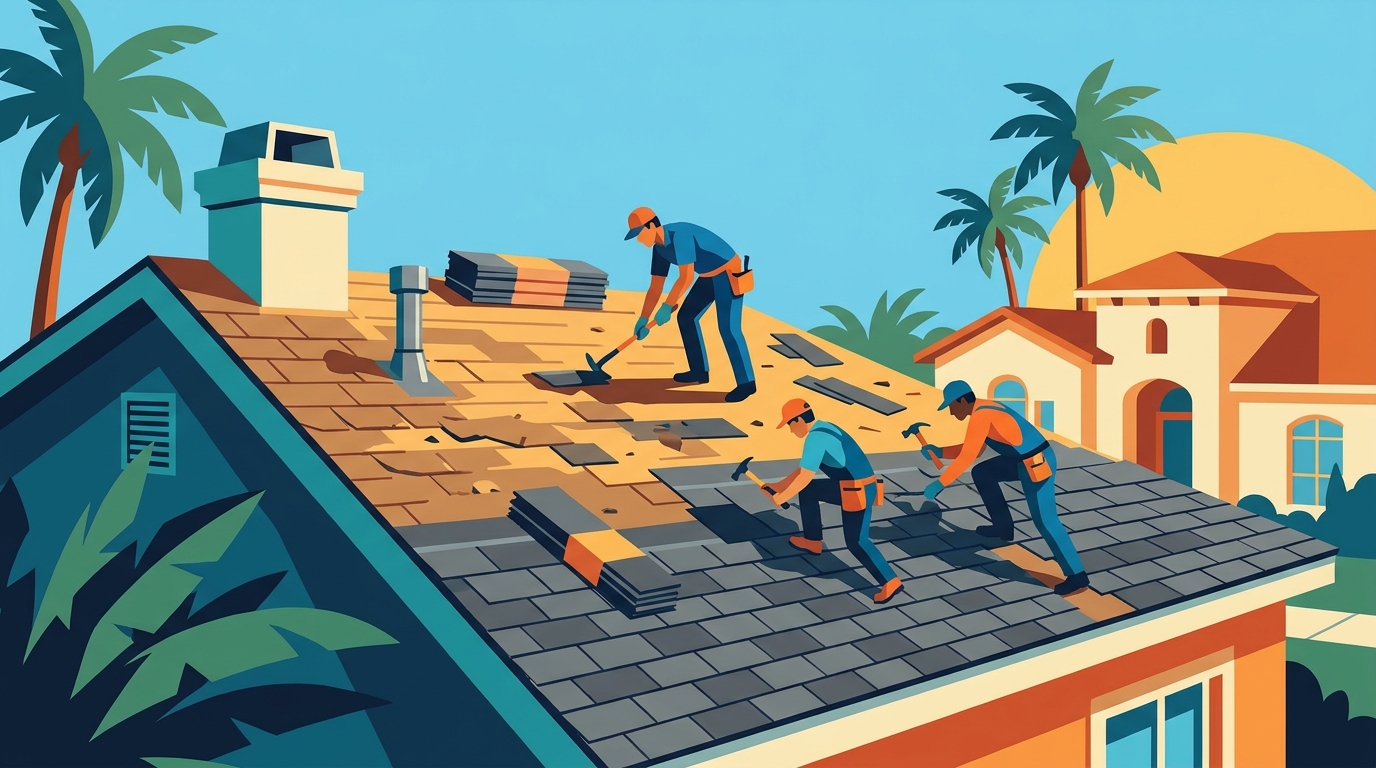
Most residential asphalt shingle replacements in Tampa are completed in one to three days, weather permitting. Tile and metal systems take longer — often four to seven days — because of material handling and fastening requirements. Summer afternoon storms and hurricane-season weather windows can add days to any schedule.
Do I need a permit to replace my roof in Tampa?
Yes. Roof replacements in Tampa require a permit from either the City of Tampa or Hillsborough County building department, depending on your address, and inspections are required at defined stages. Your contractor pulls the permit under their license — never under yours.
What's the best time of year to replace a roof in Tampa?
Late fall through early spring — roughly after hurricane season ends and before summer humidity and daily thunderstorms return. Scheduling ahead of hurricane season also means your roof is in code-compliant shape before the next named storm makes landfall.
How long should a new roof last in Tampa?
Architectural asphalt shingles typically last 15 to 25 years in Tampa's climate — shorter than the manufacturer's stated lifespan in cooler regions because UV, heat, and humidity accelerate aging. Metal and tile systems installed to code can last considerably longer.
Choosing a Roofer, in Short
Verify the license. Confirm the insurance. Look for Tampa-area tenure and manufacturer certification. Compare itemized bids in the same ballpark rather than chasing the lowest number. Insist on permits and code-compliant fastening. And keep control of any insurance claim.
Homeowners in Tampa, FL who want this handled professionally — with local licensing, hurricane-code experience, and honest claim support — can reach SCM Roofing, LLC at https://scmroofingfl.com for a free estimate on repair or replacement.