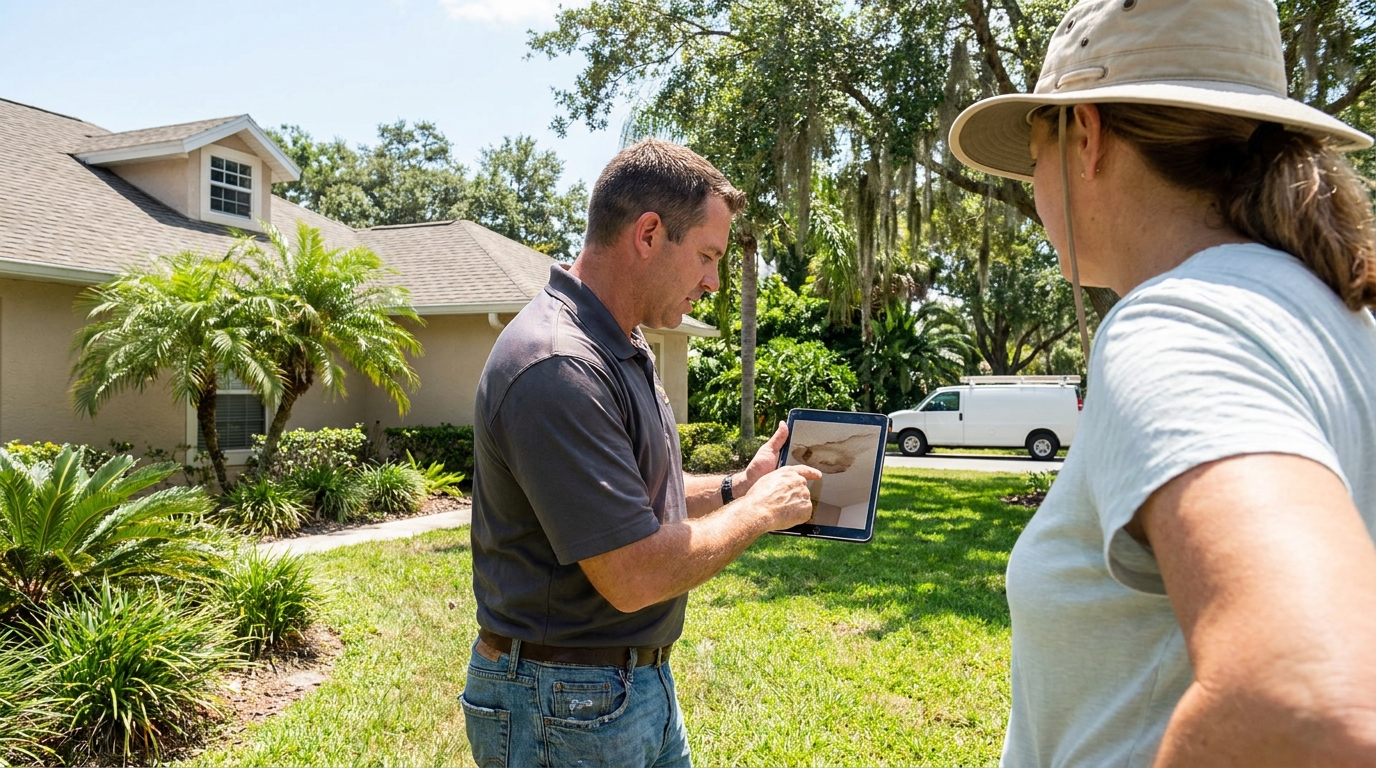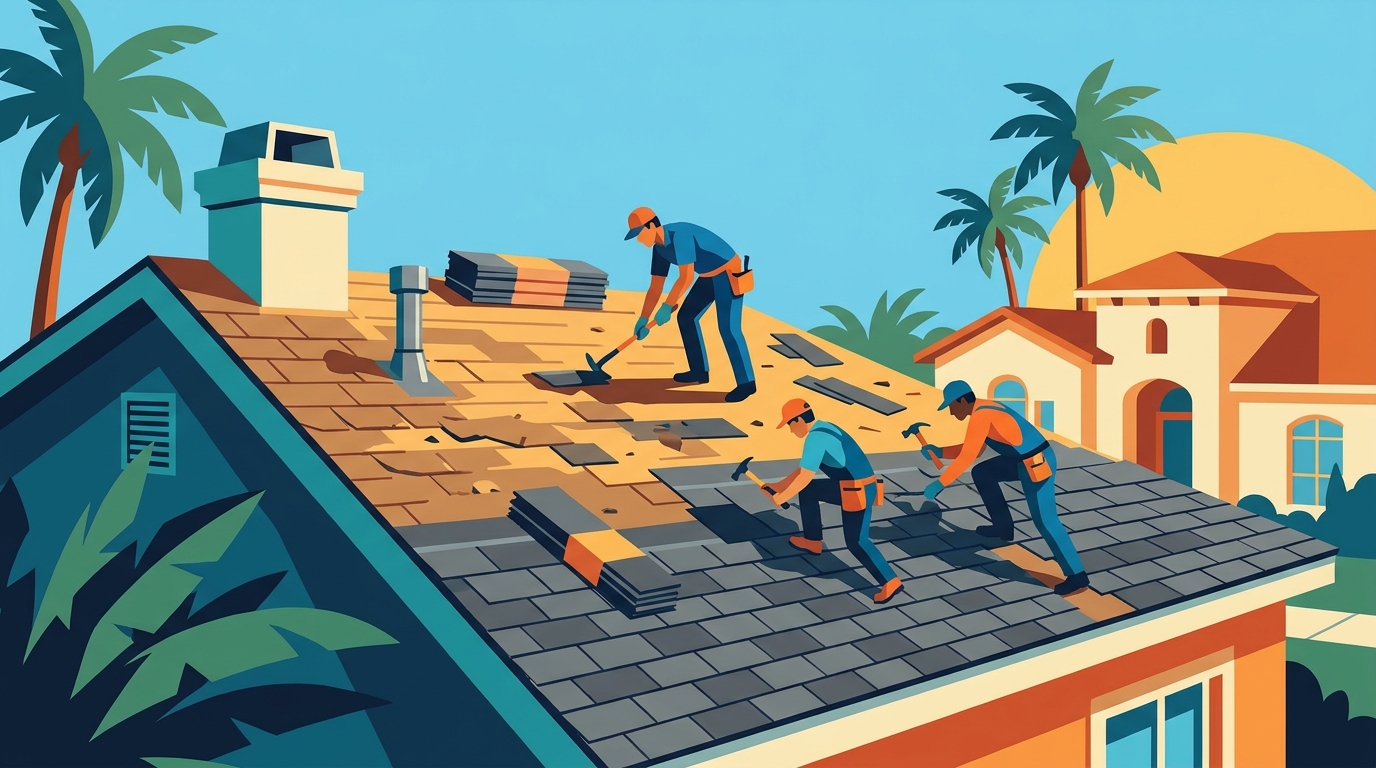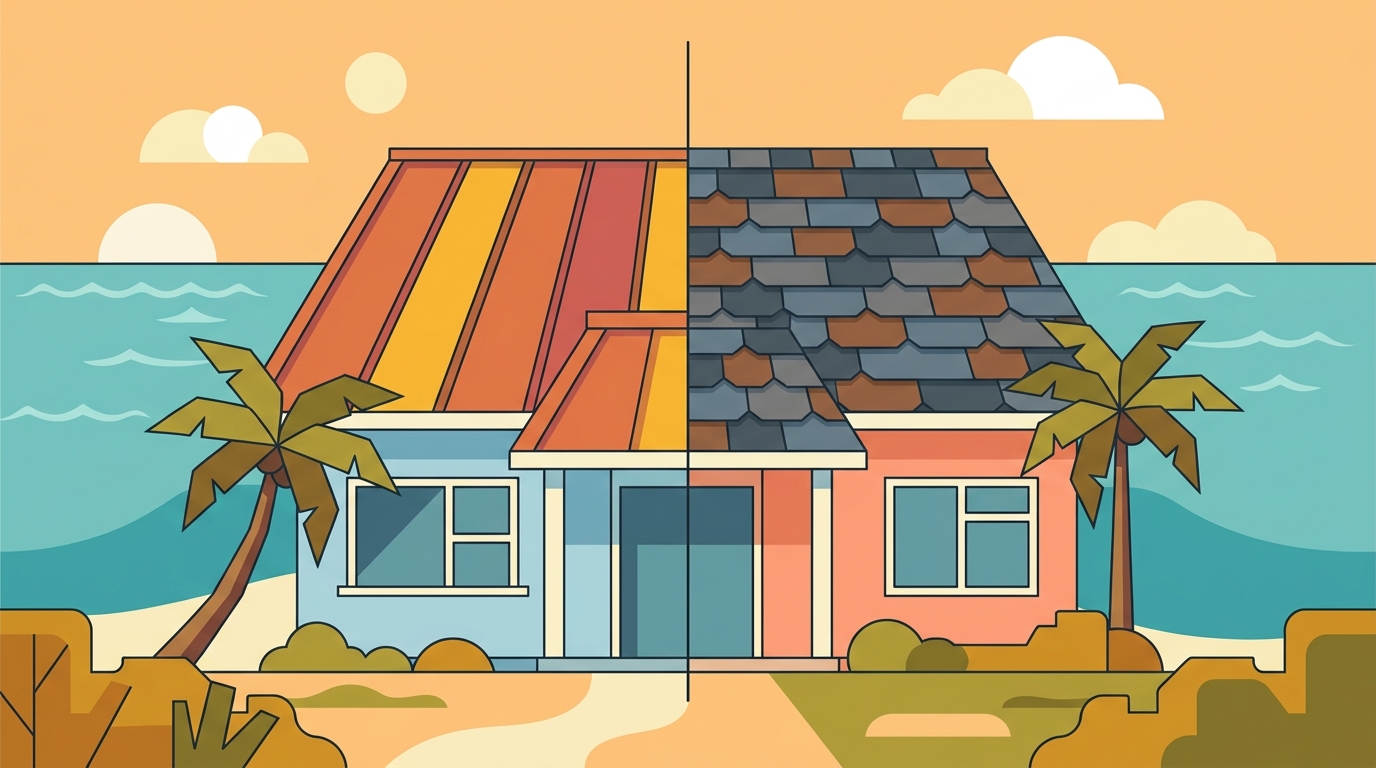
If you're staring down a roof replacement in Port Charlotte, you've probably narrowed your choices to two materials: metal or asphalt shingles. Both dominate Southwest Florida rooflines for good reason — and both behave very differently once hurricane season starts churning out of the Gulf.
This guide walks through how each material actually performs in our climate, what you can expect to spend, and which homeowners tend to be happier with which choice. We've installed both across Charlotte County, so the comparisons below reflect what actually holds up here — not what works in Ohio.
The Short Answer for Port Charlotte Homeowners
Metal roofing delivers a 40–70 year lifespan, wind ratings up to 180 mph on some systems, and meaningful cooling savings in Florida's heat — but you'll pay roughly $10–$16 per square foot installed for it locally.
Asphalt shingles cost less up front ($5–$8 per square foot installed in Florida) and offer broad style options, but typically last only 15–25 years here thanks to UV, humidity, and storm exposure.
If you plan to stay in your home long term or live closer to the harbor and Gulf, metal usually wins on lifetime cost. If you're optimizing for upfront budget or a shorter ownership horizon, architectural shingles remain a sensible choice.
Upfront Cost: Where Asphalt Shingles Lead
There's no contest on initial price. Asphalt shingles run roughly $5–$8 per square foot installed in Florida, with materials alone landing around $90–$100 per square for 3-tab, $150–$200 for architectural, and $250–$400 for premium lines like the laminated luxury tier.
Metal roofing in Florida lands closer to $10–$16 per square foot installed, with national pricing spanning $4–$30 per square foot depending on whether you choose exposed-fastener panels, PBR/MasterRib panels, standing seam, or metal shingles.
For a typical Port Charlotte home, that price gap can easily mean $8,000–$15,000 in upfront difference. The question is how you amortize that over the life of the roof.
Lifespan in Southwest Florida's Climate
This is where the math changes. Metal roofing carries a 40–70 year service life. Asphalt shingles are rated 15–30 years nationally, but in Port Charlotte's UV, salt air, summer humidity, and recurring tropical systems, real-world lifespan more often lands at 15–25 years.
Put differently: most homeowners who install asphalt shingles in their 40s will replace them at least once more before they sell or downsize. A metal roof installed at the same age is typically the last roof the home will need.
Wind and Hurricane Resistance
Charlotte County sits in one of Florida's High-Velocity Hurricane-prone zones, and the Florida Building Code reflects that. Whatever material you choose has to be installed to wind-uplift standards that exceed almost any other state's requirements.
Metal Roofing
Standing seam and premium metal systems can be rated up to 180 mph, tested against ASTM E1592 structural standards. The concealed-fastener design of standing seam (with panel coverage widths of 12", 16", or 18") eliminates the exposed-nail failure point that often initiates shingle blow-off.
Asphalt Shingles
Wind ratings vary sharply by tier:
- 3-tab: roughly 60–70 mph
- Architectural/laminated: 110–130 mph with approved starter strips and hip/ridge accessories
- Premium/luxury: up to 130–150 mph
For Port Charlotte, 3-tab shingles are essentially a non-starter on most jobs — they don't meet local wind requirements on much of the housing stock between El Jobean, Murdock, and the Deep Creek area. Architectural shingles installed with the full approved system are the realistic shingle option.
Impact Resistance
Both materials can reach the top UL 2218 Class 4 impact rating. GAF TimberSteel metal panels carry Class 4. CertainTeed's hail-resistant asphalt lines also reach Class 3 or Class 4. The practical difference: Class 4 is more consistently available across metal product families, while in shingles it's confined to specific SKUs.
For Port Charlotte, impact resistance matters less for hail (rare here) than for windborne debris during named storms — palm fronds, pool screen frames, and the assorted things that become projectiles in a 120 mph gust.
Energy Efficiency and Cooling Costs
If you've lived through an August in Port Charlotte, you know your roof is your single biggest thermal load. Metal roofing reflects solar heat far more effectively than standard asphalt, reducing cooling demand throughout the long Florida summer.
Asphalt manufacturers have responded with cool-roof shingles rated under ANSI/CRRC S100 (measuring solar reflectance, thermal emittance, and SRI). They help — but metal, particularly in lighter Galvalume finishes, still leads on reflectance.
For homes running AC roughly nine months of the year, that delta shows up on FPL bills.
Fire Rating
This dimension is effectively a tie. Quality metal roofing achieves UL 790 Class A. CertainTeed residential shingles also achieve UL Class A. Either material will satisfy fire-rating expectations for a Port Charlotte single-family home.
Maintenance and Long-Term Ownership
Metal roofing requires less ongoing maintenance — periodic inspections, fastener checks on exposed-fastener systems, and occasional sealant attention at penetrations.
Asphalt shingles in Florida demand more attention. Granule loss accelerates under UV, sealant strips can fail in extreme heat, and storms routinely lift tabs even on properly installed roofs. Expect to budget for partial repairs every few years and a full replacement well inside 25 years.
Warranty Coverage
Metal warranties tend to be longer-dated and more comprehensive:
- MasterRib 29 ga: 45-year limited panel warranty
- GAF TimberSteel: 15-year wind/hail + 30-year paint/finish
- Metal Sales Vertical Seam: 5/10/20-year watertightness options
Asphalt shingle warranties scale with tier:
- 3-tab: 20–25 year limited
- Architectural: 30-year to lifetime limited
- Premium: 30–50 year or lifetime limited
- GAF Golden Pledge workmanship: up to 40 years
- CertainTeed SureStart: 10-year non-prorated
Read the fine print — coverage is product- and system-specific, and most warranties hinge on approved installation practices.
What Each Material Looks Like Installed
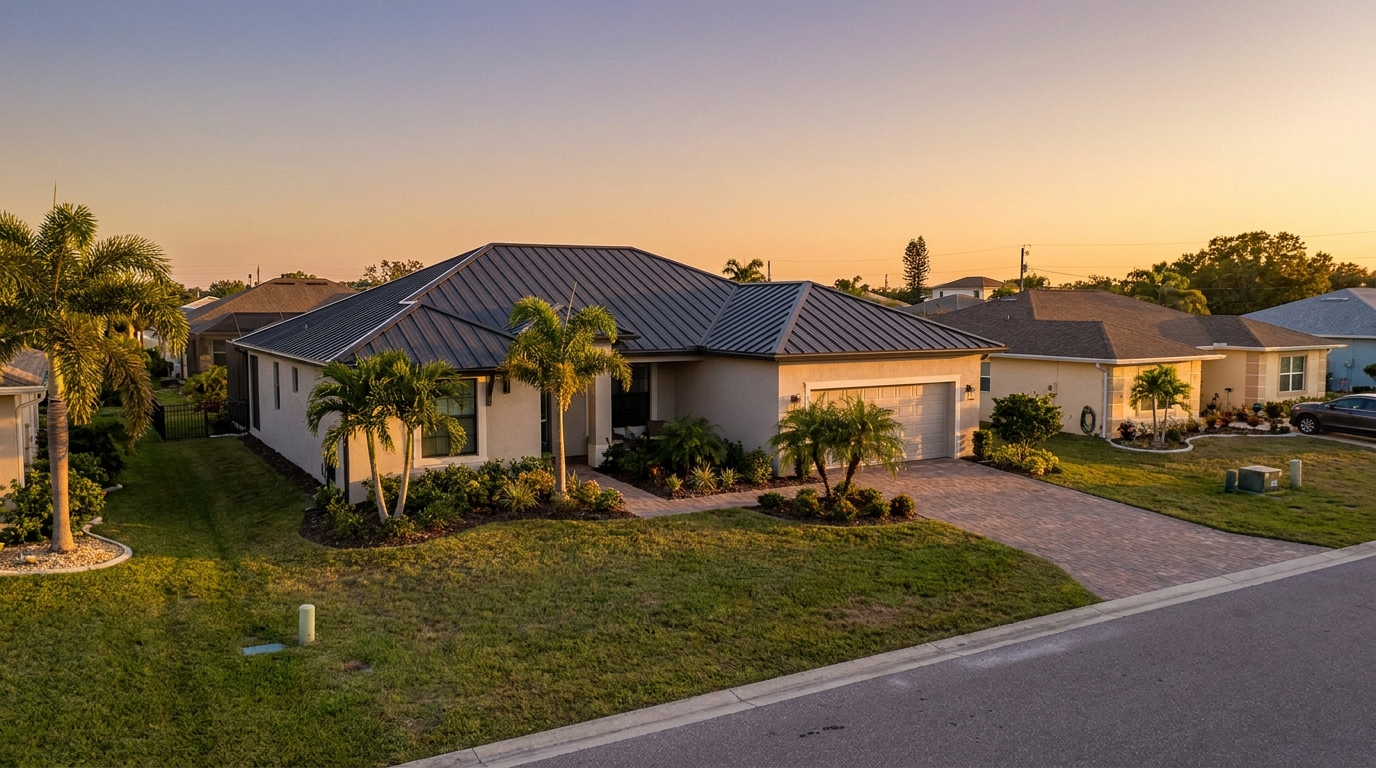
Metal in Southwest Florida is most often Galvalume-coated steel (aluminum-zinc alloy, ASTM A792, AZ50 structural grade), available in 22, 24, 26, or 29 gauge. Standing seam runs over solid substrate down to a 1:12 slope, or open framing at 3:12 and above — flexible enough for most Port Charlotte rooflines, including the low-slope Florida ranches common in Harbor Heights and west of the Peace River.
Asphalt remains the default look for many planned communities — neutral, traditional, and approved by most HOAs without question. If you live in a neighborhood with strict aesthetic covenants, confirm both materials are permitted before deciding.
How to Choose: A Quick Framework
- Staying 10+ years and want to harden against hurricanes? Metal is usually the stronger value.
- Selling within 5–7 years? Architectural asphalt shingles meeting local wind code often make more financial sense.
- Cooling bills already painful? Metal's reflectance offsets a meaningful portion of its cost premium.
- Tight upfront budget? Architectural shingles get you a code-compliant, insurable roof at the lowest entry point.
- Coastal exposure near Charlotte Harbor? Metal's salt-air durability and wind performance earn their premium.
Frequently Asked Questions
Does a metal roof lower homeowners insurance in Port Charlotte?
Many Florida carriers offer wind-mitigation credits for roofs with higher wind ratings and proper attachment. Both metal and properly installed architectural shingles can qualify, but metal systems rated to 150–180 mph often produce larger credits. Your insurer's wind mitigation inspection is the deciding document.
Will a metal roof be louder during summer thunderstorms?
Modern metal roofs installed over solid decking with underlayment are comparable to shingles for interior noise. The "loud metal roof" reputation comes from barns and sheds installed over open framing.
How long does a roof replacement take?
Asphalt shingle replacements on an average Port Charlotte home typically run 2–4 days. Metal installations generally take longer — often 5–10 days — because of panel fabrication, fastening detail, and flashing work.
Do I need permits to replace my roof in Charlotte County?
Yes. Roof replacements require a permit through Charlotte County, and inspections are required at specific points in the process. A licensed Florida roofing contractor will pull the permit on your behalf.
When's the best time to schedule a replacement?
Most Port Charlotte homeowners aim to complete roof work before hurricane season ramps up in late summer, or during the drier winter and early spring months. Booking calendars tighten quickly after any named storm passes near the region.
Does being GAF Master Elite Certified matter when choosing a contractor?
Yes — it matters significantly. GAF Master Elite is a credential held by fewer than 2% of roofing contractors nationally. It unlocks access to GAF's strongest warranty tiers, including the Golden Pledge workmanship warranty, which standard installers cannot offer. For Port Charlotte homeowners, it's one of the clearest indicators of verified installation quality and contractor accountability.
How do I compare roofing quotes in Port Charlotte to make sure I'm not overpaying?
Compare quotes line by line: material grade, underlayment spec, fastening pattern, permit inclusion, and warranty tier. The lowest number rarely reflects the same scope. One customer noted SCM Roofing offered "the best priced quote even when using the best quality materials" — a reminder that price and quality aren't always in conflict when you're comparing equivalent scopes.
The Bottom Line for Port Charlotte
For long-term homeowners weathering Southwest Florida's heat, humidity, and storm cycles, metal roofing's lifespan, wind performance, and energy savings usually justify its higher upfront cost. For shorter ownership timelines or tighter budgets, architectural asphalt shingles installed to current Florida wind code remain a defensible choice.
The right answer depends on your specific roof, neighborhood, budget, and how long you plan to stay. SCM Roofing, LLC currently holds a 4.9-star rating across 239 Google reviews, with customers consistently noting professional installation, competitive pricing, and clear communication throughout the process. Homeowners in Port Charlotte who want a professional assessment of both options — including wind-mitigation implications and accurate local pricing — can reach SCM Roofing, LLC at https://scmroofingfl.com for a free estimate.
"