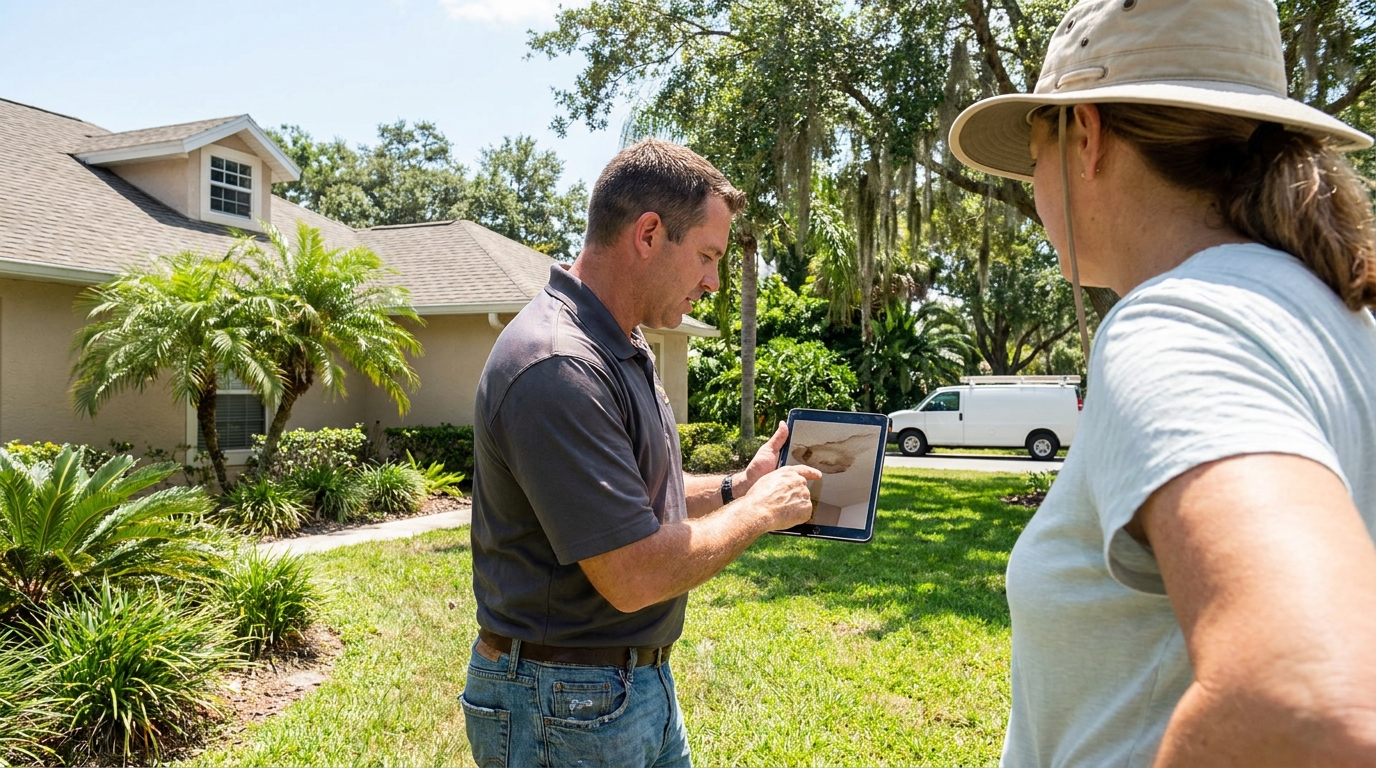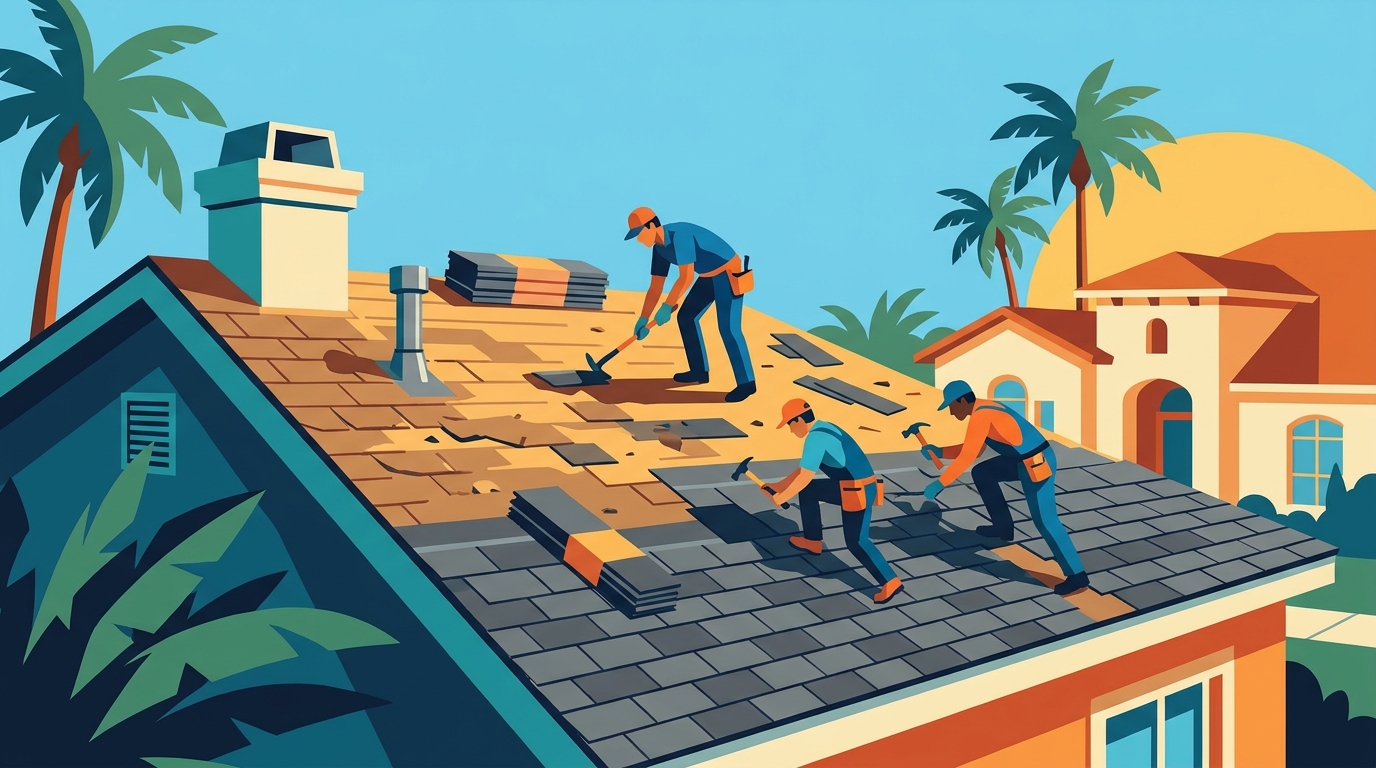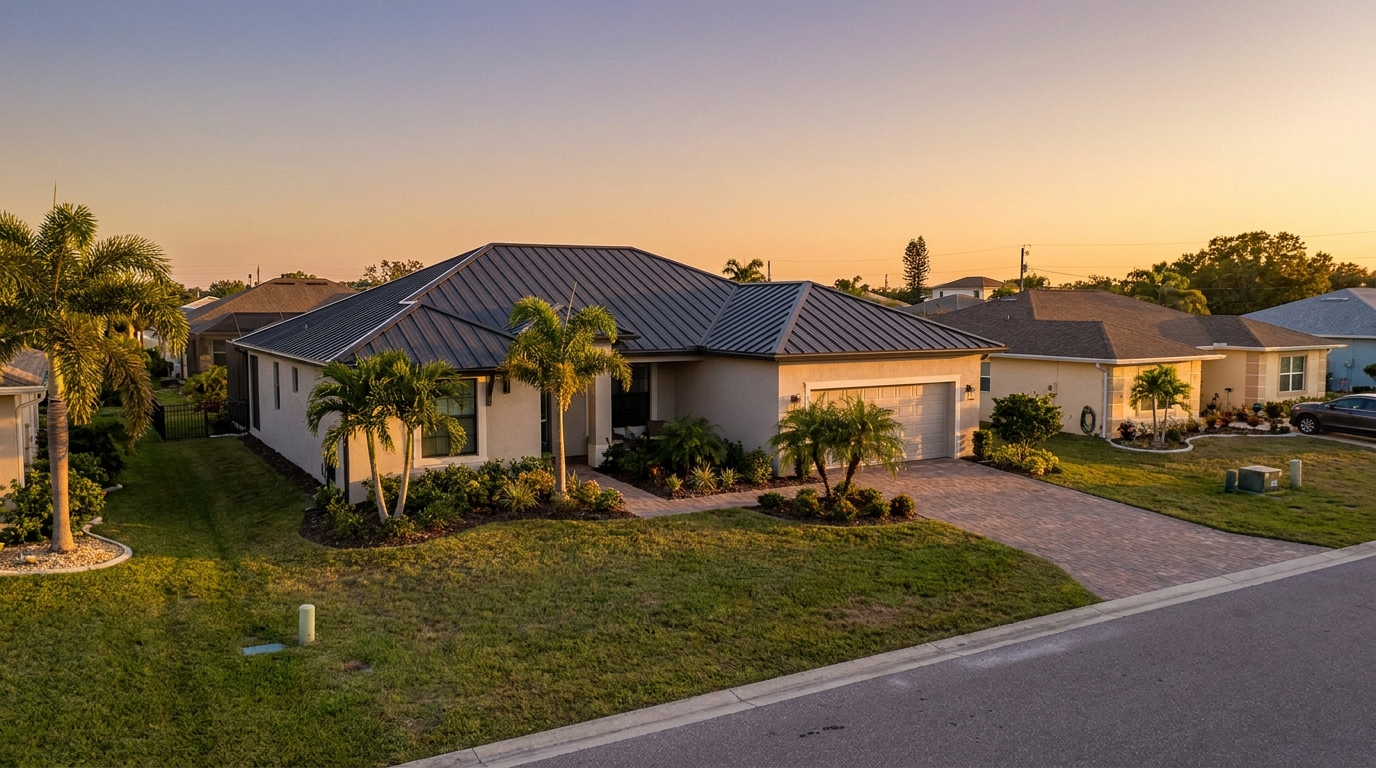
If your Tampa roof is leaking, the fastest safe fix is to contain the water inside, tarp the exterior only if you can do it without climbing a wet or steep roof, and get a licensed roofer to diagnose the source within 24-72 hours. Water that enters a Tampa attic in August humidity becomes a mold problem in days, not weeks — so the goal of any temporary fix is buying time, not solving the leak.
Here's what Tampa homeowners should actually do when the ceiling starts dripping, what causes most leaks in this market, and where the line sits between a reasonable DIY patch and a job that needs a contractor.
What causes most roof leaks in Tampa homes?
The vast majority of roof leaks in Tampa trace back to four culprits: failed flashing, deteriorated ridge caps, lifted or missing shingles from wind events, and clogged valleys or gutters. Our subtropical climate accelerates every one of them.
Tampa sits in a Gulf Coast humidity zone with an average of 50+ inches of annual rainfall, most of it concentrated between June and October. That pattern means asphalt shingles bake under intense UV, then get pounded by afternoon thunderstorms almost daily during hurricane season. Sealants dry out. Nails back out. Flashing around chimneys, skylights, and plumbing boots is usually the first thing to fail.
In older neighborhoods like Seminole Heights, Hyde Park, and Palma Ceia, you'll also see leaks around masonry chimneys and dormers where the original step flashing has corroded. In newer builds out toward New Tampa and Westchase, the weak points are typically pipe boots and ridge vents — components with a shorter service life than the shingles around them.
Storm-driven water intrusion
Wind-driven rain is a Tampa-specific problem. A tropical system doesn't need to make landfall here to push water sideways under shingle courses and behind fascia. If your leak started during or right after a named storm, assume there's uplift or lifted shingle damage even if the roof looks intact from the ground.
How do you stop a roof leak temporarily?
To stop a roof leak temporarily from inside your home: place a bucket under the drip, then use a small nail or screwdriver to puncture the center of any sagging, water-filled ceiling bulge so it drains in one controlled spot instead of collapsing. This sounds counterintuitive, but a saturated drywall belly will fail on its own — better to control where.
From there:
- Move belongings and lay down plastic sheeting under the affected area.
- Photograph everything — ceiling, walls, attic, and the exterior if you can safely see it. Insurance carriers in Florida will want dated photos.
- Check the attic with a flashlight during daylight. Wet insulation, stained rafters, or a visible pinhole of light tells you roughly where the entry point is.
- Tarp the exterior only if conditions are safe — dry roof, low pitch, daylight, and a helper. A 6-mil poly tarp secured with 1x3 furring strips at the ridge is the standard temporary cover.
Do not climb a wet Tampa roof. Do not climb any roof during a lightning watch. And do not spray sealant or roofing tar into a leak from below — it complicates the permanent repair and rarely stops the water.
When is a DIY fix okay, and when do you need a contractor?
A DIY fix is reasonable only when the leak is small, the source is visible and accessible, and the roof is dry, low-slope, and safe to walk. Everything else in Tampa needs a licensed roofer.
Practically, that means a homeowner can usually handle:
- Replacing a single missing shingle on a one-story, low-pitch section
- Resealing a small crack in a plumbing boot with a rubber collar repair kit
- Clearing a clogged valley or gutter that's causing water backup
You need a contractor for:
- Any leak around a chimney, skylight, or dormer (flashing work)
- Ridge cap or ridge vent damage
- Multiple leak locations, or a leak whose source you can't identify in the attic
- Any storm damage where an insurance claim is likely
- Roofs over 15 years old showing granule loss, cupping, or soft decking
What are the Tampa permit and code considerations?
Roofing work in the City of Tampa and unincorporated Hillsborough County almost always requires a permit, and Florida's building code has specific requirements for re-roofs — including secondary water barriers and wind-mitigation details tied to our high-velocity hurricane zone-adjacent classification. A handyman or unlicensed "roofer" doing repairs without a permit can void your homeowner's insurance and create title issues when you sell.
Florida also requires roofing contractors to hold either a state Certified Roofing Contractor license (CCC) or a registered county license. Before hiring anyone, verify the license on the Florida DBPR website. This is the single most important due-diligence step you can take.
How fast should you act on a Tampa roof leak?
Within 24 to 72 hours. Tampa's humidity means wet attic insulation and framing start growing mold within about 48 hours of saturation. A leak you ignore for two weeks in July is no longer just a roof repair — it's a roof repair plus drywall replacement plus mold remediation.
The other timing factor is hurricane season. If you have a known weak spot going into June, the first tropical system to brush the Gulf will find it. The window to address minor issues is winter and early spring — the drier stretch between roughly December and May.
How to choose a roofing contractor in Tampa
Look for a Florida-licensed contractor with manufacturer certification (GAF Master Elite, CertainTeed SELECT ShingleMaster, or equivalent), local references, a written scope, and clear documentation of insurance. SCM Roofing, LLC, based in the Tampa Bay area, is GAF Master Elite certified — a designation held by a limited percentage of roofing contractors nationally because it requires ongoing training, proper licensing, and a track record of installations.
Beyond credentials, evaluate:
- Written estimate with specifics — underlayment type, nail pattern, flashing replacement, permit responsibility
- Local track record — companies that have worked through multiple Tampa hurricane seasons understand our failure patterns
- Responsiveness — leaks are time-sensitive, and communication quality during the estimate stage predicts communication quality during the job
- Contract clarity — one SCM reviewer specifically noted the "contract was not one-sided," which is worth checking on any quote you receive
Frequently asked questions
Can I file an insurance claim for a roof leak in Tampa?
Yes, if the leak is caused by a covered peril such as wind or storm damage. Gradual wear-and-tear leaks are generally not covered under Florida homeowner policies. Document the damage with dated photos, get a licensed roofer's written assessment, and file promptly — Florida has tightened claim deadlines in recent years.
How much does roof leak repair cost in Tampa?
Minor repairs — a pipe boot, a few shingles, small flashing work — typically fall in the low hundreds to low thousands. Larger repairs involving decking, multiple flashing points, or partial re-roofing run higher. Any contractor giving a firm price without inspecting the attic and roof is guessing.
Will a roof leak get worse if I wait?
Almost always, and faster in Tampa than in drier climates. Humidity keeps sheathing and insulation wet long after the visible drip stops, which accelerates rot and mold. A $400 repair in March can easily become a $4,000 repair by September.
Do I need a permit for a small roof repair?
For most repairs beyond a handful of shingles, yes — the City of Tampa and Hillsborough County require permits for roofing work, and your contractor should pull it. Confirm this in writing before work begins.
The bottom line for Tampa homeowners
A leaking roof in Tampa is a time-sensitive problem because of humidity, storm cycles, and the way our building stock ages under Gulf Coast sun. Contain the water, document the damage, avoid climbing a wet roof, and get a licensed local roofer on-site quickly — ideally before the next line of afternoon storms rolls through.
Homeowners in Tampa who want a leak diagnosed and repaired professionally can reach SCM Roofing, LLC at https://scmroofingfl.com for a free inspection and written estimate.