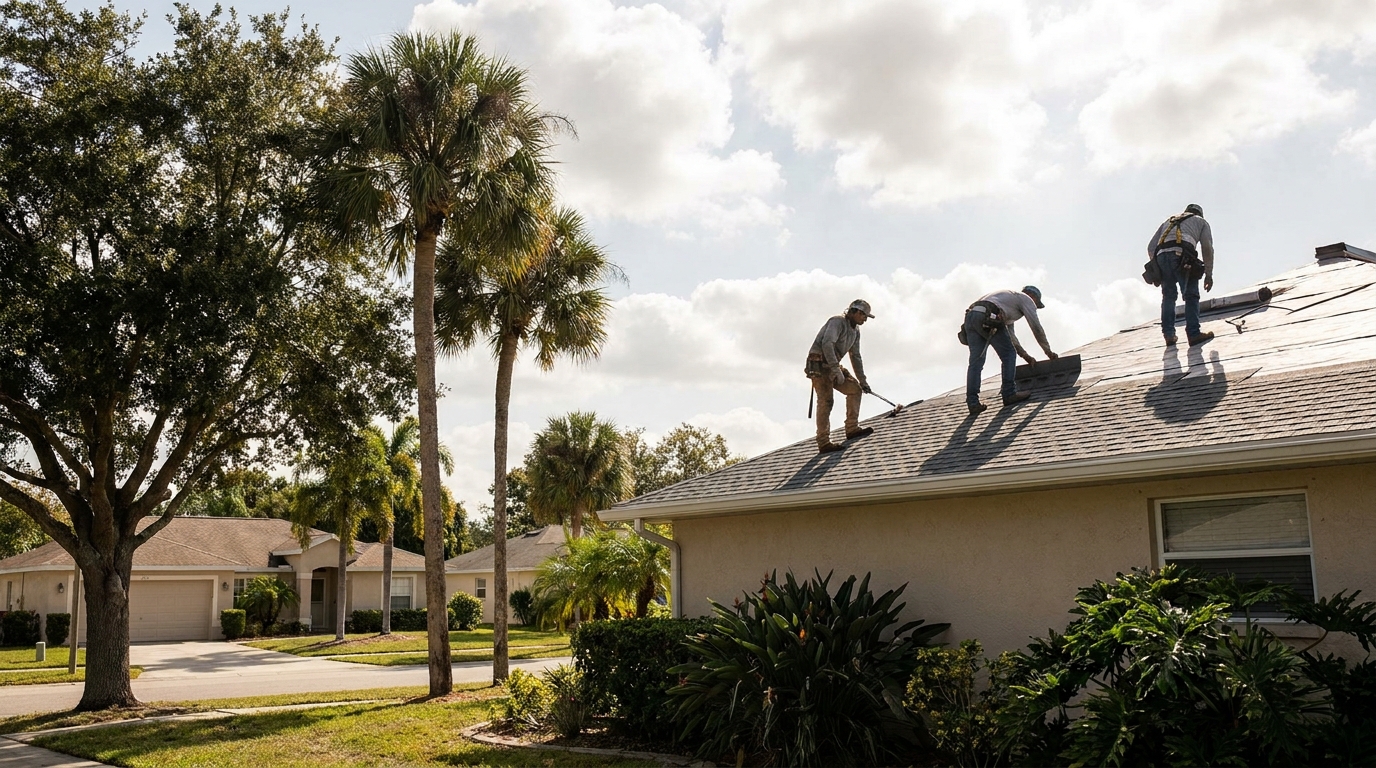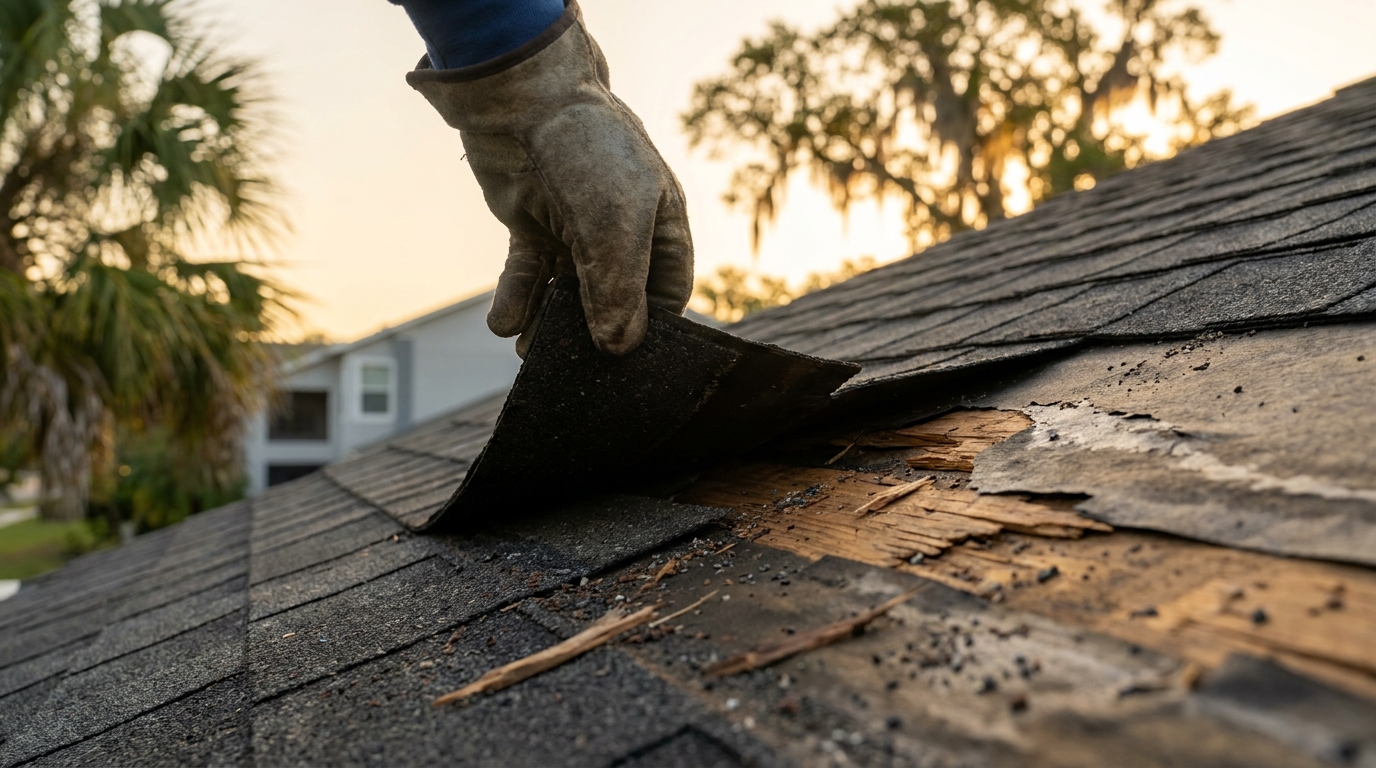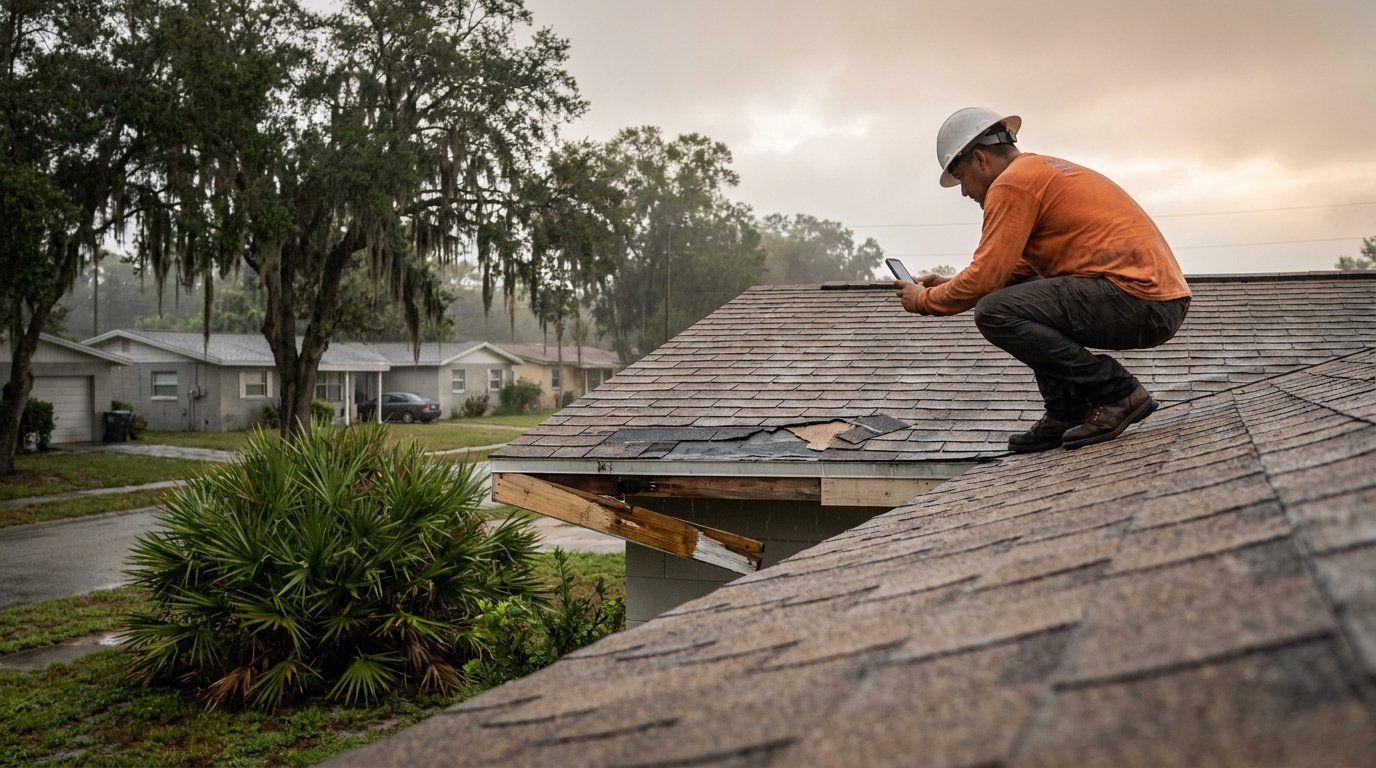
After a tropical storm damages your roof in Tampa, call a licensed Florida roofing contractor first — before your insurance company, before a public adjuster, and before any door-knocker who shows up in your driveway. A licensed roofer can tarp the roof to stop active water intrusion, document the damage properly, and give you a written scope you can hand to your insurer. Everything else works better once that first call is made.
That order matters more in Florida than almost anywhere else. Starting with proper documentation from a licensed contractor is the single biggest lever a Tampa homeowner has.
Why call a licensed roofer before your insurance company?
Call a licensed roofing contractor first because they stop the damage from getting worse, document it in a form insurers accept, and keep you on the right side of Florida Building Code. Insurance adjusters work from reports and photos — a contractor's scope and tarping record become the foundation of your claim. Reversing the order often shrinks the payout.
Helene brought six to eight feet of storm surge along the coastline, and Milton followed as part of a historically damaging storm season for the region. The repair backlog from that season is still working through the market, which is why triage — not panic — is the right mindset.
SCM Roofing is a Tampa-based contractor (Florida license CCC1331132) that handles emergency storm damage repair and insurance documentation as part of its hurricane roof repair service. The company holds GAF Master Elite Certified status, a distinction earned by only about 2–3% of roofing contractors nationwide, and keeps 24/7 emergency availability outside of its regular Monday–Friday 7:00 AM to 6:00 PM hours.
What should your first call accomplish?
Your first call should get three things on the schedule: an emergency tarp or stabilization visit, a written damage assessment with photos, and clear guidance on whether the repair needs a permit. If the contractor can't commit to those three in the first conversation, keep calling. Those three items are what your insurance claim will stand or fall on.
Tarping is not a permanent repair, and it should never be represented to an insurer or the building department as one. It buys you time — days or weeks — while a code-compliant permanent repair is scoped, permitted where required, and scheduled. Tampa's humidity and warm year-round temperatures accelerate moisture intrusion and mold risk, so the clock between tarp and permanent fix matters.
Who should Tampa homeowners NOT call first?
Do not call a public adjuster, a general handyman, or an out-of-state "storm chaser" crew before a licensed Florida roofing contractor. Public adjusters can be useful later in a disputed claim — Public adjusters can be useful later in a disputed claim — but they don't stop the water. Handymen and unlicensed crews can void your warranty and your claim.
Florida's insurance environment is uniquely contentious: the state generates approximately 70.9% of the nation's property insurance litigation. Using a licensed, local contractor who documents the loss properly is the cleanest way to stay out of that litigation funnel.
What permits apply to post-storm roof repair in Tampa?
Permanent roof repairs and replacements generally require a permit in both City of Tampa and Hillsborough County jurisdictions. Emergency tarping and basic stabilization typically do not, but confirm with the applicable building official. Jurisdiction is set by parcel, not postal address — a mailing address that names one city can sit in an unincorporated county area with its own permit process.
Hillsborough County exempts non-structural work on a single-family residence valued under $7,500 from requiring a permit under Florida House Bill 803, applied for through HillsGovHub. The exemption does not apply if the property is partially or entirely located in a flood hazard area, or if the work includes electrical, plumbing, structural, mechanical or gas work. Scope cannot be divided into multiple projects to stay under the threshold.
How should the first 72 hours be sequenced?
In the first days after a tropical storm, work this order: safety and shutoff, photo documentation from the ground, licensed roofer for emergency tarp and written scope, then insurance claim with the roofer's report attached. Permit application (if required) and permanent repair scheduling follow once the scope is agreed. Skipping or reordering these steps is where most Florida claim problems start.
| Timing | Action | Who |
|---|---|---|
| Hour 0–2 | Shut off power to affected areas; move valuables; photograph damage from the ground | Homeowner |
| Hour 2–24 | Call a licensed Florida roofing contractor for emergency tarp and inspection | Licensed roofer |
| Hour 24–48 | Receive written scope and photo report; file insurance claim with documentation attached | Homeowner + insurer |
| Hour 48–72 | Confirm permit jurisdiction (City of Tampa vs. Hillsborough County); schedule permanent repair | Roofer + building official |
What should a Tampa homeowner look for in a storm damage contractor?
Look for a current Florida DBPR license (verify the number before signing anything), local physical presence, written scopes with photo documentation, and familiarity with both City of Tampa and Hillsborough County permitting. Florida Statutes §489.105(3)(e) and §489.127 govern roofing contractor licensing — verifying license status is a two-minute check that can prevent a six-figure problem.
SCM Roofing's owner, Scott Marone, graduated from the University of Florida's Construction Management program and holds both a Florida State General Contractor's license and a Roofing Contractor's license. The company serves eight counties across Florida's Gulf Coast — Charlotte, Collier, Hillsborough, Lee, Manatee, Pasco, Pinellas, and Sarasota — with 25+ years of experience in the roofing industry.
Robbie was professional and very responsive. We looked at several roofing companies and SCM was very competitive. They were also able to start the job the soonest( before hurricane season). Juan and his team came out promptly at 7am and completed the job in one day. Amazing! I highly recommend this company.
What does post-storm roof work typically cost in Tampa in 2026?
Actual cost depends on access, pitch, material, and crew availability during post-storm demand surges.
These are market ranges published by Tampa-area contractors, not government price surveys, and they move during active storm response. For a specific property, a written quote from a licensed contractor who has actually inspected the roof is the only reliable number.
Frequently asked questions
Should I file an insurance claim before or after calling a roofer?
Call a licensed roofing contractor first, then file the claim with their written scope and photo documentation attached. A contractor's documented scope helps your claim land correctly the first time.
Is emergency tarping covered by my homeowners insurance?
Most Florida homeowners policies cover reasonable emergency mitigation costs, including tarping, under the policy's duty-to-mitigate provision — but coverage depends on your specific policy and deductible. Keep every receipt, written scope, and photo. Do not authorize work that is represented as a permanent repair if it is actually temporary stabilization; that distinction matters to adjusters and building officials.
Does my repair need a permit if it's under $7,500?
In unincorporated Hillsborough County, non-structural single-family roof work under $7,500 may qualify for a permit exemption under Florida House Bill 803, applied for through HillsGovHub. The exemption does not apply in flood hazard areas or when the work involves structural, electrical, plumbing, mechanical, or gas components. Jurisdiction over a property follows the parcel, not the mailing address — verify your parcel's jurisdiction before relying on any permit exemption.
How quickly can a roofer actually come out after a hurricane?
Response times stretch sharply after major storms. Any provider's "same-day" promise is a marketing representation, not a market guarantee. Get on a schedule quickly and keep calling if your first contractor can't commit.
Should I accept the first contractor who knocks on my door?
No. Door-to-door solicitation spikes after Tampa storms and often involves out-of-state crews without Florida licensing or local presence. Verify any contractor's Florida DBPR license, confirm a physical local address, and get the scope in writing before signing anything — including any "assignment of benefits" document. If the pitch requires an immediate signature, walk away.
What if my roof looks fine but I suspect hidden damage?
Schedule an inspection anyway. Wind-driven rain and uplift can loosen flashings, lift shingles, and crack tiles without visible ground-level signs, and Tampa's humidity accelerates any resulting moisture intrusion. Florida homeowners are generally advised to schedule roof inspections twice per year — once before hurricane season in June and once after it ends in November — with an extra inspection after any named storm.
Getting started in Tampa
If a tropical storm has damaged your roof in Hillsborough, Pinellas, or Pasco County, the sequence is the same regardless of who you call: licensed contractor first, emergency stabilization, written documentation, then insurance claim and permitted permanent repair. Homeowners in Tampa who want this handled by a local, licensed team can reach SCM Roofing at (855) 726-7663 or https://scmroofingfl.com to schedule an inspection and get a written scope.