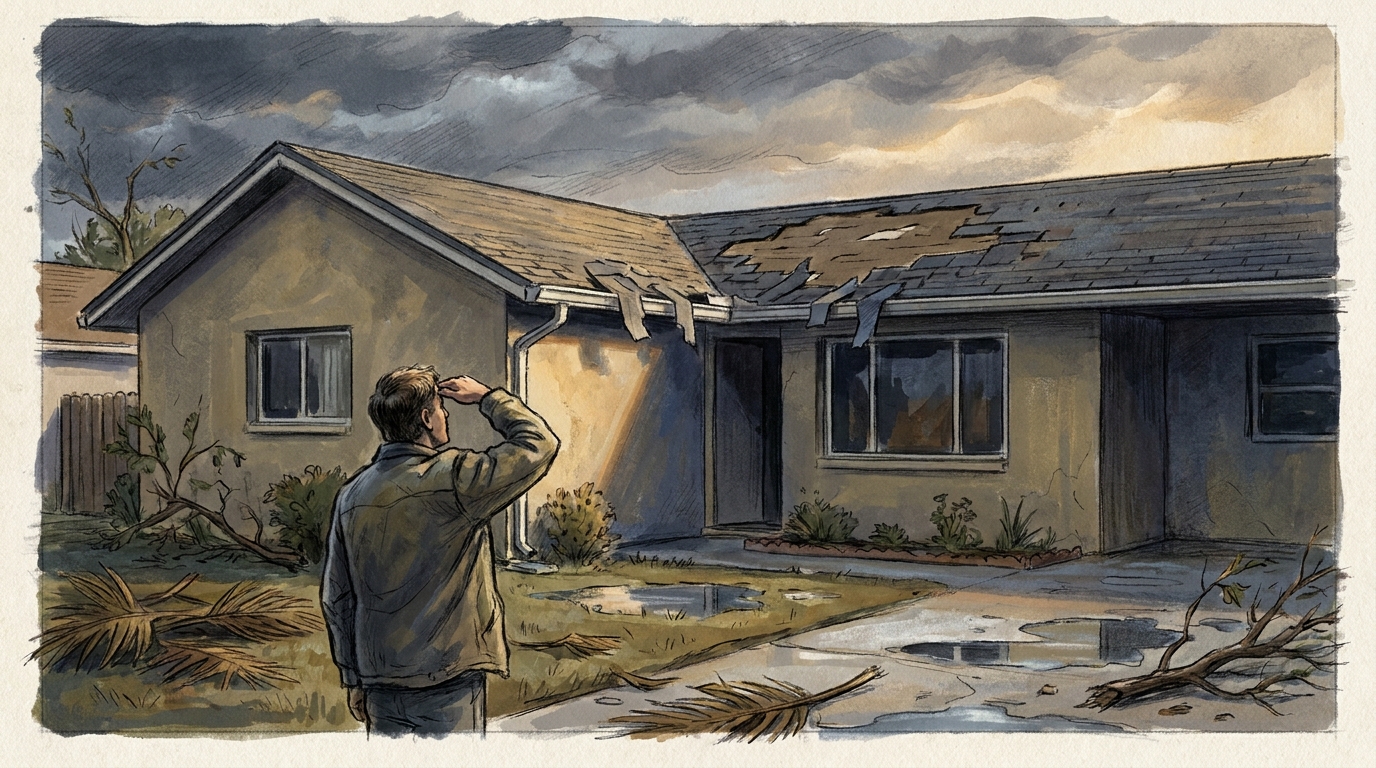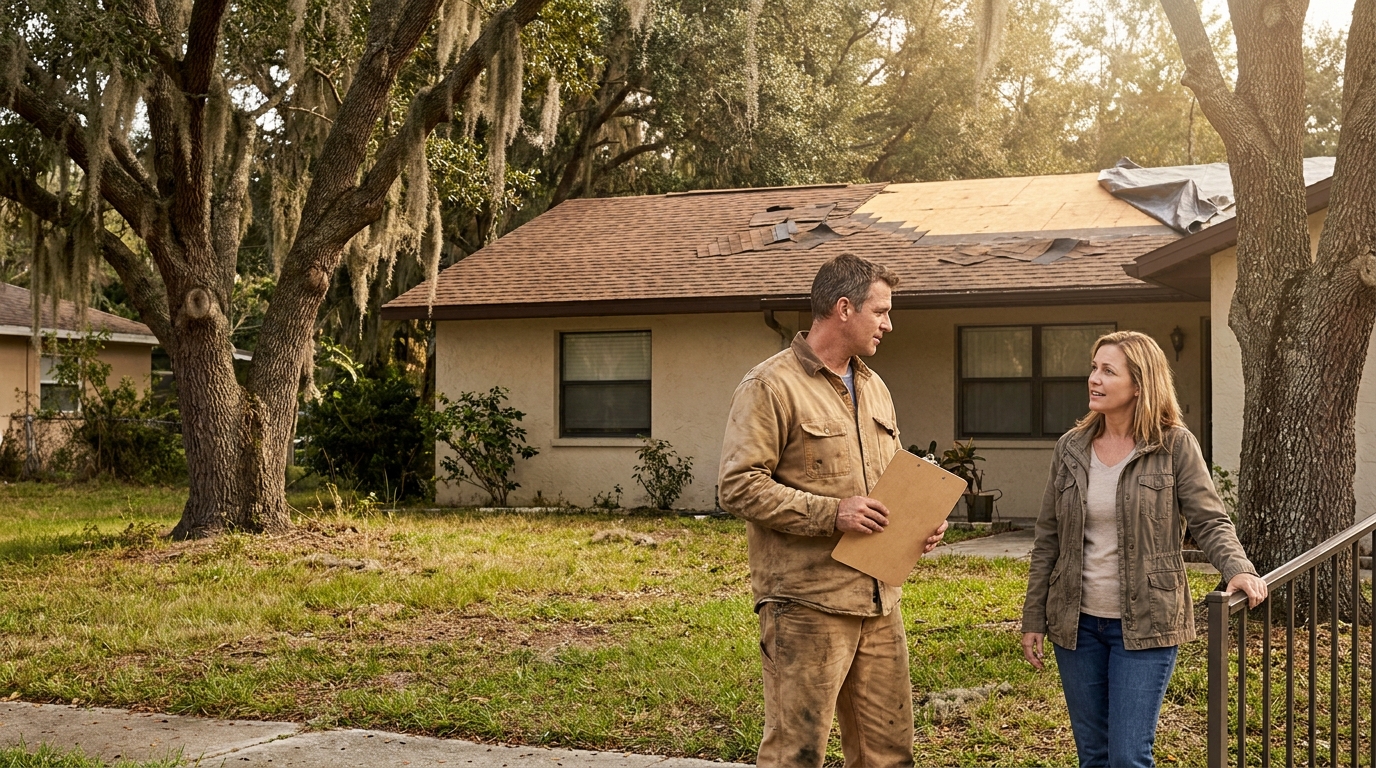
The most expensive roof repair mistakes Tampa homeowners make after a storm are signing a contract before reading the 10-day cancellation clause, hiring an unlicensed out-of-state crew working door-to-door, and skipping the Hillsborough County or City of Tampa permit that the law still requires even in an emergency. Each one can void your insurance claim, leave you paying twice, or saddle you with a roof that won't pass inspection. Here's what to watch for — and how to handle it correctly.
Why do storms expose Tampa homeowners to bad roofing decisions?
Tampa sits in one of Florida's most active wind and storm-surge corridors, and every named system that grazes the Gulf triggers a repair surge. Homeowners with water pouring into a bedroom in the middle of the night make decisions they wouldn't make in calmer circumstances — signing the first contract handed to them, skipping verification, and trusting urgency over paperwork. That pressure is where most of the costly mistakes start.
SCM Roofing, LLC, based at 5020 N Coolidge Ave in Tampa, has handled storm damage repair, leak repair, and emergency service across Hillsborough County for more than 25 years, and nearly every mistake below is one we see repeat after each major event.
What is the biggest mistake — hiring an unlicensed contractor?
Hiring an unlicensed contractor is the single most damaging post-storm mistake, because Florida Statutes Chapter 489 requires a valid license for regulated roofing work, and an unlicensed install will fail inspection, void manufacturer warranties, and can disqualify your insurance claim. Verify every contractor's license through the Florida DBPR or the HillsGovHub portal before signing anything.
After hurricanes, out-of-state crews with magnetic truck signs sweep through neighborhoods from South Tampa to Temple Terrace offering "free inspections." Many have no Florida license at all. SCM Roofing's Florida state contractor license number is CCC1331132, and owner Scott Marone holds both a Florida State General Contractor's license and a Roofing Contractor's license — the exact credentials you should be able to look up on any company you're considering.
Can I skip the permit if it's a storm emergency?
No. Emergency conditions and declared disasters do not automatically waive permit, licensing, or inspection requirements in Hillsborough County or the City of Tampa. Any waiver must come from a currently active emergency order covering your specific property and the work being done. Re-roofing without a permit can force a full tear-off later at your expense.
City of Tampa exempts roof-covering work of 500 square feet or less from a permit under City Code § 5-105.2; anything larger requires a permit through the Construction Services Division. In unincorporated areas of the county, re-roof permits may go through a dedicated online portal.
How does the 25% roof rule trip up Tampa homeowners?
Homeowners who authorize patch-by-patch repairs after successive storms often cross that threshold without realizing it, then face a full code-compliant replacement.
The 7th Edition (2020) Florida Building Code strengthened underlayment requirements to create a sealed roof deck, applicable to both new construction and roof replacement. A contractor who quietly repairs past that threshold without disclosing the rule is setting you up for an inspection failure. Ask any bidder to put the percentage of roof area affected in writing.
What insurance mistakes cost homeowners the most money?
The most expensive insurance mistake is missing Florida's one-year claim deadline. Since December 2022, Florida homeowners have 1 year from the date of loss to give their insurer notice of roof damage under Fla. Stat. § 627.70132. Waiting through hurricane season to "see how bad it gets" can kill a valid claim.
A few other patterns we see:
- Accepting a deductible-waiver offer. Florida law prohibits roofing contractors from offering to waive, rebate, or pay a homeowner's insurance deductible. A contractor who offers it is telling you they'll break the law — and may be committing fraud on your behalf.
What about the 10-day cancellation right after a hurricane?
Under Fla. Stat. § 489.147(6)(a), for a roofing contract signed within 180 days of the event underlying a Governor's state-of-emergency declaration covering your property, you may cancel without penalty within 10 days of signing or by the official start date, whichever comes first. Many homeowners don't know this exists, and storm-chasers count on that.
If you signed under pressure and had second thoughts the next morning, that cancellation window is often still open. Use it.
Should I let the contractor just roof over the old shingles?
No. Roofing over existing layers hides rotted decking, compromised underlayment, and nail pops that caused the leak in the first place — and it won't meet the sealed-deck underlayment standards of the current Florida Building Code. The only responsible post-storm repair is a full tear-off down to the deck for any area being replaced.
SCM Roofing does not roof over existing layers; all old material is removed down to the deck before a new roof is installed. On tile roofs, a dry-in inspection is required by the local jurisdiction; for other roof types a contractor may submit a roof-mitigation attestation in lieu of the dry-in inspection.
Common Post-Storm Mistakes vs. The Correct Move
| Mistake | What it costs you | What to do instead |
|---|---|---|
| Signing with a door-knocking crew | Unlicensed work, voided warranty, failed inspection | Verify license on DBPR or HillsGovHub before signing |
| Skipping the permit | Forced tear-off; sale and insurance issues later | Pull permit through City of Tampa or HillsGovHub |
| Accepting a deductible waiver | Illegal under Fla. Stat. § 489.147 | Pay your deductible; reject any contractor who offers otherwise |
| Waiting to file the claim | Past 1-year deadline, claim denied | Notify insurer within 1 year of date of loss |
| Roofing over old layers | Hidden deck damage, code non-compliance | Full tear-off to deck, new underlayment |
| Pulling your own permit to save money | Can't sell the home for 1 year after completion | Use a licensed contractor unless you'll stay put |
Is pulling my own permit as a homeowner a smart shortcut?
Rarely. Homeowners in Hillsborough County may pull their own permit and act as their own contractor under Florida Statute 489.103(7), but a homeowner who does so cannot sell the property for one year from the date the permitted work was completed, and must sign an Owner Builder Disclosure Statement. For a storm repair on a home you might list, that's a trap.
You're also personally responsible for scheduling inspections, meeting code, and correcting any deficiencies — which is a lot to manage while a tarp is still on the roof.
What homeowners say when the job is done right
Jose and his team were amazing! After getting several quotes to repair our leaky roof, we decided to go with SCM, and we couldn’t be happier. They were out within 48 hours, did an excellent job, and had everything completed in just six hours. The quality of their work was outstanding, and the whole experience was seamless. Highly recommend Jose and his team!
A 48-hour response with the work wrapped in six hours is what post-storm repair should look like — licensed, permitted, and done once.
Frequently Asked Questions
How quickly do I need to file a roof insurance claim in Florida?
Florida homeowners have 1 year from the date of loss to notify their insurer of roof damage under Fla. Stat. § 627.70132. This one-year deadline took effect in December 2022 under Fla. Stat. § 627.70132. Waiting through hurricane season to see how bad the damage gets can disqualify an otherwise valid claim, so document and report promptly.
Does Tampa require a permit for roof repair after a storm?
Yes, in most cases. The City of Tampa exempts roof-covering work of 500 square feet or less under City Code § 5-105.2; anything larger requires a permit from Tampa's Construction Services Division. Unincorporated Hillsborough County requires a re-roof permit through the HillsGovHub portal. Declared emergencies do not automatically waive permit, licensing, or inspection requirements unless a current executive order specifically covers the work.
How do I check if a roofing contractor is licensed in Tampa?
Verify any contractor's license through the Florida Department of Business & Professional Regulation (DBPR) license lookup and through the HillsGovHub portal for Hillsborough County local licensing. Ask for the license number in writing before signing. A Florida state certified roofing contractor's license begins with CCC. Unlicensed work can void manufacturer warranties, fail inspection, and jeopardize your insurance claim.
Can a roofer legally offer to waive my insurance deductible?
No. Florida law prohibits roofing contractors from offering to waive, rebate, or pay a homeowner's insurance deductible under Fla. Stat. § 489.147. Specific contract disclosures are also required. A contractor offering to "cover" or "eat" your deductible is proposing an illegal arrangement that could expose you to insurance fraud liability. Pay your deductible and walk away from any bidder who suggests otherwise.
What is the 10-day cancellation window on post-storm roofing contracts?
Under Fla. Stat. § 489.147(6)(a), if you sign a roofing contract within 180 days of the event underlying a Governor's state-of-emergency declaration covering your property, you may cancel without penalty within 10 days after signing or by the official start date, whichever comes first. This exists specifically to protect homeowners from high-pressure post-hurricane sales tactics by door-knocking crews.
Why does the 25% rule matter for Tampa roof repairs?
If more than 25% of a roof's total area is replaced or recovered within any 12-month period on a roof installed before the 2007 Florida Building Code, the entire roof system must be brought up to current code. Repeated spot repairs after successive storms can trigger this threshold, converting what the homeowner thought was a patch into a full code-compliant replacement at reinspection.
What roofing materials are typical on Tampa homes?
Tampa's housing stock runs heavily to asphalt shingle roofs — 3-tab, architectural, and luxury/designer — along with concrete and clay tile on Mediterranean-style homes and metal systems including standing seam, metal shingle, stone-coated steel, and corrugated panels. Current Florida Building Code requires a sealed roof deck underlayment on new work and replacements, which is why a full tear-off to the deck matters after storm damage.
Closing the loop
The pattern behind every mistake above is the same: a homeowner under pressure, a contractor exploiting that pressure, and paperwork no one read. Slow down for the 10 minutes it takes to verify a license, confirm the permit path, and read the cancellation clause. Those 10 minutes protect what is, for most Tampa residents, their largest investment.
Readers in Tampa who want storm damage repair handled by a licensed, local team — one that pulls the right permit, tears off to the deck, and respects Florida's claim and cancellation rules — can reach SCM Roofing, LLC at (855) 726-7663 or https://scmroofingfl.com to get started. SCM Roofing holds GAF Master Elite Certified status, a distinction earned by only about 2–3% of roofing contractors nationwide, and offers 24/7 emergency service for active leaks.