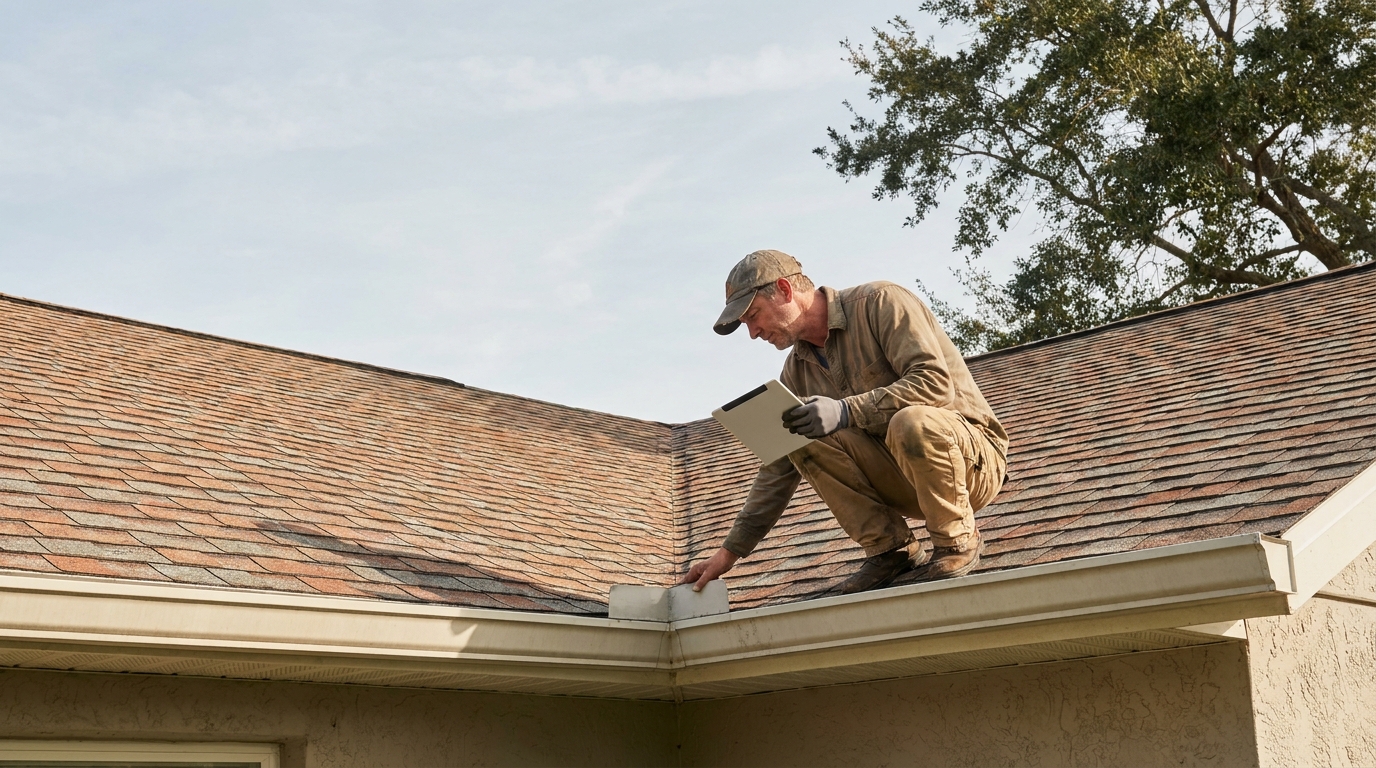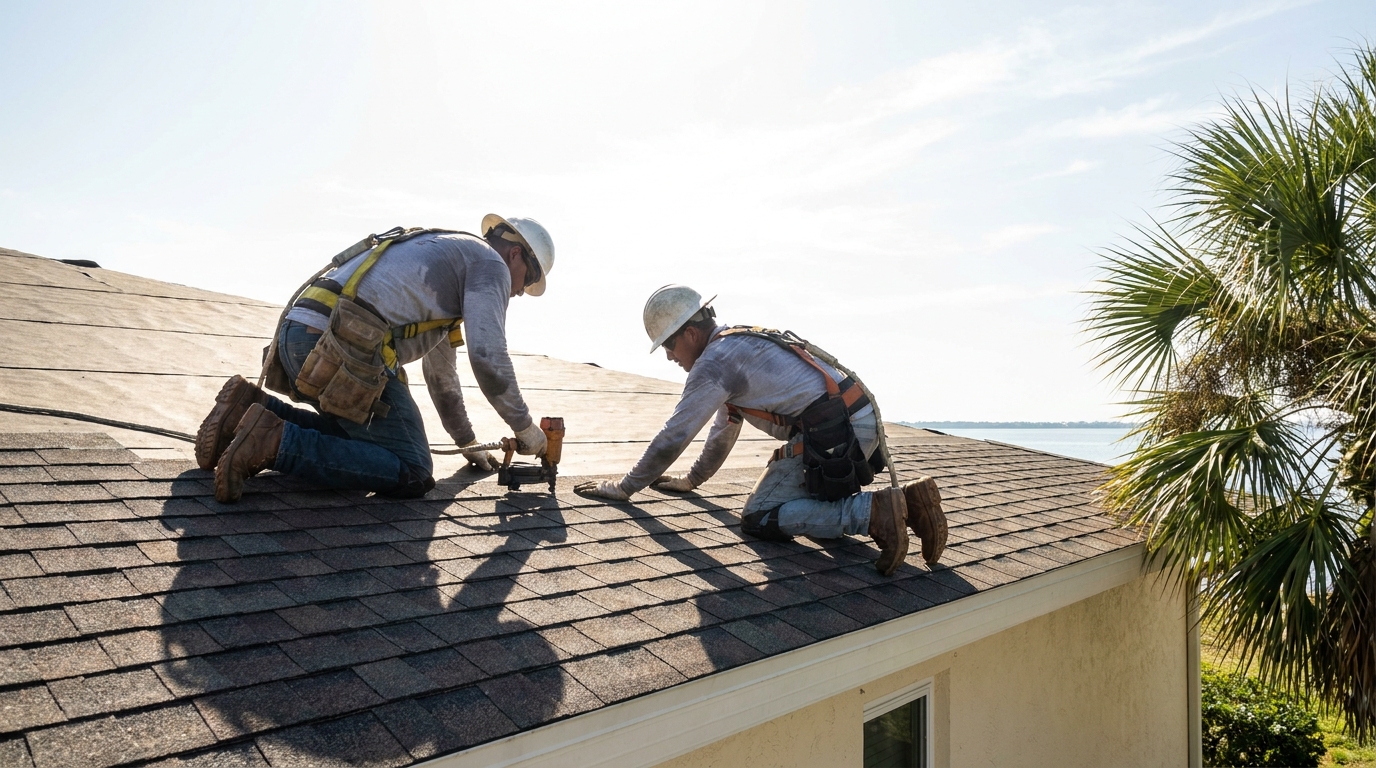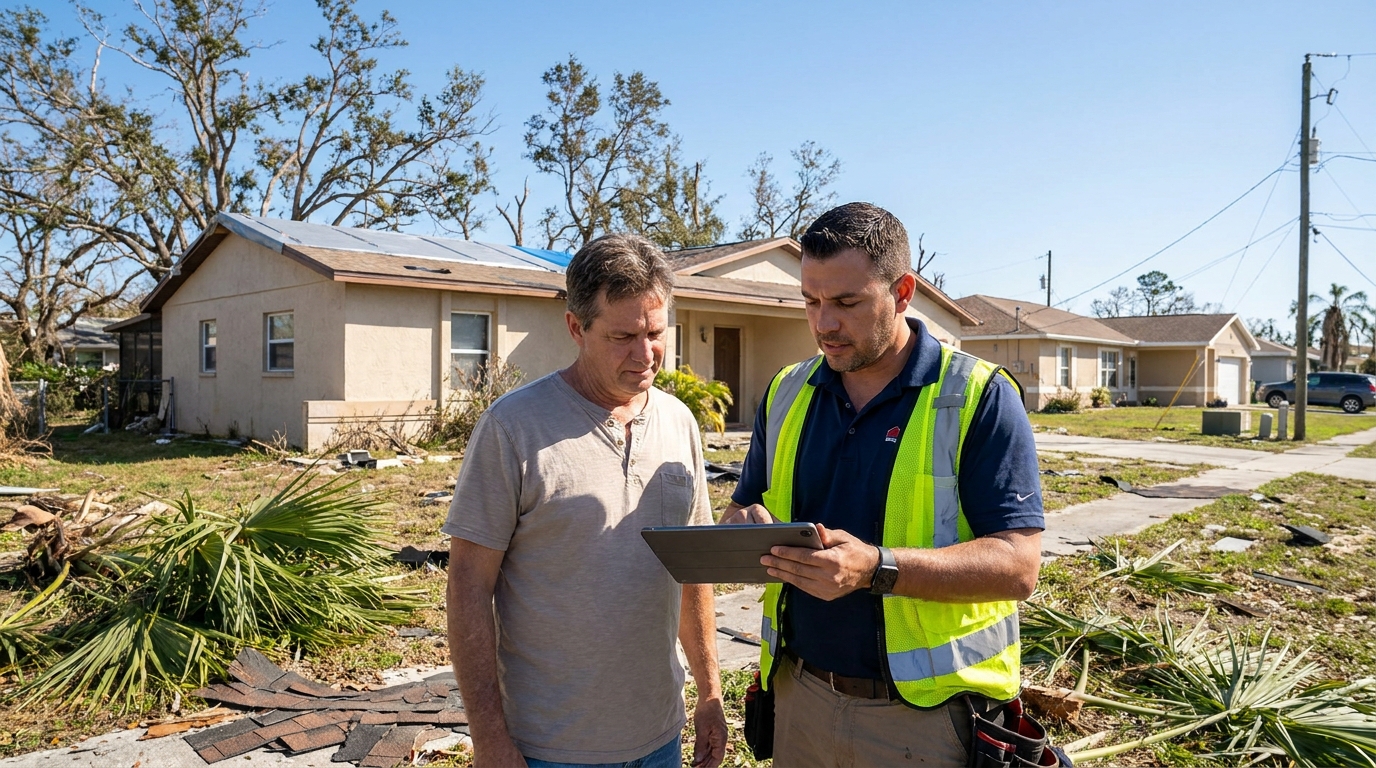
To find a trustworthy roofer after a hurricane in Tampa, verify the contractor holds an active Florida state license under Chapter 489 at MyFloridaLicense.com, refuse to pay large upfront deposits or sign an Assignment of Benefits, and use your statutory 10-day cancellation right under §489.147 if you feel pressured. Unlicensed contracting during a Governor-declared emergency is a third-degree felony in Florida — not a technicality.
The days after a hurricane are the most dangerous window a Tampa homeowner will face for roofing fraud. Out-of-state trucks appear in driveways in South Tampa, Carrollwood, and Brandon within hours of the storm. Some are legitimate licensed contractors expanding capacity under a DBPR emergency order. Many are not. This guide explains how to tell the difference before you sign anything.
Why is post-hurricane the highest-risk time to hire a roofer in Tampa?
After a Gulf Coast hurricane, demand for roof repair spikes overnight while supply of legitimate crews is fixed. That gap attracts "storm chasers" — out-of-state operators and unlicensed subcontractors who canvass damaged neighborhoods, collect deposits, and either disappear or perform substandard work. Florida law recognizes this pattern and criminalizes it more heavily during declared emergencies.
Under Florida Statute §489.127, performing contracting work without a license is normally a first-degree misdemeanor. During a Governor-declared state of emergency in the affected area, that same conduct is elevated to a third-degree felony carrying up to 5 years in prison and a $5,000 fine under §§775.082–775.083. The elevated penalty exists precisely because Tampa, Clearwater, and St. Petersburg homeowners are most vulnerable in the 30 to 180 days after a storm.
SCM Roofing, LLC works through hurricane season every year in Hillsborough County and sees the same patterns each cycle: door-to-door pressure, cash-only deposits, contracts written on the tailgate of a pickup. The countermeasures below are the ones that actually work.
How do I verify a roofer's Florida license during a declared emergency?
Search the contractor's name and license number at MyFloridaLicense.com before signing anything. A legitimate Florida roofing contractor holds either a Certified Roofing Contractor (CCC) or Registered Roofing Contractor (RC) license under Chapter 489, Part I. If the person at your door cannot produce a license number that matches an active status in the DBPR database, walk away.
Two nuances matter after a storm. First, DBPR may issue an emergency order under §120.54(4) temporarily suspending the §489.117 geographic restriction on registered contractors — meaning an RC-licensed roofer normally limited to another county may legitimately work in Hillsborough during the emergency period. Second, DBPR may suspend §489.113(3) subcontracting limitations, letting general, building, or residential contractors subcontract roofing work for any roof type during the declared period. Neither order legalizes unlicensed activity. If the license doesn't exist, no emergency order fixes that.
Ask specifically who will pull the permit. Under §252.381, counties and municipalities inside a Governor-declared hurricane emergency area may not increase building permit or inspection fees for storm-related work during the emergency. A contractor who refuses to pull a permit, or who asks you to pull it as the "owner," is trying to shift liability off their license.
What contract protections do Tampa homeowners have under Florida law?
Florida Statute §489.147 gives you a right to cancel any roofing contract signed within 180 days of a Governor-declared state of emergency covering your area, without penalty, for up to 10 days from signing — or until the contractor's official start date, whichever comes first. This is your primary defense against high-pressure driveway sales tactics after a Tampa Bay hurricane.
Two more legal points every Tampa homeowner should know before signing:
- No Assignment of Benefits (AOB). A roofer cannot legally take assignment of your post-loss insurance benefits on those policies. Any contract asking you to sign benefits over to the contractor is a red flag.
- Tarps are exempt, full replacements are not. Installing non-permanent emergency tarps to relieve hurricane damage falls under the §489.103(6) exemption and does not require a full contractor license when performed as described in applicable emergency orders. A full roof replacement or permanent repair does.
What are the specific scam patterns to watch for after a Tampa hurricane?
The most common post-hurricane scams in the Tampa Bay area follow predictable scripts. Recognizing them in the first 30 seconds of the conversation is worth more than any warranty.
| Scam pattern | What it looks like | What to do |
|---|---|---|
| Large upfront deposit | 50%+ demanded in cash or wire before materials arrive | Refuse. Legitimate contractors finance materials or bill in stages tied to milestones. |
| Door-to-door pressure | "We're in your neighborhood today only" pitch | Use your §489.147 10-day cancellation right; verify license first. |
| License borrowing | Crew uses someone else's license number on paperwork | Report to DBPR at 1-866-532-1440 — both parties face prosecution under §489.127. |
| AOB pressure | Asked to sign insurance benefits over to the roofer | |
| No permit pulled | Contractor says "we don't need one" or asks you to pull it | Report unpermitted work to City of Tampa Code Enforcement. |
How should Tampa homeowners actually vet a roofer in the weeks after a storm?
Vetting a post-hurricane roofer in Tampa comes down to five verifiable checks: state license status, local track record, written scope with permit responsibility named, insurance certificates, and payment terms tied to milestones rather than a large upfront deposit. Any contractor who resists any of the five is telling you something important.
Practical steps in order:
- Look up the license and disciplinary history at MyFloridaLicense.com.
- Confirm the business address is in Florida — ideally with a documented history in Hillsborough or Pinellas County, not a hotel or PO box that appeared after the storm.
- Read recent reviews with attention to communication, cleanup, and warranty follow-through. SCM Roofing, LLC's documented local track record reflects the kind of history that's hard to fake in the weeks after a hurricane.
- Ask for the manufacturer certification. GAF Master Elite status, for example, requires ongoing standing with the manufacturer.
- Get the payment schedule in writing. Deposits should be modest and tied to material delivery; final payment should follow permit sign-off, not precede it.
What should I do if I've already been scammed by a storm chaser?
If you've already paid an unlicensed contractor or signed a suspicious post-hurricane roofing contract in Tampa, act within your 10-day §489.147 cancellation window if it's still open, file a complaint with DBPR's Unlicensed Activity program at 1-866-532-1440 or via MyFloridaLicense.com using Uniform Complaint Form DBPR 0080-1, and report unpermitted work to City of Tampa Code Enforcement.
Additional avenues depending on the situation: price-gouging and deceptive trade practices go to the Florida Attorney General at 1-866-9-NO-SCAM; insurance-claim fraud goes to the Florida Department of Financial Services fraud hotline. Note one important limit — the Florida Homeowners' Construction Recovery Fund under §§489.140–489.144 is available only for claims against licensed contractors. Victims of unlicensed operators cannot recover from that fund, which is exactly why upfront license verification is the single most valuable step.
Frequently asked questions
How quickly should I hire a roofer after a hurricane hits Tampa?
Prioritize temporary protection first, permanent repair second. Non-permanent emergency tarping to prevent further water intrusion is exempt from full contractor licensing under §489.103(6) when performed as described in applicable emergency orders. Take that step within days. For the permanent repair or replacement, take the time to verify licensing and get written estimates — you have up to 180 days of statutory contract protections under §489.147.
Is it legal for an out-of-state roofer to work in Tampa after a hurricane?
Only if they hold a valid Florida license under Chapter 489. DBPR emergency orders may temporarily suspend geographic restrictions on already-licensed Florida registered contractors, letting them work outside their normal county. Those orders do not authorize out-of-state contractors without a Florida license to perform roofing work. Unlicensed activity during a declared emergency is a third-degree felony under §489.127.
How much of a deposit is reasonable to pay a Tampa roofer after a storm?
There is no statutory cap, but a modest deposit tied to material delivery — not a large lump sum before any work begins — is the industry norm. Storm-chaser scams almost always involve unusually large upfront deposits paid in cash or wire. Legitimate Tampa roofing contractors typically stage payments across contract signing, material delivery, and completion after permit sign-off.
Can a roofer take my insurance check directly under Florida's AOB rules?
Not on a residential property insurance policy issued or renewed on or after January 1, 2026. SB 2A eliminated Assignment of Benefits for those policies, so a roofing contractor cannot take assignment of your post-loss insurance benefits. Older policies may be subject to prior rules. Any post-hurricane contract asking you to assign benefits should be reviewed carefully before signing.
How do I file a complaint against an unlicensed roofer in Tampa?
Submit a complaint to DBPR's Unlicensed Activity program using Uniform Complaint Form DBPR 0080-1 or the online portal at MyFloridaLicense.com. The DBPR Unlicensed Activity hotline is 1-866-532-1440. For unpermitted construction work specifically, Tampa residents can also report to City of Tampa Code Enforcement through the Accela Citizen Access portal. Keep contracts, receipts, texts, and photos as evidence.
Does hurricane-related roofing work cost more because of permit fees in Tampa?
No. Under Florida Statute §252.381, counties and municipalities within a Governor-declared hurricane or tropical storm emergency area may not increase building permit or inspection fees for storm-related work during the emergency period. If a contractor claims permit costs have spiked because of the storm, that claim contradicts state law and is itself a warning sign.
Closing thoughts
Post-hurricane Tampa is a high-stakes market for anyone with roof damage. The homeowners who avoid problems are the ones who slow down for two things: verifying a Florida license at MyFloridaLicense.com, and reading the contract for AOB language, deposit size, and permit responsibility before signing. Those two habits eliminate the vast majority of storm-chaser risk.
Tampa homeowners who want the vetting handled by a licensed, GAF Master Elite Florida contractor with a documented local track record can reach SCM Roofing, LLC at https://scmroofingfl.com to schedule an inspection and get a written scope of work.