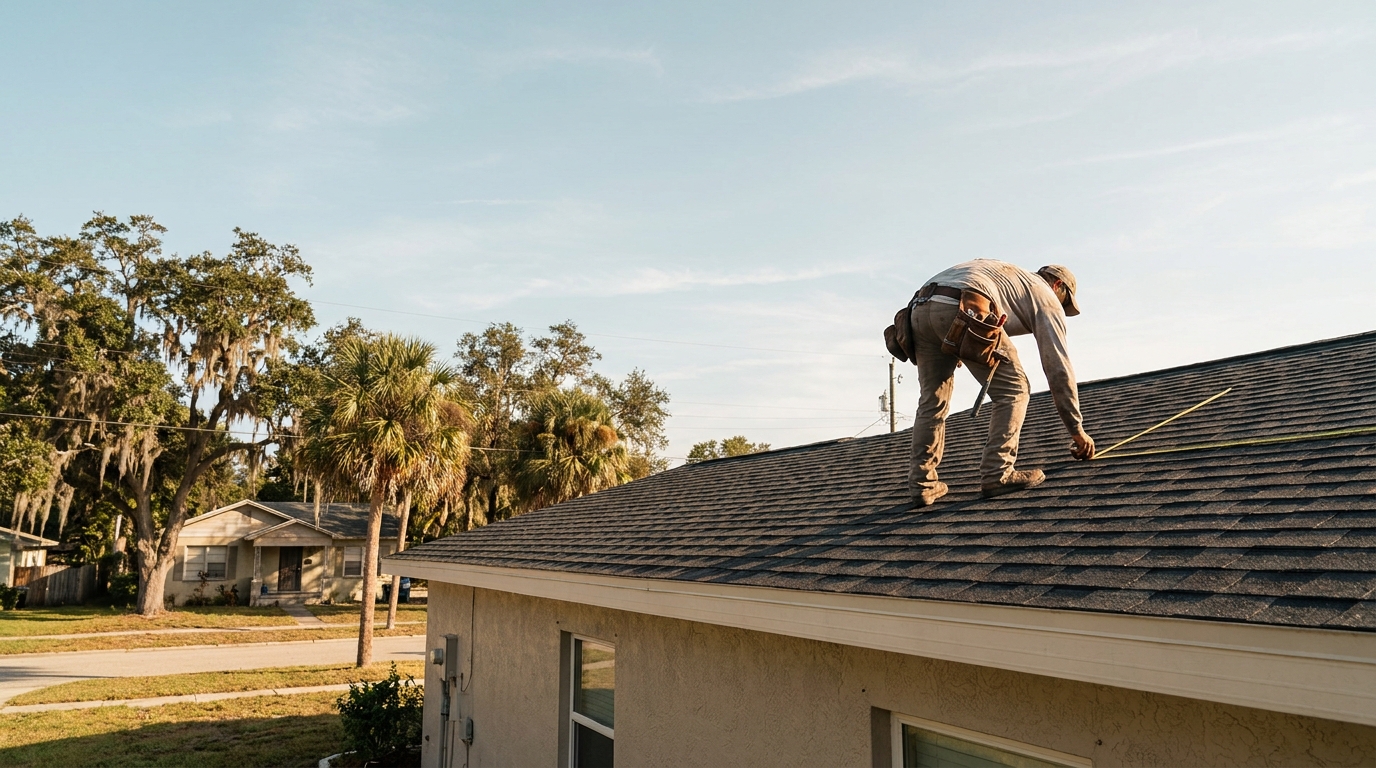
In St. Petersburg, a standard architectural asphalt shingle roof typically lasts about 15 to 22 years — a few years short of the 20–25 year lifespan cited for the broader Tampa Bay area, because coastal salt air, Gulf-intensified UV, and daily thermal cycling age shingles faster here than in more sheltered inland markets. Homes with direct Gulf or bay exposure sit at the low end of that range; sheltered inland lots sit at the high end.
Why do shingle roofs wear out faster in St. Petersburg than inland Florida?
Shingle roofs wear out faster in St. Petersburg because the city is a coastal peninsula in Pinellas County — Florida's most densely populated county — where virtually every property sits within a few miles of salt water. A shingle roof on nearby Clearwater Beach, in direct salt air, will show wear 3–5 years sooner than the same shingle installed on the mainland, according to local roofing data.
That coastal penalty compounds with Florida's baseline climate stress. The same product that comfortably reaches 25 years in a shaded Georgia subdivision is fighting UV, humidity, and salt-laden wind every day here. SCM Roofing has seen this pattern across the Gulf Coast counties it serves — Pinellas, Hillsborough, Manatee, Sarasota, Charlotte, Collier, Lee, and Pasco — and it changes how a St. Petersburg roof should be specified and installed.
How does salt air actually damage an asphalt shingle roof?
Salt air damages a shingle roof primarily by corroding the metal components — nails, staples, flashing, drip edge, valley metal, and vent collars — before the shingles themselves fail. Once fasteners corrode or flashing perforates, water finds a path under the shingles, and the roof fails from the deck up rather than the surface down.
Airborne salt is carried inland on sea breezes and deposited on the roof, where humidity and rain keep it in solution against metal surfaces almost continuously. Standard galvanized fasteners and painted steel flashing age fast under those conditions. On directly exposed coastal installs — think barrier islands and Gulf-front lots — SCM Roofing uses marine-grade or stainless steel flashings specifically because of the corrosive salt environment; the same logic applies to exposed metal anywhere a St. Petersburg home takes direct onshore wind.
How do UV and heat cycling shorten shingle life in St. Petersburg?
UV radiation breaks down the asphalt binder that holds a shingle's granules in place, and daily thermal cycling — from cool overnight dew to roof-deck temperatures well above air temperature on summer afternoons — expands and contracts the mat until it loses flexibility. The visible result is granule loss, curling edges, and brittleness that makes shingles crack when walked on.
Granules are the shingle's sunscreen. When they wash into the gutters, the asphalt underneath is exposed directly to UV and begins to oxidize fast. A roof that still looks acceptable from the street can be past its serviceable life once you're close enough to see bare patches around valleys and south-facing slopes.
What role do hurricanes and tropical storms play?
Hurricanes and tropical storms accelerate the end of a shingle roof's life by lifting tabs, breaking seals between courses, and driving rain under compromised areas — damage that often isn't visible from the ground but shortens the roof's remaining lifespan by years. Florida's hurricane season runs June 1 through November 30, and even a brush with tropical-storm-force winds can degrade an older roof's wind resistance.
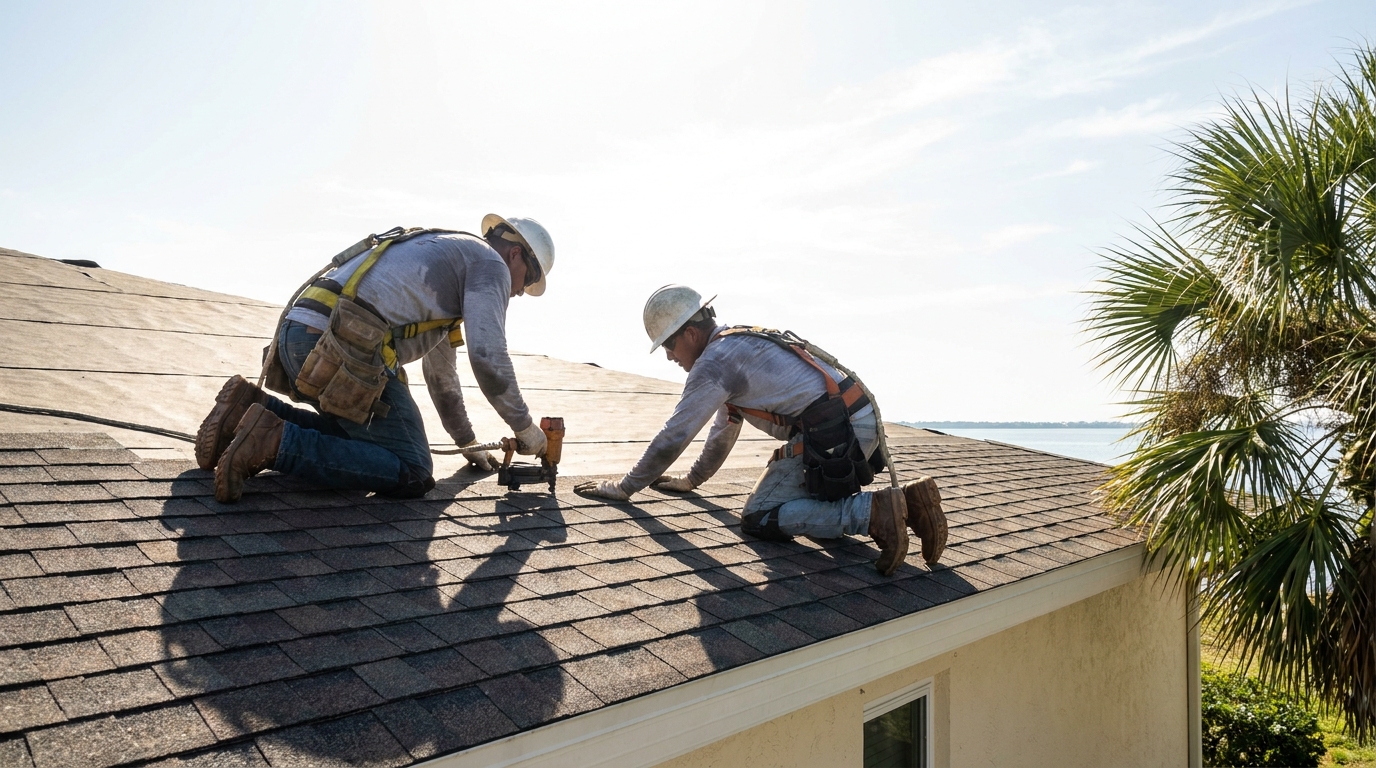
Installation quality is the main variable homeowners can control. Florida's high-wind zones require architectural shingles to be installed with six nails per shingle rather than the standard four — SCM Roofing installs to that six-nail pattern, which materially improves uplift resistance. The company also tears off down to the deck rather than roofing over existing layers, because an overlay hides deck damage and compromises the new roof's wind rating.
What is the realistic shingle roof lifespan in St. Petersburg?
A realistic shingle roof lifespan in St. Petersburg is roughly 15 to 22 years for architectural shingles, assuming proper installation and routine maintenance; 3-tab shingles generally fall toward the lower end of the asphalt shingle lifespan range. Direct coastal exposure pushes those numbers to the low end; sheltered inland lots with good attic ventilation reach the high end. The 20–25 year figure often quoted for Tampa Bay is a reasonable ceiling, not a default expectation.
| Shingle type | Typical Tampa Bay life | Direct coastal exposure | Standard manufacturer warranty |
|---|---|---|---|
| 3-tab shingles | 15–20 years | 12–17 years | 20–30 year limited |
| Architectural (dimensional) | 20–25 years | 17–22 years | Lifetime / lifetime-limited |
| Luxury / designer shingles | 25+ years | 22+ years | Lifetime / lifetime-limited |
Warranty length is not the same as service life. The lifetime term also usually refers only to the original owner of the home when the shingles were installed.
What warning signs mean a St. Petersburg roof is near the end?
Warning signs that a St. Petersburg shingle roof is approaching replacement include heavy granule accumulation in gutters, curling or cupping tabs, dark streaks from algae growth, exposed asphalt on south- and west-facing slopes, rust stains below flashing or vents, and daylight visible through the attic sheathing. Any one of these on an aging roof warrants an inspection.
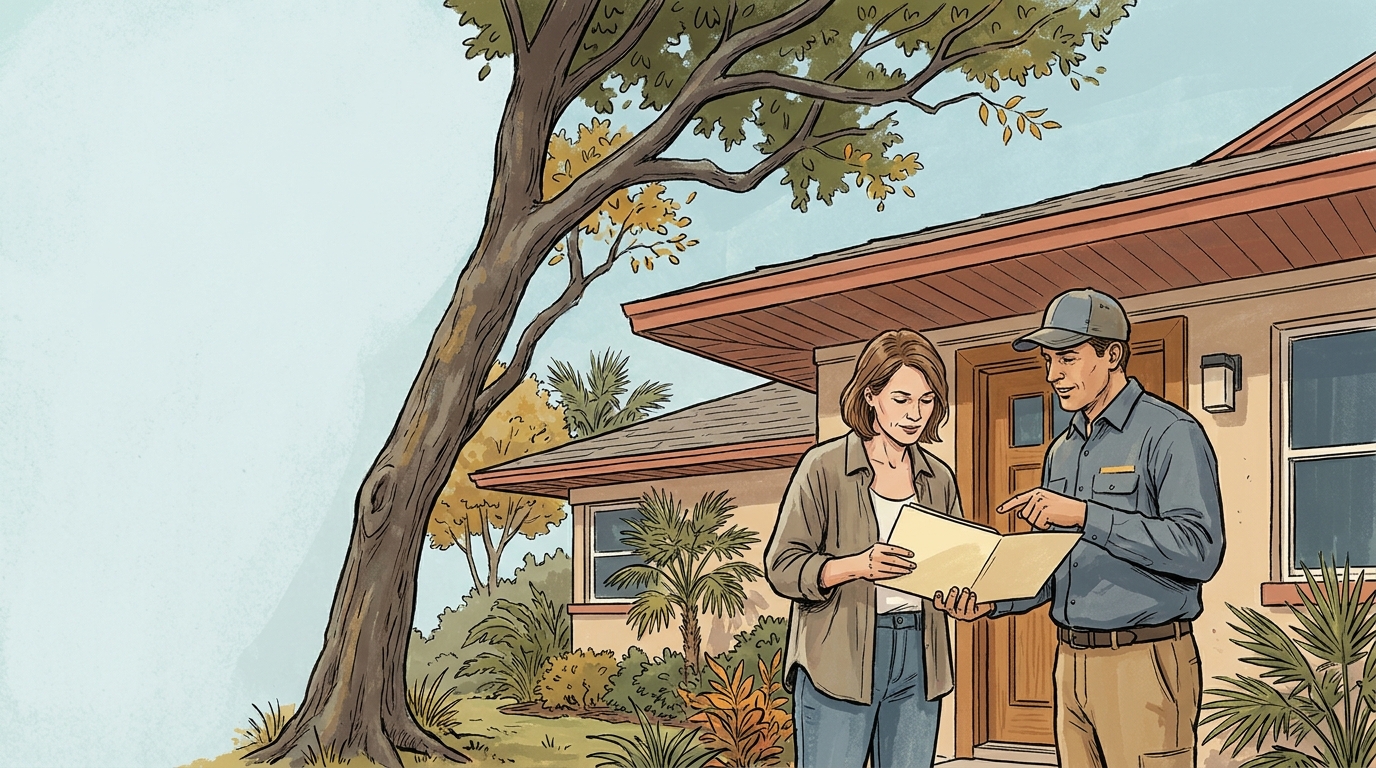
Interior clues matter too: ceiling stains after wind-driven rain, musty attic odors, and spongy roof-deck feel underfoot during inspection all point to water intrusion through compromised flashing or fasteners. SCM Roofing recommends Florida homeowners schedule roof inspections twice per year — once before hurricane season in June and once after it ends in November — specifically to catch these issues before they become interior damage.
How much does a shingle roof replacement cost in St. Petersburg in 2026?
Shingle roof replacement in the St. Petersburg area is driven by home size, pitch, tear-off scope, decking repairs, flashing upgrades, and post-storm demand — not by a flat per-square-foot price.
Those are market ranges, not quotes. The honest cost driver for a coastal St. Petersburg home is scope — marine-grade flashing, six-nail installation, decking repairs discovered after tear-off, and permit fees under the Florida Building Code all affect the final number. For a specific figure on your home, request an itemized estimate from your contractor.
What permits and code requirements apply to re-roofing in St. Petersburg?
Re-roofing in St. Petersburg requires a building permit, a Florida-licensed roofing contractor, and compliance with the Florida Building Code. Permits are administered by the City of St. Petersburg or Pinellas County depending on the property's jurisdiction, under Florida's building-permit law (§553.79). Florida building code adds roof-replacement protections for site-built single-family homes, including improved roof-deck attachment and a secondary water barrier.
Roofing contractors in Florida are regulated under Chapter 489 and must hold an active state license, verifiable through the Florida DBPR license lookup. SCM Roofing's Florida state contractor license number is CCC1331132, and owner Scott Marone holds both a Florida State General Contractor's license and a Roofing Contractor's license. Hiring an unlicensed roofer in Florida voids insurance coverage and leaves the homeowner liable for permit and code violations.
What a St. Petersburg homeowner's experience looks like
After the recent hurricanes damaged our roof, I went online to find a highly rated Tampa roofer. SCM was both highly rated and reasonably priced so I went with them and was very satisfied. From beginning to end, their rep (Robbie) was very helpful in explaining the different options, providing a contract and making sure the job got done right. When rain forced a delay in starting, he was proactive in informing us and rescheduling the job. With a two-story house, it’s hard to view the completed work up close, but the crew gave every impression that they knew what they were doing, and they very carefully cleaned up afterwards. The final bill was precisely what the estimate stated. Couldn’t ask for better service!
Frequently asked questions
How long do shingle roofs last in St. Petersburg, FL?
Shingle roofs in St. Petersburg typically last 15 to 22 years for architectural shingles, with 3-tab shingles generally falling toward the lower end of that range. The Tampa Bay baseline is about 20–25 years, but direct coastal exposure to salt air reduces effective lifespan by 3–5 years. Installation quality, attic ventilation, and whether the home sits on a barrier island or inland all shift the number within that range.
Does salt air really affect inland St. Petersburg homes, or only Gulf-front properties?
Salt air affects nearly every St. Petersburg home because Pinellas County is a coastal peninsula surrounded by saltwater on multiple sides. Direct Gulf-front and barrier island properties see the strongest 3–5 year lifespan reduction, but inland St. Petersburg homes still experience measurable corrosion of fasteners and flashing. The effect simply attenuates with distance from open water and prevailing wind direction.
Is a lifetime shingle warranty actually a lifetime of coverage?
A lifetime shingle warranty covers manufacturing defects for the original homeowner, not the full physical life of the roof under coastal conditions. It does not cover salt corrosion, UV wear, storm damage, or installation errors — those fall under separate coverage. Transferability is also limited; most manufacturer warranties restrict or reduce coverage when the home changes hands.
Can I just re-roof over my existing shingles to save money?
Roofing over existing shingles is generally a false economy in St. Petersburg. An overlay hides deck damage, traps heat that accelerates aging of the new layer, and compromises wind-uplift ratings critical in Florida's high-wind zones. SCM Roofing removes all old material down to the deck before installing a new roof, which is the approach required to properly inspect sheathing, upgrade attachment, and install a secondary water barrier under §553.844.
When is the best time of year to replace a shingle roof in St. Petersburg?
The best window for shingle roof replacement in St. Petersburg is roughly December through May, before hurricane season starts and before summer humidity and afternoon storms peak. Scheduling in that window typically means shorter lead times, lower risk of weather delays, and avoiding the post-storm demand surges that strain contractor availability and permit timelines.
What makes a shingle roof installation hold up better on the coast?
Coastal-grade installation details that extend shingle roof life in St. Petersburg include architectural shingles rated for high wind, six-nail fastening per shingle as required in Florida's high-wind zones, marine-grade or stainless steel flashings, full tear-off to the deck, a secondary water barrier, and twice-yearly inspections. Specifying these upfront, rather than defaulting to minimum code, is what keeps a coastal roof closer to the high end of its lifespan range.
The bottom line for St. Petersburg homeowners
Salt air, Gulf-intensified UV, and daily thermal cycling all compress the serviceable life of a shingle roof in St. Petersburg. Plan around 15–22 years for architectural shingles rather than the 25-year ceiling marketed nationally, and build inspection and maintenance into your routine from year ten onward. Specify coastal-grade flashing and six-nail installation when you re-roof, and the roof will reward you with more of its warranty years.
St. Petersburg homeowners who want this handled professionally can reach SCM Roofing — a GAF Master Elite Certified contractor with 25+ years of experience serving Pinellas and the surrounding Gulf Coast counties — at (855) 726-7663 or https://scmroofingfl.com to schedule an inspection or get an itemized estimate.