Florida’s 25% Rule Explained: When a Roof Repair Becomes a Full Replacement
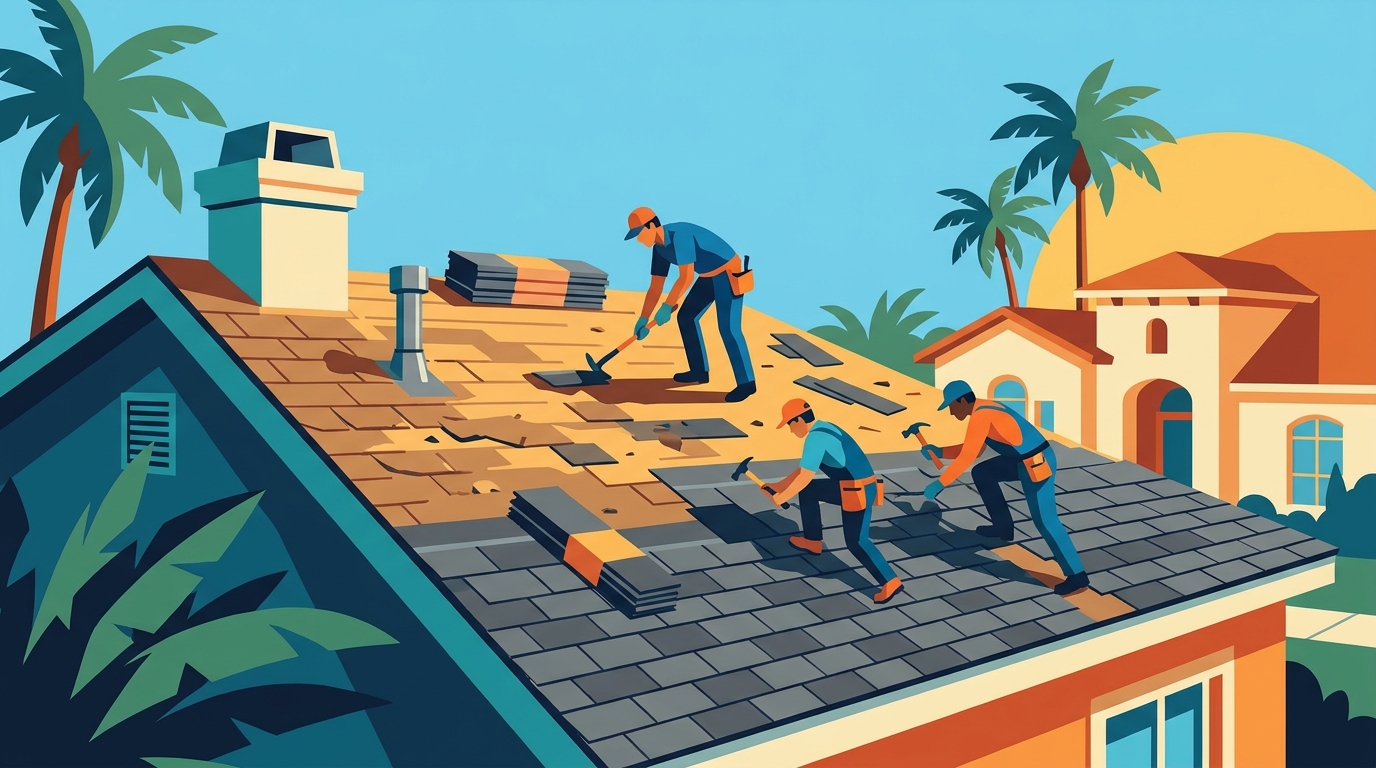
When damage or work exceeds 25% of your total roof area, the Florida Building Code requires the entire roof system to be brought up to the current building code. That means a repair turns into a full replacement — with full code compliance for underlayment, fastening, flashing, and structural connections. This is one of the most misunderstood rules in Florida roofing, and it catches homeowners off guard every hurricane season.
Table of Contents
- What Is Florida’s 25% Roof Replacement Rule?
- How Is the 25% Threshold Calculated on a Florida Roof?
- What Scenarios Trigger the 25% Rule for Gulf Coast Homeowners?
- What’s Changing with the 25% Rule in the 2026 Building Code?
- How Does the 25% Rule Affect Roof Insurance Claims?
- What SCM Roofing Recommends
- Frequently Asked Questions
- Key Takeaways
What Is Florida’s 25% Roof Replacement Rule?
The 25% rule is straightforward in concept: if you’re replacing more than 25% of your roof covering, the entire roof must be torn off and rebuilt to meet the current Florida Building Code. That doesn’t just mean new shingles — it means the underlayment, the fastening pattern, the deck attachment, the flashing, and the roof-to-wall connections all must meet whatever code is in effect at the time of permitting.
This rule exists because Florida’s building code is designed to progressively bring the state’s housing stock up to modern hurricane standards. Every time a significant portion of a roof is replaced, it’s an opportunity to upgrade the entire system. The code draws the line at 25% as the threshold between a minor repair and a major renovation.
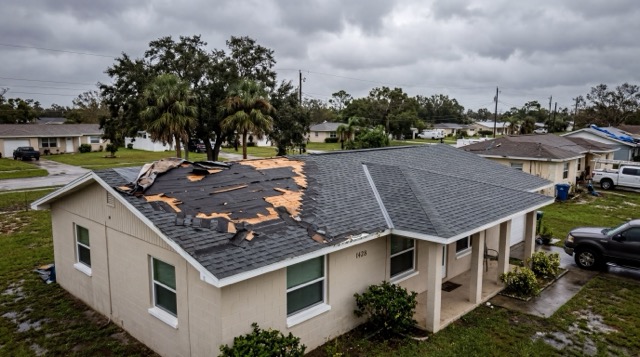
For Gulf Coast homeowners, this rule comes into play most often after storms. A hurricane that damages one slope of your roof might only affect 20% of the total area — in which case you can repair just that section. But if the damage extends to 26% or more, you’re looking at a full replacement project with full code compliance.
The rule applies to the roof covering (shingles, tiles, or metal panels) and extends to the entire roofing system underneath. Replacing more than 25% of the covering triggers full compliance for the underlayment, deck attachment, and structural connections across the entire roof.
How Is the 25% Threshold Calculated on a Florida Roof?
The calculation starts with your total roof area — the entire surface area of your roof, including all slopes, sections, and penetrations. This is measured in square feet by your roofing contractor and verified by the local building department when you pull the permit.
The 25% threshold is based on the area being torn off and replaced, not the area being repaired. A patch over a small leak doesn’t count. But removing and replacing shingles on an entire slope does. If your roof is 2,000 square feet and you’re replacing a 600-square-foot section, that’s 30% — above the threshold.
Your contractor measures the damaged or deteriorated area and submits this calculation with the permit application. The local building department — the Authority Having Jurisdiction (AHJ) — reviews the application and determines whether the 25% threshold has been exceeded.
Here’s where it gets complicated: different AHJs interpret edge cases differently. A building department in Lee County may calculate differently than one in Pinellas County on a borderline case. Your contractor’s experience with the local building department matters because they know how that jurisdiction handles gray areas.
The measurement also includes cumulative work. If you replaced 15% of your roof after one storm and then need to replace another 15% after a second storm within the same code cycle, some jurisdictions will count that as 30% cumulative and trigger the full replacement requirement.
What Scenarios Trigger the 25% Rule for Gulf Coast Homeowners?
Here are the real-world situations where Gulf Coast homeowners run into the 25% rule:
Storm damage to one slope of a multi-slope roof. A hurricane strips the shingles off the south-facing slope of your hip roof. If that slope represents more than 25% of the total roof area, you’re into a full replacement. On many Florida homes with simple hip roofs, each slope represents roughly 25% of the total, so losing one full slope puts you right at the threshold.
Tree damage to a large section. A live oak comes down and takes out a 30-foot section of your roof — the structure, the deck, and the covering. Even if the rest of the roof is in perfect condition, if the damaged area exceeds 25%, the entire roof must meet current code.
Multiple leak repairs adding up. You’ve had three or four leak repairs over the years, each in a different section. When the next one comes, the building department may look at the cumulative area that’s been addressed and determine you’ve crossed the 25% mark.
Insurance-funded section replacement. Your insurance adjuster scopes out damage to 30% of your roof. Even though insurance is paying for the repair, the building code still applies. The scope becomes a full replacement with full code compliance.
Aging roof with localized failure. Your 20-year-old shingle roof is mostly holding up, but one area is failing — granule loss, curling, and leaks. You want to just replace that section, but if it’s over 25%, the code says the whole system goes.
What’s Changing with the 25% Rule in the 2026 Building Code?
The 9th Edition Florida Building Code, effective December 31, 2026, revises the 25% rule with an important new exception.
Under the new code, partial roof replacement is allowed even when damage exceeds 25% — if the remaining, undamaged portion of the roof was originally built to 2007 Florida Building Code standards or newer. This means the existing structure already meets a modern hurricane resistance standard, and requiring a full tear-off and rebuild would be unnecessary and wasteful.
This is a meaningful change for homes built after 2007. If you have a 15-year-old roof that was built to 2007 code and a storm damages 35% of it, you can replace just the damaged section without triggering full code compliance for the undamaged 65%. The undamaged portion already meets the standard.
For older homes — those built before 2007 — the rule works the same as before. If damage exceeds 25%, the entire roof must be brought up to the current code. This affects a large number of Gulf Coast homes, particularly pre-2000 construction in Charlotte, Lee, Manatee, and Hillsborough counties.
The practical impact: homeowners with newer homes save money on storm repairs because they can fix just what’s broken. Homeowners with older homes still face the full replacement requirement, but that’s often to their benefit — upgrading the entire system to modern standards makes the home safer and more insurable.
How Does the 25% Rule Affect Roof Insurance Claims?
The 25% rule creates an interesting dynamic with insurance claims, and understanding it can affect your outcome.
When your insurance adjuster scopes storm damage, they’re determining the area that needs to be replaced. If that scope exceeds 25%, the building code requires a full replacement. In most cases, your insurance policy covers the additional cost of bringing the entire roof up to code — this falls under the "law and ordinance" or "building code upgrade" coverage in your policy. But this coverage has limits, and not every policy includes it.
Some adjusters will scope damage conservatively, keeping it just under 25% to limit the payout to a section replacement rather than a full reroof. This is where having your own contractor’s assessment matters. If your contractor measures 28% damage and the adjuster measures 23%, that’s a difference of tens of thousands of dollars.
There are also situations where the 25% rule works in the homeowner’s favor. If you have an aging roof that needs replacement anyway and a storm damages 30% of it, the insurance claim covers the full replacement because the code requires it. You get a new roof system built to current standards, partially funded by insurance.
The key step: before filing your claim, have a licensed roofing contractor assess the damage independently. Know your numbers before the adjuster arrives. And review your policy’s building code upgrade coverage before hurricane season — not after a storm hits.
What SCM Roofing Recommends
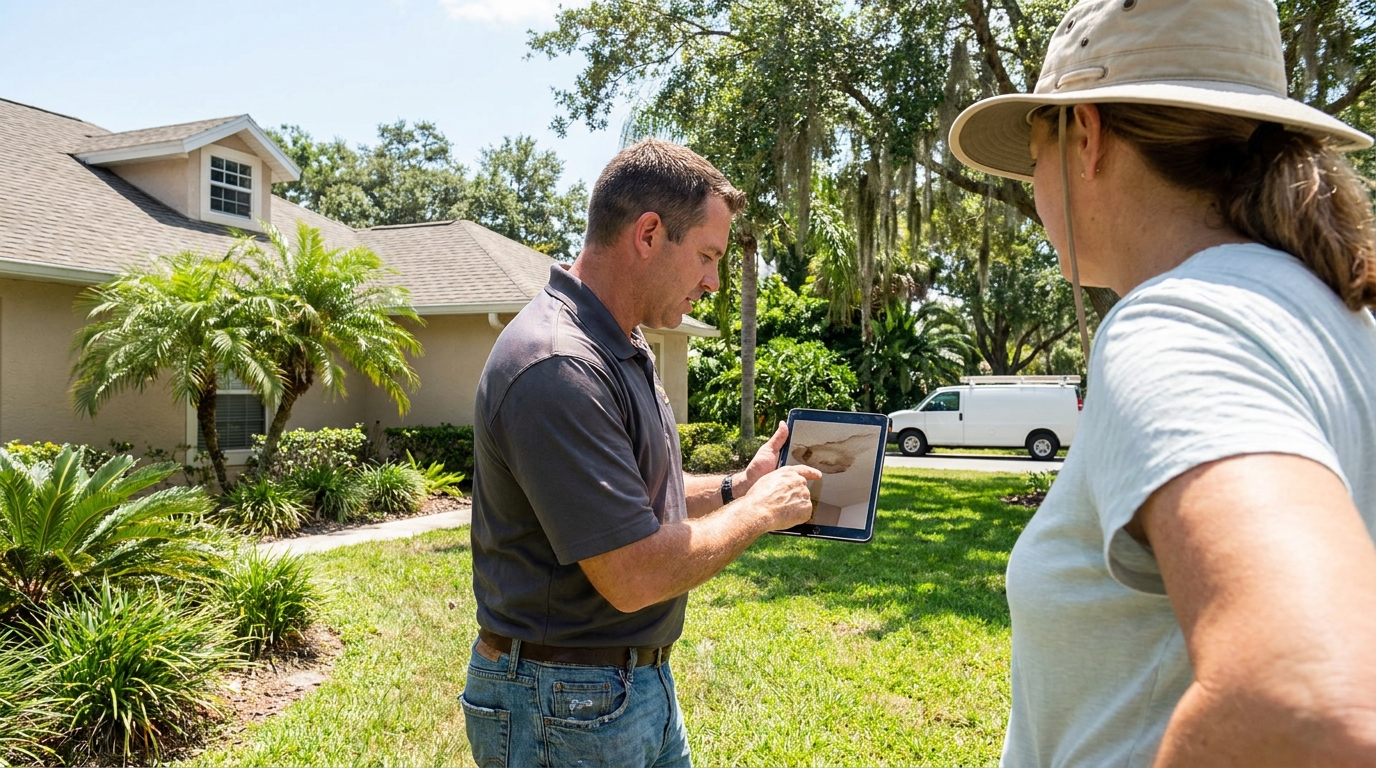
This is one of the most common questions we get after storms hit the Gulf Coast. A homeowner calls and says they need a roof repair, and after we assess the damage, we have to explain that the building code says it’s actually a full replacement.
At SCM Roofing, we measure the damage honestly. We don’t inflate the scope to sell a bigger job, and we don’t minimize it to make the project seem simpler than it is. The 25% threshold is a code requirement — not a suggestion — and the building department makes the final determination when we pull the permit.
As a GAF Master Elite certified contractor, we pull every permit and work directly with the local building department. When we submit a permit application, the damage area calculation is included. If the AHJ determines the work exceeds 25%, we walk the homeowner through what full code compliance means, what it costs, and how to work with their insurance carrier to cover it.
SCM Roofing serves all eight counties on Florida’s Gulf Coast. Whether your building department is in Hillsborough, Lee, Pinellas, or Sarasota, we know how each jurisdiction handles the 25% rule and can guide you through the process.
---
Frequently Asked Questions
Q: What happens if more than 25% of my Florida roof is damaged?
A: If more than 25% of your roof area is damaged or being replaced, the Florida Building Code requires the entire roof system to be brought up to the current code. That means a full tear-off and replacement with current-standard underlayment, fastening, flashing, and structural connections. This is a code requirement enforced by the local building department.
Q: Can I just repair part of my roof without replacing the whole thing in Florida?
A: Yes, as long as the repair area is 25% or less of your total roof area. Below that threshold, you can replace just the damaged section. Above 25%, the entire roof must meet current building code. The 2026 code revision adds an exception for homes built to 2007 or newer standards.
Q: How does the 25% rule affect my roof insurance claim on the Gulf Coast?
A: If damage exceeds 25% and triggers a full replacement, your insurance policy’s building code upgrade coverage (also called law and ordinance coverage) typically covers the additional cost. Review your policy to confirm this coverage is included and check the limits. Having your contractor independently measure damage before the adjuster arrives helps ensure the scope is accurate.
Q: Is the 25% roof replacement rule changing in 2026?
A: Yes. The 9th Edition Florida Building Code, effective December 31, 2026, adds an exception: if the undamaged portion of your roof was built to 2007 code or newer, partial replacement is allowed even when damage exceeds 25%. This benefits homes built after 2007 but doesn’t change the rule for older construction.
Q: How much does a full roof replacement cost compared to a repair in Florida?
A: A section repair on the Gulf Coast typically runs $2,000 to $8,000 depending on the area and materials. A full roof replacement on a standard Florida home ranges from $12,000 to $30,000 depending on size, material, and code requirements. When the 25% rule triggers a full replacement, the cost difference is significant — which is why getting an accurate damage assessment matters.
---
Key Takeaways
- Florida’s 25% rule means that replacing more than 25% of your roof area triggers a full code-compliant replacement of the entire roof system — not just the damaged section.
- The 2026 code revision adds an exception for homes built to 2007 standards or newer, potentially saving those homeowners thousands on storm repairs.
- Insurance claims are directly affected by the 25% threshold — get an independent contractor assessment before your adjuster scopes the damage.
- SCM Roofing measures damage honestly, pulls all permits, and works with local building departments across all eight Gulf Coast counties to ensure your project meets code.
---
Need an honest assessment of your roof damage? SCM Roofing provides free estimates across Charlotte, Collier, Hillsborough, Lee, Manatee, Pasco, Pinellas, and Sarasota counties. Call us at 855-SCM-ROOF or request an appointment online.