If you've ever stood on an asphalt shingle roof in Tampa at 2 p.m. in July, you already understand the problem. Surface temperatures on a dark roof can climb well above the ambient air temperature, turning a hot afternoon into an extreme work surface. Add Gulf Coast humidity, minimal shade, and physically demanding labor, and you have one of the most heat-intensive job environments in the construction trades.
Heat-related illness is preventable. But prevention requires more than handing out water bottles. It requires real protocols, real scheduling discipline, and a crew culture that treats heat as the serious hazard it is. Here's how professional roofers in the Tampa Bay area approach summer safety — and what homeowners should expect from any contractor working on their home between May and October.
Why Tampa Summers Are Uniquely Dangerous for Roof Work
Tampa's summer heat isn't just hot — it's persistently humid. From late May through September, persistently high dew points suppress the body's ability to cool itself through sweat evaporation. Heat index values across Hillsborough County regularly reach dangerous levels during afternoon hours, and on a roof in direct sun, the effective exposure is meaningfully higher.
Layer in Florida's afternoon thunderstorm pattern, which typically rolls in between 2 and 5 p.m., and you have a compressed safe-work window. Lightning is a separate hazard entirely — and one that ends roof work immediately, not eventually. Crews working in South Tampa, Brandon, or out near the Westshore business district all face the same compressed daily schedule: get the heavy lifting done before the heat and storms arrive.
Core Heat Safety Protocols for Florida Roofing Crews
Federal workplace safety regulations require employers to protect workers from recognized hazards — and heat illness on a Florida roof in July is about as recognized as a hazard gets. Reputable roofing companies build their summer protocols around established heat-safety frameworks, adapted for Gulf Coast conditions.
1. Schedule Work Around the Heat, Not Against It
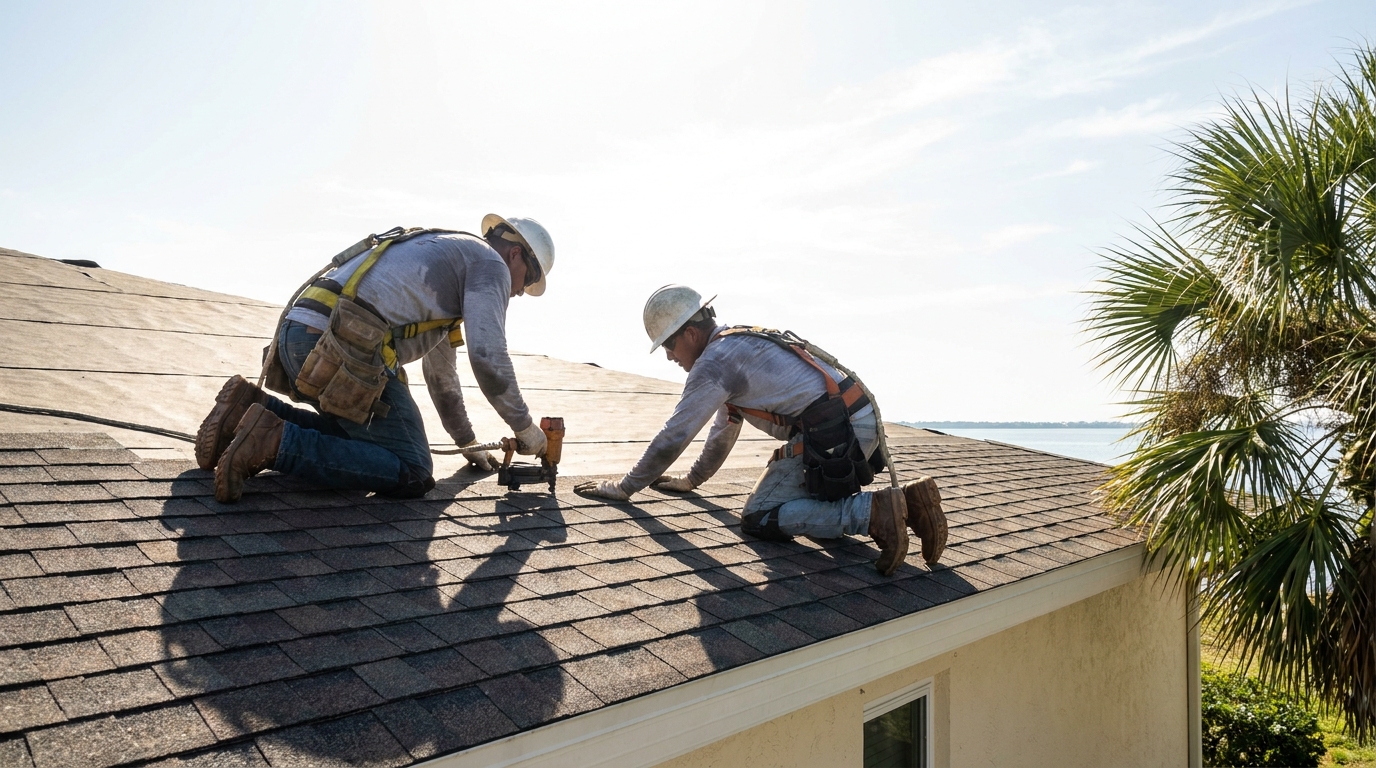
The single most effective heat safety measure is starting early. Crews working on Tampa homes in summer typically begin at first light — often 6:30 a.m. — and aim to complete the most physically demanding tasks (tear-off, dry-in, hauling bundles) before 11 a.m. Afternoon hours are reserved for lighter finish work, cleanup, or are simply called off when the heat index spikes.
2. Hydration on a Schedule, Not on Demand
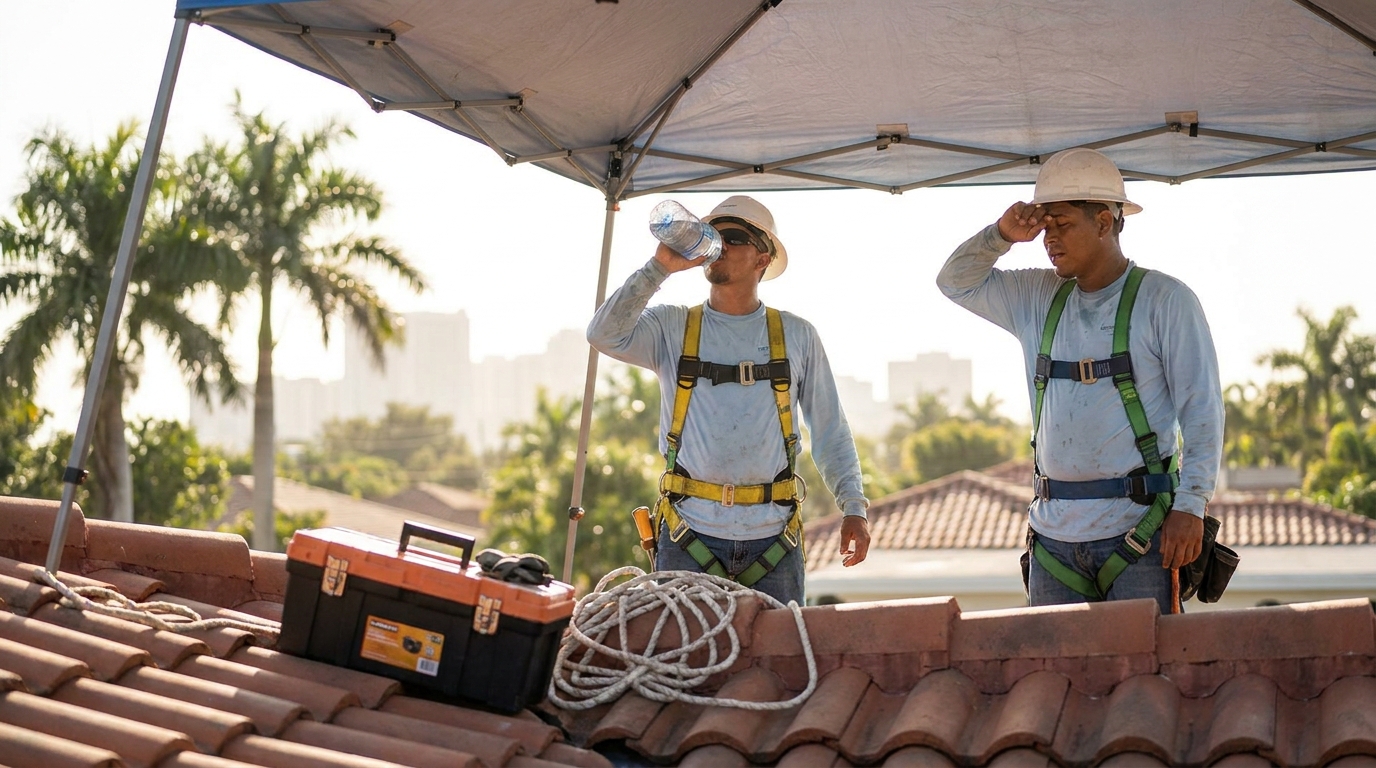
By the time a worker feels thirsty, they're already behind. Best-practice protocols call for frequent, scheduled water intake during active work, with electrolyte replacement during extended shifts. Coolers stay on the truck and on the roof. Sugary drinks and energy drinks are out — they accelerate dehydration.
3. Mandatory Shade and Rest Cycles
Established guidance for heavy work at high heat index levels recommends regular rest periods in shade proportional to the intensity of the heat. At extreme heat index levels — which can occur on Tampa roofs in August — that ratio shifts further toward rest, or work stops entirely. Crews should have a designated shade area at ground level, not just a tarp on the roof.
4. Acclimatization for New and Returning Workers
A worker returning from vacation or a new hire starting in July needs a graduated exposure schedule, incrementally building up to a full workload over several days. Most serious heat illness incidents in roofing happen to unacclimatized workers in their first week. This is non-negotiable on any responsibly run crew.
5. Buddy System and Symptom Awareness
Heat exhaustion and heat stroke don't always announce themselves to the person experiencing them. Confusion, slurred speech, and stopping sweating are late-stage warning signs that require immediate intervention. Crews should be trained to watch each other and pull a coworker off the roof at the first signs of trouble — headache, nausea, dizziness, cramping.
Gear That Actually Helps in Florida Humidity
Standard construction PPE isn't optimized for Gulf Coast summers. Effective hot-weather roofing gear includes:
- Light-colored, moisture-wicking long sleeves — counterintuitively cooler than short sleeves because they block UV and allow sweat evaporation
- Wide-brim hard hat accessories or vented hard hats with neck shades
- Cooling neck wraps (evaporative or phase-change) refreshed every couple of hours
- Roofing-specific soft-sole boots with heat-resistant compounds — standard rubber soles can soften and lose grip on hot shingles
- UV-rated safety glasses — Florida's UV index reaches extreme levels in summer
- Personal harnesses inspected for heat damage — webbing degrades faster in sustained UV exposure
Fall Protection Doesn't Pause for Heat
It's tempting to cut corners on harnesses and anchor points when you're already miserable from the heat. Don't. Florida Building Code and OSHA fall-protection requirements apply regardless of temperature, and falls remain among the most serious hazards in roofing. Anchor points, properly fitted harnesses, and secured ladders are the baseline — not the upgrade.
Tampa homes in older neighborhoods like Seminole Heights and Hyde Park often feature steep pitches and aging decking that compound the risk. Heat-related fatigue increases the likelihood of a misstep, which makes fall protection more critical in summer, not less.
What Homeowners Should Expect From a Professional Crew
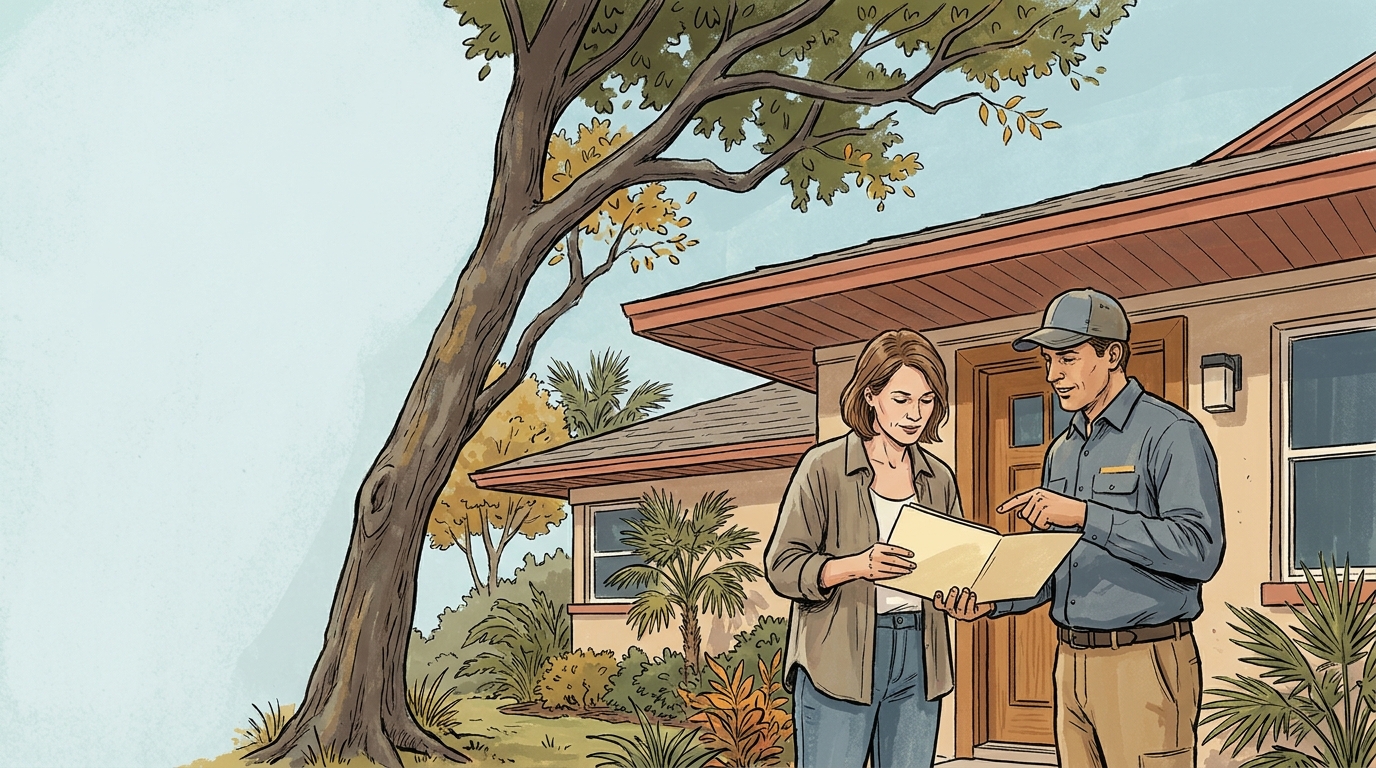
If you're scheduling roof work in Tampa during summer months, here's what a properly run job looks like from your driveway:
- Crews arriving at or before sunrise
- A staged water and shade setup before work begins
- Visible harnesses, anchor points, and proper ladder securement
- Work pace that slows or pauses during peak afternoon heat
- Clear willingness to reschedule if a thunderstorm rolls in — not push through
- A foreman on site who's tracking the heat index, not just the clock
If a contractor is pushing a crew to work straight through a 108°F afternoon to finish a tear-off, that's a red flag for both worker safety and workmanship quality. Heat-fatigued installers make more mistakes — misaligned shingles, missed nails, improperly sealed flashing — and those mistakes show up as leaks two hurricane seasons later.
Frequently Asked Questions
What time of day is safest for roof work in Tampa summers?
Early morning, generally 6:30 a.m. to 11 a.m. By midday, both surface temperatures and the heat index typically exceed safe thresholds for sustained heavy labor. Afternoon work, when it happens, should be lighter-duty and closely monitored.
Can roofing work continue during summer thunderstorms?
No. Lightning safety protocols require crews off the roof at the first sign of approaching storms — typically when thunder is heard or lightning is detected in the area. Work resumes only after a safe interval has passed following the last strike. This is why Tampa roof projects often build weather contingency days into the schedule from May through October.
How long should a roof replacement take in summer?
A Tampa-area asphalt shingle replacement typically takes more than one day in ideal conditions, depending on the size and complexity of the roof. Summer heat and afternoon storms can extend that timeline, and a contractor who promises a same-day finish in August on a complex roof is either overpromising or planning to push the crew past safe limits.
Are summer roof installations lower quality because of the heat?
Not when the work is done correctly. In fact, asphalt shingles seal more effectively in warm weather. The risk isn't the season — it's a fatigued or rushed crew. Properly scheduled, hydrated, and rested installers do excellent work in Florida summers.
How do I know if a roofing crew is following proper heat safety protocols?
Look for early start times, visible shade stations at ground level, and workers taking regular breaks. A well-run crew will have water coolers staged on site before work begins, a designated foreman monitoring conditions, and no signs of workers powering through peak afternoon heat. Asking a contractor directly about their summer heat protocols before hiring is entirely reasonable.
Does heat affect roofing materials during installation, not just the workers?
Yes. Asphalt shingles can become overly pliable in extreme heat, making them more vulnerable to scuffing or misalignment during installation. Proper handling — staging bundles in shade, limiting foot traffic on laid material during peak hours — is part of quality summer workmanship, not just a worker comfort measure.
The Bottom Line
Roofing safety in Florida summer heat comes down to discipline: starting early, hydrating on a schedule, respecting the heat index, and never compromising fall protection. It's not glamorous work, and it's not work that should ever be rushed. The contractors who do it right are the ones whose crews go home healthy at the end of every shift — and whose roofs hold up through the next hurricane season.
Homeowners in Tampa who want a roof project handled by a crew that takes summer safety seriously can contact SCM Roofing, LLC for a free estimate. SCM Roofing, LLC is GAF Master Elite Certified — a distinction held by roughly 2–3% of roofing contractors nationwide — and holds a 4.9★ rating across 239 Google reviews as of April 2026, with customers consistently noting the professionalism of the installation team and the cleanliness of the worksite. One customer wrote: "Jose and his team arrived when they said and worked meticulously together from the start to the finish of our roof. Their cleanup was great too as you could not tell they were ever here."