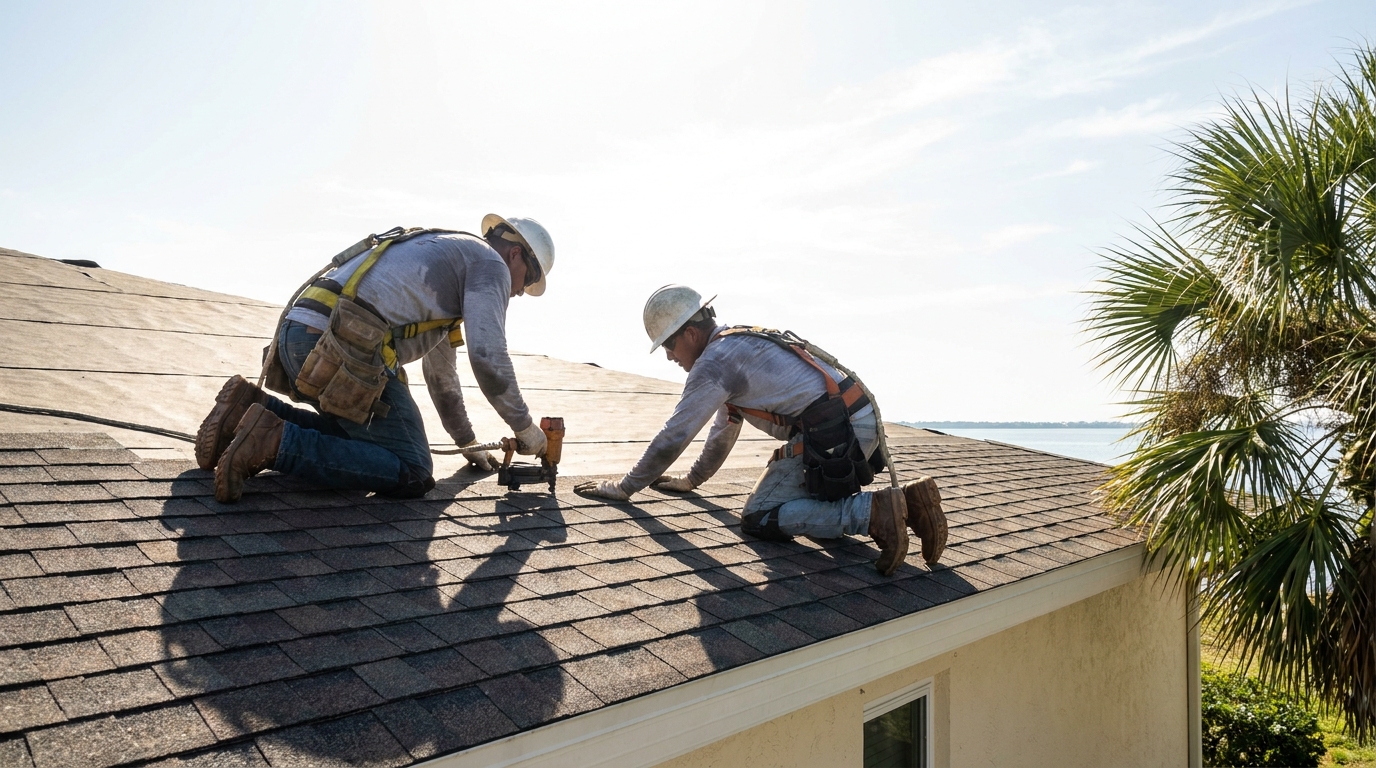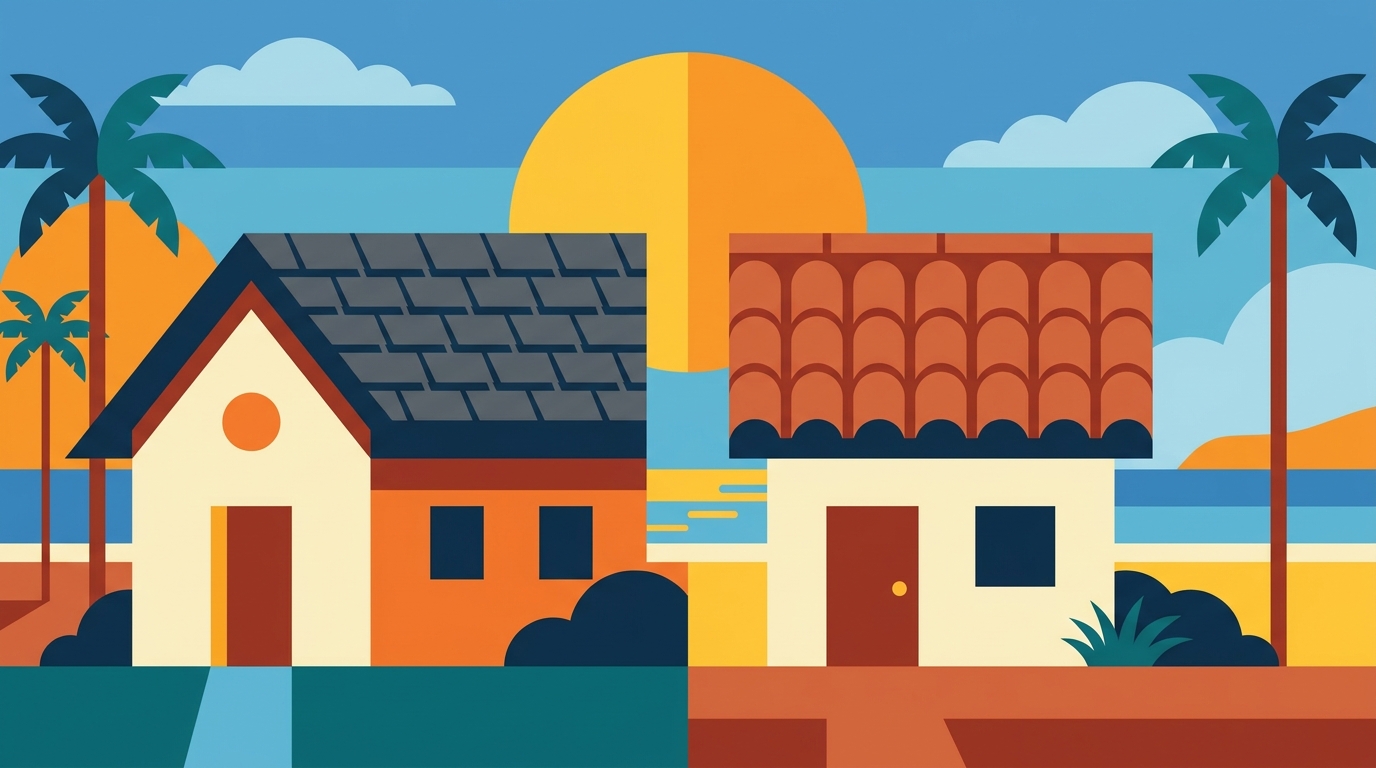
If you own a home in Tampa, the question of asphalt shingles versus tile roofing isn't academic. Between Gulf Coast humidity, hurricane season threats rolling up Tampa Bay, and the relentless UV exposure that defines life on the Florida peninsula, your roof is the single most important system protecting your investment. The choice between these two materials shapes your upfront budget, your insurance premiums, your cooling bills, and how often you'll be calling a Roofing Contractor over the next half-century.
Here's the honest breakdown of how the two materials stack up for homes from South Tampa and Hyde Park out to New Tampa, framed for Florida's climate and the requirements of the Florida Building Code.
The Short Answer for Florida Homeowners
Asphalt shingles win on upfront cost and structural simplicity. Tile roofing wins on longevity, hurricane resistance, and energy efficiency. For a 2,000 square foot home in the Tampa area, architectural asphalt shingles typically run in the range of roughly $9,000 to $18,000 installed based on current Florida per-square-foot rates, while concrete tile installations land considerably higher — the gap reflects both material costs and the structural work tile often requires. Coastal Florida pricing typically adds further to baseline figures for both materials.
Over a 75-year horizon, however, the math changes. Asphalt shingles last 15 to 25 years in Florida — UV, salt air, and heat shorten their service life compared to the 25 to 30 years they'd see in milder climates. Tile lasts 50 to 75+ years with minimal degradation. That means a tile roof is often a one-and-done investment, while shingles will be replaced two or three times in the same span.
Upfront Cost: Shingles vs Tiles Cost Compared
If your budget or your timeline is short, asphalt shingles are the clear value pick. According to current Florida market data, architectural shingles run approximately $4.50 to $9 per square foot installed — three-tab shingles sit at the lower end of the cost spectrum but carry significant wind-rating limitations. They require no structural reinforcement, which keeps the project simple and the quote predictable.
Tile is a larger commitment. Florida installed costs for tile roofing currently run approximately $10 to $25+ per square foot depending on product type and site conditions. Tile also requires a structural assessment per Florida Building Code before installation, since the material weighs 7 to 10 pounds per square foot compared to asphalt's 2 to 3 pounds. If your roof deck needs reinforcement, that cost is on top of the tile pricing — something we always flag during the estimate phase at SCM Roofing so there are no surprises later.
Who each material suits
- Asphalt shingles: Budget-conscious buyers, owners with a 10–15 year horizon, homes that can't structurally support tile, or properties being prepped for resale.
- Tile roofing: Long-term owners, coastal and hurricane-exposed properties, energy-efficiency seekers, and Mediterranean or Spanish-style homes common across the Tampa Bay area.
Hurricane and Wind Resistance
Tampa hasn't taken a direct major-hurricane hit in living memory, but the threat is real every June through November, and insurance carriers price policies accordingly. Wind ratings matter here.
Three-tab asphalt shingles carry a 60 to 70 MPH wind rating — not adequate for the modern Florida Building Code in most applications. Architectural shingles step up to 110 to 130 MPH, and high-performance versions reach up to 150 MPH when installed to FBC specifications. Tile roofing, when secured with modern foam adhesives and mechanical fasteners, also achieves up to 150 MPH ratings. The difference is in post-storm behavior: tile's mass resists uplift, and individual tiles can be replaced after a storm rather than requiring a full re-roof. Tile generally produces fewer insurance claims after major wind events when properly installed to code.
Lifespan in Florida's Climate
Florida is rough on roofing. The same UV intensity that drives our tourism industry also breaks down asphalt binders, and Gulf Coast salt air accelerates granule loss on shingles in waterfront neighborhoods like Davis Islands, Bayshore, and the Westshore peninsula. Expect 15 to 25 years from architectural asphalt shingles in Tampa — closer to the lower end if your home is exposed to direct sun all day.
Tile is largely indifferent to Florida's climate stressors. Concrete and clay don't rot, don't feed mold, don't lose granules, and don't soften in heat. A tile roof installed today on a home in Seminole Heights or Carrollwood can reasonably outlast the current owner.
Energy Efficiency and Cooling Bills
Tampa summers mean AC units run hard from May through October. Tile roofing benefits from its thermal mass and the natural ventilation that occurs in the air gap beneath each tile, making it a strong performer in hot climates. Reflective tile finishes amplify this further. Asphalt shingles, by contrast, are heat-absorbent and offer no meaningful thermal mass benefit — your attic, and your AC, feel the difference.
Maintenance and Warranty
Tile roofs are low-maintenance. Spot repairs are inexpensive, and the intervals between major work are long. Asphalt requires more frequent inspection, especially after summer storms, and granule loss accelerates near the end of service life.
On the warranty side, premium architectural shingles carry lifetime limited warranties from major manufacturers, often paired with long-term algae protection. Tile warranty packages vary widely by product tier. Class 4 impact-rated tile packages may also qualify for insurance premium discounts — worth asking your carrier about before you decide.
Florida Building Code and Permitting in Tampa
Both materials must be installed by a licensed contractor and pulled under permit through the City of Tampa or unincorporated Hillsborough County, depending on your address. The Florida Building Code requires high-wind-rated systems and, for tile, a structural assessment confirming the deck and trusses can handle the load. Skipping these steps creates problems at resale and at insurance renewal — two reasons to work with a Roofing Contractor that handles permitting in-house rather than leaving it to you.
Frequently Asked Questions
Is tile roofing worth the extra cost in Tampa?
For homeowners planning to stay 20+ years, yes — the longer lifespan, lower lifetime maintenance, HVAC savings from thermal mass and ventilation, and potential insurance discounts typically justify the higher upfront investment. For shorter horizons, architectural asphalt shingles remain a sound choice.
Can my Tampa home support a tile roof?
Maybe. Many homes can with modest reinforcement; some need more substantial work. A structural assessment per Florida Building Code is required before any tile installation, and that assessment is the only honest way to answer this question for your specific property.
What wind rating do I need in Tampa?
For most of the Tampa Bay region, 130–150 MPH-rated systems are appropriate, and the FBC will dictate the specifics for your address. Both architectural asphalt shingles (high-performance versions) and modern tile installations can meet this requirement when installed correctly.
How long will my new roof actually last?
In Florida specifically: 15–25 years for architectural asphalt shingles, 50–75+ years for concrete or clay tile. Coastal exposure and direct sun trim the asphalt range; tile is largely unaffected.
Does tile roofing require more maintenance than asphalt shingles in Florida?
Day-to-day, tile actually demands less attention than asphalt. Tile doesn't shed granules or degrade from UV the way shingles do. The caveat is that when repairs are needed — typically involving cracked tiles or aging underlayment — the work is more specialized and can cost more per visit than a shingle patch. Overall maintenance intervals are much longer with tile, which is a net advantage for most long-term Tampa homeowners.
How does each roofing material affect homeowners insurance in Tampa?
Your roofing material, age, and wind rating all factor into Florida homeowners insurance premiums. Tile roofs — particularly those with high wind ratings and Class 4 impact resistance — can qualify for meaningful premium discounts from some carriers. Architectural shingles with strong wind ratings can also help, though the discount potential is generally smaller. Ask your insurer for a quote comparison before finalizing your material choice.
Choosing What's Right for Your Home
The right answer depends on your timeline, your budget, your home's structure, and your priorities around insurance and energy costs. There's no universally correct material — there's the material that fits your situation. A good Roofing Contractor will walk you through both options with real numbers for your specific roof, not push you toward whichever job is more profitable.
Tampa homeowners who want this evaluated professionally can reach SCM Roofing, LLC at https://scmroofingfl.com for a free estimate. With a 4.9★ rating across 239 Google reviews and GAF Master Elite certification, our team handles the structural assessment, permitting, and installation for both shingle and tile projects across the Tampa Bay area — and we'll give you a straight answer about which material actually makes sense for your home. As one customer wrote: "GAF Master Elite Certified... customer service was outstanding" — that combination is exactly what we aim to deliver on every project.