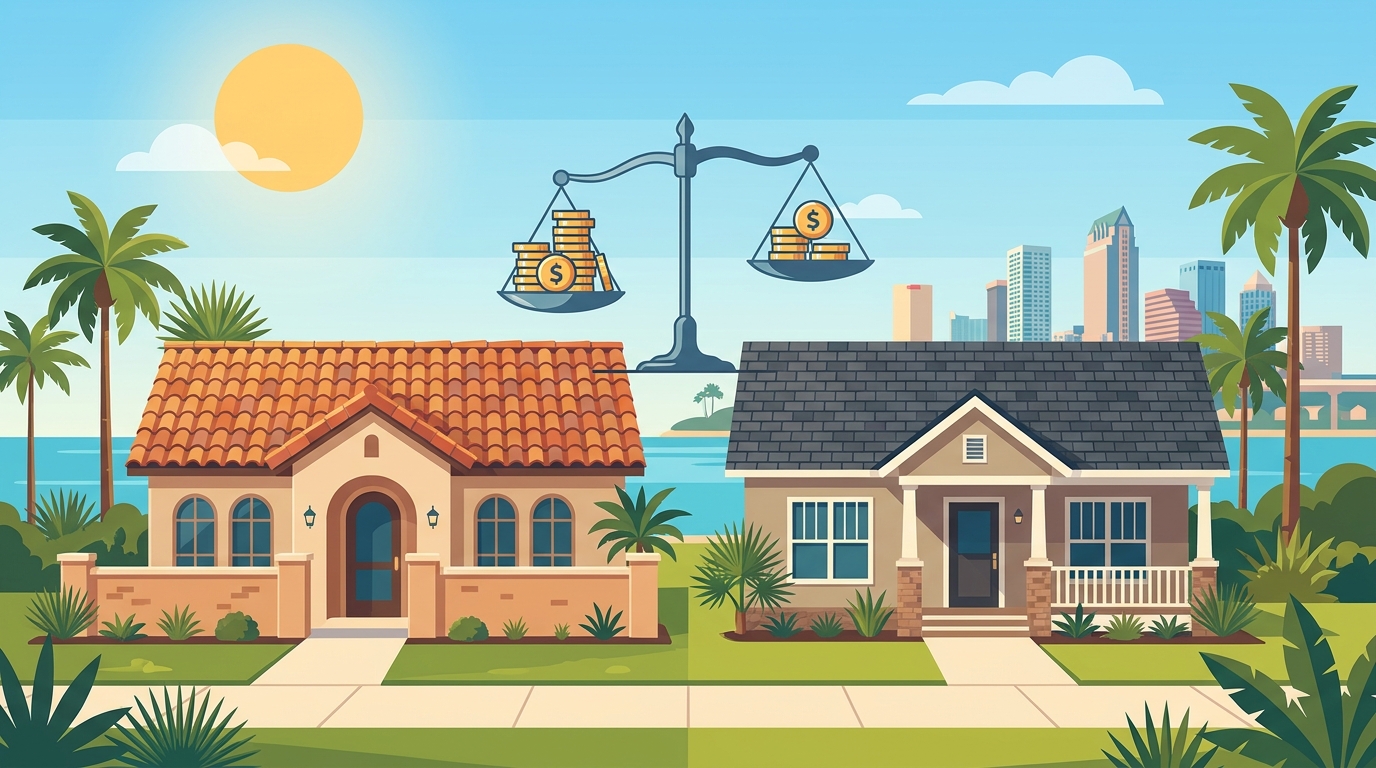
You're staring down a roof replacement, and the two quotes on your kitchen table look nothing alike. One is for architectural asphalt shingles. The other is for concrete or clay tile — and it's roughly double, sometimes triple, the price. Which one actually makes sense for your Tampa home?
The honest answer depends on how long you plan to stay, what your HOA allows, and whether your house can carry the weight. Here's how to think about the tradeoff before you sign anything, based on current Tampa-area market conditions in 2026.
Tile Roof vs Shingle Roof Cost in Tampa, FL: The Short Answer
Asphalt shingles carry a meaningfully lower upfront installed cost than tile across all product tiers. Tile roofing — whether concrete or clay — runs substantially higher on day one. Concrete tile tends to come in at a lower installed price than clay, while luxury asphalt shingles can approach the lower end of concrete tile pricing.
In other words, tile typically costs roughly two to three times what shingles do upfront. Tampa pricing tends to track close to Florida statewide averages, running somewhat below high-velocity hurricane zone markets like Miami-Dade and Broward County, where insurance and labor premiums push numbers higher. For current installed-cost figures specific to your roof, contact SCM Roofing, LLC for a free estimate — prices depend on measured roof area, pitch, shape, product selected, and project scope.
What You're Actually Paying For: Lifespan and Annualized Cost
Upfront price is only half the story. In Florida's UV, humidity, and storm environment, asphalt shingles typically deliver an effective lifespan of roughly 15 to 30 years depending on product tier, installation quality, ventilation, and storm exposure — often on the shorter end, even with a strong manufacturer warranty. Heat and thermal cycling are hard on asphalt.
Tile is a different animal. Its potential service life is substantially longer than asphalt shingles — tile covering can outlast multiple shingle replacements on the same home. Run the math on cost per year of service and the story can flip in tile's favor for long-term homeowners.
One important caveat: the tile itself may last a very long time, but the underlayment beneath it doesn't. The underlayment may need replacement before the tile covering reaches the end of its service life, adding a meaningful additional cost. Bids should specify the full system scope — tile covering, underlayment, fasteners, flashing, and any deck repairs — not just the top layer. Even factoring in underlayment replacement, long-term homeowners often find tile competitive on a lifetime-cost basis.
Hurricane Performance and Insurance in Tampa Bay
Tampa sits inside a hurricane zone, and Hillsborough County's building requirements reflect it.
Tile roofing, when properly fastened per manufacturer product approval and tested assembly requirements, is generally cited as offering strong hurricane performance. Individual tiles can crack under wind-driven debris, but the underlayment continues to protect the deck below. Asphalt shingles installed to Florida Building Code specifications — including the correct fastening pattern for high-wind zones — can also perform well, though tile is generally credited with stronger sustained wind and debris resistance.
Insurance carriers in Florida frequently offer better hurricane-mitigation discounts for tile roofs than for asphalt shingles. Actual savings depend on your insurer and policy, so it's worth calling your agent before you decide. SCM Roofing, LLC handles permitting as part of its installation process.
Weight, Structure, and Older Tampa Homes
Tile is heavy — significantly heavier than asphalt shingles per square foot of roof area. For newer homes in places like New Tampa, FishHawk, or Westchase that were framed with tile in mind, the weight isn't an issue. But for older bungalows in Seminole Heights, Hyde Park, or the historic pockets of South Tampa, going from shingle to tile often requires a structural review and possible reinforcement before installation can proceed. That engineering work adds cost and lead time to any tile project and should be signed off by a licensed engineer.
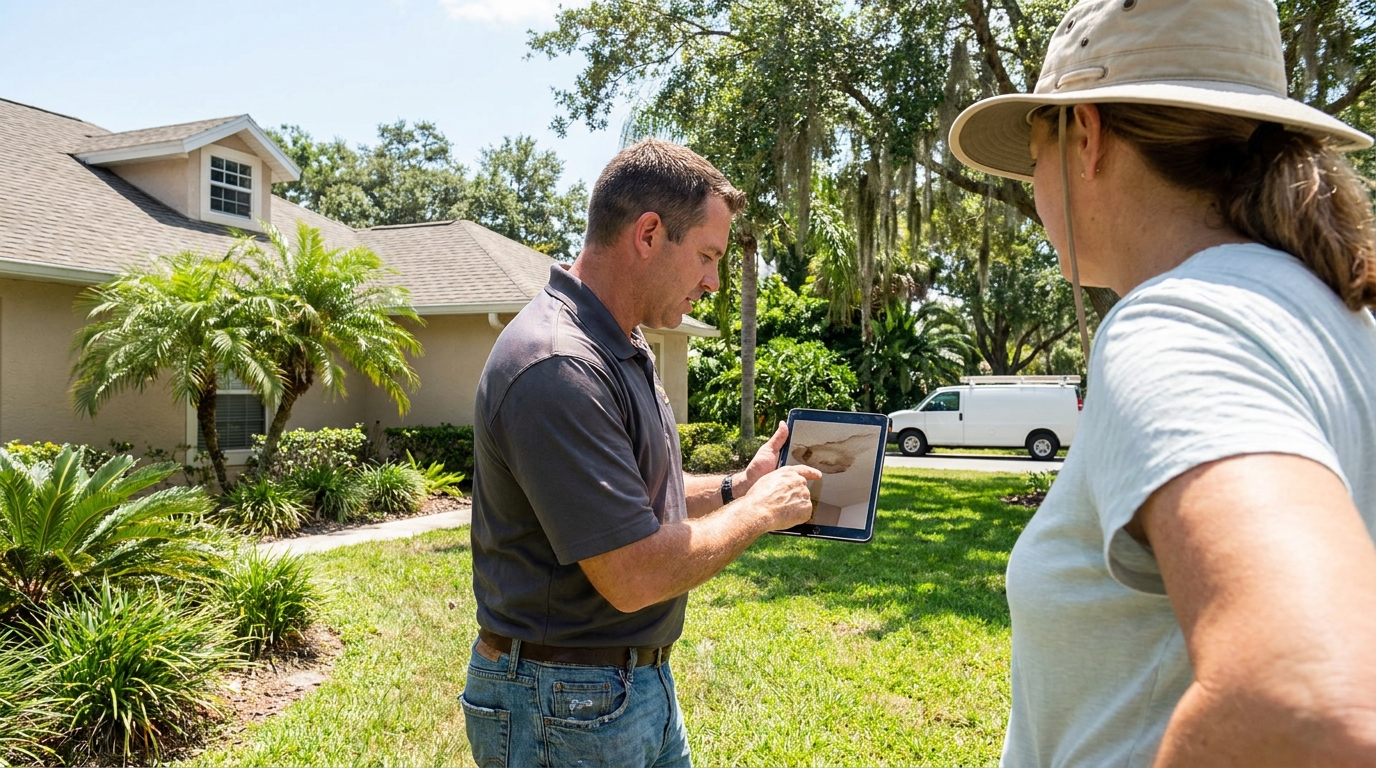
If your existing structure can't reasonably support tile, staying with a quality architectural shingle isn't a compromise — it's the right engineering call. SCM Roofing, LLC's inspection process includes a structural assessment that can help clarify what your home's framing will support.
Energy Performance in Florida Heat
Tampa summers are long, humid, and expensive to cool. Roofing choice matters here.
Tile is among the more energy-efficient roofing options available in Florida. Thermal mass combined with the naturally ventilated air gap under the tiles reduces heat transfer into the attic, and reflective finishes can deflect solar radiation before it gets absorbed. Homeowners often see measurable reductions in cooling load compared to asphalt.
Asphalt shingles absorb and hold heat. That translates into hotter attics and higher electric bills during Tampa's summer stretch — a real ongoing cost that doesn't show up in the installation quote but does show up on your FPL bill each month.
Salt Air and Coastal Neighborhoods
If your home sits near the water — Davis Islands, Bayshore Beautiful, Apollo Beach, or anywhere along Old Tampa Bay — salt air is a factor. Tile is well regarded for performance in salt exposure and coastal moisture environments. Asphalt shingle granules and binders can weather faster in salty conditions, shortening service life further than the Florida inland average.
That's a meaningful consideration for waterfront and near-waterfront homes, where the shingle lifespan you plan around may already be optimistic. SCM Roofing, LLC is familiar with coastal installation requirements across Tampa Bay.
HOA Requirements and Neighborhood Character
A significant number of deed-restricted Tampa communities require tile roofs, particularly in newer master-planned developments. If your HOA mandates tile, the comparison is over before it starts — check your covenants before you get too far into shingle quotes.
In neighborhoods without tile requirements, either material is on the table, and aesthetics become a personal call. Tile carries a distinctly Florida-Mediterranean look that many buyers associate with higher-end homes. Architectural shingles have come a long way visually and remain the standard across most mid-market Tampa subdivisions. SCM Roofing, LLC installs both tile and architectural shingles and can work within HOA architectural review requirements.
Which Roof Fits Which Buyer
Tile roofing tends to make sense for:
- Long-term homeowners planning to stay 20+ years
- HOA-controlled communities that require tile
- Coastal and higher-end properties
- Homeowners focused on energy efficiency and lower lifetime cost
Architectural asphalt shingles tend to make sense for:
- Budget-focused buyers who need the lowest upfront cost
- Owners with a 10–15 year horizon before selling
- Investors and flippers
- Older homes where structural reinforcement for tile isn't practical
- Neighborhoods without HOA tile requirements
Frequently Asked Questions
How much does a tile roof cost in Tampa in 2026?
Tile roofing carries a significantly higher upfront installed cost than asphalt shingles — concrete tile and clay tile each fall into different price ranges, with clay generally running higher. Final cost depends on measured roof area, pitch, shape, underlayment, product selected, and whether any structural work is needed. Contact SCM Roofing, LLC for a current, itemized estimate specific to your home.
How much does a shingle roof cost in Tampa in 2026?
Asphalt shingles are available in three tiers — 3-tab/basic, architectural/laminated, and luxury/designer — each at a different installed price point. Architectural shingles are the most common practical middle ground. For a current price specific to your roof's size and conditions, contact SCM Roofing, LLC for a free estimate.
Do tile roofs really last longer in Florida?
Yes, tile covering generally has a substantially longer potential service life than asphalt shingles. The underlayment beneath the tile, however, may need replacement before the tile itself reaches end of life — so bids should specify the full system, not just the tile covering. Installation quality, storm exposure, and maintenance all affect actual longevity.
Will tile lower my homeowners insurance in Tampa?
It often can. Florida carriers frequently offer hurricane-mitigation discounts on tile roofs versus asphalt, but the actual savings vary by insurer and policy. Confirm with your agent before assuming a specific number.
Can any Tampa house handle a tile roof?
Not automatically. Older homes originally built for shingles often need a structural review and possible reinforcement before tile can be installed. SCM Roofing, LLC's inspection includes a structural assessment that can identify what your framing will support before you commit to a material.
Does it matter which contractor installs my roof in Tampa?
Yes — significantly. Improper fastening on tile can compromise wind performance; sloppy shingle installation shortens an already-limited lifespan. SCM Roofing, LLC holds GAF Master Elite Certified status — earned by roughly 2–3% of roofing contractors nationwide — and installs architectural shingles using six nails per shingle as required in Florida's high-wind zones. The installer matters as much as the material.
What should I ask for when getting roofing bids in Tampa?
Request written, itemized bids that specify measured roof area, exact product names and product approval numbers, tear-off scope, underlayment type, flashing details, ventilation plan, permit fees, debris removal, and warranty terms for both materials and workmanship. Comparing bids on these specifics — not just the bottom-line number — is the most reliable way to evaluate competing quotes.
The Bottom Line for Tampa Homeowners
If you're staying in your home for the long haul, live in a coastal or HOA-tile neighborhood, and your structure can support the weight, tile is often the better long-term value despite the upfront cost. If you need to control cash outlay, plan to sell within 10 to 15 years, or own an older home where structural reinforcement isn't practical, a quality architectural shingle installed correctly is a sound choice — not a consolation prize.
Either way, the installer matters as much as the material. Tampa homeowners who want a straightforward comparison based on their specific roof, structure, and budget can reach SCM Roofing, LLC — with 25+ years of industry experience and a 4.9-star rating from 239 Google reviews as of April 2026 — at https://scmroofingfl.com or by calling (855) 726-7663 for a free inspection and estimate with no obligation.