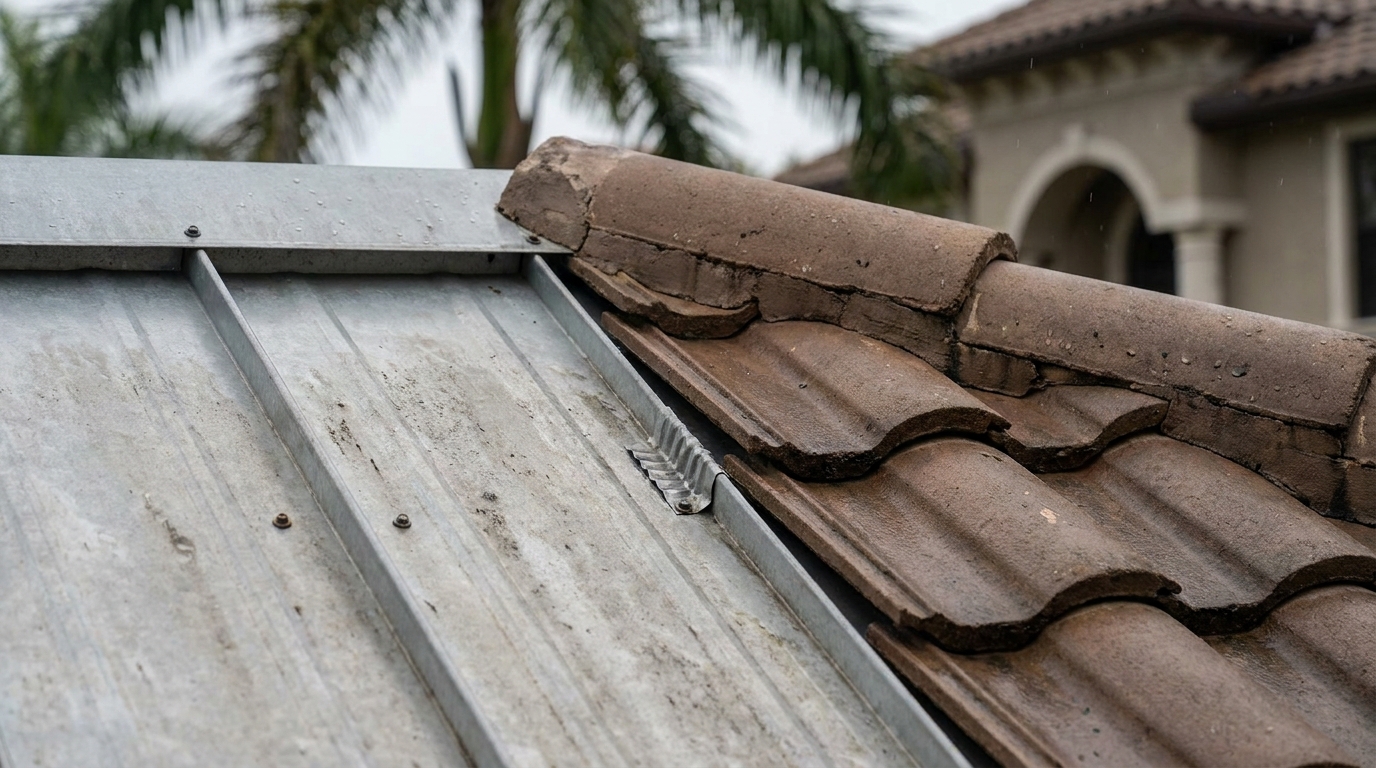
For Tampa homes in the Gulf Coast hurricane corridor, standing seam metal and properly installed concrete tile both perform well against hurricane-force winds when the assembly is Florida Building Code approved — but standing seam metal generally offers the strongest combination of wind resistance, leak control, and low post-storm maintenance, while concrete tile is often the best value for buyers who want a heavy, traditional Florida roof. Corrugated (exposed-fastener) metal and clay tile can also perform, but each carries a specific weakness worth understanding before you sign a contract.
Which roof actually holds up better in a Tampa hurricane?
Standing seam metal typically holds up best overall in Tampa hurricanes because its concealed fasteners and interlocking seams eliminate the most common wind-driven leak points, and Florida-oriented roofing guidance associates it with higher wind ratings than exposed-fastener metal. Concrete tile is a close second when properly approved and installed. Corrugated metal and clay tile trail on either fastener exposure or fragility.
The material name alone doesn't decide the outcome. In Florida, what matters is whether the specific panel or tile assembly carries a Florida Building Code product approval for your wind zone — and whether the installer follows the approved attachment schedule. Tampa sits in a wind-borne debris region, so those details are the difference between a roof that survives a Category 3 and one that peels.
At SCM Roofing, LLC, we install both metal and tile systems across South Tampa, Westchase, New Tampa, and coastal neighborhoods near the bay, and the honest answer we give homeowners is that the installer and the product approval matter as much as the material category.
How does metal roof hurricane resistance compare in Florida?
Standing seam metal is the stronger performer among metal options in Florida hurricanes because it uses concealed fasteners, interlocking vertical seams, and clips that allow thermal movement — reducing penetrations through the panel field and the leak paths that exposed-fastener systems create. Corrugated metal costs less but relies on exposed screws with washers, which become the known failure point in Florida's humidity and storm cycles.
Here's what that means in practice for Tampa Bay:
- Standing seam metal — concealed fasteners, cleaner appearance, less field maintenance, and the best metal option for weather-tightness. Florida-oriented pricing runs roughly $9.45–$17.50 per square foot installed.
- Corrugated metal — exposed fasteners that require periodic inspection, more leak risk over time, and shorter service life in Florida's climate. Installed pricing sits closer to $4.50–$12 per square foot.
Standing seam is consistently the more expensive metal option — often around 2x corrugated in market comparisons — but for a primary Tampa residence in a hurricane zone, the reduced maintenance and stronger leak resistance usually justify the delta.
What is a tile roof's wind rating on the Gulf Coast?
Tile roofs — both concrete and clay — can achieve high wind ratings on the Gulf Coast when the assembly is Florida Building Code approved and installed with the correct underlayment, batten system, and fastening schedule. Concrete tile generally offers the best value for wind performance among tile options, while clay tile is more fragile under impact and during maintenance walks, though it delivers the premium Mediterranean aesthetic Florida buyers often want.
The Florida Building Code requires roof assemblies to be tested and approved for wind resistance, and the state publishes approved product information through its Building Code product approval system. For a Tampa tile roof, we recommend homeowners verify the product approval number for their specific tile and underlayment combination — not just the tile brand.
Two practical realities to keep in mind:
- Weight — both concrete and clay are significantly heavier than metal. Older Tampa homes, especially in historic pockets like Hyde Park or Seminole Heights, may need a structural review before a reroof to tile.
- Impact fragility — clay in particular can crack from wind-borne debris or foot traffic during post-storm inspections.
Metal vs tile roof storm damage: what actually fails first?
In Tampa hurricanes, the first failure point on corrugated metal is typically the exposed fastener — screws back out, washers degrade, and water intrusion begins at penetrations. On tile roofs, individual tiles crack or dislodge from wind uplift or debris strikes, exposing the underlayment. Standing seam metal's most common issue is oil-canning cosmetics rather than structural failure, and concrete tile usually fails only when installation shortcuts were taken on fastening or underlayment.
Post-storm, the repair economics diverge sharply. A handful of cracked concrete tiles can be swapped individually. Clay tile replacements are more expensive and harder to color-match on older roofs. Corrugated metal fastener repairs are cheap per point but often widespread. Standing seam panel replacements are the most expensive per unit but the least frequent.
Metal vs tile in Tampa: side-by-side comparison
The four systems Tampa homeowners most often weigh — standing seam metal, corrugated metal, concrete tile, and clay tile — trade off differently on cost, weight, maintenance, and fit. This table summarizes the practical differences we walk homeowners through during estimates.
| Roof type | Wind/leak performance | Installed cost (FL sources) | Best fit for Tampa buyers |
|---|---|---|---|
| Standing seam metal | Best metal option — concealed fasteners, low maintenance | ~$9.45–$17.50/sq ft | Long-term owners, coastal or wind-conscious buyers |
| Corrugated metal | Lower — exposed fasteners are the known weak point | ~$4.50–$12/sq ft | Budget-driven reroofs, accessory buildings |
| Concrete tile | Good with approved assembly and correct install | ~$10–$20/sq ft | Mid-to-high budget, classic Florida look |
| Clay tile | Durable material but more break-prone | ~$15–$30+/sq ft | Premium aesthetic, higher-budget homes |
A second Florida-oriented pricing guide puts standing seam at $10–$16 per square foot and corrugated at $5–$9 per square foot, which brackets the numbers above.
What should Tampa homeowners look for in a hurricane-rated roof install?
Tampa homeowners should look for a Florida Building Code product approval number for the exact roof assembly being installed, a licensed and insured contractor with local hurricane-zone experience, manufacturer certification for the specific product, and a clear written attachment schedule that matches the approved system. The installer's local track record matters as much as the material — a Code-approved product installed incorrectly is not Code-approved anymore.
Practical evaluation criteria we suggest for any Tampa reroof:
- Verify manufacturer certification (for asphalt work, GAF Master Elite is a meaningful credential — one recent SCM Roofing customer specifically cited this in their review).
- Ask to see the Florida product approval documentation for your specific assembly.
- Confirm the contract references the approved fastening pattern, not just "per code."
- Look at reviews for post-install communication and cleanup quality, not just the sale.
SCM Roofing, LLC holds a 4.9-star rating across 239 Google reviews, with recurring praise for communication, on-time installation, and thorough cleanup — the operational details that separate a roof that performs from one that leaks the first season.
Frequently asked questions
Is a metal roof or tile roof better for hurricanes in Tampa?
Standing seam metal is generally the strongest performer for Tampa hurricanes because its concealed fasteners eliminate common leak points, followed closely by properly installed concrete tile. Both can carry high Florida Building Code wind approvals. Corrugated metal and clay tile can also perform, but corrugated has exposed-fastener risk and clay is more fragile under debris impact.
What wind speed can a Florida tile roof withstand?
Wind resistance depends on the specific product approval, not the material category. Florida's Building Code requires roof assemblies to be tested and approved for wind resistance, and Tampa's wind-borne debris region requires assemblies rated for the local design wind speed. Homeowners should verify the Florida product approval number for their exact tile, underlayment, and fastening combination rather than relying on brand claims alone.
How much does a hurricane-rated metal roof cost in Tampa?
Florida pricing sources place standing seam metal at roughly $9.45–$17.50 per square foot installed, with a second Florida-oriented guide citing $10–$16 per square foot. Corrugated metal runs lower at roughly $4.50–$12 per square foot. Final cost depends on roof complexity, pitch, tear-off requirements, panel gauge, and whether structural reinforcement is needed.
Do concrete tile roofs break easily in hurricanes?
Concrete tile is durable but can crack under direct impact from wind-borne debris or improper foot traffic during inspections. Concrete is generally less break-prone than clay tile. The bigger failure mode in hurricanes is individual tiles dislodging from wind uplift when the fastening schedule wasn't followed — which is why Florida Building Code approval and correct installation matter more than the tile itself.
Will a metal roof lower my Tampa homeowners insurance?
Insurance carriers in Florida typically consider roof material, age, and wind mitigation features when pricing coverage, and many offer credits for roofs with verified Florida Building Code wind ratings. Actual savings vary by carrier and policy. Homeowners should request a wind mitigation inspection after any reroof and submit the report to their insurer to capture available credits.
How long do metal and tile roofs last on the Gulf Coast?
Standing seam metal typically outlasts corrugated metal in Florida's climate because it avoids exposed-fastener degradation. Concrete and clay tile are known for long service lives when installed with correct underlayment and fastening, though underlayment often needs replacement well before the tiles themselves. In Tampa's humidity and salt-air exposure near the coast, installation quality drives real-world lifespan more than the material spec sheet.
The bottom line for Tampa Bay homeowners
If your priority is hurricane performance with the lowest lifetime maintenance, standing seam metal is the strongest choice on the Gulf Coast. If you want a traditional Florida look with strong wind performance at a mid-range budget, concrete tile is the value play. Clay tile earns its cost on aesthetics, and corrugated metal earns its place on budget-driven or secondary-structure projects.
Whichever direction you go, the Florida Building Code product approval, the correct fastening schedule, and the installer's local track record will decide how your roof performs when the next Gulf storm crosses the bay. Tampa homeowners who want this handled professionally can reach SCM Roofing, LLC at https://scmroofingfl.com to schedule an inspection and get a written comparison for their specific home.