You're staring down a roof replacement in Naples, and the first question is almost always the same: metal or shingles? It's a fair question, and the answer matters more here than almost anywhere else in the country. Between Gulf-side salt air, summer humidity that doesn't quit, UV exposure that bakes asphalt for nine months a year, and the annual threat of named storms rolling in from the Caribbean, your roof isn't just a finish material. It's a structural defense system.
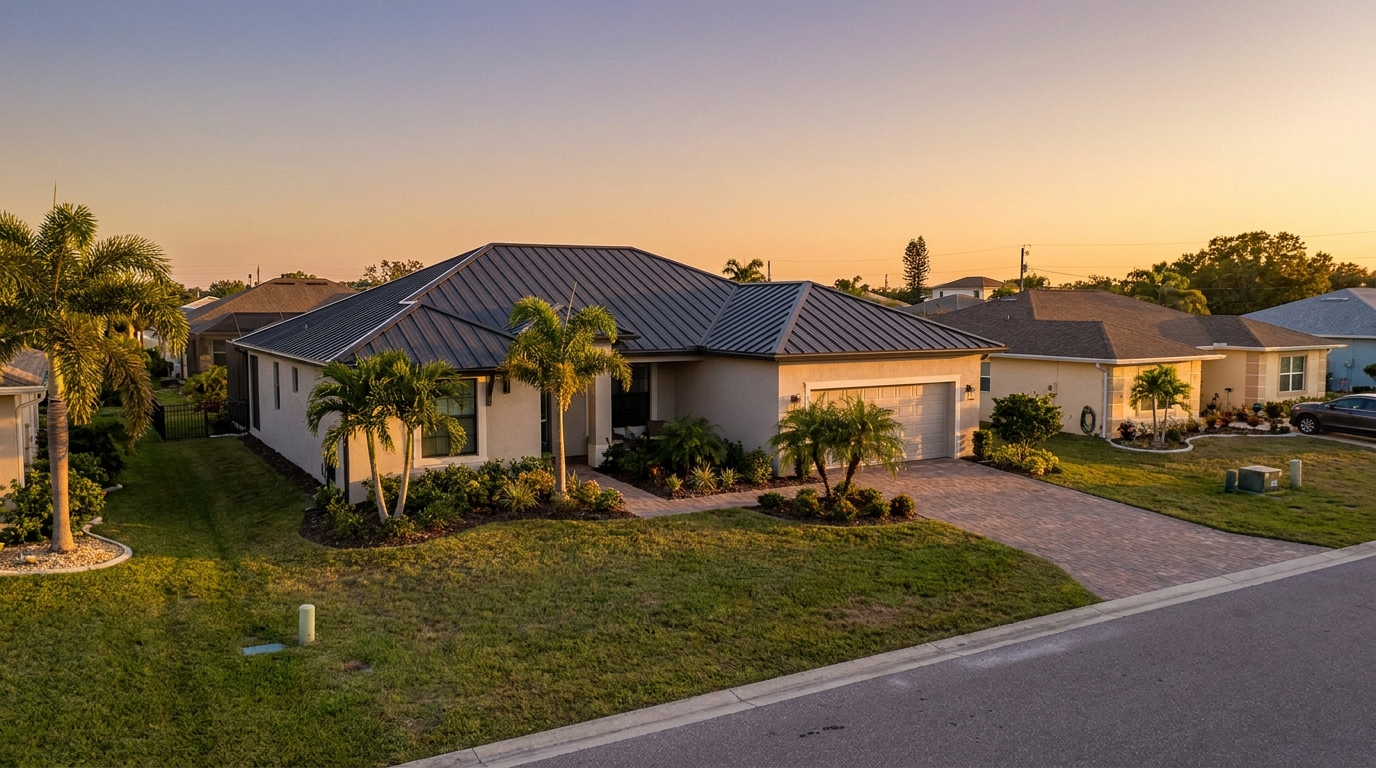
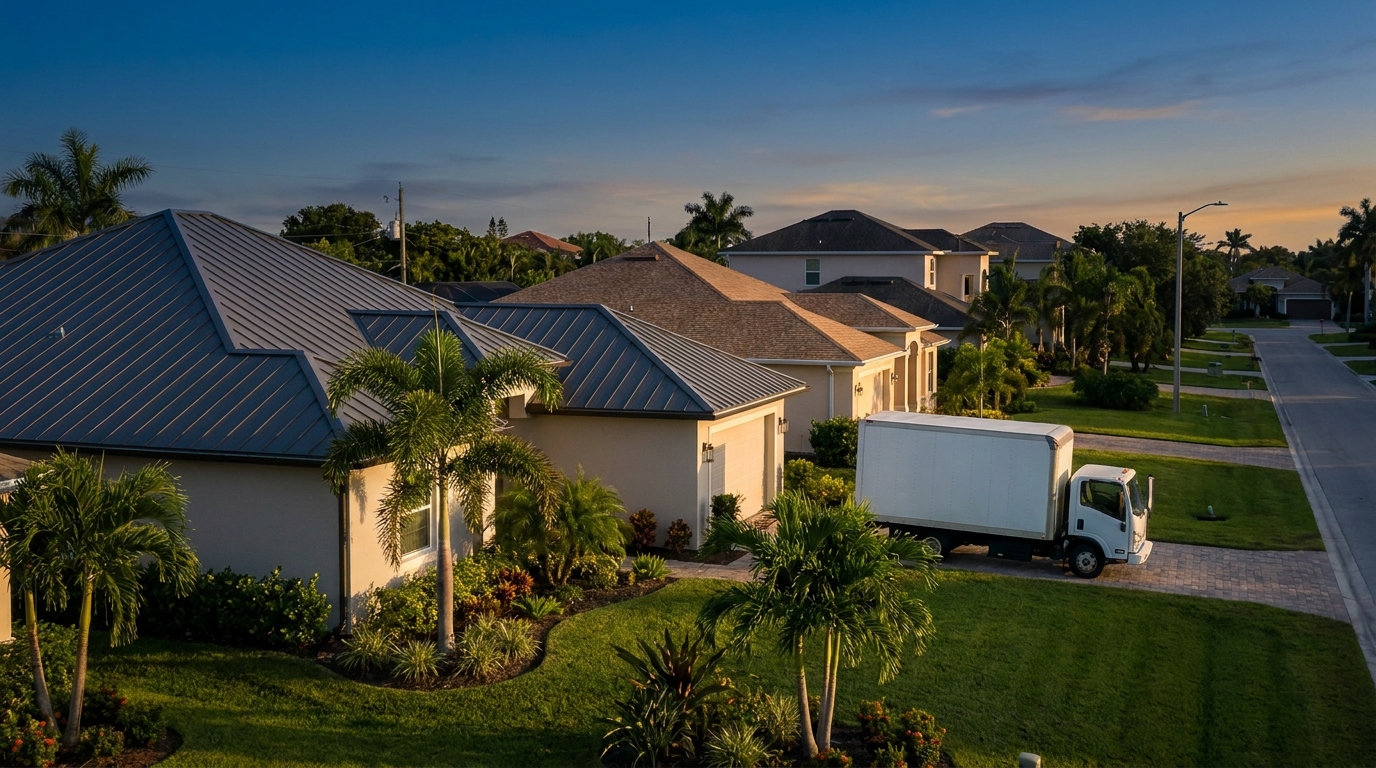
Here's the short version: metal roofing costs significantly more upfront — often two to three times the installed price of asphalt shingles — but typically lasts longer and performs measurably better in hurricane-prone, coastal environments. For long-term owners in Naples, metal is usually the stronger choice. For budget-conscious homeowners or sellers planning to move within a few years, architectural asphalt shingles remain a practical option.
Below, we break down how the two materials compare across the dimensions that actually matter in Southwest Florida.
Upfront Cost: Where Shingles Win Cleanly
On a typical Naples roof, architectural asphalt shingles generally come in well below metal on initial installed cost — sometimes less than half the price of a standing-seam system. Metal shingles and tile-look panels fall between the two extremes. Per square foot, installed metal can range widely depending on gauge, coating, profile, and system type.
That's the headline gap. Naples pricing also runs above national averages on both materials because of hurricane-rated underlayment requirements, stricter code enforcement, and the labor premium that comes with coastal Collier County work. Tear-off complexity, decking repairs, and permit costs can push either project higher. For a current side-by-side quote built around your actual roof, contact SCM Roofing, LLC at (855) 726-7663.
Lifespan: Metal Lasts Two to Three Roofs Worth of Shingles
Metal roofing in Florida typically delivers a significantly longer service life than asphalt shingles when the coating and installation are right. Asphalt shingles in the same climate face constant UV and humidity pressure — and frankly, in Naples's conditions, you're often closer to the lower end of any published lifespan range than the upper.
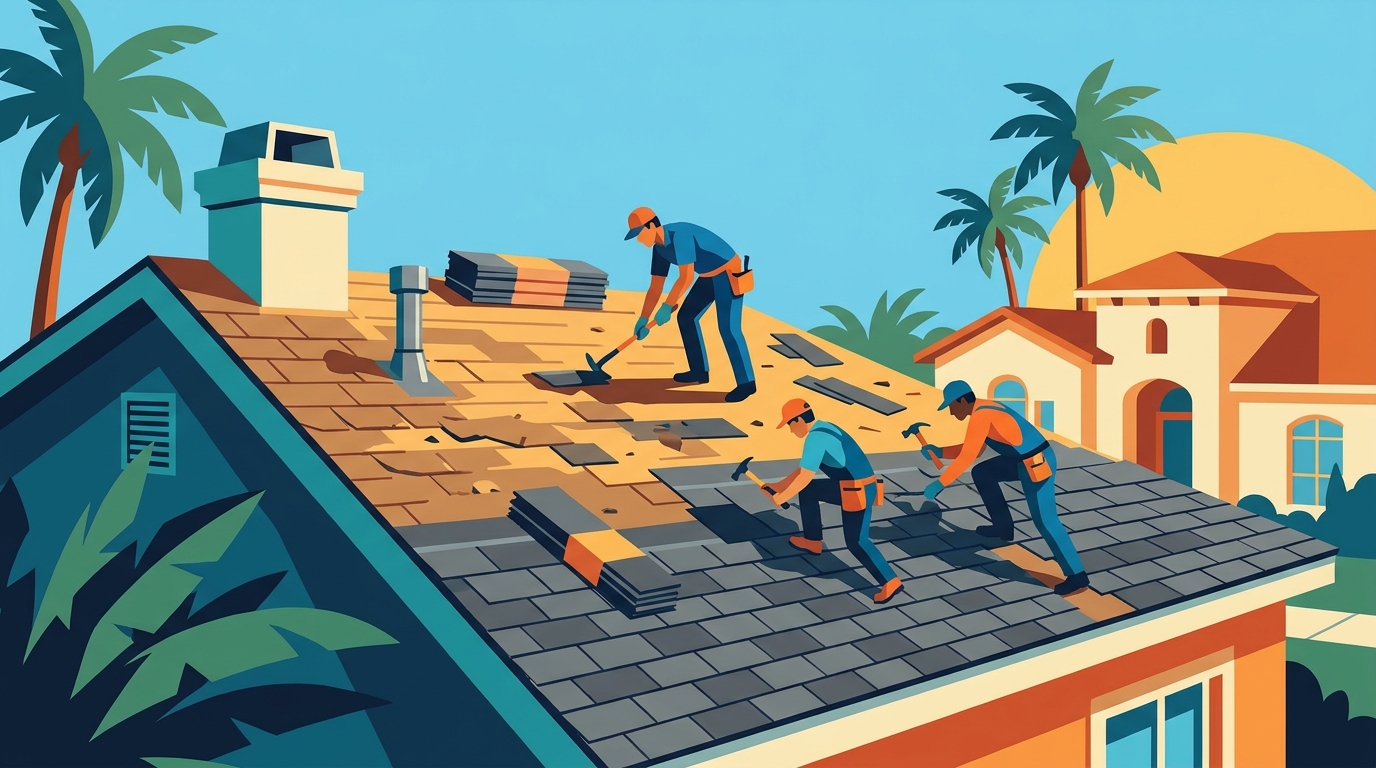
Run the math over a long ownership horizon. A shingle roof will likely need replacement two or even three times. A quality metal roof, installed once, may outlast the mortgage.
Hurricane and Wind Performance
This is where the conversation gets serious for anyone living west of Collier Boulevard. Standing-seam metal panels with concealed fasteners offer the strongest wind performance available in residential roofing. Testing routes for metal-panel systems include UL 580 and UL 1897, among others, and the specific approval documentation for the proposed system should be confirmed before installation.
Asphalt shingles can perform well too. Premium products are tested and classified under standards including ASTM D3161 and ASTM D7158, designed for high-wind regions. But shingles age. UV exposure degrades the sealant strip, and a shingle roof that is more than a decade old simply doesn't resist uplift the way it did on day one. Metal, properly fastened, doesn't lose that integrity over time.
For homes in Old Naples, Aqualane Shores, Port Royal, or anywhere within a few blocks of the Gulf, this difference is meaningful — not theoretical.
Heat, Energy, and the Naples Summer
If you've ever stood in an attic in Golden Gate Estates in August, you know how much heat a roof can drive into a home. Reflective metal roofing with fluoropolymer coatings can reduce heat transfer into the home, which may help lower cooling loads during the long Southwest Florida cooling season. Asphalt shingles, even cool-roof versions, generally don't match those numbers. Darker standard shingles absorb significant heat, which translates directly into higher cooling loads during the long Southwest Florida cooling season.
Salt Air, Maintenance, and Coastal Realities
Naples's coastal exposure cuts both ways. Metal roofing requires less routine maintenance and fewer full replacements over a home's lifetime — but salt air will attack lower-quality coatings. For properties close to the Gulf, specifying a high-grade fluoropolymer (PVDF) finish and corrosion-resistant fasteners is essential, not optional. SCM Roofing uses marine-grade or stainless steel flashings for installations in highly corrosive salt environments, a detail that matters in coastal Collier County.
Asphalt shingles deal with their own coastal issues: algae streaking, granule loss from wind-driven rain, curling at the edges under UV. Expect more frequent inspections and a shorter replacement cycle than you'd see in a milder climate.
Fire and Impact Ratings
Both materials are available in fire-resistant and impact-resistant versions; the specific ratings vary by product. Check with your insurer about whether the selected product and its ratings affect your policy or premium before signing the contract.
Aesthetics and Roof Slope
Naples has every architectural style imaginable, from Old Florida cottages in Naples Park to modern coastal contemporary builds in Pelican Bay. Both materials adapt. SCM Roofing installs metal roofing in standing seam, metal shingle, stone-coated steel, and corrugated/exposed-fastener styles, as well as shingle roofing including 3-tab, architectural (dimensional), and luxury/designer shingles — so your choice of profile is broad either way.
If your home has shallow-pitch sections, confirm the approved product and installation method with your contractor.
Permits, Code, and Florida Specifics
Products used in high-velocity hurricane zones must carry appropriate approvals — including testing routes such as FM 4474, UL 580, UL 1897, and TAS 100 for metal systems, and ASTM D3161, TAS 107, or ASTM D7158 for asphalt shingles. This is not a corner to cut — unpermitted work can void insurance claims and complicate resale.
Collier County also requires a hurricane-mitigation affidavit for certain wood-deck structures permitted before September 14, 1993, with an appraised value of $300,000 or more. Ask your contractor or the county whether that requirement applies to your property. SCM Roofing works within HOA architectural review requirements in Collier County, submitting product specs, color samples, and documentation for approval before work begins.
Which Roof Is Right for Your Naples Home?
Choose metal if you're a long-term owner, you live close to the coast, you want the strongest available hurricane performance, and you'd rather pay once than three times. Choose architectural asphalt shingles if upfront budget is the primary constraint, you're planning to sell within the next several years, or you want the fastest, most familiar installation with the widest contractor availability.
SCM Roofing, LLC holds GAF Master Elite Certified status — a distinction earned by only about 2–3% of roofing contractors nationwide — and carries Florida state contractor license CCC1331132. As a GAF Master Elite contractor, SCM Roofing can offer GAF's strongest warranty coverage, including both product and workmanship coverage on shingle installations. The company has earned a 4.9-star rating from 239 Google reviews as of April 2026, with customers consistently noting quality materials and professional installation teams.
Frequently Asked Questions
Does a metal roof make my Naples home louder during storms?
Modern metal roofing installed over solid decking with quality underlayment is not meaningfully louder than asphalt. The "barn roof" sound comes from metal over open purlins, not residential systems.
Will a metal roof lower my homeowners insurance in Florida?
Often yes, particularly if the system carries a UL 2218 Class 4 impact rating and appropriate wind uplift approvals. Confirm with your insurer before assuming a discount.
How long does a roof replacement take in Naples?
Asphalt shingle replacements typically take a few days. Standing-seam metal projects take longer due to fabrication and more specialized installation. Plan ahead, especially before hurricane season begins in June.
Can I install metal over an existing shingle roof?
Sometimes, but in coastal Florida it's usually smarter to tear off and inspect the decking. SCM Roofing removes all old material down to the deck before installing a new roof, and permits and code requirements often dictate the approach in any case.
What slope does my roof need for each material in Florida?
If your home has shallow-pitch sections — common on porches and additions — confirm the approved product and installation method with your contractor before committing to a material.
How often should I have my Naples roof inspected?
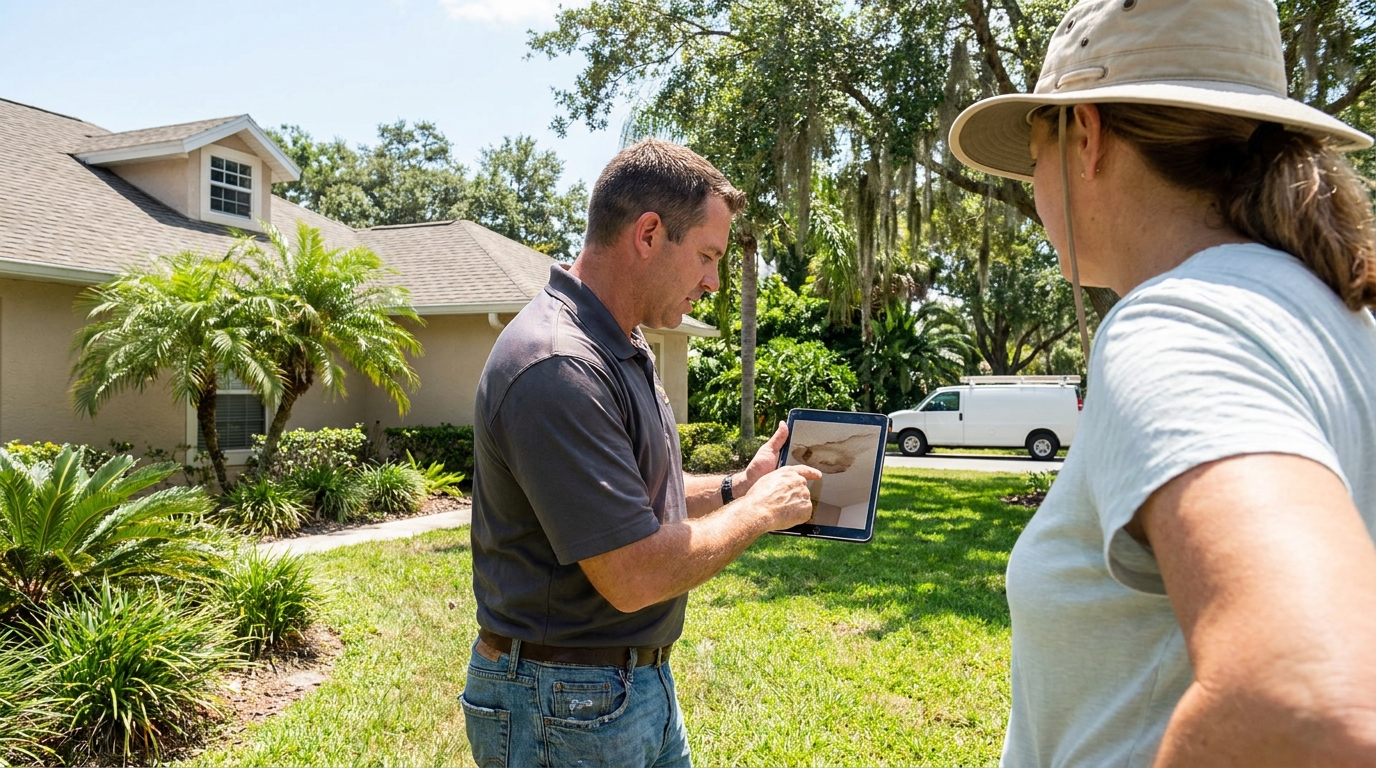
SCM Roofing recommends Florida homeowners schedule roof inspections twice per year — once before hurricane season in June and once after it ends in November. Each inspection covers structural condition, roofing material condition, past workmanship, and an attic and interior check, with photo documentation and a written report with prioritized repair recommendations.
Getting a Straight Answer for Your Home
The right roof depends on your ownership horizon, your budget, your home's exposure, and your tolerance for storm risk. A good contractor will walk you through both options honestly rather than steering you toward whichever job is most convenient to schedule. SCM Roofing, LLC offers free roof inspections and free estimates with no obligation. Homeowners in Naples, FL who want a professional assessment of their specific roof can reach SCM Roofing, LLC at https://scmroofingfl.com or by phone at (855) 726-7663 for a side-by-side comparison built around the actual conditions at your address.
"