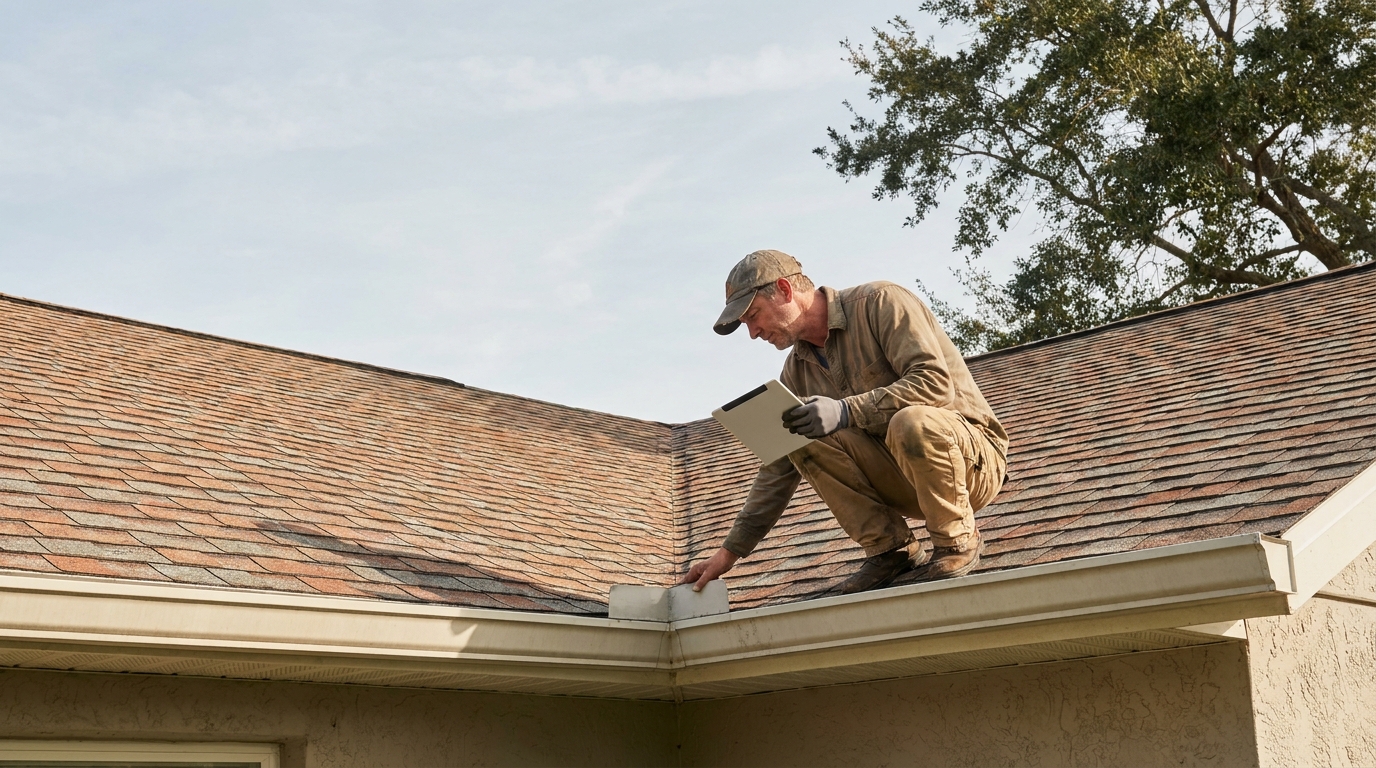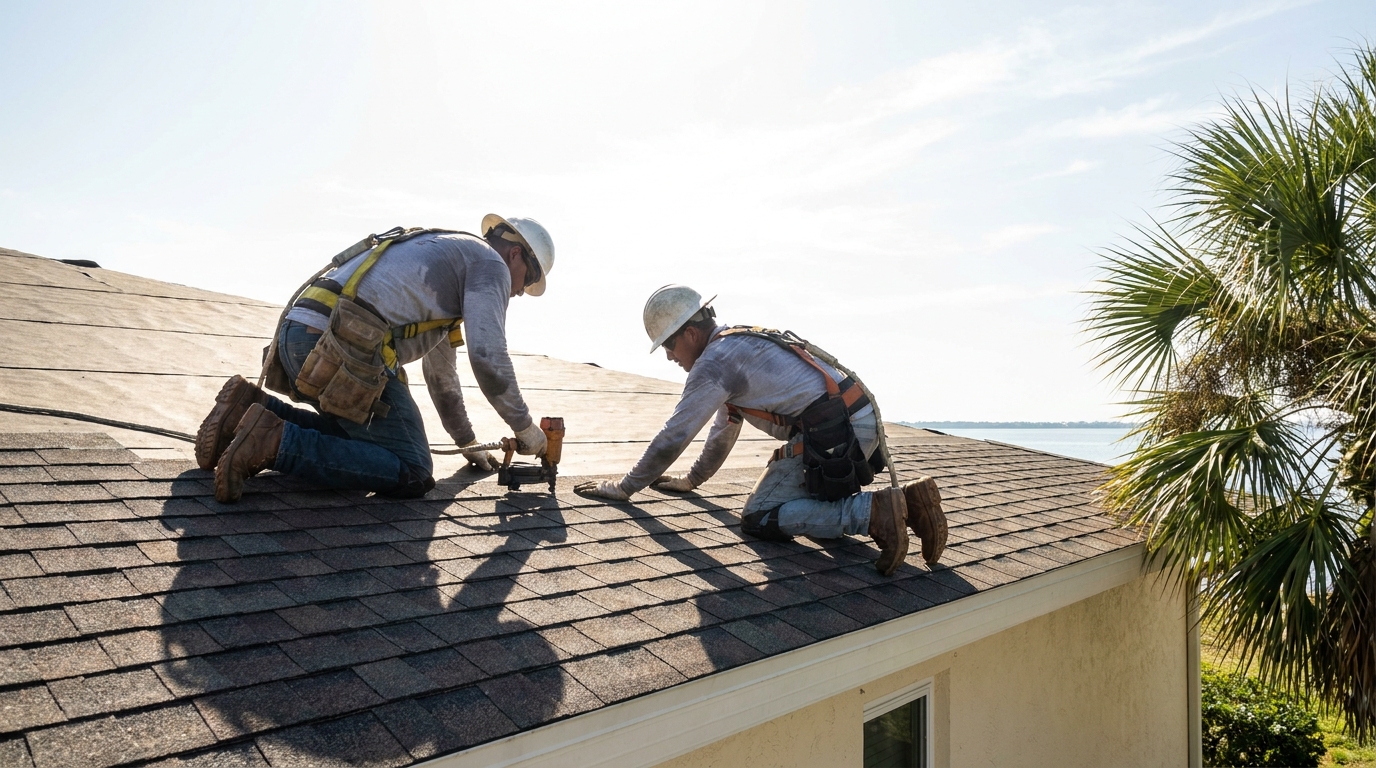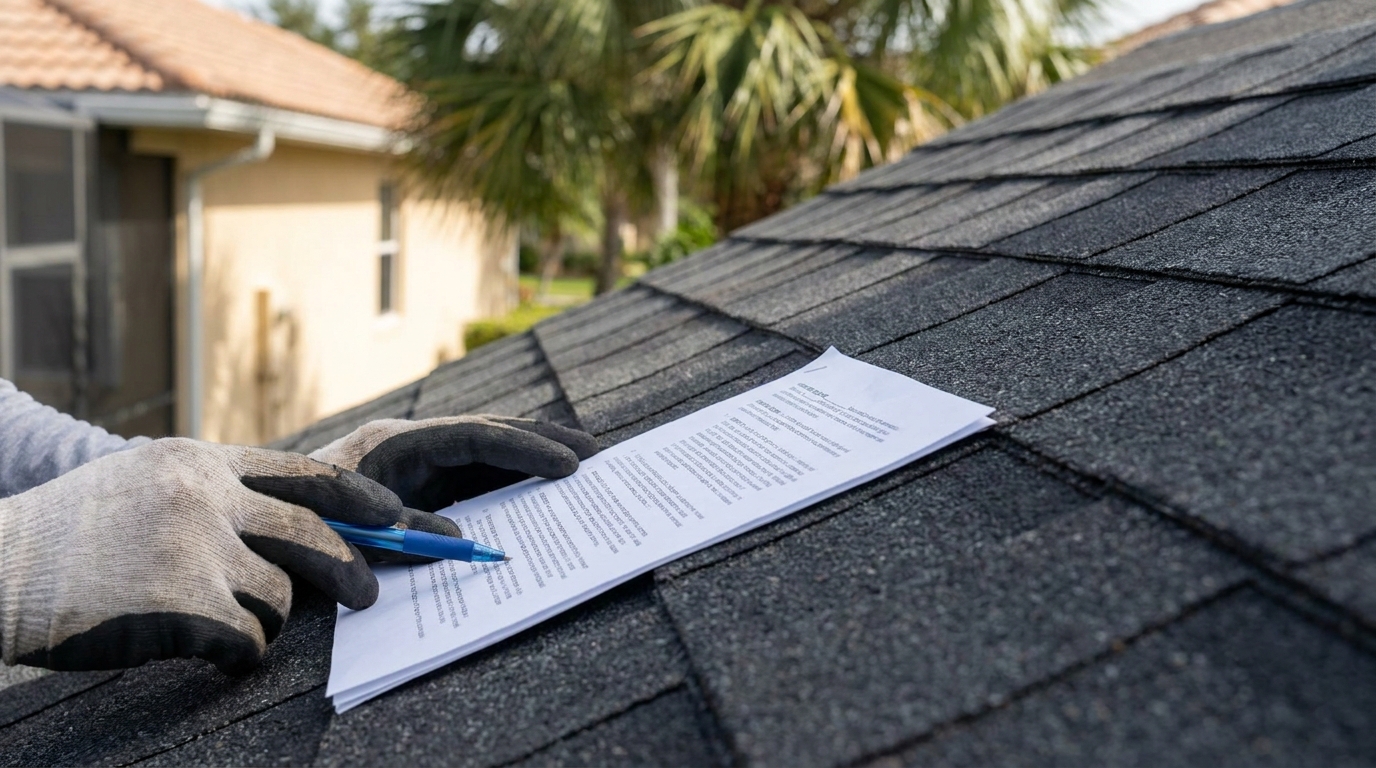
A Tampa roofing contract should spell out the scope of work, price, payment schedule, permit responsibilities, lien-law disclosures required by Florida statute, warranty terms, and how change orders and disputes get handled. Anything vague is a liability — and in a market that lives under hurricane season, humidity, and the constant threat of afternoon downpours, vague costs homeowners real money.
Before you sign anything, walk through the checklist below. Florida's construction lien law gives your roofer real leverage over your property, so the paperwork matters as much as the shingles.
The Florida Lien Warning Your Contract Must Contain
Under §713.015 of the Florida Statutes, any direct roofing contract with a homeowner on a residential property of four or fewer units exceeding $2,500 must include a verbatim statutory lien warning. If that block of language isn't in your contract, the contract doesn't meet Florida's requirements for residential improvements — full stop.
The warning explains that people who work on your home, or supply materials, can file a claim against your property if they aren't paid, even if you already paid your contractor. That's not a scare tactic. It's Chapter 713 in action, and it's why the disclosure exists.
Scope of Work: Specific, Not Generic
The scope section should name the exact roof system, underlayment, drip edge, flashing, ventilation, and fastening pattern being installed. "Replace roof" is not a scope of work. You want line items — tear-off layers, decking replacement rates, ice-and-water shield placement, ridge and soffit venting, and manufacturer specs (for example, a GAF architectural shingle system with matching accessories).
In Tampa, the scope should also address wind-mitigation details relevant to Florida Building Code compliance — secondary water barrier, nailing patterns, and truss-to-wall attachment inspections when applicable. Those specifics matter for both durability and insurance credits.
Permits and the Notice of Commencement
Your contract should state clearly that the roofing contractor pulls the permit through the City of Tampa or Hillsborough County (whichever has jurisdiction) and that inspections are their responsibility. If a contractor asks you to pull the permit as the homeowner, that's a red flag — it usually means they can't, or don't want the accountability.
For any improvement exceeding $2,500, Florida §713.13 requires a Notice of Commencement to be recorded before work begins. And under §713.135, direct contracts greater than $5,000 require the permitting authority to have the NOC on file before the first inspection. A residential reroof in Tampa almost always crosses both thresholds, so the contract should specify who records and posts the NOC — typically the owner, though the contractor often assists.
Payment Schedule: Tied to Progress, Not the Calendar
A protective payment schedule ties each draw to a completed milestone, not to a date. A common structure looks like this:
- A modest deposit at contract signing (enough to secure materials, not fund the project)
- A progress payment upon material delivery or tear-off completion
- A payment at dry-in / underlayment inspection
- Final payment after the final inspection passes and lien releases are delivered
If a contract demands 50% up front before a shingle arrives, that's a leverage problem. Reputable Tampa roofers like SCM Roofing structure draws so the homeowner is never significantly ahead of the work performed.
Lien Releases at Every Payment
Every progress payment should be exchanged for a lien waiver conforming to §713.20, which prescribes four standard forms — conditional partial, unconditional partial, conditional final, and unconditional final. Use conditional waivers when you pay by check (they become effective when the check clears) and unconditional waivers only after payment is confirmed.
Because subcontractors and suppliers not in privity with you must serve a Notice to Owner within 45 days of first furnishing (per §713.06), you may receive NTOs in the mail even from parties you've never spoken with. That's normal. Keep them. At final payment, insist on final unconditional waivers from the contractor and every party that served an NTO — that's how you close out lien exposure on your home.
Contractor Licensing — Confirm It Before You Sign
Roofing contractors in Florida must be licensed under Chapter 489, and per §489.128, an unlicensed contractor has no lien rights and largely unenforceable contracts. Verify the license number on your contract at the Florida DBPR license lookup before signing. It takes two minutes and it's the single cheapest form of protection you have.
The contract should list the license number, the qualifier's name, and the company's certificate of insurance information (general liability and workers' compensation). Ask for a COI issued directly from the insurer, not a photocopy.
Warranty Language — Workmanship vs. Manufacturer
Your contract should separate the manufacturer's material warranty (from the shingle maker) from the contractor's workmanship warranty (from the roofer). These are two different documents with two different terms. Ask for the manufacturer warranty registration confirmation after installation — many enhanced warranties require registration within a specific window.
In a Tampa climate — UV load, humidity, wind-driven rain, and hurricane exposure — workmanship warranties on flashing, penetrations, and valleys matter more than headline shingle warranties. That's where leaks actually start.
Change Orders, Rotten Decking, and Hidden Conditions
Every reroof turns up something. The contract should specify a per-sheet price for replacing rotten or delaminated decking and a written change-order process — no verbal approvals, no surprise invoices. In older neighborhoods like Seminole Heights or Hyde Park, where wood decking has weathered decades of Gulf Coast humidity, decking replacement is common enough that the number should be agreed on in advance.
Hurricane Season and Timing Clauses
Tampa's roofing calendar is shaped by hurricane season (June 1 through November 30) and the summer rainy pattern of daily afternoon storms. A well-written contract addresses weather delays, tarping obligations if a storm rolls in mid-project, and material availability if a named storm disrupts supply chains. Vague "acts of God" language isn't enough — you want specific responsibilities.
Dispute Resolution and Cumulative Remedies
Florida §713.30 confirms that lien remedies are cumulative — meaning contract, breach, and other claims can proceed alongside lien claims, subject to the four-year statute of limitations in §95.11(3). Your contract's dispute clause should specify venue (Hillsborough County), whether disputes go to mediation before litigation, and how attorney's fees are handled.
Frequently Asked Questions
Does every Tampa roofing contract need the §713.015 lien warning?
Yes, if it's a direct residential contract exceeding $2,500 on a property with four or fewer dwelling units. The warning must appear in the statutory language required by §713.015.
Who is responsible for pulling the roofing permit in Tampa?
Your licensed roofing contractor should pull the permit and manage inspections through the City of Tampa or Hillsborough County. Homeowner-pulled permits shift liability to you and are a warning sign when a contractor requests them.
How long does a Florida construction lien last?
A recorded lien expires one year after recording under §713.22 unless the lienor files suit to enforce it. A homeowner can shorten that window to 60 days by recording a Notice of Contest of Lien.
What if a subcontractor I never hired sends me a Notice to Owner?
That's expected. Under §713.06, subcontractors and suppliers not in privity with you must serve an NTO within 45 days of first furnishing to preserve lien rights. Save every NTO and collect final unconditional lien waivers from those parties before making final payment.
Can an unlicensed roofer file a lien on my Tampa home?
No. Under §489.128, unlicensed contractors have no lien rights under Chapter 713 and their contracts are largely unenforceable. Verifying the license before signing is essential.
The Bottom Line
A strong roofing contract in Tampa reads less like a sales document and more like a plan: exactly what will be installed, who pulls the permit, when payments release, what waivers you receive in exchange, and how surprises get handled in writing. Florida's lien law is homeowner-protective only when you use it — by insisting on the §713.015 warning, tracking NTOs, and collecting lien releases at each draw.
Homeowners in Tampa, FL who want a contract reviewed line by line before signing, or who want a straightforward proposal built around these standards, can reach SCM Roofing, LLC at https://scmroofingfl.com for a free estimate. This article is general guidance, not legal advice — for specific questions about lien exposure or contract enforceability, consult a licensed Florida attorney.