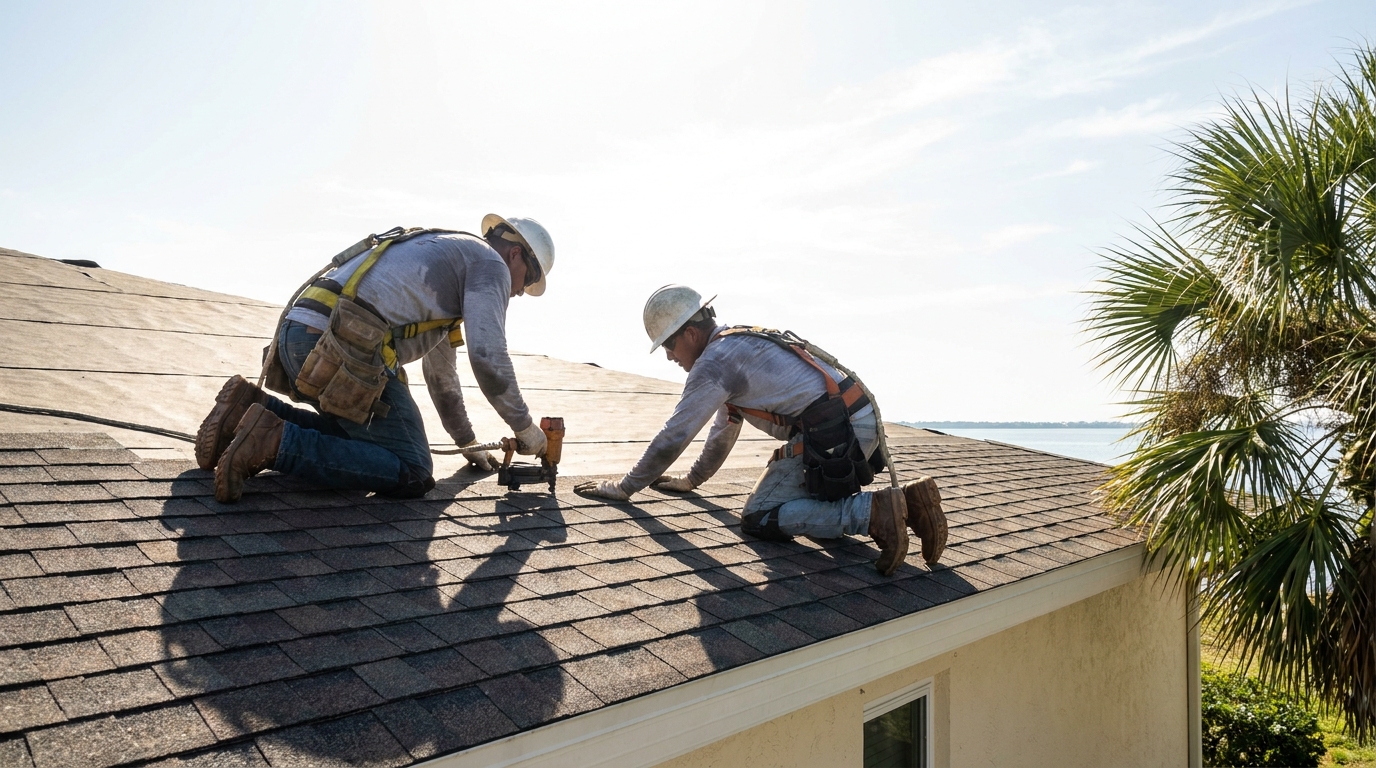
In Tampa, a roof warrants full replacement rather than repair when it's past 15 years old on asphalt shingle or 20 on tile, when storm damage covers more than roughly 25% of the surface, when the deck shows moisture or rot, or when your insurance carrier flags the roof as uninsurable at renewal. Everything short of those thresholds is usually a repair conversation.
That's the short version. The longer version matters here on the Gulf Coast, because Tampa's mix of aging housing stock, hurricane exposure, and tightening insurance rules pushes the repair-versus-replace decision in ways homeowners in cooler, drier markets never face. Below is how we think through it, drawing on what SCM Roofing sees week to week across South Tampa, Carrollwood, Brandon, and the older bungalow neighborhoods around Seminole Heights and Hyde Park.
How do I know if my Tampa roof needs replacement instead of repair?
Replace rather than repair when your roof crosses any one of four thresholds: age past its material's service life (roughly 15–20 years for asphalt shingle, 20–25 for older tile underlayment, 25+ for metal), storm damage exceeding about 25% of the roof plane, active deck rot or sagging, or an insurance non-renewal tied to roof condition. Isolated leaks or a few missing shingles are almost always repair territory.
The trap most Tampa homeowners fall into is patching a roof that's already three or four repairs deep. Each patch on an aging roof buys twelve to eighteen months at best, and Florida's UV, salt air, and afternoon downpours punish repaired seams faster than the original installation. If you've already spent $2,000–$4,000 on repairs in the last two years, you're funding a replacement in installments.
What roof age triggers replacement in the Tampa market?
In Tampa, asphalt shingle roofs typically need replacement at 15–18 years, concrete or clay tile roofs at 20–25 years (usually driven by underlayment failure, not the tile itself), and standing-seam metal at 30–40+ years. Coastal exposure in areas like Davis Islands, Apollo Beach, and the Interbay Peninsula shortens those windows by two to four years due to salt and wind load.
Tampa's housing stock skews older than most people realize. A large share of homes in Seminole Heights, Palma Ceia, and Temple Terrace were built or re-roofed in the late 1990s through mid-2000s — which means a big population of roofs is now in the 20-to-25-year replacement window right now, in 2026. If your last roof went on before Hurricane Charley in 2026, you are past due for a professional assessment.
Tile roofs are a special case
Barrel and flat tile roofs — common across Tampa's Mediterranean-style neighborhoods — can look pristine while the underlayment beneath them has failed completely. The tiles are the rain hat; the underlayment is the actual waterproofing. When underlayment goes, a "tile roof replacement" usually means lifting, stacking, and re-laying the existing tiles over new underlayment, not tearing everything off.
How does hurricane season change the repair-vs-replace math?
Hurricane season (June 1 through November 30) changes the calculation because a storm-damaged older roof rarely qualifies for a repair-only claim. Florida insurance carriers and Hillsborough County inspectors apply the 25% rule: if more than 25% of a roof section is damaged within any 12-month period, the entire roof section generally must be brought up to current code — which effectively means replacement.
Wind uplift, hail bruising, and tile slippage from a single storm can push a marginal roof past that 25% line in an afternoon. We've walked plenty of Tampa roofs after storms where the visible damage looked minor from the driveway but crossed the threshold once measured out plane by plane. That's why post-storm inspections need to be done by someone who understands how the rule is actually applied, not just what looks bad from the ground.
How do Florida insurance rules push toward replacement?
Florida insurance carriers have tightened roof underwriting sharply. Many now refuse to renew policies on asphalt shingle roofs older than 15 years without a passing inspection, and some won't insure any roof over 20 years regardless of condition. If your carrier issues a non-renewal or a mandatory-repair notice tied to roof age or condition, replacement is often the only path to keeping coverage.
This is the single biggest shift Tampa homeowners have faced in the last few years. A roof that would have been repaired and re-insured in 2026 now triggers a policy cancellation in 2026. Before you spend money on repairs, call your carrier and ask specifically whether they'll continue coverage on a repaired roof of your age — the answer often makes the decision for you.
Repair vs. replacement: cost and lifespan at a glance
| Scenario | Typical Tampa Cost | Expected Added Life | Insurance-Friendly? |
|---|---|---|---|
| Spot repair (few shingles, one flashing) | $450–$1,500 | 1–3 years on aging roof | Only if roof is under ~15 yrs |
| Section repair (one slope, minor deck work) | $2,500–$6,000 | 3–7 years | Sometimes |
| Tile re-lay over new underlayment | $18,000–$32,000 | 20–25 years | Yes |
| Full asphalt shingle replacement | $14,000–$26,000 | 20–30 years | Yes |
| Metal or flat-roof (TPO) replacement | $22,000–$45,000+ | 25–40 years | Yes |
Ranges reflect typical Tampa-area 2026 pricing for single-family homes between 1,800 and 2,800 square feet. Complex roof geometry, steep pitches, and premium materials push costs higher.
What does the Hillsborough County permit process look like?
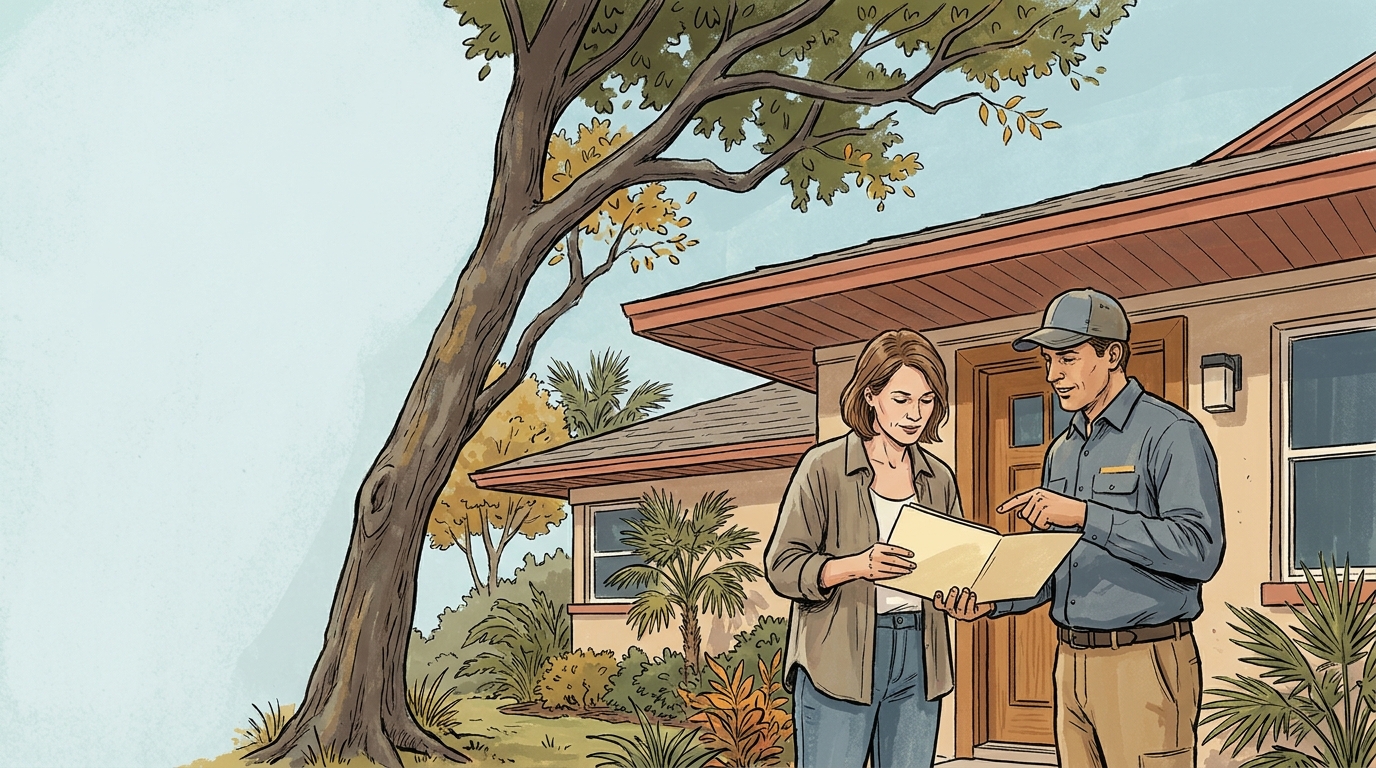
Every roof replacement in Tampa requires a permit through Hillsborough County (or the City of Tampa Construction Services Division for homes inside city limits). Your licensed roofing contractor pulls the permit, schedules a dry-in inspection after underlayment is installed, and a final inspection after completion. Permit fees typically run $200–$500 depending on job value, and turnaround runs a few business days in normal conditions.
Two things trip homeowners up. First, the permit must be pulled by a Florida-licensed roofing contractor — a handyman or unlicensed crew cannot legally re-roof your home, and doing it without a permit voids most insurance policies. Second, current Florida Building Code requires secondary water barrier installation and specific nailing patterns for wind resistance; older repairs often don't meet those standards, which is why replacements after storm damage almost always cost more than the last roof did.
When is repair still the right answer in Tampa?
Repair is usually the correct call when your roof is under 12 years old, the damage is localized to one area, the deck underneath is dry and sound, and your insurance carrier will continue coverage without a full replacement. A well-executed repair on a healthy roof can add five to ten years of service without issue.
Repairs also make sense as a bridge — for example, if you're selling within 12 months and disclosure-safe repairs let the buyer inherit the replacement decision, or if you need to survive one more hurricane season while you line up financing. Just go in with clear eyes: a bridge repair is not the same as fixing the problem.
Frequently asked questions
How many roof repairs are too many before I should just replace?
Three significant repairs in a five-year span, or two repairs on the same roof section, is the practical ceiling. At that point you're addressing symptoms of a systemic underlayment or fastener failure, not isolated damage. Cumulative repair spending approaching 25–30% of a full replacement cost is another clear signal that replacement is the more economical path.
Will my Florida insurance actually drop me for an old roof?
Yes — non-renewals tied to roof age are now common across Florida carriers. Many won't renew asphalt shingle policies past 15 years without an inspection showing five-plus years of remaining life, and some cap coverage at 20 years regardless. Call your carrier before hurricane season and ask directly about their roof-age policy so you're not surprised at renewal.
How long does a full roof replacement take in Tampa?
A standard asphalt shingle replacement on a Tampa single-family home typically takes one to three days of active work. Tile re-lays run five to ten days because of the labor of stacking and resetting tile. Weather delays are common June through September; most reputable Tampa roofers schedule around the afternoon thunderstorm pattern to keep the deck dry.
Do I need to be home during the replacement?
No, you don't need to be home, but you should plan to move vehicles out of the driveway, secure attic contents (vibration knocks dust loose), and take down wall-mounted items on the top floor. Pets are usually happier boarded or kept elsewhere for the noisiest day. Your contractor should walk the property with you before and after the job.
Can I replace just half of my roof?
Partial replacements are possible but usually not advisable in Tampa. Matching new shingles or tiles to weathered existing ones is nearly impossible aesthetically, and insurance carriers frequently reject partial replacements as insufficient. The exception is a genuinely modular roof — for example, a detached garage or an addition with its own roof plane separated from the main structure.
What should I look for when hiring a Tampa roofer for a replacement?
Verify a Florida state roofing contractor license (CCC number), current general liability and workers' comp insurance, manufacturer certifications like GAF Master Elite, and a physical Tampa-area address. Read recent local reviews — SCM Roofing, for example, holds a 4.9-star rating across 239 Google reviews, which is the kind of sustained local track record worth looking for. Get the scope, materials, warranty, and permit responsibility in writing before signing.
Getting a straight answer on your roof
The repair-versus-replace decision in Tampa comes down to honest measurement: age, damage percentage, deck condition, and where your insurance carrier draws its line. Any Tampa roofer who quotes replacement without walking the roof, checking the deck, and asking about your insurance situation is guessing — and any who quotes repair on a 20-year-old shingle roof heading into hurricane season is doing you no favors either.
Homeowners across Tampa, from Westchase and Carrollwood down through South Tampa and out to Brandon, who want a straight assessment can reach SCM Roofing, LLC at https://scmroofingfl.com. We're a GAF Master Elite certified local contractor, and we'd rather tell you your roof has five good years left than sell you one it doesn't need. For related reading, see our guides on Roof Inspection in Tampa, Roof Repair in Tampa, and Metal Roofing in Tampa.