Shingle roofing in Port Charlotte, FL in 2026 comes down to three things: choosing the right asphalt shingle type for a Gulf Coast wind zone, following Charlotte County permitting and Florida's 25% roof rule, and installing the system in the correct sequence so gravity does its job. Get those right and a shingle roof is still the most cost-effective, code-compliant way to cover a Port Charlotte home.
The rest of this guide walks through the shingle categories available today, how a code-correct install actually goes on, and the local rules that decide whether you're repairing, re-roofing, or starting fresh down to the deck.
What types of asphalt shingles are available for Port Charlotte homes?
Four main asphalt shingle types are sold in North America: traditional (3-tab), architectural, premium, and performance. All four are composition shingles built on a fiberglass base with asphalt and granules, which is why they're all sometimes called fiberglass shingles. Only premium shingles are marketed as designer shingles.
Traditional shingles — also called strip shingles or 3-tab — are the oldest asphalt shingle still made today. Architectural shingles (dimensional, laminate, or laminated composite) use a layered construction that gives a thicker shadow line and typically better wind performance. Premium and performance shingles are also laminate builds, aimed at higher wind ratings and specific aesthetics.
For a Port Charlotte roof sitting in a hurricane-exposed coastal market, most homeowners land on architectural or performance shingles. SCM Roofing installs shingle roofing in all three of the main residential categories — 3-tab, architectural (dimensional), and luxury/designer — so the choice is driven by wind rating, HOA appearance rules, and budget rather than what a crew happens to stock.
How is a shingle roof actually installed, layer by layer?
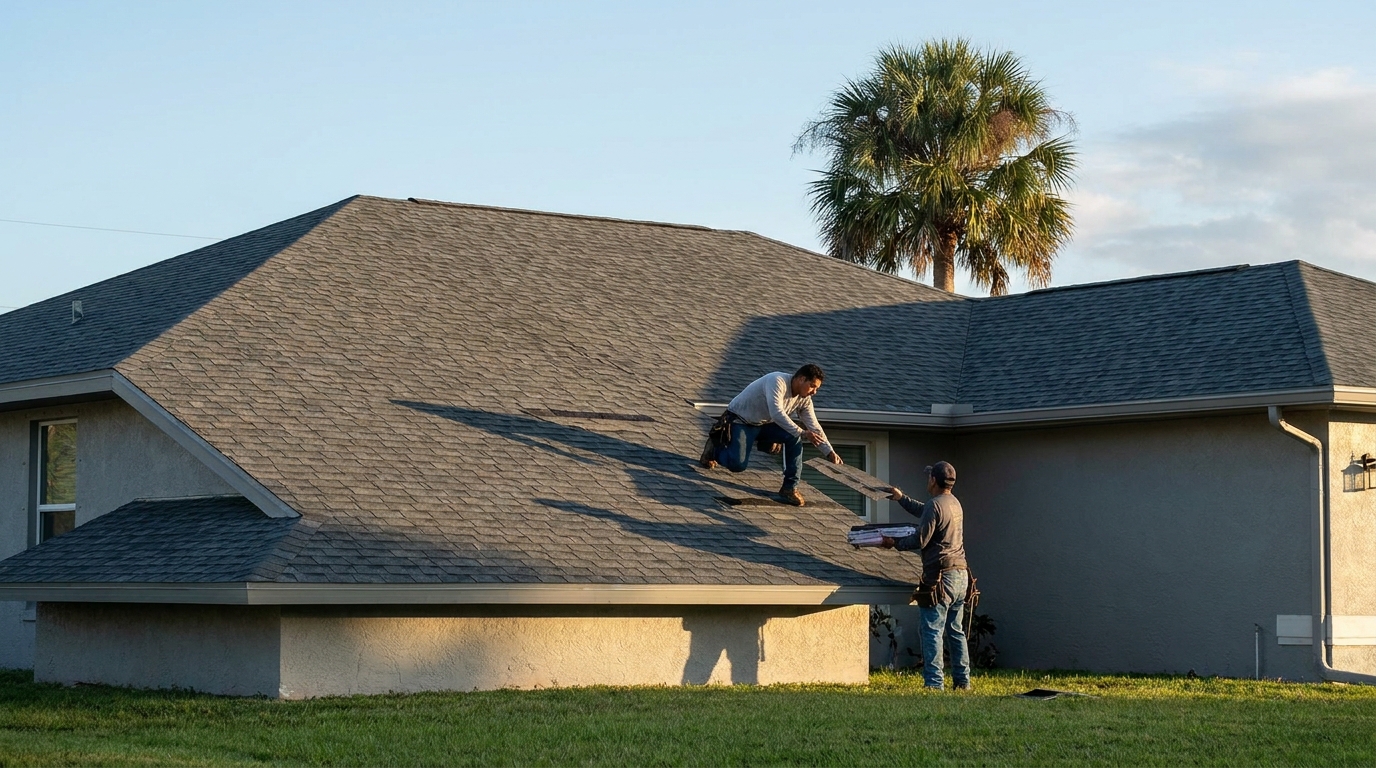
Asphalt shingles shed water by gravity: every layer overlaps the one below, starting at the eave and working up to the ridge. The sequence is deck prep, drip edge, underlayment, starter strip, shingle courses, flashing at penetrations and walls, and ridge cap at the top.
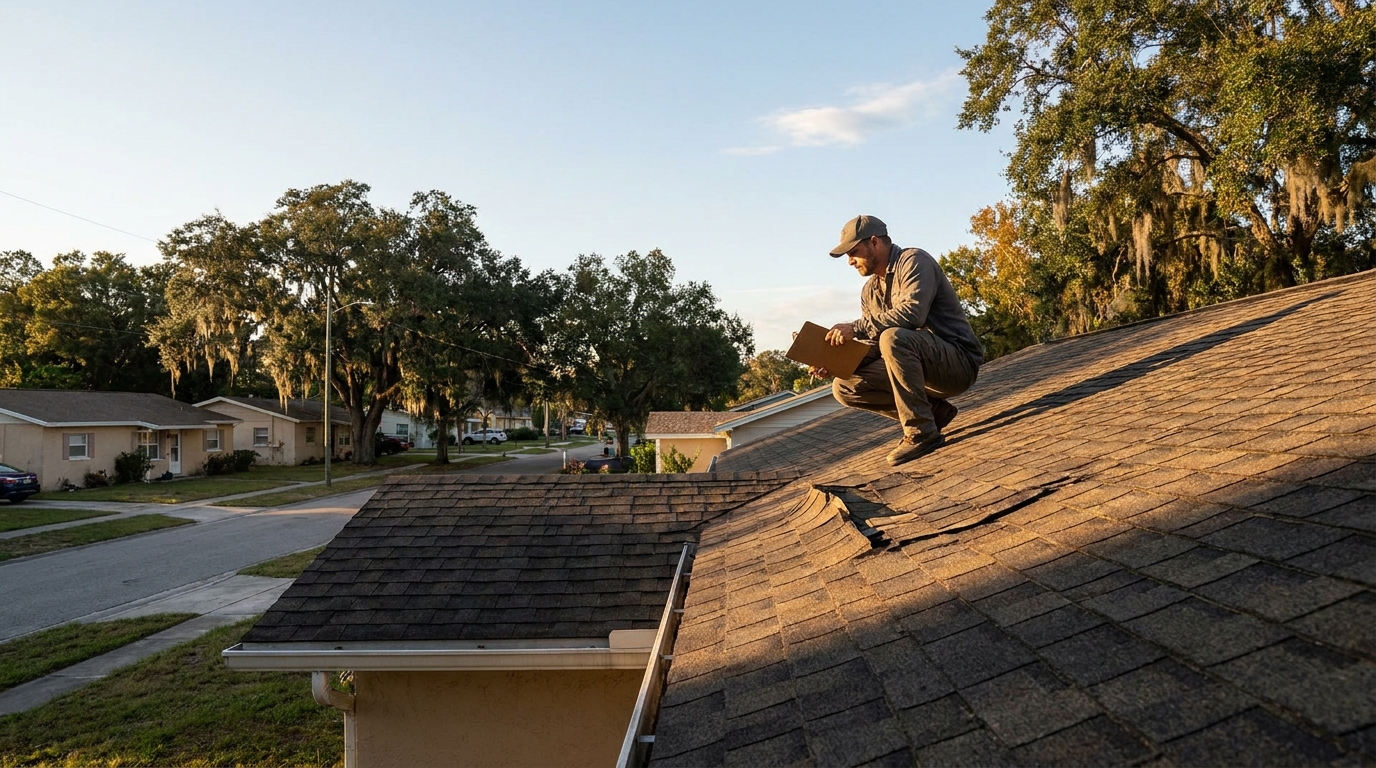
Before anything is fastened down, the roof deck has to be smooth, properly nailed to the trusses, dry, and free of gaps or holes. The first material installed at the eave is the drip edge, which gives the roof a clean lower edge and stops water from wicking back onto the deck before it leaves the roof. Underlayment goes on next, then a starter strip along the eaves, then shingle courses run upward with flashing woven in at valleys, walls, vents, and chimneys.
One Florida-specific note: SCM Roofing does not install over existing layers. Everything comes off down to the deck before a new roof goes on, which is both a longevity decision and a way to keep the install squarely under current building code.
How does Charlotte County permitting and Florida's 25% rule affect your project?
Charlotte County requires a permit for any roof repair exceeding 100 square feet (one roofing square) or any work involving trusses or rafters. Repairs under 100 square feet that don't touch structural members are listed as not requiring a permit. Residential roof permits are described as over-the-counter, meaning plans review is typically minimal or not required.
Florida's existing-building code then layers on the 25% rule: repairing, replacing, or recovering more than 25% of a roof or roof section in any 12-month period generally triggers a requirement to bring the entire roof or section up to the current code — unless that roof was built, repaired, or replaced under the 2007 Florida Building Code or later. Florida's current statewide edition is the 8th Edition (2023), and the applicable edition should be confirmed at the time the permit is filed.
A full tear-off is generally required when the existing roof is water-soaked or badly deteriorated, when two or more roof-covering layers already exist, or when the existing material is slate, clay, cement, or asbestos-cement tile.
What should Port Charlotte homeowners compare before choosing a shingle?
The shingle category drives price, appearance, and wind performance. Use the table below as a quick frame before getting into manufacturer-specific product approvals.
| Shingle type | Also known as | Construction | Typical Port Charlotte fit |
|---|---|---|---|
| Traditional (3-tab) | Strip shingles | Single-layer, fiberglass base | Budget repairs, matching older roofs |
| Architectural | Dimensional, laminate, laminated composite | Laminated, fiberglass base | Most common new install |
| Premium | Designer shingles | Laminated, fiberglass base | Higher-end homes, specific looks |
| Performance | — (performance line) | Laminated, fiberglass base | High-wind priority installs |
Beyond the category, the product's Florida product-approval number matters. Florida product-approval records specify whether a product is approved for use in a given wind zone and may state limits or point to an evaluation report for wind-uplift resistance. A product approval is not a blanket guarantee that any given shingle is suitable for every roof — it tells you the conditions under which it's allowed.
What makes a Port Charlotte shingle roofing contractor worth hiring?
License, local track record, and how a contractor handles the deck are the three things worth checking before you sign anything. SCM Roofing holds Florida state contractor license CCC1331132, and owner Scott Marone graduated from the University of Florida's Construction Management program and holds both a Florida State General Contractor's license and a Roofing Contractor's license. SCM Roofing also holds GAF Master Elite Certified status, a distinction earned by only about 2–3% of roofing contractors nationwide, and brings 25+ years of experience in the roofing industry.
"Excellent workmanship and great communication throughout the project. The roof looks fantastic!"
For storm-related work, SCM Roofing also provides leak repair, storm damage repair, and emergency service — relevant in a market where a single tropical system can push a 25%-rule conversation from theoretical to urgent before hurricane season is even over.
Frequently asked questions
Do I need a permit to repair my shingle roof in Port Charlotte?
Charlotte County requires a permit for any roof repair exceeding 100 square feet (one roofing square) and for any repair that involves work to trusses or rafters. Repairs under 100 square feet that don't touch structural members are listed as not requiring a permit. Residential roof permits are described as over-the-counter, meaning plans review is typically minimal or not required.
What is Florida's 25% roof rule?
There is an exception when the roof was built, repaired, or replaced in compliance with a qualifying edition of the Florida Building Code.
When is a full tear-off required instead of a re-cover?
A full tear-off is generally necessary when the existing roof is water-soaked or deteriorated, when the roof already has two or more roof-covering layers, or when the existing material is slate, clay, cement, or asbestos-cement tile. SCM Roofing removes all old material down to the deck before installing a new roof as standard practice.
Are architectural shingles the same as fiberglass shingles?
Architectural shingles are also known as dimensional shingles, laminate shingles, laminated composite shingles, and fiberglass shingles. All four main asphalt shingle types — traditional, architectural, premium, and performance — share a fiberglass base, so technically all of them can be called fiberglass shingles. Only premium shingles are marketed as designer shingles.
What goes on the roof first during a shingle installation?
The first material installed at the eave is the drip edge, which provides a clean edge and protects the lower edge of the roof deck from water damage by preventing water from wicking back up before it leaves the roof. Before any of that, the deck itself must be smooth, properly fastened to the trusses, dry, and free of gaps or holes.
How does Florida product approval affect my shingle choice?
Florida product-approval records state whether a shingle is approved for use in a given wind zone and may include limits or reference an evaluation report for allowable wind-uplift resistance. A product approval is not a blanket guarantee the shingle is suitable for every roof — it defines the conditions under which the product may be installed, which matters in a wind-exposed market like Port Charlotte.
The bottom line for Port Charlotte homeowners
A shingle roof in Port Charlotte is still a strong, code-friendly choice in 2026 as long as the shingle category, the product approval, the permit path, and the install sequence all line up. The traps are almost always upstream of the shingles themselves: skipping the deck inspection, misreading the 25% rule, or trying to re-cover a roof that's already carrying two layers.
Homeowners in Port Charlotte, FL who want this handled professionally can reach SCM Roofing at (855) 726-7663 or https://scmroofingfl.com to get started.