Hurricane Season Roof Inspection Checklist for Tampa Bay Homeowners
Every June, the same question runs through the back of every Tampa Bay homeowner's mind: Is my roof actually ready for this?
It's a fair question. Tampa sits squarely in one of the most active hurricane corridors in the country. The Gulf's warm shallow water fuels storm intensification fast — sometimes faster than forecast models catch. By the time a named storm is three days out, it's too late to discover you have missing flashing, a failing ridge cap, or soft decking that didn't make it through last season intact.
A hurricane roof inspection isn't about panic. It's about knowing what you have before the wind decides to show you. This checklist walks you through exactly what to look for — and when a professional storm damage assessment is the smarter call.
Why Pre-Season Roof Inspections Matter in Tampa Bay
Tampa Bay's roof environment is genuinely harsh. You're dealing with high UV exposure, humidity that promotes algae and moss growth, salt air corrosion near the coast, and storm cycles that can include wind-driven rain, hail, and sustained gusts well above 100 mph in a major event.
Small vulnerabilities — a lifted shingle tab, a cracked vent boot, a section of compromised caulking — are manageable repairs in April. After a Category 2 passes through, those same issues become water intrusion, structural damage, and insurance claim complications.
The Florida building code requires wind mitigation features on newer roofs for good reason. But code compliance at installation doesn't mean your roof is still performing to that standard years later. Wear, thermal cycling, and minor storm events chip away at those features over time.
A pre-season inspection gives you a documented baseline — useful for your insurance carrier, your peace of mind, and your wallet.
Hurricane Roof Inspection Checklist: What to Look For
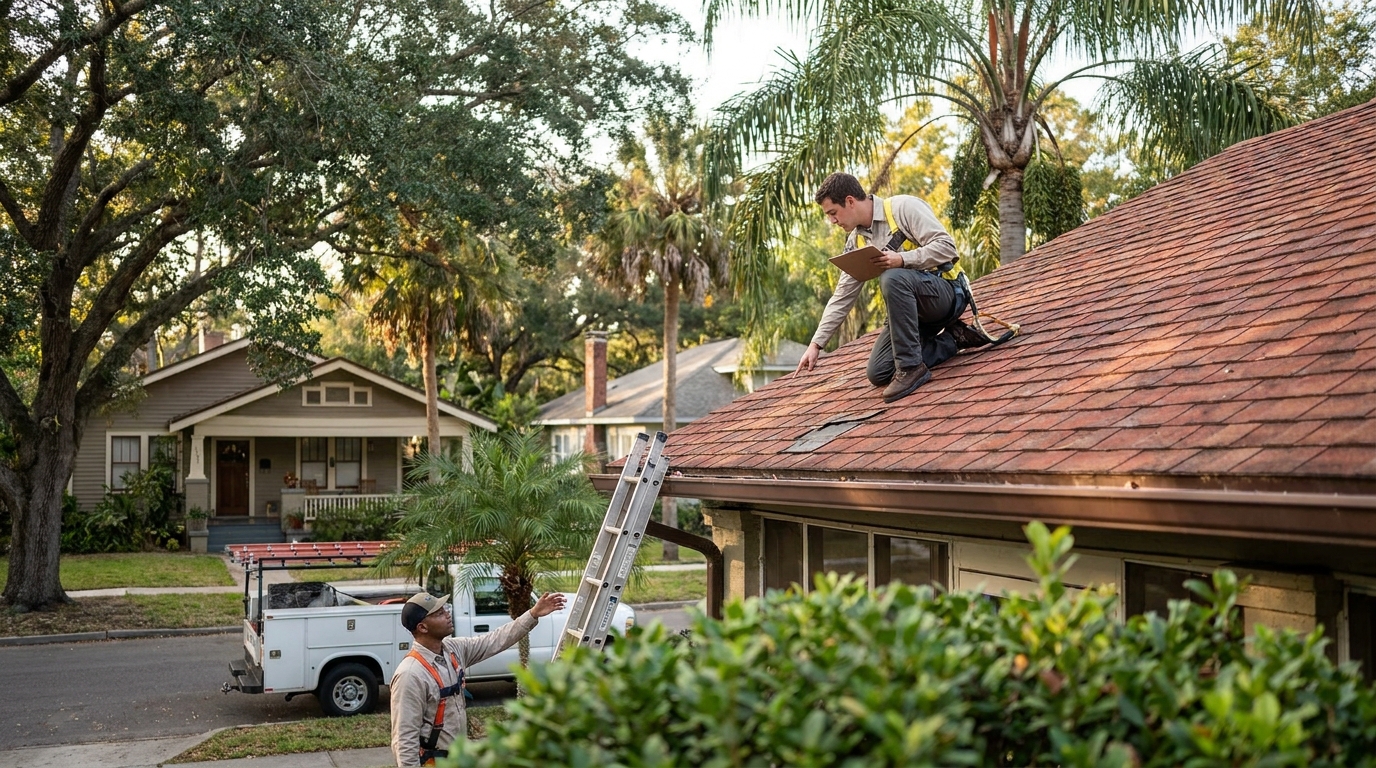
Work through this list systematically. Some items are safe to check from the ground or from inside your attic. Others require getting on the roof — and if you're not comfortable doing that safely, a professional inspection is worth every cent.
1. Shingle Condition
- Look for curling, cupping, or buckling shingle edges — signs of age or improper ventilation
- Check for missing granules (bare spots on the shingle surface indicate UV and impact wear)
- Identify any missing, cracked, or visibly lifted shingles
- Look for shingle tabs that have separated from their adhesive bond
In Tampa Bay, asphalt shingles typically show significant aging between 15 and 20 years depending on ventilation quality and product grade. If yours fall in that range, a full evaluation is especially important before hurricane season opens.
2. Flashing Integrity
- Inspect metal flashing at all roof-wall intersections, chimneys, skylights, and dormers
- Look for rust, separation, or lifting at the edges
- Check step flashing along dormers and additions — these joints are common water entry points
- Verify that flashing is still fully sealed with roofing cement or appropriate sealant
Flashing failures are one of the leading causes of storm-related water intrusion. Wind-driven rain finds these gaps before anything else does.
3. Ridge and Hip Caps
- Check that ridge cap shingles are intact and nailed correctly — not just laying in place
- Look for raised or missing caps along hip lines
- Examine the ridge vent (if present) for debris blockage or physical damage
4. Gutters and Drainage
- Clear gutters of leaves, debris, and standing material — blocked gutters can back water under the drip edge during heavy rain
- Check downspout extensions to confirm water is directed well away from your foundation
- Look for granule buildup in gutters — a sign of accelerating shingle wear
5. Fascia, Soffit, and Eaves
- Inspect wood fascia boards for rot, especially at gutter attachment points
- Check soffit panels for sagging, cracks, or separation — high winds create significant uplift pressure at eaves
- Look for any insect activity, particularly carpenter bees or wasps, which can compromise soffit structure
6. Roof Penetrations
- Inspect all pipe boots, HVAC curbs, and vent covers for cracking, separation, or deterioration
- Check rubber pipe boots specifically — UV degradation causes them to crack and split, often invisibly until a hard rain
- Confirm all penetration covers are properly secured and sealed
7. Attic Inspection
- Look for daylight showing through the roof deck — a clear sign of gaps or damage
- Check for water staining on rafters or sheathing, which indicates past or current leaks
- Assess ventilation: inadequate airflow accelerates shingle deterioration and can affect decking integrity
- Look for soft or spongy areas in the decking when viewed from below
Attic inspections often reveal problems invisible from the exterior. This step gets skipped more often than it should.
Storm Damage Assessment: What Counts as a Problem?
Not every imperfection requires immediate action. Part of a useful storm damage assessment is triage — understanding what's cosmetic, what's a near-term repair, and what needs attention before June 1.
Address before hurricane season: Any missing, lifted, or cracked shingles. Separated or rusted flashing. Damaged pipe boots. Soft decking. Any active leak, no matter how minor.
Monitor through the season: Granule loss on shingles that are otherwise intact. Minor algae streaking that hasn't caused structural issues. Gutters that are clean but showing age.
Document for insurance purposes: Photograph your roof condition before the season starts. If a storm causes damage, pre-storm documentation is valuable evidence for your claim.
One area where homeowners often underestimate is flashing. It looks fine from a distance. Up close, a professional eye catches separations and failures that a homeowner walking the perimeter wouldn't notice. That's exactly where SCM Roofing, LLC's inspection process focuses — detailed, systematic, and honest about what actually needs work versus what can wait.
When to Schedule a Professional Inspection
DIY inspection is a reasonable starting point. But there are situations where professional eyes are worth it — and in Tampa Bay, the following situations genuinely warrant a call:
- Your roof is 10+ years old and hasn't had a formal inspection in the last two years
- You experienced any wind event, hail, or named storm last season
- You notice interior staining on ceilings or walls that appeared after rain
- You're planning to list your home or refinance — a clean inspection report matters
- You can't safely access the roof yourself
SCM Roofing, LLC provides hurricane preparation inspections for Tampa Bay homeowners. They're GAF Master Elite Certified — a designation that reflects both installation standards and ongoing training. One customer wrote that SCM "stood out from the rest for several reasons," citing the GAF Master Elite certification, competitive pricing, and outstanding customer service. That kind of responsiveness matters when you're making decisions under a deadline.
Frequently Asked Questions: Hurricane Roof Prep in Tampa Bay
How often should I have my roof professionally inspected in Tampa?
Annually is a reasonable standard for Tampa Bay homeowners, given the storm exposure. At minimum, inspect before hurricane season opens and after any significant wind or hail event.
Does my homeowner's insurance cover a pre-season roof inspection?
Most standard homeowner's policies don't cover preventive inspections — those are out-of-pocket. However, if a prior storm caused damage that's still present, that repair may be claimable. A professional inspector can help you distinguish storm-caused damage from general wear.
What's the difference between a wind mitigation inspection and a standard roof inspection?
A wind mitigation inspection is a formal evaluation completed by a licensed inspector specifically for insurance purposes. It verifies features like roof shape, deck attachment, opening protection, and roof covering type. A standard roof inspection focuses on condition and serviceability. You may want both — the wind mitigation report can lower your insurance premium if your roof qualifies.
How much does a roof inspection cost in Tampa Bay in 2026?
Many reputable roofing contractors in Tampa offer inspections at no charge, particularly when they include a written assessment and photo documentation. Standalone wind mitigation inspections typically run $75–$150 through licensed inspectors. When comparing providers, clarify whether the inspection includes a written report with photos — verbal walkthroughs alone don't give you documentation you can use later.
Should I repair or replace before hurricane season?
That depends on the scope and location of the damage, the age of your roof, and your budget. A roof with localized issues — one or two damaged sections, isolated flashing failures — is typically a repair candidate. A roof showing widespread granule loss, multiple penetration failures, or decking issues across several areas is worth evaluating for full replacement. A professional assessment gives you the information to make that call confidently.
What should I do if a storm hits before I've had a chance to inspect my roof?
Schedule a professional inspection as soon as conditions are safe — ideally within days of the storm passing. Document any visible damage with photos before repairs begin. Avoid climbing the roof yourself in post-storm conditions. Contact your insurance carrier to open a claim promptly, since many policies have time limits on storm-damage reporting. A written inspection report strengthens your claim considerably.
Can I do a roof inspection myself, or do I always need a professional?
A ground-level and attic walkthrough using this checklist is a reasonable starting point for most homeowners. However, a professional inspection catches flashing separations, subtle deck softness, and penetration failures that aren't visible from the ground. If your roof is over 10 years old, or you find anything that concerns you during your own check, a professional assessment is the smarter next step.
Putting the Checklist to Work
The most useful version of hurricane preparation isn't reactive — it's the inspection you do in April or May that removes the uncertainty before a storm has a name.
Work through the checklist above systematically. Start with the attic and work outward. Document what you find with photos. If something looks wrong, get a professional assessment before you dismiss it as minor.
Tampa Bay homeowners who want a professional set of eyes on their roof before the season opens can reach SCM Roofing, LLC at scmroofingfl.com to schedule an inspection and written assessment. Their 4.9★ rating across nearly 239 Google reviews reflects a straightforward, communicative process — which is exactly what you want when you're making time-sensitive decisions about your home.
The roof over your head deserves a look before the sky decides to test it.