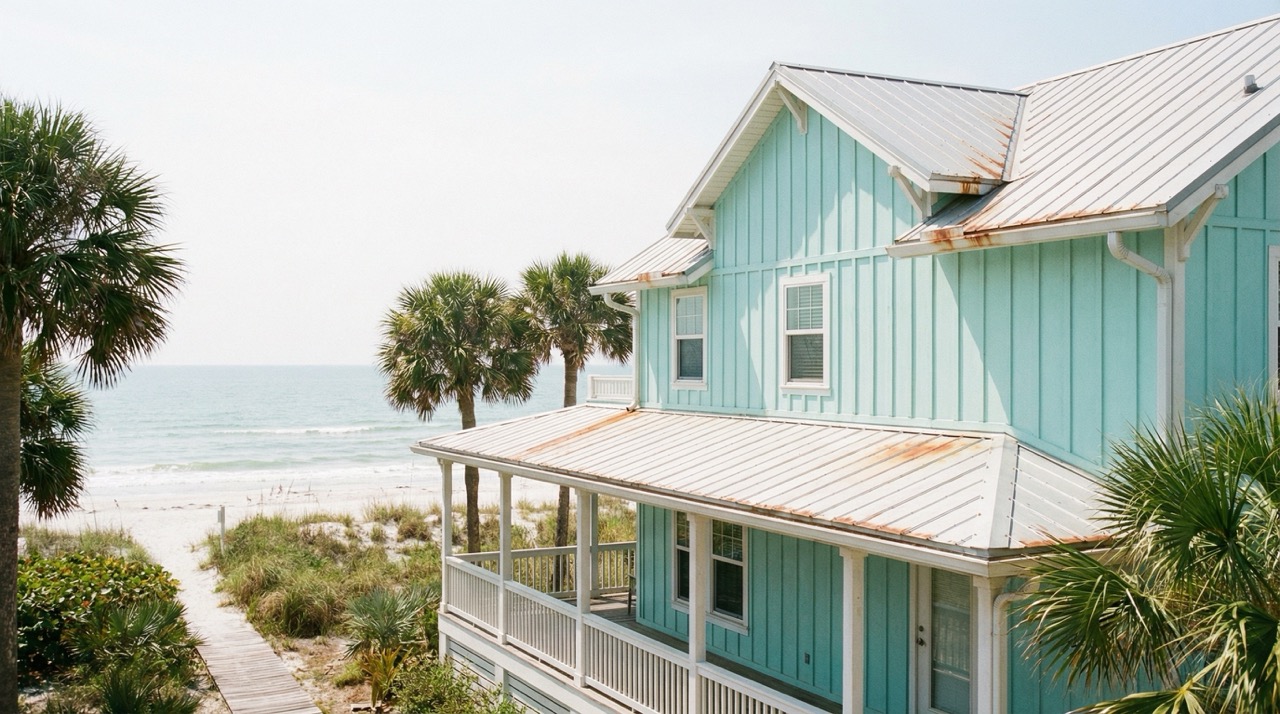
If you own a home on St Pete Beach's barrier islands—whether it's a cozy beach cottage along Corey Avenue or a modern beachfront property near Pass-a-Grille—your roof faces a silent enemy: salt air. Unlike inland Florida roofs that may last 20-25 years with proper care, coastal roofs in high-salt environments can deteriorate in just 12-15 years if not protected. Salt-laden air from the Gulf corrodes fasteners, weakens flashing, and breaks down protective coatings faster than any other environmental factor. The good news? Understanding how salt damages your roof and choosing the right materials and maintenance schedule can extend your roof's life by years and save thousands in premature replacement costs.
How Salt Air Damages Roof Materials
St Pete Beach sits on a barrier island directly exposed to the Gulf of Mexico, making salt air a persistent threat to any roofing material. Salt particles—primarily chlorides—are carried on wind and salt spray, especially during storm season. These particles settle on roof surfaces and don't just sit there: they attract moisture from Florida's humid air, creating a corrosive electrolyte that accelerates oxidation and material breakdown.
How Different Materials React to Salt:
- Asphalt Shingles: Salt doesn't directly destroy asphalt, but it erodes the protective mineral granules that shield the shingles from UV rays. Granule loss accelerates over time, leaving the asphalt underneath exposed. You'll see rust streaks running down your roof from compromised metal fasteners before the shingles themselves fail.
- Metal Roofing: Unprotected steel corrodes rapidly in salt air. Steel fasteners and flashing fail first, sometimes rusting away completely within 5-7 years if standard galvanized fasteners are used instead of marine-grade alternatives. The metal panels themselves remain sound longer if properly coated.
- Tile Roofing: Clay and concrete tile themselves resist salt well, but the mortar, sealants, and metal fasteners underneath are vulnerable. Brackish water seepage under tiles can cause freeze-thaw damage in winter and corrosion of the underlying structure.
- Flat Roofs (EPDM, TPO, Modified Bitumen): Membrane materials are relatively salt-resistant, but penetrations, seams, and metal edging corrode. Once fasteners loosen from corrosion, water infiltration becomes a major issue.
Corrosion on Fasteners and Flashing: The Hidden Problem
This is where most St Pete Beach homeowners get caught off guard. Your roof may look fine from the ground, but corrosion is happening behind your flashing and under the surface where you can't see it.
Galvanic Corrosion: The Electrochemical Threat
When two different metals contact each other in the presence of moisture and salt (a powerful electrolyte), galvanic corrosion occurs. One metal corrodes preferentially while the other is protected. Standard galvanized fasteners holding copper flashing, or steel fasteners in aluminum panels, create a galvanic couple. Add salt air and moisture, and the fastener becomes a sacrificial anode—it rusts away, leaving your roofing assembly loose and vulnerable to water infiltration.
Florida Building Code recognizes this threat: in coastal areas, Type 316 stainless steel fasteners are required within 15 miles of saltwater for many applications. Regular galvanized fasteners won't cut it.
Flashing and Penetrations: First to Fail
Your roof's flashing around chimneys, vents, skylights, and edges takes the brunt of salt spray. If installed with standard fasteners and sealants, flashing can start corroding within 3-5 years. You won't see the worst damage until water is already leaking inside. By then, interior damage compounds the problem.
Which Roofing Materials Best Resist Salt Air
For St Pete Beach homes, not all roofing materials are created equal when salt air is a factor.
Top Performers in Coastal Salt Air:
1. Standing Seam Metal with Marine-Grade Coatings (Best for Longevity) Metal roofs are the premium choice for barrier island homes. A standing seam metal roof with a Galvalume substrate and 70% PVDF (Kynar 500) coating can last 40-70 years in coastal conditions—three times longer than asphalt shingles. Kynar 500 is a trade name for PVDF resin formulations containing a minimum of 70% Kynar resin by weight, meeting the highest AAMA standards. Kynar-coated metal resists salt-induced and atmospheric corrosion far better than standard painted finishes. The 25-year warranty on coastal PVDF finishes reflects manufacturers' confidence, though real-world performance often extends 40+ years.
Aluminum substrates with PVDF coating are preferred over steel in high-salt zones because aluminum's natural oxide layer provides additional corrosion resistance. Galvalume (a zinc-aluminum-silicon coating) is also superior to traditional galvanizing, especially for coastal use.
2. Impact-Rated Asphalt Shingles (Budget-Conscious Option) If you're not ready for a metal roof investment, premium impact-rated shingles with wind ratings of 130+ mph and impact-resistant ratings are available. These are thicker, more durable, and include better adhesive systems. However, expect replacement in 12-15 years rather than 20-25, and plan for more frequent maintenance to manage salt-induced granule loss.
3. Concrete Tile (Traditional, Low-Tech Durability) Concrete tile, common on older St Pete Beach homes, naturally resists salt well. The tile material itself won't corrode. The weakness is everything underneath: the mortar, fasteners, and structural support. Concrete tile requires more frequent inspection and maintenance in salt air, and re-fastening old tile roofs is expensive.
4. Avoid: Uncoated Steel or Galvanized-Only Systems Standard galvanized metal roofing without additional PVDF or SMP coatings will not hold up well to St Pete Beach's salt air environment. Galvanizing provides some protection, but it's designed for inland conditions. In salt air, galvanized surfaces chalk and corrode within 8-12 years.
Marine-Grade Coatings That Actually Work
Your choice of coating is as important as the substrate material. Three coating families dominate coastal roofing:
Kynar 500 (PVDF) – The Gold Standard Kynar 500 coatings contain polyvinylidene fluoride resin, a synthetic plastic that forms an exceptionally durable, UV-resistant barrier. PVDF coatings are formulated to a minimum of 70% Kynar resin content (meeting AAMA 2605 standards) and deliver:
- Superior color retention (up to 25-year fade warranty)
- Excellent salt air and atmospheric corrosion resistance
- Typical service life of 40-60 years in coastal climates
- Cost: Premium option; expect to pay 20-30% more than standard painted metal
Galvalume Substrate (Not a Coating, But a Substrate Choice) Galvalume is a trademarked metal coating (55% aluminum, 43.4% zinc, 1.6% silicon) applied to steel. It's superior to traditional galvanizing because the aluminum-zinc alloy provides better protection against moisture and corrosion. Many contractors use Galvalume as a base substrate, then apply PVDF on top for maximum protection. Galvalume alone lasts 15-20 years in salt air; Galvalume with PVDF extends that to 40+ years.
SMP (Silicone-Modified Polyester) – The Mid-Range Choice SMP coatings offer good salt air resistance at a lower cost than PVDF. Typical warranty is 10-15 years, with real-world performance of 15-20 years. SMP is a practical choice if budget is tight, but PVDF is worth the investment if you plan to stay in your home long-term.
Application Thickness Matters Coastal roofing coatings should be applied at 2.0-2.5 mils minimum. Thinner applications won't last as long and defeat the purpose of choosing marine-grade materials.
Coastal Roof Maintenance Schedule for St Pete Beach Homes
You've chosen the right materials. Now maintain them. A barrier island home on St Pete Beach requires a more aggressive maintenance schedule than inland Florida homes.
Twice-Yearly Professional Inspections (Spring and Fall) Schedule inspections just before hurricane season (May) and again in fall (September/October). After major storms—especially those with salt spray—add an extra inspection. Your inspector should examine:
- All fasteners for corrosion, loosening, or rust streaks
- Flashing around chimneys, vents, skylights, and edges
- Granule loss on shingles or coating degradation on metal
- Sealant integrity at all penetrations
- Gutters and downspouts for salt deposit buildup
- Evidence of water staining inside your attic or upper walls
Salt Air Rinsing (2-4 Times Per Year) If you live within 1,500 feet of the Gulf—which includes most of St Pete Beach's barrier island homes—professional salt air rinsing removes chloride deposits before they cause damage. A gentle rinse with fresh water using low-pressure techniques removes salt without damaging materials. DIY rinsing with a standard garden hose on low pressure works for gutters and accessible areas, but hire professionals for the roof itself. Cost: $300-800 per rinsing, but far cheaper than replacing a corroded roof.
Fastener and Flashing Checks Every 3-5 Years Have a contractor walk your roof every 3-5 years to re-seal any loose or corroded fasteners. Early tightening and re-sealing prevents water infiltration that leads to interior damage. This preventive step costs $500-2,000 depending on roof size but can extend your roof's life by 5+ years.
Protective Coating Reapplication (Every 3-5 Years) If you have a metal roof with PVDF or SMP coating, consider a protective clear-coat reapplication every 3-5 years in high-salt zones. This adds a fresh barrier against salt spray and UV damage. Cost: $1,500-4,000 for a typical home, but extends coating life significantly.
Gutter and Downspout Cleaning (Quarterly) Salt air deposits in gutters accelerate corrosion of gutter fasteners and seams. Clean gutters every 3 months (quarterly), especially after storms.
What SCM Roofing Recommends
With 25+ years of experience on Florida's Gulf Coast and as a GAF Master Elite Certified contractor, SCM Roofing has seen every way salt air can damage a roof. Here's our professional recommendation for St Pete Beach homeowners:
For Maximum Longevity and Peace of Mind: Install a standing seam metal roof with a Galvalume substrate and 70% PVDF (Kynar 500) coating. Use Type 316 stainless steel fasteners throughout. The installed cost is higher—typically $12,000-18,000 for a 2,500 sq ft home—but you're buying 40-70 years of protection. Your replacement interval moves from 15 years to 40-70 years. Over the life of homeownership, this is the lowest-cost option.
For Budget-Conscious Homeowners: If metal roofing isn't in the budget, choose a premium impact-rated asphalt shingle (130+ mph wind rating, impact resistant) from a manufacturer with a strong coastal track record. Pair it with a professional maintenance program: twice-yearly inspections, annual salt air rinsing, and proactive fastener re-sealing every 3-5 years. This approach keeps your roof functional for 15-18 years and catches problems before they become expensive interior damage. Maintenance cost: $1,500-3,000 annually, which adds up but keeps you ahead of corrosion.
Do Not Skimp on Fasteners: Whatever roofing material you choose, use Type 316 stainless steel fasteners rated for coastal use. The difference in material cost ($0.50-1.00 per fastener vs. galvanized) is negligible compared to the cost of water damage from corroded fasteners. This is the single most important decision you can make to protect your roof from salt air.
Avoid Moisture Buildup Under the Roof: Ensure your attic ventilation is unobstructed. Trapped moisture under a roof accelerates corrosion and promotes mold growth. If you have soffit vents, keep them clear of debris. Ridge vents and gable vents should be open and functioning.
Frequently Asked Questions
Q: How quickly does salt air actually corrode a roof? A: On St Pete Beach, unprotected steel fasteners can show visible rust within 6-12 months and fail structurally within 5-7 years. Standard galvanized fasteners last 8-12 years. Type 316 stainless steel fasteners last 40-70+ years. The difference is dramatic, which is why material selection matters so much.
Q: I see rust streaks on my asphalt shingle roof. Is my roof about to fail? A: Rust streaks typically indicate corroding fasteners or flashing, not the shingles themselves. You have time to act, but address it soon. Have the roof inspected professionally within the next 3-6 months. Most rust streaks can be managed with fastener re-sealing and flashing repair without full replacement.
Q: How much does it cost to maintain a coastal roof in St Pete Beach? A: Expect $1,500-3,000 annually for a well-maintained coastal roof if you're proactive with inspections and rinsing. This includes two professional inspections ($300-500 each), 2-3 salt air rinses ($300-800 each), and minor repairs. It's much cheaper than replacing a roof due to salt damage.
Q: Can I rinse my roof myself? A: Yes, for accessible areas like gutters. Use a gentle, low-pressure stream to avoid damaging shingles or metal coatings. For the roof itself, hire professionals who know how to rinse without causing leaks or granule loss. Professional rinsing is worth the cost.
Q: Is Galvalume better than galvanized steel for a coastal roof? A: Yes. Galvalume's aluminum-zinc-silicon alloy provides superior corrosion resistance compared to pure zinc galvanizing. However, Galvalume alone (without additional PVDF coating) is designed for mild to moderate exposure. In high-salt zones like St Pete Beach barrier islands, Galvalume with PVDF coating is the better choice.
Q: What does the Florida Building Code require for coastal roofing on St Pete Beach? A: St Pete Beach falls within Pinellas County's coastal high-wind zone. Florida Building Code requires roofing systems to resist specified wind loads, enhanced fastening patterns (typically 6 nails per shingle vs. 4 inland), and impact resistance in some zones. Type 316 stainless fasteners are required within 15 miles of saltwater in many applications. All roofing work in coastal zones requires a licensed contractor and permit approval.
Q: How often should I have my coastal roof professionally inspected? A: Minimum twice yearly—spring (before hurricane season) and fall. After major storms, add an inspection. If you're proactive, you'll catch corrosion and water intrusion before they become expensive problems.
Q: My roof is 10 years old. Should I replace it before salt air damage gets worse? A: It depends on the material and your maintenance history. Have a professional inspection. If it's asphalt shingles with standard fasteners and you've had minimal maintenance, replacement in the next 2-5 years is prudent. If it's a well-maintained metal roof with quality coatings and stainless fasteners, you have 20-30 years left. The inspection tells you which scenario applies to your home.