If you manage a commercial property in St Petersburg, your flat roof is doing more work than almost any other building system — and getting less attention than it deserves. Between salt-laden Gulf air, daily UV punishment, summer downpours, and the looming six-month hurricane season, a flat roof on a Central Avenue retail block or a warehouse near the Gateway business district can age years in a single season if it's left to fend for itself.
The good news: a disciplined maintenance schedule is the single biggest lever you have. Properties that follow a structured plan routinely double the service life of their roof systems and avoid the kind of emergency repairs that blow up an annual budget. Here's the schedule we recommend for commercial flat roof care in St Petersburg, and the local realities that should shape it.
Why St Petersburg Flat Roofs Need a Different Maintenance Approach
Generic maintenance advice doesn't survive contact with the Pinellas County climate. Flat roofs here — whether TPO, modified bitumen, EPDM, or built-up — face a specific stress profile:
- Hurricane season runs June 1 through November 30. That's half the calendar year under elevated wind and water risk.
- Salt air corrodes metal flashing, fasteners, and edge details faster on properties closer to Tampa Bay, the Gulf beaches, and the downtown waterfront.
- Afternoon thunderstorms in summer dump heavy rain quickly, which exposes any drainage flaw immediately.
- UV exposure is brutal year-round, accelerating membrane chalking, seam separation, and sealant failure.
- The Florida Building Code, with Pinellas County amendments, sets specific requirements for re-roofing, secondary water barriers, and wind-resistance ratings that affect how repairs and replacements must be performed.
A maintenance plan that ignores any of these factors is a plan that fails early. Preventive roof maintenance in this market is less about generic checklists and more about timing inspections to the rhythm of Gulf Coast weather.
The Recommended Annual Maintenance Schedule
Twice-Yearly Professional Inspections (Spring and Fall)
For commercial buildings in St Petersburg, two professional inspections per year is the floor — not the ceiling. We recommend scheduling them as follows:
- Spring inspection (April–May): This is your pre-hurricane checkup. The goal is to identify and correct any vulnerability before June 1. Loose flashing, open seams, deteriorated sealant at penetrations, clogged drains, and weak edge metal are the priorities.
- Fall inspection (November–December): Once hurricane season closes, a thorough post-season inspection identifies wind damage, debris impact, and water intrusion that may not yet have reached the interior. Catching it now prevents winter leaks during the cool, dry months when tenants are least tolerant of disruption.
Quarterly Visual Walk-Throughs
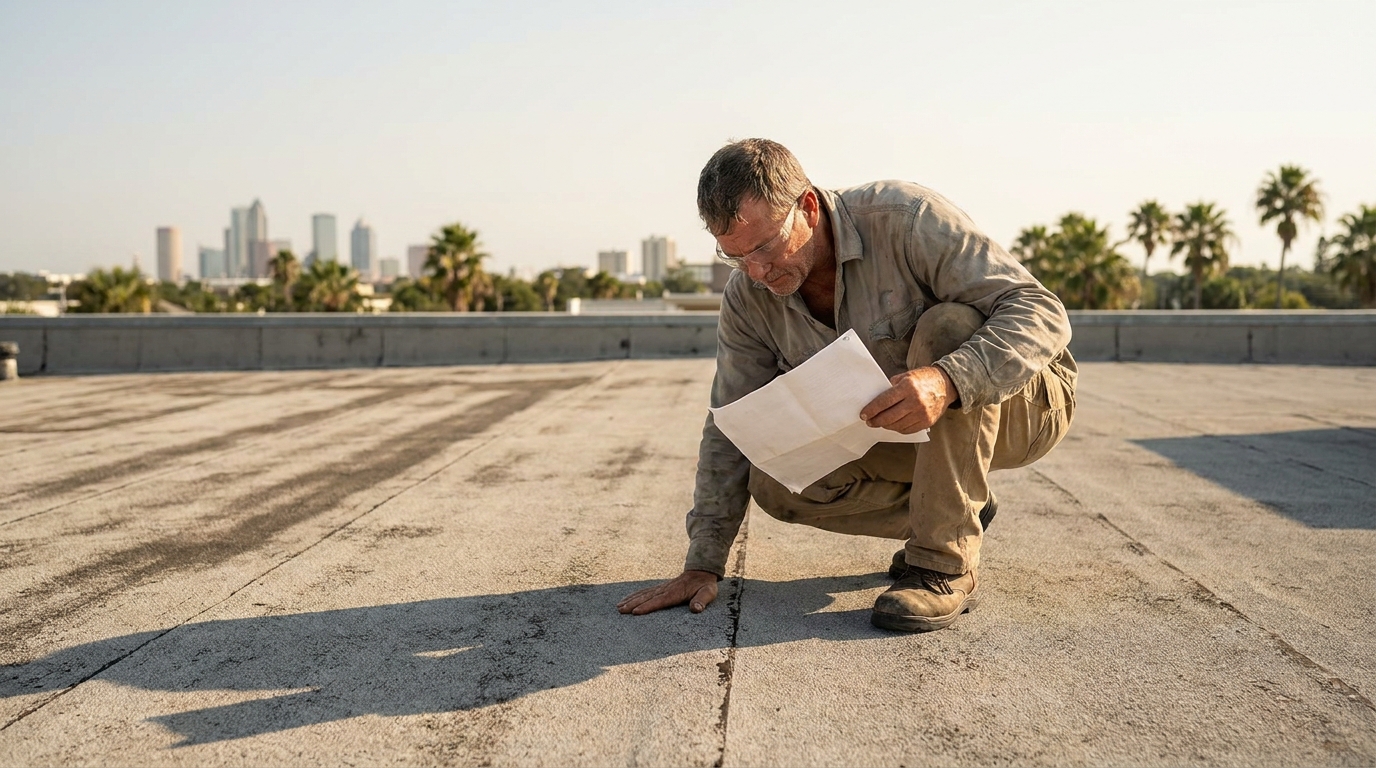
Between professional inspections, your facilities team or property manager should perform a quarterly walk of the roof. You're not looking for technical defects — you're documenting changes. Photograph problem areas, note any new ponding water, and check that drains and scuppers are clear.
For multi-tenant properties along the 4th Street corridor or in the Grand Central District, this quarterly habit catches HVAC technician damage, satellite installation punctures, and other third-party traffic issues before they become leaks.
Monthly Drainage Checks During Rainy Season
From June through September, drains, scuppers, and gutters need monthly attention. A single clogged drain on a TPO roof can hold thousands of pounds of standing water during an afternoon storm — enough to deflect the deck, stress seams, and overload the structure. Clear debris, check strainers, and confirm overflow scuppers are unobstructed.
What a Professional Flat Roof Inspection Should Cover
Not all inspections are created equal. A thorough commercial inspection in St Petersburg should document, at minimum:
- Membrane condition — blisters, splits, punctures, shrinkage, UV degradation, and seam integrity
- Flashings and terminations — wall flashings, curb flashings, edge metal, coping, and counter-flashing
- Penetrations — pipe boots, HVAC curbs, vents, drains, and any post-construction additions
- Drainage — slope, ponding areas, drain function, scupper condition, and downspout flow
- Rooftop equipment — HVAC units, condensate lines, and any signs of vibration damage or leaking pans
- Interior ceiling inspection — staining, sagging tiles, or efflorescence that points to active intrusion
- Photo documentation — date-stamped images of every concern, building a year-over-year history
That documentation matters when you file an insurance claim after a named storm. Carriers in Florida have grown stricter about pre-existing condition exclusions, and a documented maintenance history is often the difference between a covered loss and a denied claim.
Seasonal Maintenance Tasks to Build Into Your Calendar
Pre-Hurricane Season (May)
- Secure or remove loose rooftop items
- Trim trees overhanging the roof — particularly important for properties in older neighborhoods like Old Northeast and Historic Kenwood where mature canopy is common
- Verify all roof access hatches and equipment are properly fastened
- Confirm emergency contact and tarp-response plan with your roofing contractor
Peak Summer (July–August)
- Monitor for ponding water 48 hours after major rain events
- Inspect interior ceilings monthly for early leak signs
- Check rooftop HVAC condensate lines for blockage
Post-Storm (Anytime June–November)
- Walk the roof within 72 hours of any named storm or significant wind event
- Document damage immediately with photos and date stamps
- Avoid permanent repairs by unlicensed parties — Florida requires licensed roofing contractors for most commercial work, and unpermitted repairs can void warranties and complicate insurance recovery
Dry Season (December–April)
- Schedule any larger repair work, recoating, or partial replacement during this lower-rain window
- Refresh sealants at penetrations and terminations
- Plan capital projects and budget for the next fiscal year
When Maintenance Isn't Enough: Recoating and Replacement Signals
Even disciplined maintenance has limits. Watch for these signs that your flat roof needs more than a tune-up:
- Multiple leak locations in a single season
- Widespread membrane chalking, cracking, or shrinkage
- Saturated insulation detected by infrared or moisture survey
- Repeated seam failures despite repair
- Roof age approaching the upper end of its system's expected life (typically 15–25 years for most commercial flat systems in Florida's climate)
A fluid-applied roof coating can extend service life meaningfully when the underlying membrane is still sound. When it isn't, a full replacement under current Florida Building Code — with proper wind-uplift ratings for our coastal exposure — is the right move.
FAQs: Commercial Flat Roof Maintenance in St Petersburg
How often should a commercial flat roof be inspected in St Petersburg?
Twice a year at minimum — once before hurricane season and once after — plus quarterly visual walks and monthly drainage checks during rainy season. Coastal properties and buildings older than 10 years often benefit from more frequent professional review.
Does a maintenance program affect my roof warranty?
Yes. Most manufacturer warranties on commercial flat roof systems require documented maintenance and repairs performed by qualified contractors. Skipping inspections or using unlicensed labor can void coverage entirely.
What's the biggest mistake property managers make with flat roofs?
Waiting for visible interior leaks. By the time water shows up on a ceiling tile, it has usually been migrating through insulation for months, and the repair scope has multiplied. Preventive roof maintenance catches problems while they're still small.
Are roof permits required for commercial repairs in St Petersburg?
Most commercial roof repairs and all re-roofs require permits through the City of St Petersburg or Pinellas County, depending on the property's jurisdiction. A licensed contractor handles the permit process as part of the job.
Building a Maintenance Partnership That Actually Works
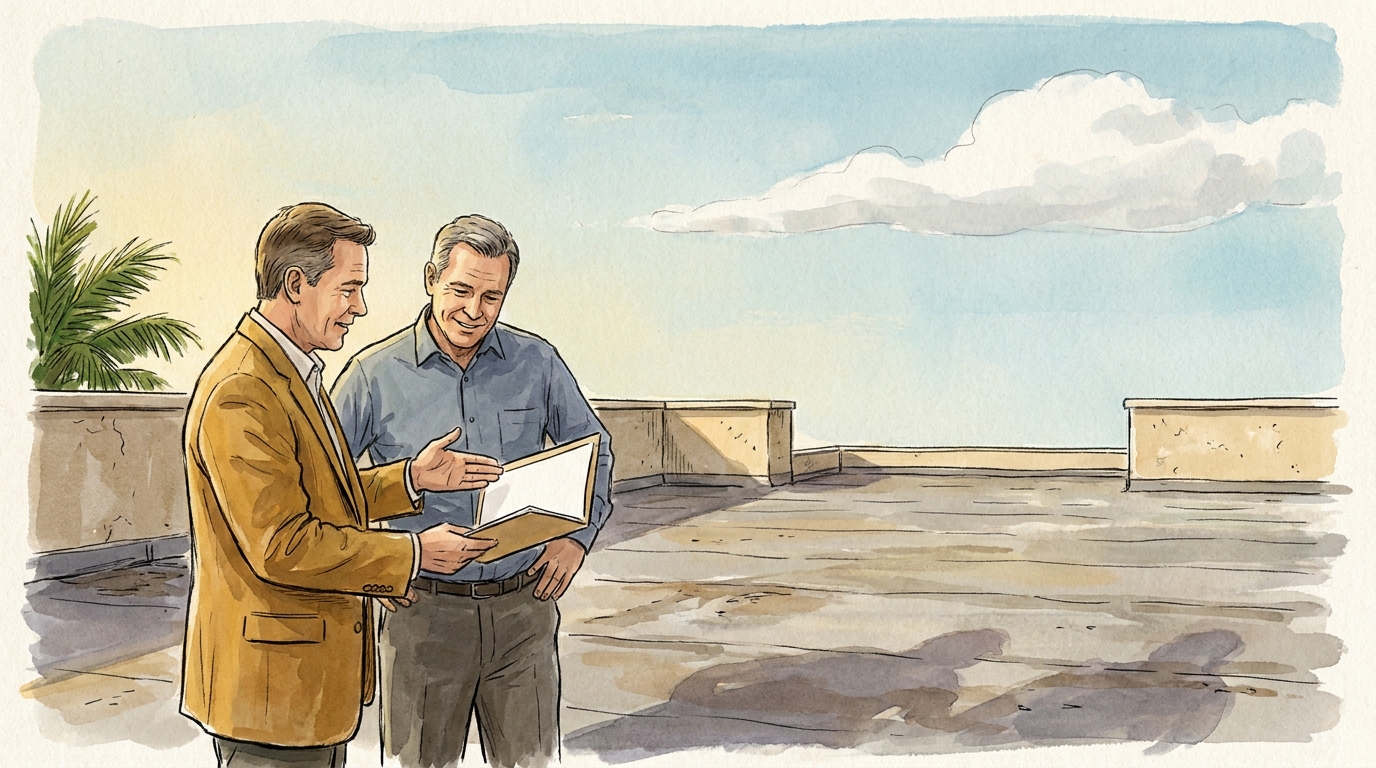
The properties that get the most life out of their flat roofs share one thing in common: a working relationship with a roofing contractor who knows the building, the history, and the local conditions. That continuity matters. A contractor walking your roof for the fifth time spots changes that a first-time inspector never would.
SCM Roofing, LLC works with commercial property managers across St Petersburg on exactly this kind of structured maintenance program — pre- and post-hurricane inspections, documented reporting, and prioritized repair planning built around Pinellas County's climate and code environment. The company holds GAF Master Elite certification and carries a 4.9★ rating across more than 230 Google reviews, with customers regularly highlighting communication, honesty, and crews that treat the property as their own.
Property managers in St Petersburg who want a structured maintenance plan or a second opinion on an aging flat roof can reach SCM Roofing, LLC at https://scmroofingfl.com for a free assessment. A clear schedule, honest reporting, and timely repairs are what keep a commercial roof — and a maintenance budget — predictable.
"