Commercial Roof Maintenance Schedule: Preventive Care Checklist
Most commercial roof failures don't happen overnight. They build slowly — a neglected seam here, a clogged drain there — until what could have been a $500 repair turns into a $50,000 replacement. For property managers in Tampa, that reality hits harder than almost anywhere else in the country.
Florida's climate is relentless. Intense UV exposure, torrential summer rain, hurricane-season wind loads, and high humidity create conditions that accelerate roofing material degradation year-round. A well-structured commercial roof maintenance schedule isn't optional here — it's the difference between controlling your building's lifecycle costs and being controlled by them.
This checklist is built around what actually matters for commercial roofing care in a Tampa climate. Use it to guide your internal team, set expectations with your roofing contractor, or simply know what questions to ask.
Why a Preventive Roof Maintenance Program Pays Off
Preventive roof maintenance extends the serviceable life of your roof system — often significantly. Most commercial roofing warranties require documented maintenance to remain valid. Skipping inspections doesn't just risk the roof; it risks the warranty that's supposed to protect your investment.
The math is straightforward. Routine inspections and minor repairs typically cost a fraction of what emergency leak remediation or premature roof replacement runs. In Tampa's market, as of 2026, a full commercial reroof on a mid-size building can run well into six figures. Annual preventive maintenance programs cost a small percentage of that.
Beyond cost, proactive commercial roofing care keeps your tenants protected, your liability exposure lower, and your property value intact.
Commercial Roof Maintenance Schedule: Season-by-Season Breakdown
Pre-Storm Season Inspection (April – May)
In Tampa, hurricane season officially begins June 1. That makes April and May your most important window for preventive action. This inspection should be thorough — not a visual pass from the parking lot.
- Inspect all membrane seams, laps, and termination points for lifting, separation, or cracking
- Check penetrations (HVAC curbs, pipe boots, skylights, exhaust vents) for failed sealants or improper flashing
- Examine field membrane for blistering, punctures, or UV degradation
- Clear all drains, scuppers, and gutters of debris — restricted drainage is one of the most common causes of commercial roof failure in Florida
- Inspect parapet walls and copings for cracks, displacement, or mortar deterioration
- Review any repairs made since the last inspection and confirm they're holding
- Document everything with dated photographs
This is the inspection where you want a qualified roofing contractor on the roof with you, not just a facilities crew. Issues missed in May can become water intrusion events in August.
Mid-Storm Season Check (August – September)
After the first wave of significant summer storms, schedule a follow-up walkthrough. This doesn't need to be as comprehensive as the spring inspection, but it should cover the most vulnerable areas.
- Inspect areas flagged during the spring inspection for any change or progression
- Check drains and scuppers again — debris accumulates fast during storm season
- Look for signs of ponding water, which should dissipate within 48 hours on a properly designed commercial roof
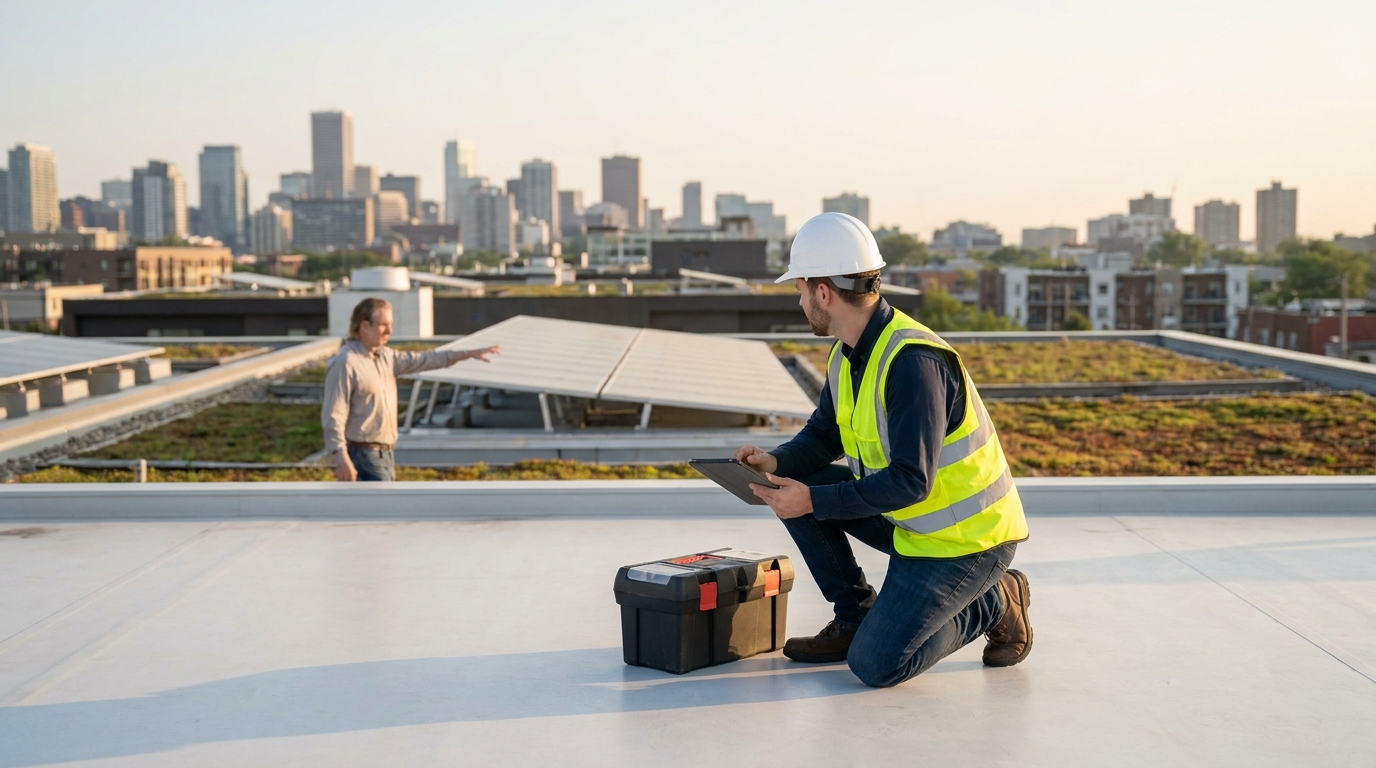
- Inspect any areas where rooftop equipment (HVAC units, solar installations, satellite dishes) experienced wind movement
- Document any new membrane damage, flashing displacement, or visible saturated insulation
Post-Storm Season Inspection (November)
Once storm season winds down, a thorough post-season inspection gives you a clear picture of what the summer did to your roof system. This is the right time to schedule any repairs before the dry season, when roofing crews have more scheduling flexibility and weather conditions are more predictable.
- Full membrane inspection — look for storm-related punctures, seam stress, or impact damage from windblown debris
- Assess flashing conditions around all penetrations and perimeter edges
- Check interior ceiling tiles, insulation, and structural decking for moisture evidence
- Test drains and confirm proper flow
- Update your maintenance log and photograph all areas of concern
Annual Comprehensive Inspection (January – February)
The dry-season window is ideal for your most detailed annual review. This is where a professional roofing contractor should assess the full condition of the system and provide written documentation — including any warranty compliance requirements.
- Complete membrane evaluation, including core cuts if moisture is suspected beneath the surface
- Structural assessment of the roof deck where accessible
- Review of all prior repair areas and long-term performance
- Flashing, counterflashing, and coping condition report
- Drainage system performance review
- Written maintenance report for your records and warranty file
Preventive Roof Maintenance Checklist: Ongoing Monthly Tasks
Between formal inspections, your facilities team can handle a short monthly walkthrough. These don't replace professional inspections — they catch obvious issues early and keep drainage systems clear.
- Clear debris from drains and scuppers after any significant rain event
- Check for visible standing water on the roof surface
- Look for signs of interior water intrusion (ceiling stains, drips, musty odors)
- Note any rooftop equipment that appears displaced or improperly supported
- Log anything unusual and report it to your roofing contractor
Consistent documentation is the foundation of a good preventive maintenance program. A dated maintenance log protects you legally, satisfies warranty requirements, and gives your contractor the context they need to make accurate repair assessments.
Common Commercial Roofing Systems in Tampa and Their Specific Needs
Not all commercial roofs require the same maintenance approach. Tampa's commercial building stock includes a wide range of flat and low-slope systems, each with different vulnerabilities.
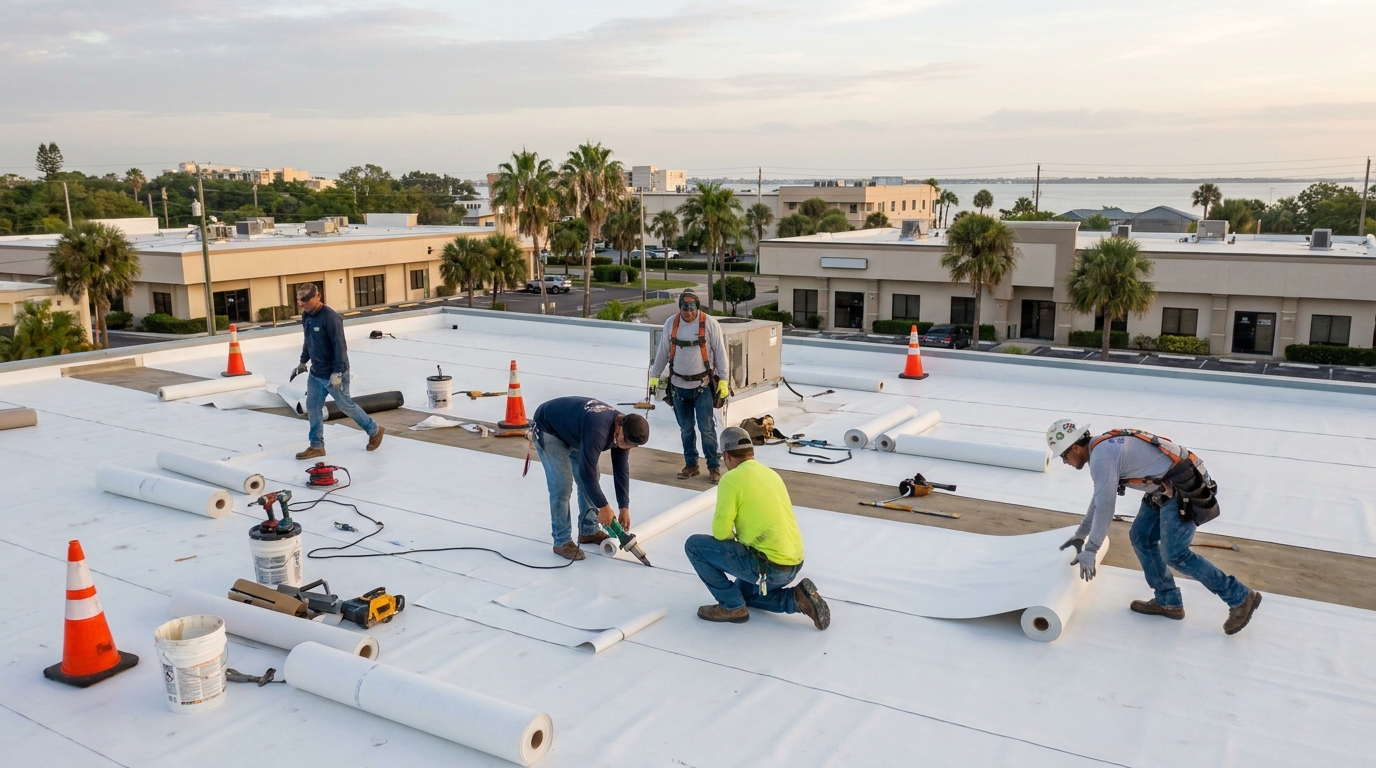
TPO and PVC Membranes: Common on newer commercial construction. Focus maintenance attention on heat-welded seams, which can fail over time due to UV exposure and thermal cycling. Inspect termination bars and edge metal annually.
Modified Bitumen: Frequently found on older Tampa commercial properties. Watch for alligatoring, surface erosion, and lap seam adhesion. Granule loss accelerates in Florida's UV environment.
EPDM (Rubber Membrane): Susceptible to shrinkage and seam failure. Check perimeter adhesion and pipe boots carefully. Repairs require proper adhesive compatibility — not every contractor handles EPDM correctly.
Built-Up Roofing (BUR): Durable but heavy. Monitor for blistering, surfacing aggregate loss, and lap failures. Drainage is critical — ponding accelerates BUR deterioration faster than most property managers realize.
When to Call a Commercial Roofing Contractor
Some conditions require professional assessment rather than a facilities walkthrough. Contact a qualified commercial roofing contractor when you observe any of the following:
- Active leaks or new interior water staining
- Visible membrane separation, lifting, or punctures
- Ponding water that persists beyond 48 hours after rain
- Damage following any significant wind or hail event
- Soft or spongy areas underfoot when walking the roof (a sign of wet insulation or deck deterioration)
- Flashing that has separated from walls, curbs, or penetrations
In these situations, delaying assessment almost always increases repair costs. Water travels laterally through insulation before it shows up on interior ceilings — what looks like one small problem is often a larger affected area.
Frequently Asked Questions: Commercial Roof Maintenance in Tampa
How often should a commercial roof be professionally inspected?
Twice per year is the standard recommendation — once before storm season and once after. In Tampa's climate, many property managers add a mid-season check after significant storm activity. Most commercial roofing warranties require at minimum annual documented inspections to remain valid.
Does preventive maintenance actually extend roof life?
Yes, consistently. Roofing industry data supports that maintained commercial roofs outlast neglected systems by a significant margin — often 10 or more additional years. In practical terms, that means deferring a major capital expense while keeping the building protected.
What should a commercial roof maintenance report include?
A useful maintenance report documents the date of inspection, all areas examined, conditions found, photographs, any repairs performed, and recommended follow-up actions. It should be written clearly enough that someone without roofing expertise can understand the findings and use the report to satisfy warranty requirements.
Can I use any roofing contractor for commercial maintenance inspections?
Technically yes, but practically it matters. Commercial roofing systems — TPO, EPDM, modified bitumen, BUR — require different inspection approaches and repair techniques than residential systems. Look for contractors with documented commercial experience and manufacturer certifications relevant to your roof system. A GAF Master Elite certification, for example, signals a contractor that has met specific training and quality standards.
What's the biggest maintenance mistake commercial property managers make?
Deferring inspections after a storm because the roof "looks fine" from the ground. Most storm-related commercial roof damage — seam stress, flashing displacement, membrane bruising from hail — isn't visible from street level. By the time interior damage appears, the repair scope has grown substantially.
How do I know if my commercial roof maintenance program satisfies warranty requirements?
Start by reading your warranty document directly — most commercial roofing manufacturers specify inspection frequency, required documentation, and who must perform the inspections. Written reports from a qualified contractor, dated photographs, and a maintained log of all repairs are the elements most warranties require. When in doubt, contact your manufacturer's warranty representative for written clarification.
What's the best way to track commercial roof maintenance across multiple properties?
A shared digital maintenance log — even a simple spreadsheet — that records inspection dates, findings, photographs, and repair work for each property is the most practical starting point. Assign a single point of contact per building and require written reports from your roofing contractor after every visit. Consistent recordkeeping across your portfolio simplifies warranty compliance and budget forecasting.
Keeping Your Commercial Roof on Track
A structured commercial roof maintenance schedule isn't complicated, but it does require consistency. The biggest risk isn't missing one inspection — it's the pattern of treating the roof as invisible until something goes wrong.
Build your inspection calendar around Tampa's storm season. Document everything. Work with a contractor who knows commercial roofing systems and can provide written reports, not just verbal assessments. And treat roof maintenance as a financial strategy, not just a facilities task — because that's what it is.
Tampa property managers looking for professional commercial roofing care can find additional guidance and schedule a roof evaluation through SCM Roofing, LLC at scmroofingfl.com. Rated 4.9 stars across 239 Google reviews, SCM Roofing is GAF Master Elite Certified and consistently recognized for communication and transparency — one customer noted they were "shown pictures and plans for what our roof needed" — which is exactly the kind of documentation-focused approach that supports a sound maintenance program.
"