If you manage a commercial property in Tampa, ice dams probably aren't keeping you up at night. They shouldn't — our climate makes true ice dam formation extremely rare. But here's the catch: the same building science principles that cause ice dams in northern cities are responsible for moisture failures, ponding, and membrane damage on low-slope commercial roofs across the Gulf Coast. And on the rare occasion a hard freeze rolls through Hillsborough County — like the cold snaps Tampa has weathered in recent winters — building owners who haven't winterized their roofs learn the hard way that Florida is not immune.
This guide explains how ice dams actually form, why low-slope commercial roofs are uniquely vulnerable, and what Tampa property managers should do to protect their buildings during the brief but real winter risk window.
What Causes Ice Dams on Low-Slope Commercial Roofs
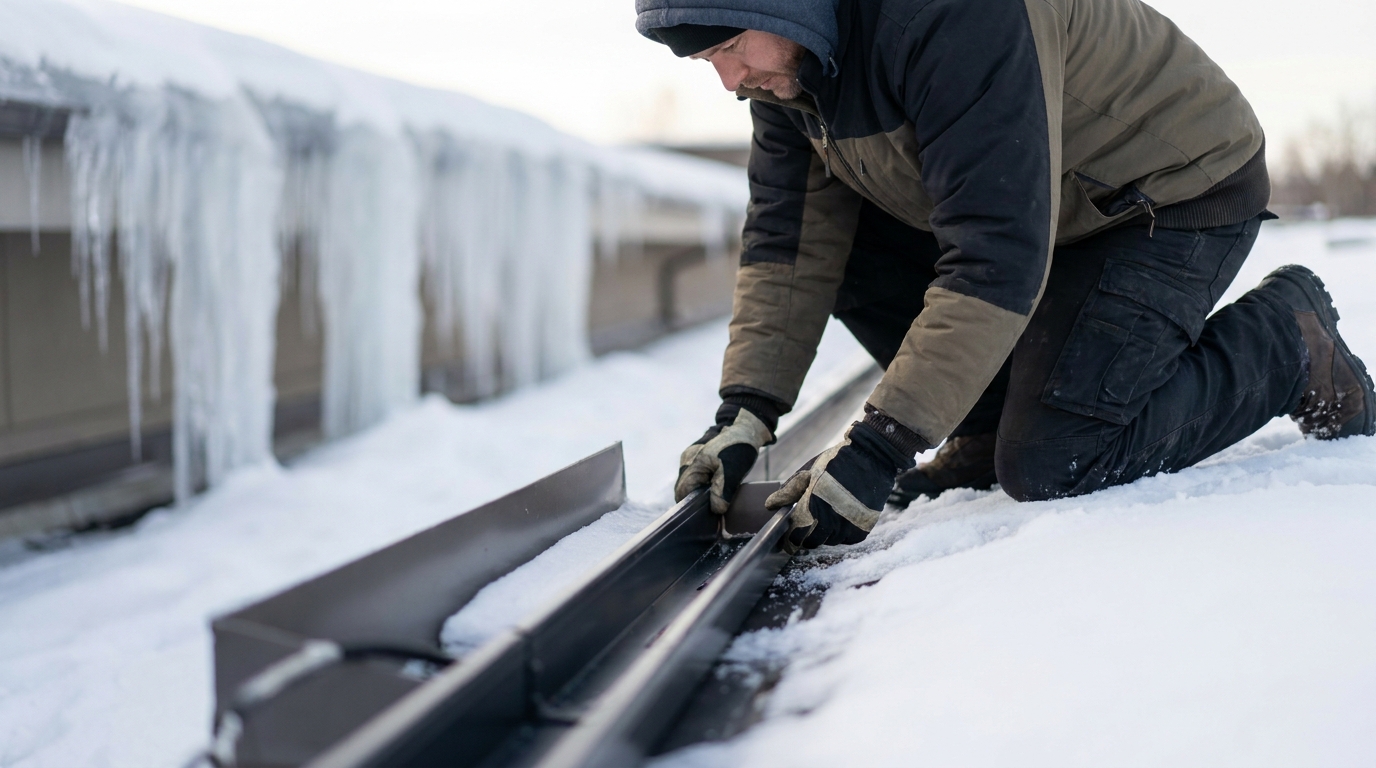
An ice dam forms when heat escaping from the building's interior warms the roof surface, melts any accumulated snow or ice, and the resulting water refreezes when it reaches a colder edge — typically the eave, parapet, or drain. That ridge of refrozen water then traps additional meltwater behind it, which works its way under the membrane, through laps, and into the deck.
On steep-slope residential roofs, the dam usually forms at the eave. On low-slope commercial roofs, the failure points are different and arguably worse:
- Internal roof drains that freeze and back up
- Scuppers and overflow drains blocked by ice
- Parapet walls where wind-driven moisture freezes against cold masonry
- HVAC curbs and penetrations where heat loss creates localized melt-refreeze cycles
- Ponding areas where standing water freezes, expands, and stresses the membrane
For commercial buildings in places like the Westshore business district or the warehouse corridors near the Port of Tampa, the bigger threat isn't a textbook ice dam — it's freeze-thaw damage to TPO, EPDM, and modified bitumen systems that were never designed for sub-32°F cycling.
Why Tampa Buildings Need Cold-Weather Roof Planning
Tampa averages only a handful of freezing nights per winter, but that's exactly the problem. Building owners assume the risk is zero, defer maintenance, and get caught when an Arctic front pushes overnight lows into the 20s. Freeze events over the past several winters have produced enough commercial roof claims across the Tampa Bay area to make low-slope roof ice dams and freeze damage a legitimate line item in your maintenance plan.
Add Tampa's other realities — high humidity, frequent heavy rainfall, and roofs already stressed by hurricane season — and a roof entering winter with clogged drains or compromised flashings is at real risk during a freeze event.
Step-by-Step Commercial Roof Winterization
1. Schedule a Pre-Winter Roof Inspection
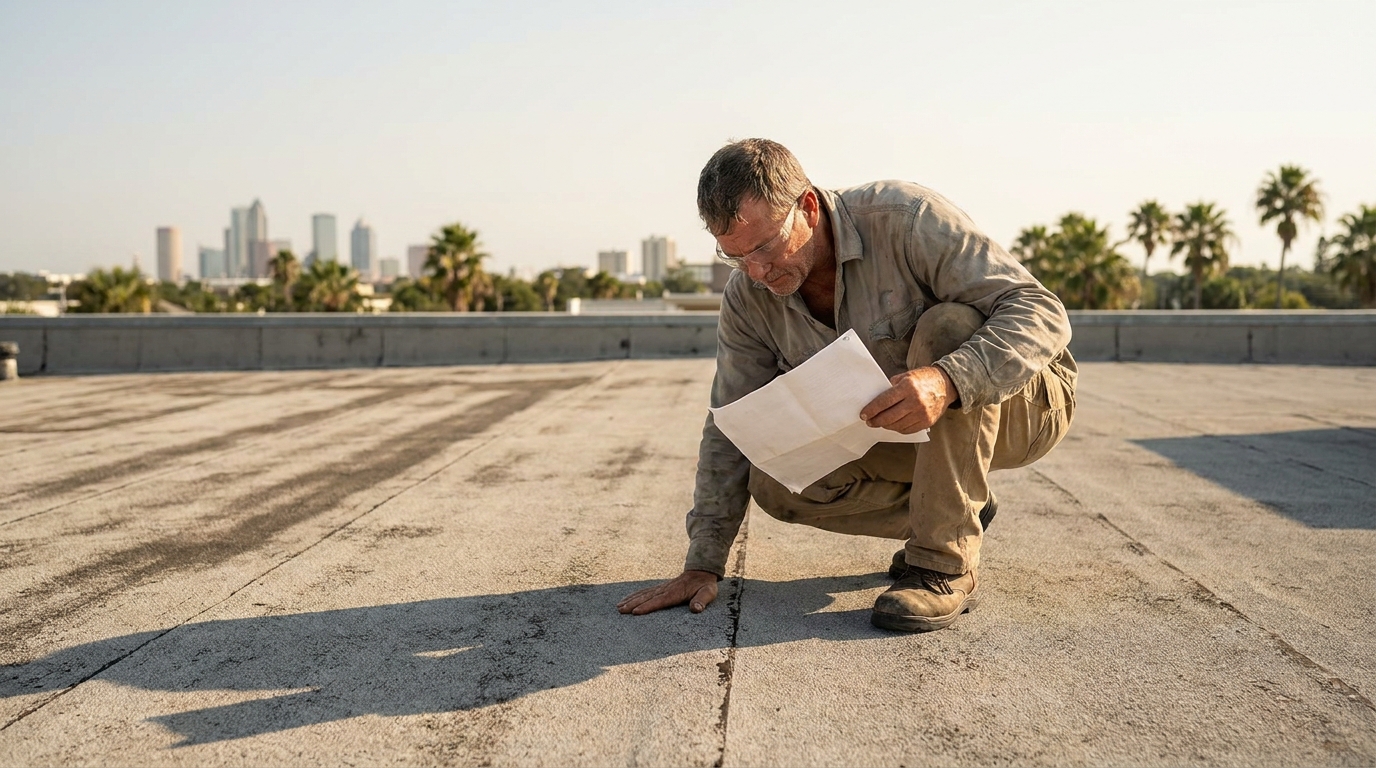
The single most valuable step is a documented inspection between late October and early December, after hurricane season winds down and before the first cold front. A qualified commercial roofer should walk the roof, check every penetration, test drains, and photograph problem areas. Many Tampa property managers schedule this alongside their post-hurricane assessment to consolidate site visits. Contact SCM Roofing, LLC to arrange an inspection.
2. Clear and Test All Drainage
Ponding water is enemy number one for commercial roof ice protection. Clear all internal drains, scuppers, gutters, and downspouts of leaves, palm fronds, and debris. Run water through each drain to confirm flow. A drain that backs up in a December rainstorm will back up worse if temperatures drop overnight.
3. Inspect and Reseal Flashings
Flashings around HVAC curbs, parapet caps, pipe penetrations, and edge metal are where freeze-thaw cycling does its damage. Look for separated laps, cracked sealant, and pinholes. Tampa's UV exposure breaks down sealants faster than northern climates, so what looked fine in spring may be failing by November.
4. Address Ponding Areas
Any spot holding water for an extended period after rainfall is a winter liability. Tapered insulation, crickets, or additional drains can correct the slope. On older built-up roofs in older parts of Tampa — Ybor City, Seminole Heights, parts of South Tampa with mid-century commercial stock — ponding is often the first sign the insulation below has gotten wet and compressed.
5. Verify Insulation and Vapor Control
Wet insulation doesn't insulate. It also creates uneven roof surface temperatures, which is the exact mechanism behind ice dam formation. Infrared moisture scanning identifies saturated areas you can't see from above. Replacing wet sections before winter prevents both energy loss and freeze damage.
6. Service Rooftop Equipment
HVAC units, exhaust fans, and refrigeration equipment leak heat directly into the roof assembly when seals fail. Have your mechanical contractor confirm equipment is properly curbed, gasketed, and not dumping warm, humid air against cold membrane during a freeze.
7. Document Everything
Photographs, inspection reports, and a written maintenance log are essential for warranty claims and insurance. Florida insurers have grown stricter about commercial roof claims, and a documented winterization history is often the difference between a covered loss and a denied claim.
Florida Building Code and Permitting Considerations
Commercial roofing work in Tampa falls under the Florida Building Code, with permitting administered by the City of Tampa Construction Services Division or Hillsborough County depending on jurisdiction. Repairs that exceed certain thresholds — including significant flashing replacement or membrane work — typically require permits and licensed contractor sign-off. Cutting corners here creates problems at sale, refinance, or claim time. Work with a licensed commercial roofing contractor who pulls the right permits the first time.
FAQ: Ice Dam Prevention on Commercial Roofs
Do Tampa commercial buildings really need ice dam prevention?
True ice dams are rare, but freeze-thaw damage to low-slope membranes during cold snaps is a real and recurring issue in the Tampa Bay area. The same winterization steps that prevent ice dams also protect against ponding, drain failure, and flashing damage year-round.
When should commercial roof winterization happen?
Late October through early December is ideal — after hurricane season, before the first significant cold front. This timing also catches any storm damage that might otherwise go undetected.
How often should low-slope commercial roofs be inspected?
Twice yearly at minimum: once in spring before hurricane season and once in fall before winter. Buildings with heavy rooftop equipment, older membranes, or recent storm exposure benefit from quarterly inspections.
What's the typical lifespan of a low-slope commercial roof in Tampa?
TPO and modified bitumen systems can deliver many years of service in this climate, with proper maintenance extending their useful life. UV exposure and humidity are the bigger long-term threats here than freeze cycling.
Can freeze damage to a commercial roof void the membrane warranty?
Yes, in some cases. Most membrane manufacturers require documented routine maintenance as a condition of warranty coverage. If a freeze event causes damage and the building owner cannot show a maintenance history — including pre-winter inspections and drain clearing — the warranty claim may be denied. A written winterization log is one of the simplest ways to protect your coverage.
What roofing materials hold up best to Tampa's occasional freeze-thaw cycles?
TPO and EPDM membranes generally perform well in brief freeze-thaw conditions because they retain flexibility at low temperatures. Modified bitumen systems can become brittle when temperatures drop sharply, making pre-winter flashing inspections especially important on older built-up roofs. The bigger factor in Tampa is choosing a material suited to high UV and humidity for the other eleven months of the year.
Getting Professional Help in Tampa
Commercial roof winterization is one of those tasks that feels optional until it isn't. The buildings that come through a freeze event without claims are almost always the ones with current inspections, clean drains, and tight flashings going in. Property managers and owners in Tampa who want this handled by a licensed local commercial roofer can contact SCM Roofing, LLC at https://scmroofingfl.com or by phone at (855) 726-7663. SCM Roofing holds GAF Master Elite certification, carries a 4.9-star rating from 239 Google reviews as of April 2026, and works across Hillsborough County on both maintenance programs and full commercial replacements — a useful starting point if your building hasn't been formally evaluated heading into winter.
"