How to Choose the Best Commercial Roofing Contractor in Tampa
Your commercial roof is one of the most expensive and consequential components of your building. When it fails — or when you need a new one installed — the contractor you hire will determine whether that investment holds up for decades or becomes a recurring headache.
Tampa's climate makes this decision even more consequential. The combination of intense UV exposure, heavy seasonal rainfall, and hurricane-season wind loads puts commercial roofing systems under stress that contractors in other markets rarely encounter. Choosing the right partner for Tampa commercial roofing isn't just about getting the lowest bid. It's about finding someone who understands what your roof is actually up against.
This guide walks you through the criteria that matter most — the ones that separate contractors who deliver long-term value from those who create new problems after the job is done.
1. Verify Local Experience and Florida Licensing
Florida maintains some of the most rigorous contractor licensing requirements in the country. Any contractor performing commercial roof installation in Tampa must hold a valid Florida Roofing Contractor license — not a general contractor license. These are distinct, and the difference matters legally and practically.
Ask for the contractor's license number and verify it through the Florida Department of Business and Professional Regulation (DBPR) database. This takes under five minutes and tells you whether the license is active, whether there are any disciplinary actions on record, and whether the contractor is properly insured.
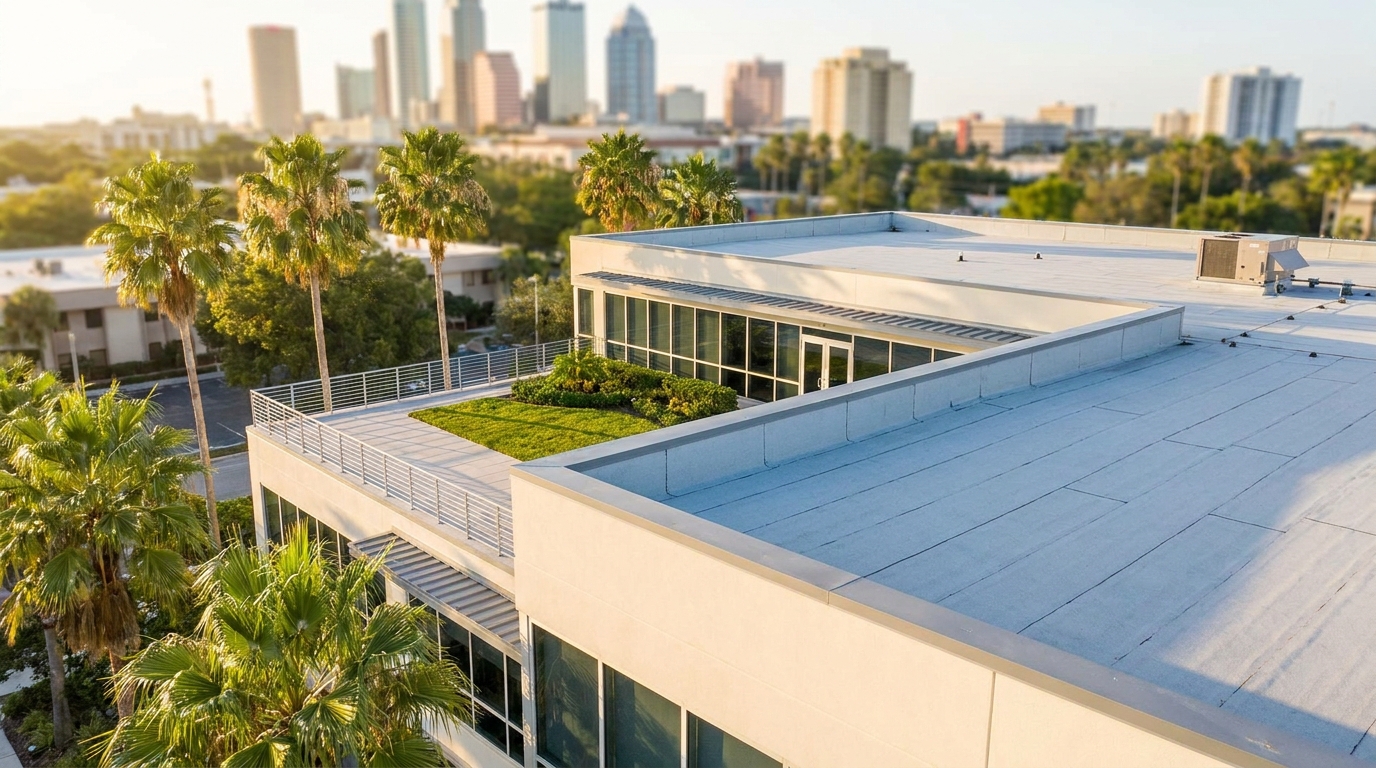
Beyond the license itself, prioritize contractors with documented experience on commercial projects — not just residential work. Flat roofing systems like TPO, EPDM, modified bitumen, and built-up roofing (BUR) require different expertise than shingle installation. A contractor whose portfolio skews residential may not be equipped for your project's scope or system type.
2. Understand the Manufacturer Certifications That Actually Matter
Manufacturer certifications aren't just marketing credentials. They have real implications for your warranty coverage.
One customer who compared multiple contractors specifically noted that SCM Roofing, LLC's GAF Master Elite certification was a deciding factor — alongside pricing, communication, and the quality of their contract terms. That combination of credential plus customer-first process is what you should be looking for.
When evaluating commercial roofing contractors in Tampa, ask directly: what manufacturer certifications do you hold, and what warranty options does that unlock for my specific roof system?
3. Evaluate Communication Before You Sign Anything
The quality of a contractor's communication during the sales and estimating process is a reliable predictor of how they'll handle your project once it's underway.
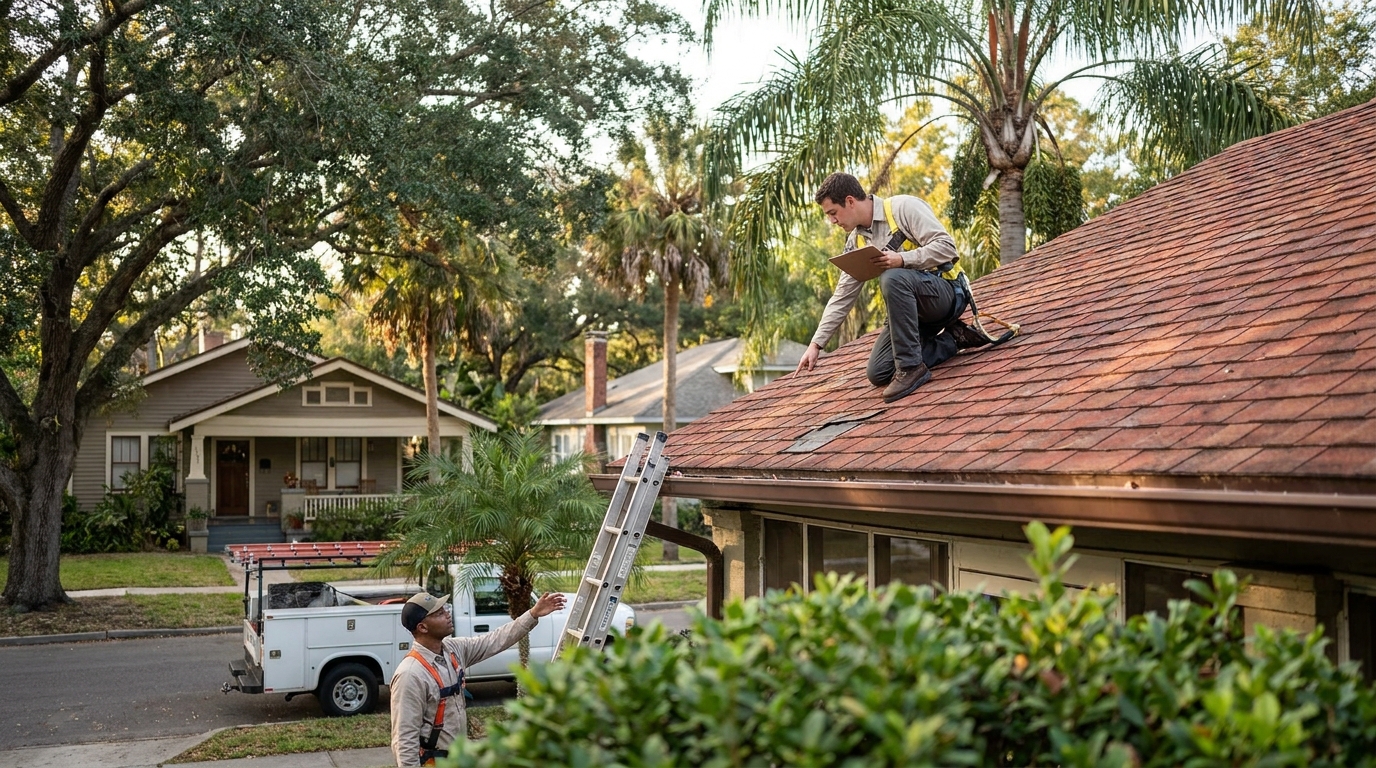
Pay attention to how quickly they respond to your initial inquiry. Notice whether they show up on time for the inspection. Ask whether they'll provide photos documenting the existing roof condition — and whether they'll walk you through the scope of work before you commit to anything.
Customers consistently flag responsiveness as one of the clearest differentiators between contractors they'd recommend and those they'd avoid. One customer wrote: "We were shown pictures and plans for what our roof needed" — the kind of upfront documentation that lets you make an informed decision rather than a leap of faith.
If a contractor is vague about scope, slow to return calls, or resistant to putting specifics in writing, those patterns tend to get worse after you sign the contract — not better.
4. Read the Contract Carefully — Both Sides of It
Commercial roofing contracts can be heavily one-sided. Some protect the contractor at the expense of the building owner, limiting liability, restricting recourse, and leaving ambiguity around what's actually included in the work.
Before signing, confirm the contract clearly specifies: the roofing system being installed (brand, product line, thickness or weight), the warranty terms for both materials and installation labor, the project timeline with start and estimated completion dates, payment schedule tied to milestones rather than upfront lump sums, and what happens if unexpected damage or structural issues are discovered during the project.
A contractor who offers a fair, clearly written contract is signaling something important about how they conduct business. Conversely, a contract full of exclusions and vague language should prompt serious questions before you proceed.
5. Ask About Crew Structure and Subcontracting
Many commercial roofing contractors in Tampa use subcontracted labor — sometimes extensively. This isn't automatically a problem, but it does affect consistency, accountability, and quality control.
Ask directly: will your own crew be doing the installation, or will this be subcontracted? If subcontractors are involved, how does the company ensure quality oversight on-site?
Companies with dedicated installation crews tend to deliver more consistent results. When the same team works together regularly, they develop the kind of coordinated efficiency that shows up in both craftsmanship quality and project timelines. One customer described the installation crew as arriving "right on time" and working together "like a well-oiled machine" — which reflects what a structured, experienced crew looks like in practice.
6. Don't Select on Price Alone
On a commercial project, the lowest bid is rarely the lowest cost over time.
Commercial roof installation in Tampa involves materials that vary significantly in quality, labor that ranges from meticulous to careless, and warranty coverage that can be nearly worthless or genuinely protective depending on the contractor's certifications. A bid that looks attractive on paper may reflect cheaper underlayment, fewer fasteners, or skipped flashing details — none of which will be visible until there's a leak.
Request itemized quotes so you can compare actual scope and materials — not just the bottom line. If one contractor is significantly cheaper than others, ask them specifically what they're doing differently. The answer will tell you a lot.
That said, a higher price doesn't automatically mean better quality. What you're looking for is a contractor who can clearly justify their pricing with specifics: the system they're installing, the warranty it carries, and the team doing the work.
Frequently Asked Questions: Hiring a Commercial Roofing Contractor in Tampa
What roofing systems are most common for commercial buildings in Tampa?
TPO (Thermoplastic Polyolefin) is widely used for flat and low-slope commercial roofs in Tampa because of its reflectivity, heat resistance, and cost-effectiveness. EPDM (ethylene propylene diene monomer) is another durable option. Modified bitumen systems remain common on older buildings, and metal roofing is increasingly specified for new commercial construction due to its wind resistance and longevity.
How long does a commercial roof installation take in Tampa?
Project timelines vary by building size, roof system type, and the condition of the existing substrate. A straightforward TPO installation on a smaller commercial building may take a few days. Larger or more complex projects with structural repairs can take several weeks. A credible contractor will give you a project timeline in writing before work begins.
Is a permit required for commercial roofing work in Tampa?
Yes. Any licensed roofing contractor should pull the required permits on your behalf — if a contractor suggests skipping permits to save time or money, that's a significant red flag.
What should I do if my commercial roof has storm damage?
Document the damage with photos immediately after the storm. Contact your insurance carrier to initiate a claim and request an adjuster inspection. Then get a professional roofing inspection from a licensed contractor before any temporary repairs are made — this ensures the damage is properly assessed and documented for your claim.
How do I evaluate a contractor's reputation before hiring?
Look at their Google review profile — pay attention to overall volume and rating, but also read for patterns in what customers mention. Responsiveness, crew professionalism, and cleanup quality are frequently cited details that reflect how a company actually operates. SCM Roofing, LLC carries a 4.9-star rating across more than 239 Google reviews, as of April 2026, with customers consistently highlighting communication, crew conduct, and project follow-through.
How does Tampa's hurricane risk affect my choice of commercial roofing contractor?
It matters significantly. A contractor experienced in Tampa must understand Florida Building Code wind-uplift requirements and specify fastening patterns, membrane thicknesses, and edge details rated for local wind loads. Ask any candidate how their installation approach addresses hurricane-season exposure specifically — a contractor who can't answer in detail likely lacks the local commercial experience your project requires.
What questions should I ask before signing a commercial roofing contract?
Ask for the exact brand and product specification of every material being installed, the full warranty terms for both materials and labor, who will physically perform the work, the permit-pulling process, and what triggers a change order. A contractor who answers these questions clearly and puts every detail in writing is far less likely to deliver surprises once the job is underway.
Making the Right Call for Your Tampa Property
Hiring a commercial roofing contractor in Tampa comes down to a combination of verifiable credentials, clear communication, transparent contracts, and the kind of crew accountability that produces consistent results on-site.
The criteria above aren't arbitrary — they reflect what actually differentiates projects that go smoothly from ones that generate complaints, leaks, and warranty disputes. Price matters, but it's one variable among several, and it should never be the only filter you apply.
Tampa-area property owners and facility managers who want a contractor that checks these boxes can review SCM Roofing, LLC's commercial services at scmroofingfl.com. They hold GAF Master Elite certification, carry consistent reviews from commercial and residential clients across Tampa, and offer the kind of itemized, documented estimating process that makes it possible to make an informed decision before committing to any scope of work.