Flat Roof Repair vs Replacement: How to Make the Right Choice
You've got a leak. Or maybe a blister. Or you've noticed water pooling on your flat roof after every Tampa rainstorm, and you're not sure whether to call for a patch job or start budgeting for a full replacement.
This is one of the most common commercial roof decisions property owners face — and also one of the most financially consequential. Repair the wrong roof and you'll be back in the same conversation six months from now. Replace a roof prematurely and you've left real money on the table.
Here's how to think through it clearly.
Why Flat Roofs Require a Different Decision Framework
Flat roofs — technically low-slope systems — behave differently than pitched residential roofs. Water doesn't shed naturally. It pools, sits, and slowly works its way through any weakness in the membrane.
That changes how you evaluate damage. A small compromised seam on a flat roof can cause far more interior damage than the same issue on a steep-slope system. And because flat roofing systems age as a whole — not just in isolated spots — the decision to repair vs replace often comes down to system-wide integrity, not just the visible problem.
Common flat roof problems in Tampa include membrane shrinkage and cracking from UV exposure, seam failures, ponding water from inadequate drainage, blistering from trapped moisture, and flashing failures around HVAC units and penetrations. Any of these can present as a localized leak — but the underlying cause might be system-wide deterioration.
When Flat Roof Repair Is the Right Call
Repair makes sense when the damage is genuinely isolated and the surrounding system is sound. The key word is sound.
A qualified roofing contractor will assess not just the leak point, but the broader membrane condition. If core samples and infrared scanning show dry insulation, intact seams, and a membrane that still has years of life left, a targeted repair delivers real value.
Signs Repair Is a Reasonable Option
- The roof is less than 10–12 years old and has had minimal prior repairs
- Damage is confined to a specific zone — around a rooftop unit, a pipe penetration, or a single field seam
- Moisture scanning shows dry insulation outside the damaged area
- The existing membrane (TPO, EPDM, modified bitumen) is structurally intact across most of the surface
- You're dealing with flashing failure rather than membrane failure
In these cases, a competent repair extends the system's life meaningfully. It's not a stopgap — it's sound asset management.
The threshold most experienced contractors use: if repairs address less than 25% of the total roof area, and the system is less than halfway through its expected service life, repair is usually the right move.
When to Replace a Flat Roof Instead
Replacement becomes the smarter commercial roof decision when the cost and frequency of repairs start approaching the cost of a new system — or when the underlying substrate has been compromised.
Tampa's climate accelerates flat roof aging. Intense UV radiation breaks down membranes faster than in northern climates. Hurricane season subjects seams and flashings to repeated stress. And the combination of heat and humidity creates the moisture conditions that destroy insulation boards when membranes let any water through.
Clear Indicators It's Time to Replace
- The roof is at or near the end of its rated service life (typically 15–25 years depending on system type)
- You've had multiple repairs in the past three to five years and leaks keep returning
- Infrared or core sampling reveals widespread wet insulation
- The membrane shows alligatoring, widespread cracking, or significant shrinkage across large areas
- Ponding water covers more than 50% of the roof surface and drainage correction alone won't solve it
- The roof deck itself — typically wood or concrete — shows rot or structural compromise
Replacing a roof at the right time is not a failure of maintenance. It's responsible long-term planning. Waiting too long means deck damage, interior damage, and higher replacement costs when you finally pull the trigger.
The 50% Rule (and Why It's a Starting Point, Not a Conclusion)
Many contractors reference a rough guideline: if fixing the immediate problem costs more than 50% of a full replacement, replace the whole roof. It's a useful starting point, but it's not the whole picture.
You also need to factor in the remaining useful life of the system, your occupancy situation (an active commercial tenant makes replacement timing complicated), your insurance position, and whether deferred replacement creates code compliance issues in a future sale or refinance.
This is why the repair vs replacement conversation is really a financial and operational planning conversation — not just a roofing conversation. A contractor worth working with will walk you through that full picture, not just quote you for one option.
What a Proper Flat Roof Assessment Looks Like
If you're uncertain which direction to go, the assessment process itself should give you confidence in the answer.
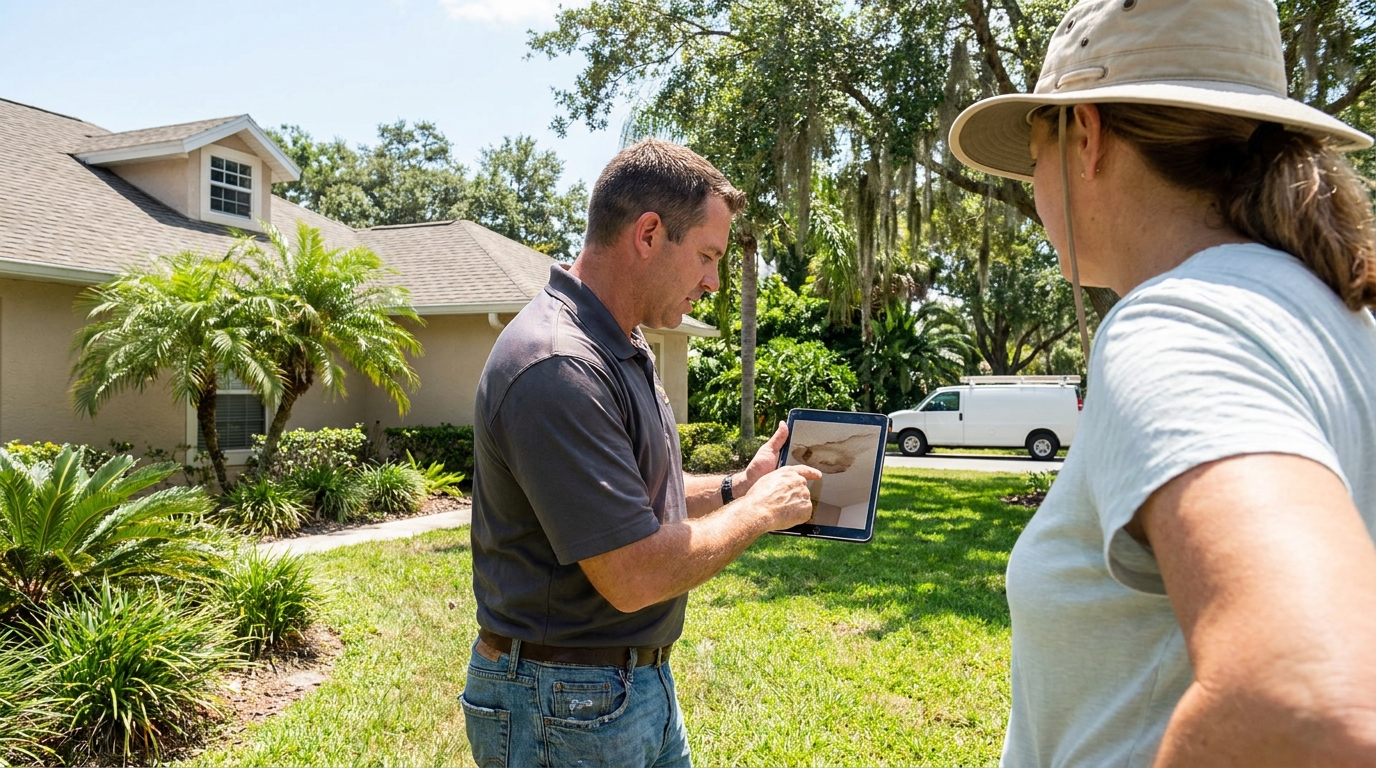
A thorough evaluation of a commercial flat roof includes a visual inspection of the membrane, seams, flashings, and drainage; infrared thermography or nuclear moisture scanning to detect wet insulation; core cuts to assess insulation condition and deck integrity; and a review of the repair history if available.
Any contractor recommending a major course of action — repair or replacement — without doing this kind of assessment is guessing. You deserve more than a guess on a decision of this size.
Reputable providers like SCM Roofing, LLC approach assessments as a diagnostic process, not a formality before the sales pitch. One customer wrote that they were "shown pictures and plans for what our roof needed" before any work began — that kind of transparency is exactly what makes a repair-vs-replace recommendation trustworthy. The team's 4.9-star rating across 239 Google reviews reflects consistent feedback about communication and honesty throughout the process.
Flat Roof Systems: How Material Type Affects the Decision
The type of membrane on your roof matters when evaluating repair viability.
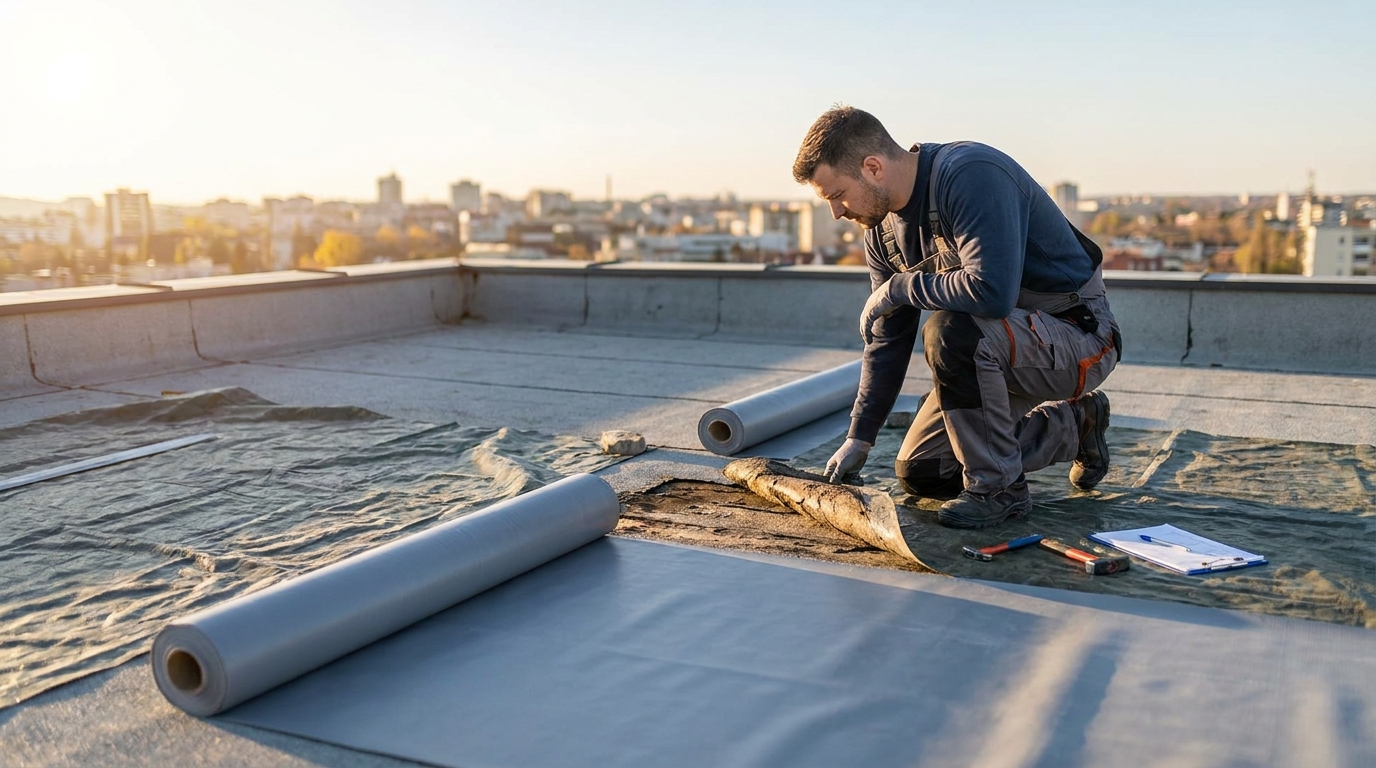
TPO (Thermoplastic Polyolefin): Widely used on commercial buildings in Tampa. Seams are heat-welded and highly repairable if the membrane field is still sound. Good candidate for repair if the system is under 15 years old.
EPDM (Rubber Membrane): Durable and patchable, but adhesive-bonded seams can fail over time in Florida's heat. Older EPDM systems often become candidates for recover or replacement rather than repeated spot repairs.
Modified Bitumen: Typically a two-ply system with strong puncture resistance. Can be repaired effectively when damage is localized, but widespread granule loss or delamination signals end-of-life.
Built-Up Roofing (BUR): Multiple plies of felt and asphalt. Can be repaired, but older BUR systems in Tampa often show widespread brittleness that makes comprehensive repair economically impractical.
Frequently Asked Questions: Flat Roof Repair vs Replacement
How long does a flat roof repair typically last?
A quality repair on a structurally sound system can last five to ten years or more. A repair on a deteriorating system might hold for one season. The durability of the repair is almost entirely a function of the underlying system condition — which is why proper assessment matters more than the repair itself.
Can I add a new flat roof membrane over the existing one?
In some cases, yes. A roof recover — installing a new membrane over the existing one — can be a cost-effective alternative when the existing membrane is reasonably flat and the insulation is dry. Most building codes allow one recover before full tear-off is required. A contractor can confirm whether your roof qualifies.
How much does flat roof repair vs replacement cost in Tampa in 2026?
Repair costs for commercial flat roofs in 2026 typically range from a few hundred dollars for small flashing repairs to several thousand for larger membrane patches. Full replacement on a mid-size commercial building runs significantly higher depending on square footage, membrane type, and deck condition. The right comparison isn't repair cost vs replacement cost in isolation — it's repair cost plus remaining useful life value vs full replacement cost and timeline.
Does a flat roof repair affect my warranty?
It depends on who does the repair and how. Repairs performed by contractors who are not authorized under your existing manufacturer's warranty can void coverage. If your roof is under a manufacturer's warranty, verify that any repair contractor is authorized to work within that system before proceeding.
What flat roof problems are most common in Tampa specifically?
UV-related membrane degradation, seam failures from thermal expansion and contraction, ponding water from seasonal heavy rain events, and flashing failures around HVAC equipment are the most frequent issues Tampa contractors address. Hurricane preparedness — including proper edge metal and flashing securement — is also a regular maintenance and repair concern in this market.
How do I know if a flat roof contractor's assessment is thorough enough to trust?
A trustworthy assessment goes beyond a visual walkthrough. It should include moisture scanning — infrared thermography or nuclear moisture detection — plus core cuts to check insulation and deck condition. The contractor should show you findings with documentation before recommending a course of action. If a contractor quotes repair or replacement after only a visual inspection, that recommendation isn't grounded in enough information to be reliable.
Can insurance cover flat roof repair or replacement in Tampa?
Possibly, depending on the cause of damage. Storm-related damage from wind, hail, or hurricane events is typically covered under commercial property policies, while damage from wear, aging, or neglected maintenance generally is not. An adjuster will assess the cause of loss. Having a contractor document damage thoroughly — with photos and written findings — before any work begins strengthens your claim.
Making the Final Call
The repair vs replacement decision comes down to three things: the current condition of the full system (not just the visible damage), the remaining useful life of that system, and whether the cost of repair makes financial sense against the replacement horizon.
Get a proper diagnostic assessment. Ask for it to include moisture scanning, not just a visual walkthrough. Ask the contractor to explain specifically why they're recommending one path over the other — and whether the alternative was genuinely considered.
If you're working through this decision on a commercial property in Tampa, SCM Roofing, LLC (https://scmroofingfl.com) offers flat roof assessments and can walk you through both options with the documentation to support the recommendation. Their 4.9-star rating across 239 Google reviews reflects consistent feedback about communication and transparency — which matters most when the decision involves real money and a roof you're counting on.