To file a roof insurance claim after a storm in Clearwater, FL, notify your insurer in writing within one year of the date of loss, document all damage with timestamped photographs, and hire a licensed Florida roofing contractor (CCC or CRC) to prepare a formal assessment. Your insurer must acknowledge the claim within 14 days and pay or deny it within 90 days under Florida Statutes §627.70131.
That's the short version. The longer version — the one that actually protects your payout — involves Pinellas County permitting, hurricane-specific deadlines, and a documentation trail that can make or break a settlement. Here's how the process really works on the Gulf Coast.
What's the first thing to do after storm damage in Clearwater?
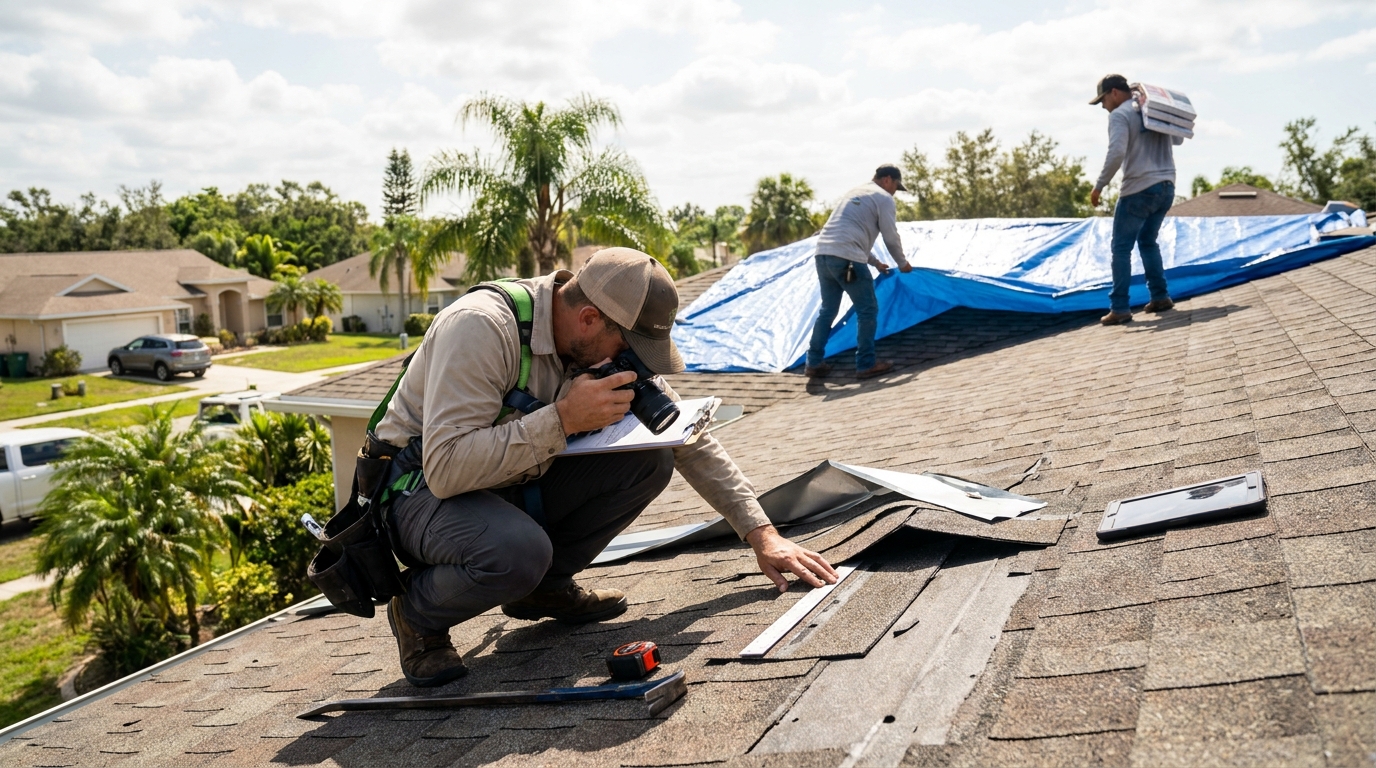
Photograph everything before you touch it. Walk your property with a phone camera, capture timestamped images of missing shingles, lifted flashing, interior water stains, and debris on the roof, then make temporary repairs (tarping) to prevent further damage. Florida law requires roof damage assessments submitted to insurers to include timestamped photographs, so this first hour matters more than most homeowners realize.
Clearwater sits on a peninsula between the Gulf and Tampa Bay, which means wind-driven rain routinely finds its way under compromised shingles long before an owner spots the exterior damage. If you're in Island Estates, Sand Key, or anywhere along the coastal ridge, salt-air corrosion on fasteners and flashings is often the underlying story behind what looks like a simple storm loss.
Save receipts for any tarping, board-up, or emergency work. Those costs are typically reimbursable under the mitigation provisions of a standard Florida homeowners policy.
How do I actually file the claim with my insurer?
Call your insurer's claims line or file online, provide the date of loss, describe the storm event, and attach your timestamped photos. Under Florida Statutes §627.70132, you must file notice of a new property insurance claim within one year of the date of loss; supplemental or reopened claims must be filed within 18 months. For hurricane damage, the date of loss is the date of hurricane landfall as verified by NOAA.
Once notice is received, §627.70131 requires the insurer to acknowledge the claim and begin investigation within 14 days, and to pay or deny it within 90 days absent circumstances beyond its control. Keep a written log of every call, adjuster name, and claim number. If your insurer misses those windows, that log becomes evidence.
At SCM Roofing, we routinely help Clearwater homeowners assemble this initial packet so nothing important is missing when the adjuster shows up.
Who should inspect the roof before the insurance adjuster arrives?
A licensed Florida roofing contractor holding a CCC (Certified Roofing Contractor) or CRC (Certified Residential Contractor) license — this is required by HB 815 for any roof damage assessment submitted to an insurer. A general handyman's report will not satisfy the statute, and an assessment without timestamped photographs can be rejected outright.
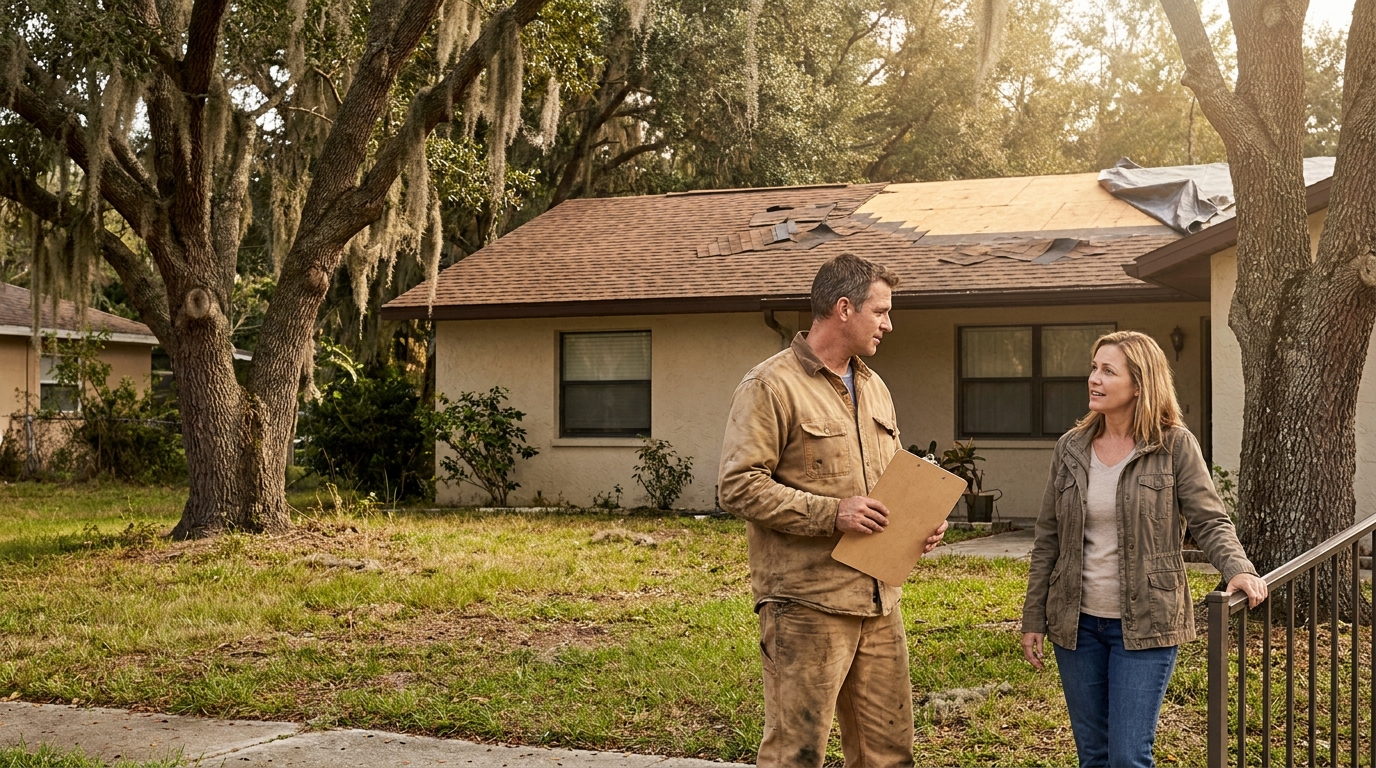
Have the inspection done before the insurance adjuster's site visit whenever possible. When both parties walk the roof together, disputes over scope tend to shrink. A contractor who knows Pinellas County's wind-uplift patterns can point out damage an out-of-area adjuster might miss — lifted ridge caps on the windward side, compromised drip edge along the eaves, granule loss concentrated on southwest-facing slopes after a Gulf storm.
What documentation does Pinellas County require for storm repairs?
Pinellas County Building Services requires a building permit for roof repair or replacement work. If you had emergency repairs performed without a permit — common after a named storm — you must pursue an after-the-fact storm permitting process, which requires documentation of storm damage (photos, storm event dates, contractor reports) and confirmation that repairs meet current Florida Building Code and floodplain standards.
Depending on your address, permitting may fall under the City of Clearwater Building Department rather than Pinellas County — worth confirming before work starts. Coastal floodplain zones can also trigger substantial improvement or substantial damage thresholds, which sometimes force broader upgrades than the roof alone.
Do I have to replace the entire roof, or can I just repair the damage?
You can often repair just the damaged section. Under Florida Statutes §553.884(5),. The old rule that forced a full replacement anytime more than 25% of the roof was repaired is eliminated for qualifying roofs.
There is a matching exception. Under Florida Statutes §626.9744, when the original roofing material is discontinued or no longer a reasonable match, your insurer may be required to pay for replacing a reasonably continuous area so the repaired roof reasonably matches the undamaged portion. In practice, that clause is where many Clearwater tile and architectural-shingle claims quietly turn into full replacements.
How and when does the insurer actually pay?
Most Florida policies pay Actual Cash Value (ACV) up front and Replacement Cost Value (RCV) as repairs are completed, under Florida Statutes §627.7011. That means you may receive a first check that looks smaller than your contractor's estimate — the depreciation holdback is released once the work is finished and invoiced.
| Milestone | Statutory Deadline | Source |
|---|---|---|
| Homeowner files initial claim | Within 1 year of date of loss | §627.70132 |
| Supplemental / reopened claim | Within 18 months of date of loss | §627.70132 |
| Insurer acknowledges claim | Within 14 days of notice | §627.70131 |
| Insurer pays or denies | Within 90 days of notice | §627.70131 |
| Pre-suit notice of intent to litigate | 10 days before filing suit | §627.70152 |
| Public adjuster written estimate | Within 60 days of contract | §626.854 |
Wind is a covered peril on Florida residential property policies under §627.712, but hurricane deductibles regulated under §627.701 apply separately for named-storm damage and can run several thousand dollars before the insurer owes a dime.
What if the insurer denies or underpays the claim?
Before you can sue, Florida Statutes §627.70152 requires you to serve the insurer a 10-day written notice of intent to litigate, including an itemized estimate of damages and a demand amount. This step is mandatory — skipping it will get a lawsuit dismissed.
You may also file a consumer complaint with the Florida Department of Financial Services if your insurer missed the 14-day acknowledgment or 90-day pay-or-deny deadlines. A public adjuster is another option, but note that under §626.854 they owe you a written estimate of loss within 60 days of signing their contract, and their fee comes out of your settlement.
How do I pick the right contractor to handle the claim work?
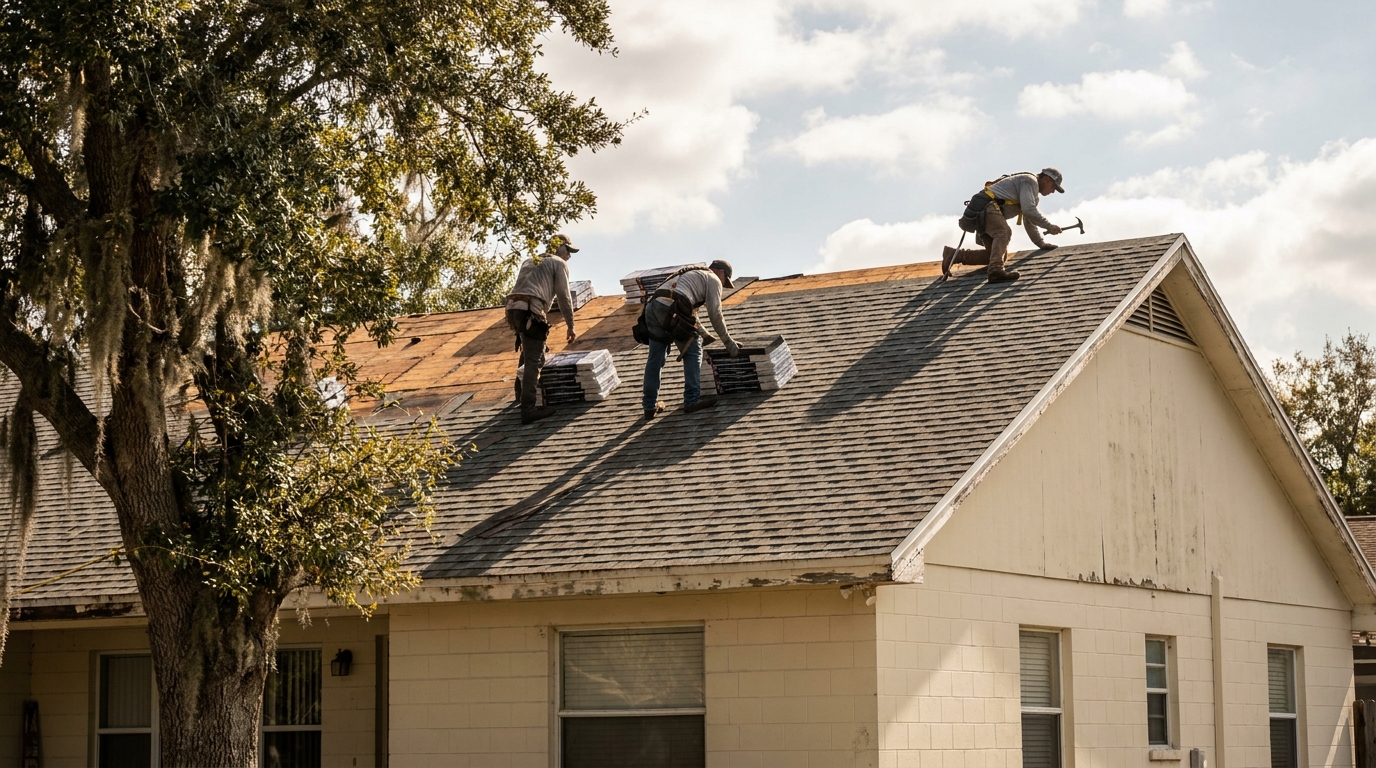
Verify the license number (CCC or CRC), confirm the contractor pulls the Pinellas County or City of Clearwater permit in their own name, and check their review track record. SCM Roofing works claims routinely from Countryside down through Belleair and out to the barrier islands.
Avoid storm-chaser crews that appear after every hurricane, demand assignment of benefits, or pressure you to sign before the adjuster inspects. Those arrangements have driven much of Florida's recent insurance-market turmoil.
Frequently asked questions
How long do I have to file a roof insurance claim in Florida after a storm?
You have one year from the date of loss to file a new property insurance claim, and 18 months to file a supplemental or reopened claim, under Florida Statutes §627.70132. For hurricane damage, the date of loss is the date of hurricane landfall as verified by NOAA. Some analyses reference a longer notice period for hurricane claims, so verify your specific policy language.
How long does the insurance company have to pay my roof claim?
Florida Statutes §627.70131 requires the insurer to acknowledge your claim and begin investigation within 14 days of receiving notice, and to pay or deny the claim within 90 days of receiving notice, absent circumstances beyond the insurer's control. If those deadlines are missed, you can file a complaint with the Florida Department of Financial Services.
Do I need a permit for storm roof repairs in Clearwater?
Yes. Pinellas County Building Services requires a permit for roof repair or replacement, and the City of Clearwater Building Department handles some addresses. If emergency work was done without a permit after a storm, you must pursue an after-the-fact storm permit, providing damage photos, storm dates, and contractor reports to confirm current Florida Building Code and floodplain compliance.
Can my insurer force a full roof replacement if only part is damaged?
Generally no, if your roof complies with the 2026 Florida Building Code or later. Under §553.884(5), amended by SB 4-D effective May 26, 2026, only the repaired portion must meet current standards. However, under §626.9744's matching rule, if replacement shingles or tiles no longer reasonably match the existing roof, a broader replacement may still be required.
What happens if my roof is old — can the insurer drop me?
Under Florida Statutes §627.7011, an insurer cannot refuse to issue or renew a policy solely because of roof age when the roof is below specified age thresholds. For older roofs, insurers may require an inspection showing at least five years of remaining useful life before demanding replacement as a condition of coverage. Roof age alone is not automatic grounds for nonrenewal.
Should I hire a public adjuster or a roofing contractor first?
Start with a licensed CCC or CRC roofing contractor, because HB 815 requires their assessment (with timestamped photos) for the insurer. A public adjuster is optional and works on percentage fees, but must provide a written estimate of loss within 60 days of contract under §626.854. Many Clearwater claims are resolved successfully with the contractor and homeowner alone, no public adjuster needed.
Getting the claim across the finish line
A Clearwater roof claim is won on documentation and deadlines — timestamped photos on day one, a licensed contractor's assessment before the adjuster arrives, a permit pulled with Pinellas County or the City of Clearwater, and a written log of every insurer contact. The statutes give you real leverage; using them requires organization more than expertise.
Readers in Clearwater who want this handled professionally can reach SCM Roofing at https://scmroofingfl.com to arrange a licensed inspection and a claim-ready damage report. This article is general information, not legal advice — for a contested or denied claim, consult a licensed Florida attorney.