To document roof damage for a Florida hurricane insurance claim, take dated wide, medium, and close-up photos of every damaged area — plus video walk-throughs of the exterior and interior — before making any non-emergency repairs, save receipts for all emergency tarping and mitigation work, and file your claim within one year of the date of loss under Fla. Stat. § 627.70132. Keep every original damaged material on-site until your adjuster inspects it, and back everything up in cloud storage the same day.
Tampa homeowners live under a specific set of rules., and 18 months for supplemental claims. That's a shorter window than many homeowners realize — and it's why your documentation has to be right the first time.
What should you photograph on your roof after a Tampa hurricane?
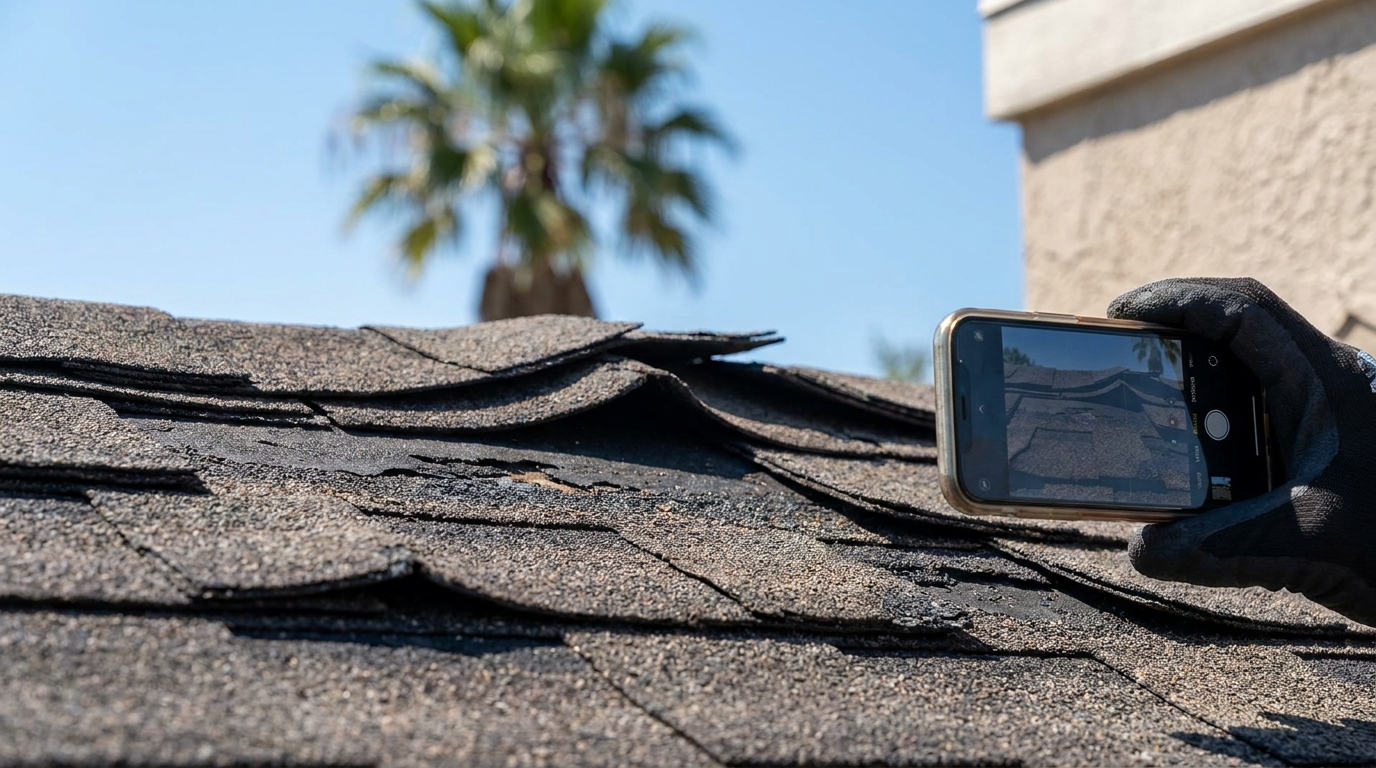
Photograph every plane of the roof from the ground with a wide shot, then medium shots of each damaged section, then tight close-ups of individual issues — missing shingles, lifted flashing, punctures, exposed underlayment, dented vents, torn soffits, and displaced ridge caps. Include a dated video walk-around of the entire perimeter. Every image needs a timestamp, and every timestamp needs to fall inside your claim window.
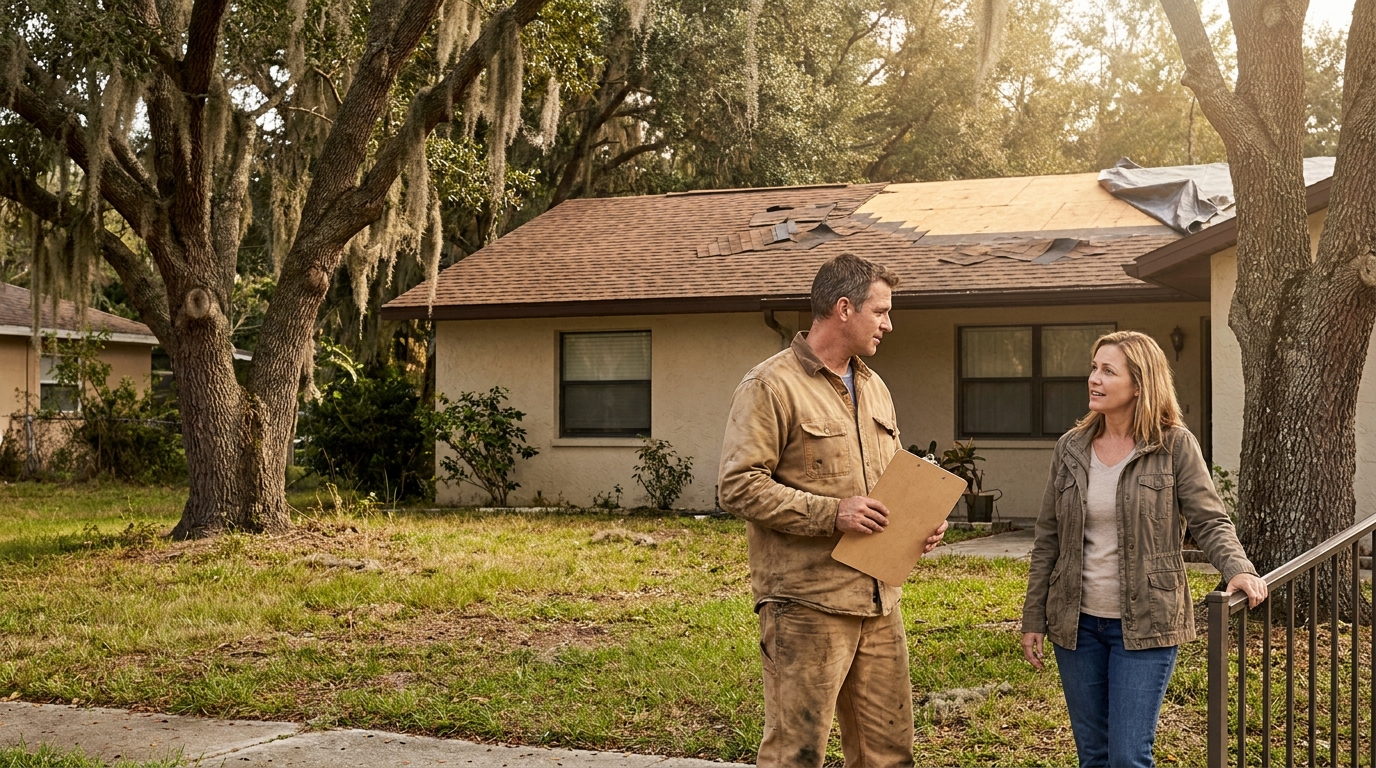
At SCM Roofing, we tell Tampa homeowners to think in three zooms: the whole elevation, the damaged section, the specific defect. Adjusters need all three to connect a granular problem to a storm event.
Prioritize these areas — they're where Gulf Coast wind and wind-driven rain do the most damage on Tampa's typical asphalt shingle and tile roofs:
- Ridge lines, hips, and rake edges (first to lift in high wind)
- Field shingles, especially on the windward slope
- Flashing around chimneys, skylights, vents, and wall junctions
- Soffits and fascia (a common failure point in South Tampa and coastal neighborhoods)
- Gutters, downspouts, and drip edge
- Roof-mounted equipment: satellite dishes, solar attachments, HVAC curbs
Then move inside. Photograph ceiling stains, attic sheathing, insulation saturation, and any water tracking down interior walls. Interior damage is what proves the roof breach let water in — without it, adjusters often classify the loss as cosmetic.
How do you create a documentation record a Florida adjuster will accept?
Build a single, dated file per claim: photos and video with visible timestamps, a written itemized inventory of damaged materials and personal property, receipts for every emergency mitigation expense (tarps, board-up, debris removal, dry-out), and copies of any pre-loss inspection or maintenance records you already have. Store originals in cloud backup the same day and never hand over your only copy.
Florida insurers investigate under Fla. Stat. § 627.70131, which requires them to acknowledge the claim, investigate, and issue a coverage decision within statutory timeframes. Your file is what keeps that clock honest. Missing dates, missing receipts, or photos that could have been taken any time in the last five years give the carrier room to delay.
A workable evidence stack looks like this:
| Evidence type | What to capture | Why it matters |
|---|---|---|
| Exterior photos | Wide, medium, close-up of every roof plane and damaged component | Establishes scope and location of storm damage |
| Interior photos | Ceilings, walls, attic, insulation, flooring under leaks | Proves water intrusion caused by the roof breach |
| Video walk-through | Continuous exterior perimeter and interior room-by-room | Adjusters can't dispute what a video sequence shows |
| Written inventory | Itemized list of damaged materials and contents with dates | Supports valuation of the loss |
| Mitigation receipts | Tarping, board-up, debris removal, water extraction | Reimbursable and required proof of reasonable action |
| Pre-loss records | Prior inspection reports, maintenance invoices, closing photos | Shows the roof was in sound condition before the storm |
Can you make emergency repairs before the adjuster arrives?
Yes. Florida law and standard policies both allow — and expect — emergency repairs to prevent further damage, such as tarping an open roof or boarding a broken window. You must preserve evidence of the original damage as much as possible, photograph and video the damage before you cover it, and keep every receipt. Do not throw away damaged shingles, tiles, or interior materials until they've been documented and inspected.
This is where Tampa homeowners frequently trip up. After a fast-moving storm off the Gulf, the instinct is to clean up and start ripping out wet drywall. Don't — not before you've photographed it, not before your adjuster (and ideally your own roofer) has seen it. If safety forces you to remove something, photograph it in place first, then bag and label it for the adjuster.
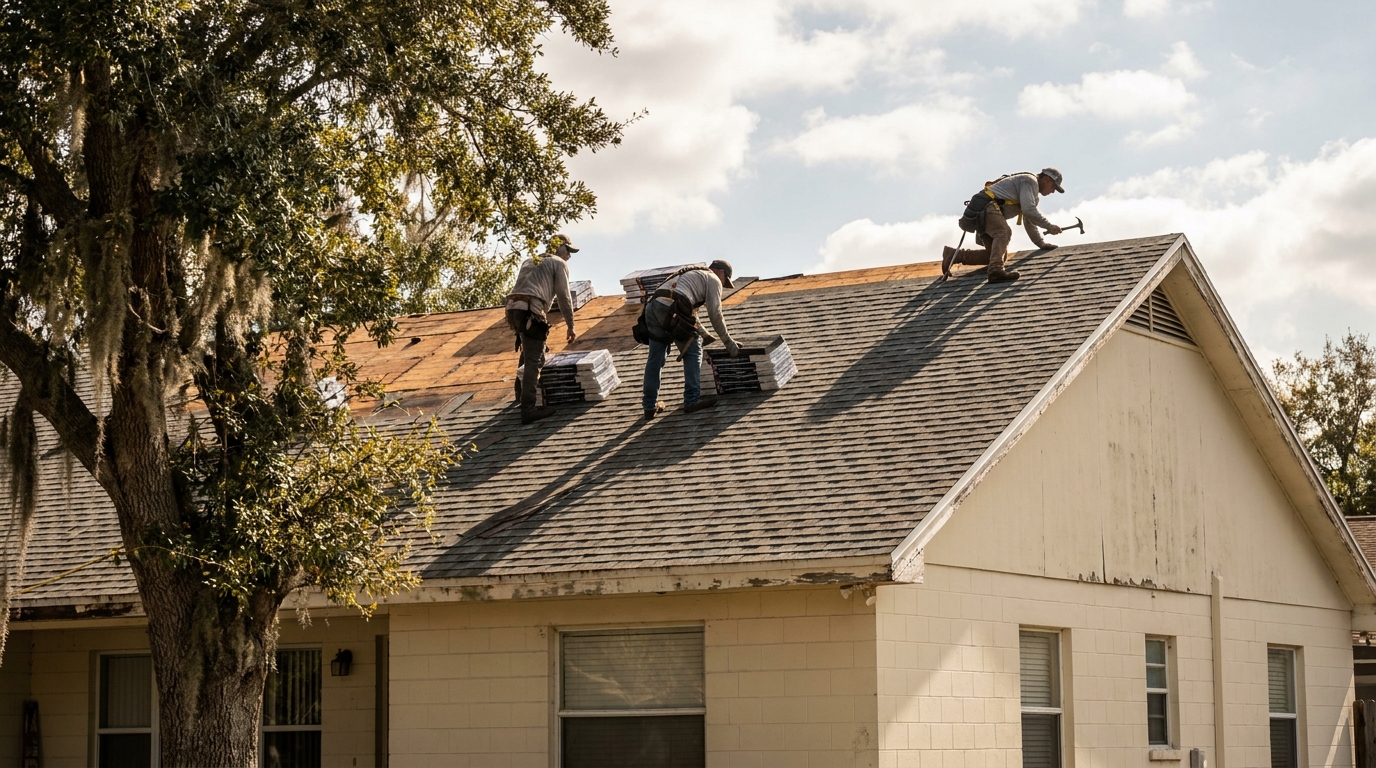
Reputable local roofers, SCM Roofing included, will tarp an active leak the same day and hand you a written scope of the emergency work with photos attached. That documentation goes straight into your claim file.
What are the Florida deadlines you cannot miss?
, and 18 months from the date of loss to file a supplemental claim. A sworn Proof of Loss, when the insurer requests one in writing, is generally due within the timeframe the policy specifies — commonly 60 days — and is a contractual, not statutory, requirement.
Miss the 1-year notice window and the insurer can raise it as a defense to the entire claim. — worth checking the law that was in effect on your date of loss.
Two more Florida-specific realities to keep in your head:
- Flood is separate. Storm surge and rising water are generally excluded from standard Florida homeowners policies and require a separate flood policy. If wind opened the roof and rain came in from above, that's a homeowners claim. If water rose from below, that's a flood claim.
- Cooperation is required. You must give the insurer's adjuster access to the property. Keep copies of everything you send them, and take your own photos during their inspection.
How does a Tampa roofing contractor strengthen the claim?
A licensed local roofer produces the technical documentation that adjusters weight most heavily: a written damage assessment tied to specific building codes, drone or ladder photos an insured can't safely take, moisture readings, and a line-item repair or replacement estimate. In Tampa, that documentation also needs to reflect Florida Building Code requirements and Hillsborough County permitting realities — generic out-of-state templates carry less weight.
SCM Roofing's strong customer reviews reflect a practice built on that kind of documentation-first work. One recent reviewer described the team as showing pictures and plans for exactly what the roof needed — that's the same paper trail that stands up in a claim file.
Storm-chasers who roll into Tampa after a hurricane rarely stick around for the back-and-forth with an adjuster. Local, licensed contractors do — and that continuity matters when a supplemental claim gets filed months later.
Frequently asked questions
How long do I have to file a hurricane roof claim in Florida?
Supplemental claims have an 18-month deadline from the date of loss., so check the law in effect on your date of loss.
Do I need a sworn Proof of Loss for a Florida hurricane claim?
A sworn Proof of Loss is a contractual policy requirement rather than a statutory one in Florida. When your insurer requests it in writing, you typically have 60 days to submit it, but the exact timeframe is controlled by your specific policy language. Failing to submit a requested Proof of Loss can impair or void your claim as a breach of a contractual duty after loss.
What if I already made repairs before taking photos?
Contact your insurer immediately and gather every scrap of evidence you still have: receipts, contractor invoices, photos taken by roofers or family, security-camera footage, and any bagged debris. Emergency repairs are permitted under Florida practice, but you must preserve evidence of the original damage to the extent possible. Undocumented repairs weaken the claim but do not automatically defeat it.
Does homeowners insurance cover storm surge damage in Tampa?
No. Flood damage from storm surge or rising water is generally excluded from standard Florida homeowners insurance policies and requires a separate flood insurance policy, typically through the National Flood Insurance Program or a private flood carrier. Wind-driven rain that enters through a storm-created roof opening is usually covered under homeowners; water that rose from ground level is not.
Should I get my own roof inspection before filing?
Yes, when possible. An independent inspection from a licensed Tampa roofing contractor produces technical documentation — measurements, code references, photos of areas you cannot safely reach, and a line-item estimate — that gives the adjuster something concrete to evaluate against. It also creates a baseline you can compare to the insurer's own assessment if the two disagree.
What happens if the insurer misses its deadlines?
Fla. Stat. § 627.70131 requires insurers to acknowledge the claim, investigate promptly, and issue a coverage determination within statutory timeframes. If the insurer fails to comply, you may have remedies through the Florida Office of Insurance Regulation or through civil courts. Keep dated copies of every communication — those records are what enable enforcement of the timeline.
Bottom line for Tampa homeowners
A Florida hurricane claim is won or lost on paper. Photograph everything three ways, video the whole property, save every receipt, back it all up the day you take it, and file inside the 1-year window under § 627.70132. Do not throw anything away until an adjuster has seen it. Do not rely on training-data assumptions about what your policy covers — read the policy, and know that flood is separate.
Tampa homeowners who want a documentation-grade roof assessment before or after filing a claim can reach SCM Roofing at https://scmroofingfl.com to schedule an inspection. The goal is a claim file the adjuster can approve on the first pass — not a second round of photos taken after the tarps come off.