After a Tampa Bay storm rolls through — whether it's a summer squall off the Gulf, a tropical system during hurricane season, or one of those microbursts that flattens a single block in Seminole Heights — the question every homeowner faces is the same: How do I prove this damage to my insurance company?
Documenting roof damage for insurance is half technical inspection, half paper trail. Adjusters work from evidence. The cleaner and more thorough your documentation, the faster your claim moves and the more likely you are to get a fair settlement. Here's how to do it right.
Why Documentation Decides Your Claim
Insurance adjusters in Florida are working under tighter scrutiny than ever. After the legislative reforms that reshaped Florida's property insurance market, carriers now demand granular proof of storm-related damage versus wear and tear. A vague claim with three blurry photos won't move the needle. A timestamped, organized record of damage — paired with a contractor's inspection report — almost always does.
Roof damage documentation matters because adjusters are trained to look for reasons to reduce or deny. Missing shingles can be classified as "prior wear." Soft decking can be blamed on age. Without photo evidence tied to a specific storm date, you're arguing from memory while the carrier argues from policy language.
Step 1: Document Before Anything Else
If your roof is visibly damaged after a named storm, a hailstorm, or high straight-line winds, your first move isn't a phone call to your insurer — it's documentation. Get evidence before tarps go up, before debris is cleared, and before any temporary repair alters the scene.
Capture the date and time
Use your phone's camera with location services enabled. Every photo should carry a timestamp and GPS metadata.
Photograph from multiple angles
Adjusters want context. For each area of damage, capture:
- A wide shot showing the damaged section in context with the rest of the roof
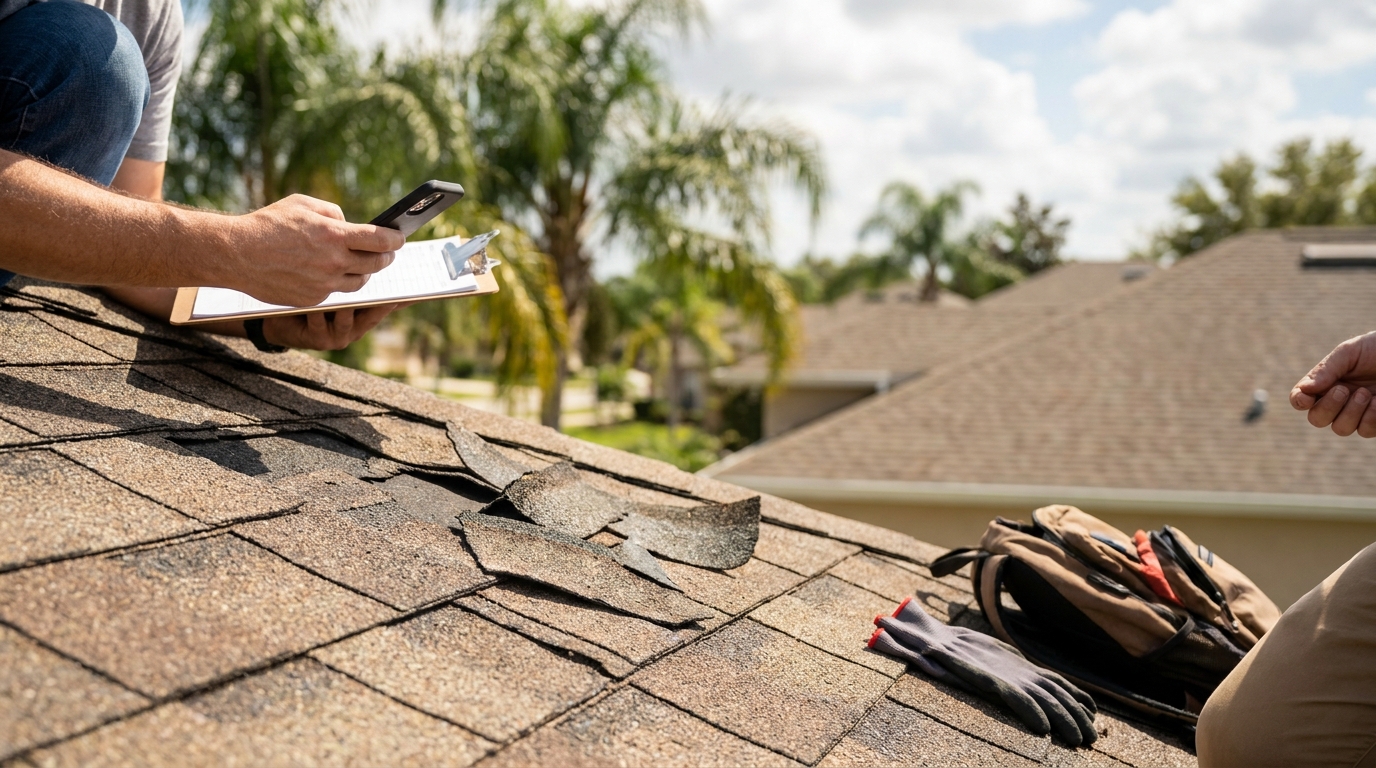
- A medium shot of the specific damaged area (a missing shingle field, a bent flashing run, a punctured valley)
- A close-up showing material detail — granule loss, exposed mat, cracked tile, lifted seams
Three photos per damage point is a good baseline. Ten is better.
Step 2: Document the Interior Too
Roof claims aren't just about the roof. Water intrusion from a compromised roof system causes secondary damage that's often worth more than the roof repair itself. Walk every room and photograph:
- Ceiling stains, bubbling paint, or sagging drywall
- Attic rafters and decking — look for daylight, water trails, or wet insulation
- Damaged personal property (furniture, electronics, flooring)
- HVAC components in the attic if they were affected
In older Tampa neighborhoods like Hyde Park, Seminole Heights, and Old Northeast across the bay, attic access can be tight and decking is often original wood. Photograph any signs of water on rafters even if the ceiling below looks dry — leaks travel.
Step 3: Get a Professional Roof Inspection
Before the insurance adjuster arrives, schedule an independent inspection with a licensed Florida roofing contractor. This is where many homeowners give themselves a meaningful advantage. A contractor's inspection report carries weight because it's prepared by someone who climbs roofs every day and knows exactly what storm damage looks like versus normal aging.
A thorough inspection should include:
- A written damage report identifying each affected area
- Drone or ladder photography of the entire roof plane, not just the damaged section
- Moisture readings where applicable
- An assessment of underlayment, decking, flashing, and ventilation components
- A repair-versus-replacement recommendation tied to Florida Building Code requirements
Adjusters know this rule, but they don't always apply it proactively. Your contractor should.
SCM Roofing, LLC, a GAF Master Elite certified contractor serving the Tampa area, performs this kind of pre-adjuster inspection regularly and provides the documentation packet homeowners hand directly to their carrier.
Step 4: Build an Organized Claim File
Adjusters review dozens of claims a week. The one that's easiest to evaluate gets approved fastest. Organize your file like this:
- Cover summary — date of loss, storm event, brief description of damage
- Photo evidence — labeled by location (e.g., "northwest slope, missing shingles")
- Weather data — NWS report, local news coverage, or insurance industry storm verification
- Contractor's inspection report — signed and dated
- Repair estimate — itemized, code-compliant
- Interior damage records — photos and any receipts for emergency mitigation
Step 5: Be Present for the Adjuster's Inspection
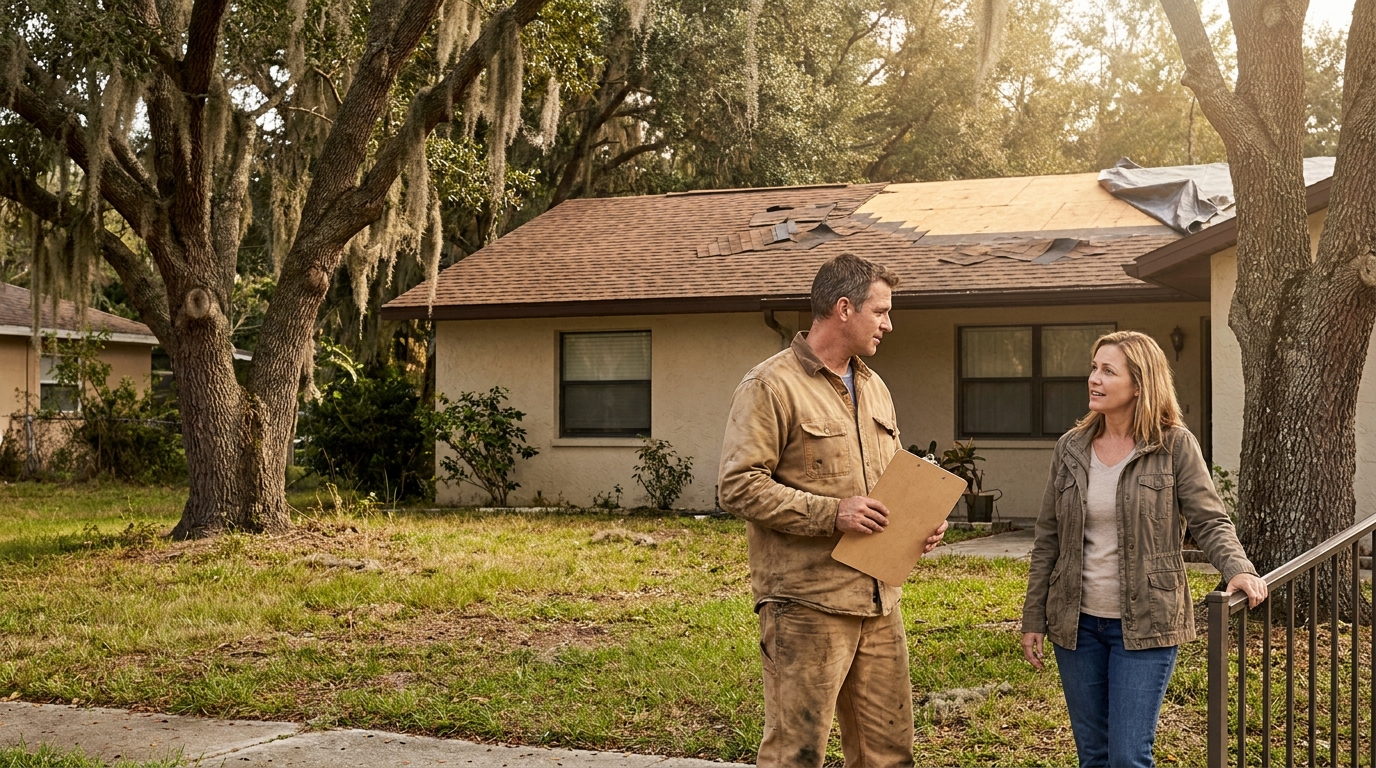
When the insurance adjuster's roof inspection happens, be there. Walk the property with them. Bring a printed copy of your contractor's report. If your roofing contractor can attend the adjuster meeting, that's even better — having a roofer on-site to point out chalk-marked damage and explain code requirements often prevents items from being missed or undervalued.
Take notes during the visit. Write down the adjuster's name, license number, and any verbal commitments. Photograph their chalk markings on your roof so you have a record of what they identified.
Common Mistakes That Weaken Roof Damage Claims
- Cleaning up too quickly. Hauling away debris before photographing it eliminates evidence.
- Permanent repairs before the adjuster's visit. Tarps and emergency dry-in are fine and often required by your policy. Full repairs before inspection are not.
- Relying only on the adjuster's photos. They work for the carrier. You need your own record.
- Skipping the attic. Interior evidence often unlocks coverage for damage the adjuster initially overlooked.
- Filing without a contractor's input. Self-described damage rarely matches the technical language adjusters respond to.
FAQs: Documenting Roof Damage in Tampa
How long do I have to file a roof damage claim in Florida?
Under current Florida law, property insurance claims for storm damage must be reported within a set window from the date of loss, and these deadlines have changed across recent legislative sessions. These windows have changed across recent legislative sessions, so confirm the current deadline with your carrier or attorney.
Should I file a claim before or after getting a contractor's inspection?
Get the inspection first. Knowing the scope and likely cost of damage helps you decide whether filing makes sense relative to your deductible — and gives you documentation ready to submit.
What if my adjuster denies damage my contractor identified?
You have the right to request a re-inspection, hire a public adjuster, or invoke your policy's appraisal clause. Your contractor's written report and photos become the foundation of any dispute.
Does drone photography help?
Yes. Drone imagery captures damage that's hard to see from a ladder and reduces the safety risk of walking a steep or fragile roof. Most professional Tampa roofers now include drone documentation as standard.
Can I use my own photos, or do I need a professional roofer to take them?
Your own photos are valid and important — take as many as possible immediately after the storm. That said, a licensed contractor's photos carry additional credibility with adjusters because they are professionally annotated and tied to a signed inspection report. Use both: your timestamped photos establish the scene; the contractor's photos establish the technical damage assessment.
What does "GAF Master Elite certified" mean, and why does it matter for my claim?
It signals verified licensing, insurance, training, and a commitment to quality installation standards. When a Master Elite contractor submits an inspection report, adjusters recognize the credential — it adds professional weight to your documentation and makes it harder to dismiss damage findings as exaggerated.
The Bottom Line
The homeowners who get fair, fast settlements aren't necessarily the ones with the worst damage — they're the ones with the cleanest documentation. Photos, weather records, a contractor's inspection report, and a present-and-engaged homeowner during the adjuster visit add up to a claim that's hard to undervalue.
Tampa homeowners who want this handled professionally — from initial inspection through final settlement coordination — can contact SCM Roofing, LLC at https://scmroofingfl.com or call (855) 726-7663 for a free roof inspection and claim documentation support. With a 4.9★ rating across 239 Google reviews as of April 2026 and GAF Master Elite certification, the team works alongside homeowners and adjusters to make sure storm damage is fully documented and fairly evaluated. One customer wrote: "SCM stood out from the rest for several reasons. They are GAF Master Elite Certified… Customer service was outstanding."
"