You hear it before you see it — that steady drip somewhere above the ceiling, getting faster as the rain band rolls in off the Gulf. Maybe a brown stain is spreading across your living room drywall, or water is running down a window frame. If you're dealing with a roof leak during a storm in Tampa, the next hour matters. What you do right now will determine whether you're patching drywall next week or replacing flooring, insulation, and framing next month.
Tampa homeowners know the drill: from the start of hurricane season in June through the tail end of October, afternoon thunderstorms and tropical systems put roofs under constant stress. Add the wind-driven rain that comes off Tampa Bay, and even a small flashing failure can dump gallons into your attic in a single afternoon. Here's what to do, in order.
Step 1: Protect People and Electronics First
Before you think about the roof, think about what's underneath the leak. Water and electricity are the immediate danger.
- If water is near outlets, light fixtures, or ceiling fans, shut off the breaker for that room at your electrical panel.
- Move furniture, rugs, and electronics out of the drip zone. If items are too heavy to move, cover them with plastic sheeting or trash bags.
- Keep pets and kids out of the affected room — saturated ceilings can collapse without warning, especially older plaster and the popcorn ceilings still common in mid-century homes around Seminole Heights and Temple Terrace.
Step 2: Contain the Water Inside
You want to capture water in a controlled way rather than let it spread across the ceiling and into the walls.
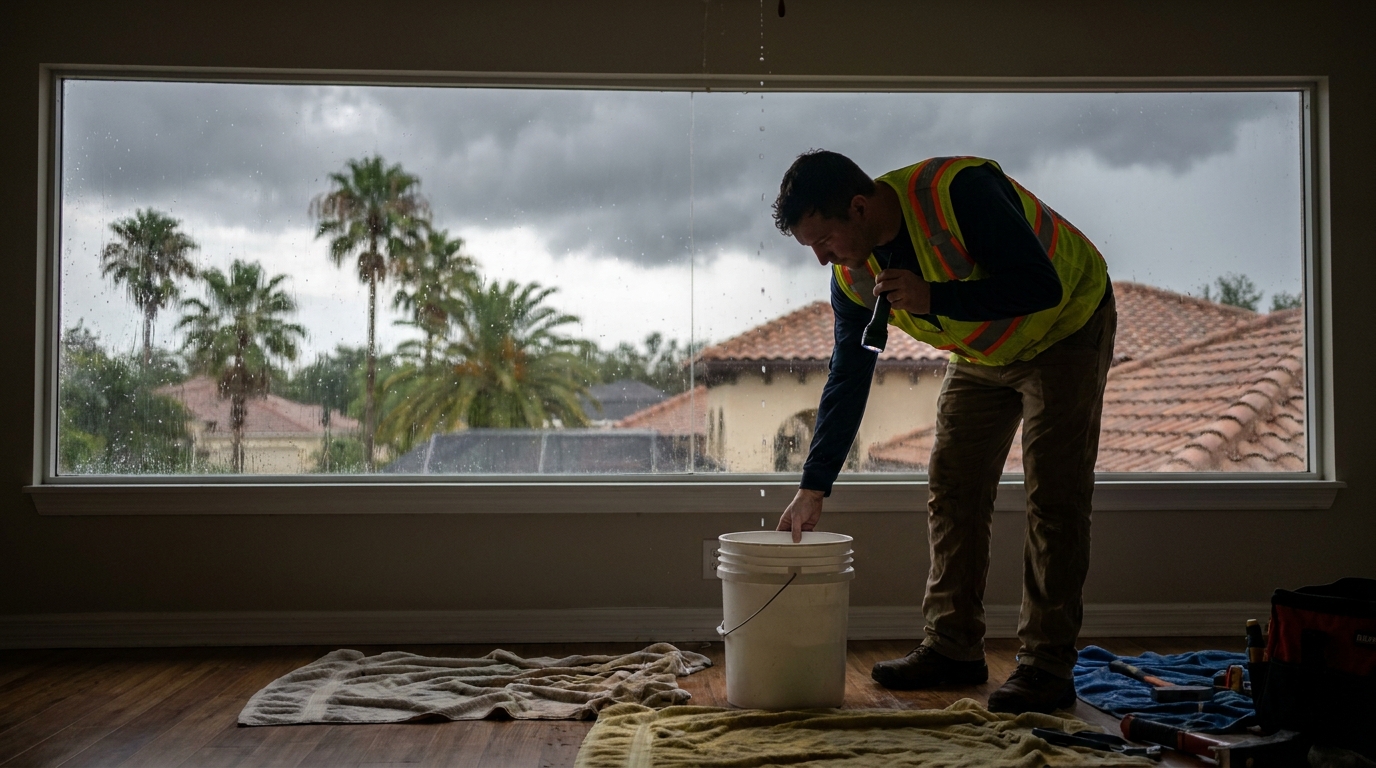
- Place buckets, plastic bins, or large pots under active drips. Lay towels around them to catch splash.
- If you see a ceiling bulge — a sagging spot where water is pooling above the drywall — take a screwdriver or nail and puncture the center of the bulge from below. This sounds counterintuitive, but a controlled release into a bucket is far better than the entire section of drywall failing and dumping everything at once.
- Empty containers regularly. A single ceiling leak during a Tampa squall can produce five gallons in an hour.
Step 3: Document Everything for Insurance
Florida insurance carriers have tightened their claims processes considerably, and documentation is now the difference between a covered claim and a denied one. Before you clean anything up:
- Take photos and video of every affected area — ceiling stains, dripping water, soaked carpet, damaged belongings.
- Capture wide shots and close-ups. Get the time and date stamp on, if your phone supports it.
- Save the weather report for the day. Screenshots of radar showing the storm over your ZIP code support your claim.
- Keep receipts for tarps, buckets, fans, or anything else you buy to mitigate damage. Most Florida policies reimburse reasonable mitigation expenses.
Florida law generally requires you to take reasonable steps to prevent further damage once you know about a leak. Skipping mitigation can give a carrier grounds to reduce your payout, so document the steps you take.
Step 4: Find the Source — Carefully
If it's safe to do so, go into the attic with a flashlight during a lull in the storm. The entry point on the roof deck is rarely directly above the ceiling stain. Water travels along rafters, trusses, and the top of insulation before finding a drywall seam to drop through. Look for:
- Wet sheathing or visible daylight where there shouldn't be any
- Soaked insulation (it will look matted and darker)
- Water trails running down framing members
- Rusted nail tips, which often indicate a chronic small leak that the storm has worsened
Do not climb onto the roof during a storm. Tile and shingle roofs in Tampa get extraordinarily slick when wet, and lightning is a serious risk during summer convective storms. Roof inspection waits for clear weather or a qualified contractor with the right equipment.
Step 5: Apply a Temporary Roof Leak Fix
Once winds drop below roughly 30 mph and there's no lightning, a temporary patch can keep things stable until permanent repairs happen. The two common options:
Interior patching
From inside the attic, you can press a piece of plywood or even a thick piece of plastic against the underside of the leaking deck and brace it. Roofing cement applied around the perimeter can buy you a day or two. This is a stopgap, not a fix.
Exterior tarping
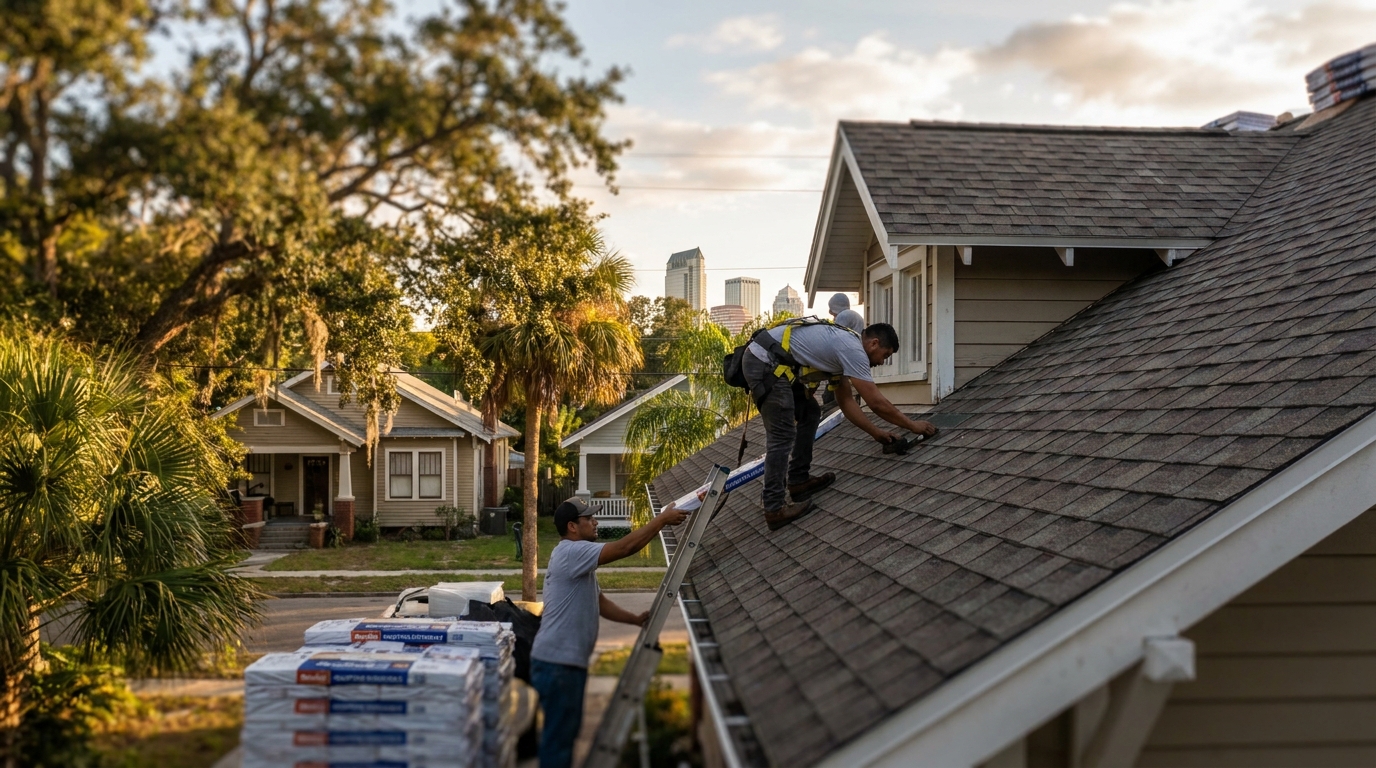
A properly installed roof tarp — anchored with furring strips screwed into the decking and extended over the ridge — is the standard emergency measure. Done poorly, a tarp does almost nothing; done right, it can hold for weeks. Most Tampa homeowners are better off calling a roofing contractor for this rather than getting on a wet roof themselves. Falls from residential roofs are one of the leading storm-related injuries on the Gulf Coast.
SCM Roofing handles emergency tarping calls across Hillsborough County and is familiar with the wind-uplift patterns common in neighborhoods from South Tampa to Carrollwood.
Step 6: Call a Local Roofing Contractor
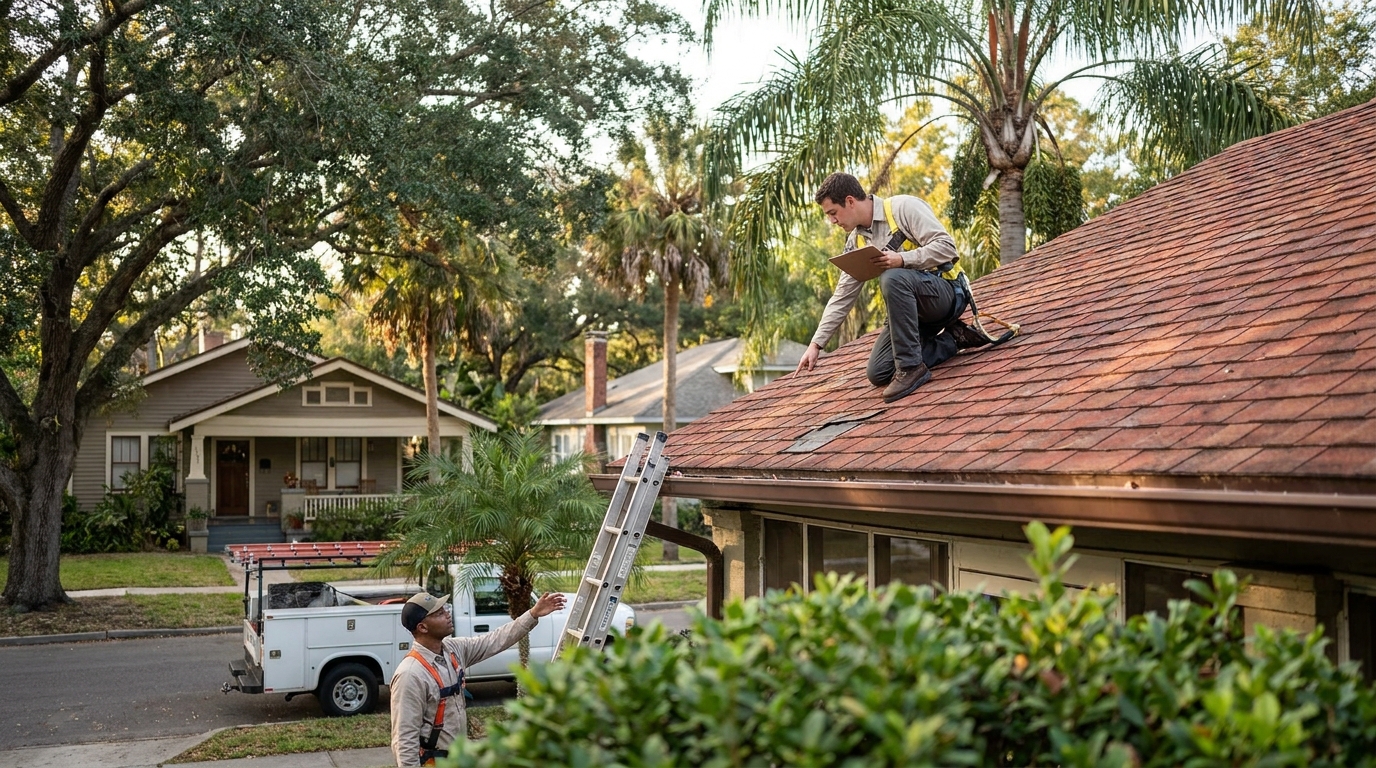
For storm roof damage in Tampa, working with a contractor who knows the local permit process and Florida Building Code requirements saves significant time. Hillsborough County requires permits for most roof repairs and replacements, and inspections must be scheduled through the county. A contractor unfamiliar with Tampa's process can stretch a two-week repair into two months.
When you call, have ready:
- Your address and roof type (shingle, tile, metal, flat)
- Approximate age of the roof, if you know it
- A description of where you're seeing water inside
- Photos, if you can text or email them
FAQ: Roof Leaks During Tampa Storms
Does homeowners insurance cover a roof leak from a storm?
Generally, yes — sudden damage from a named storm, wind, or hail is typically covered, while gradual wear-and-tear leaks are not. Florida policies have specific hurricane deductibles that apply once the National Weather Service names a storm. Review your declarations page or call your agent.
How fast should I get emergency roof leak repair?
Within 24–48 hours of the leak starting, ideally. Tampa's humidity means wet attic insulation and framing begin growing mold within roughly 48–72 hours. The longer water sits, the more secondary damage you'll be paying to remediate.
Will a contractor come out during an active storm?
Most reputable contractors won't put crews on a roof during active lightning or sustained high winds — it's not safe. They will, however, take your call, schedule the first available slot, and walk you through interior mitigation by phone.
What if my roof is older and I've been putting off replacement?
A storm leak on a 20-plus-year-old roof is often the moment to evaluate replacement rather than repeated repairs. Carriers in Florida have grown stricter about insuring older roofs, and a full replacement may actually improve your premium.
The Bottom Line
A roof leak during a Tampa storm is stressful, but the response is straightforward: protect people, contain water, document for insurance, and get a qualified contractor on the phone. The homeowners who fare best are the ones who act methodically in the first hour rather than panicking or waiting it out.
Homeowners in Tampa who want a leak handled professionally — from emergency tarping to full storm damage assessment and insurance coordination — can reach SCM Roofing, LLC at https://scmroofingfl.com for a free estimate. The company's 4.9★ rating across more than 230 Google reviews reflects what local homeowners consistently mention: responsive communication, clear documentation, and crews that show up when they say they will.