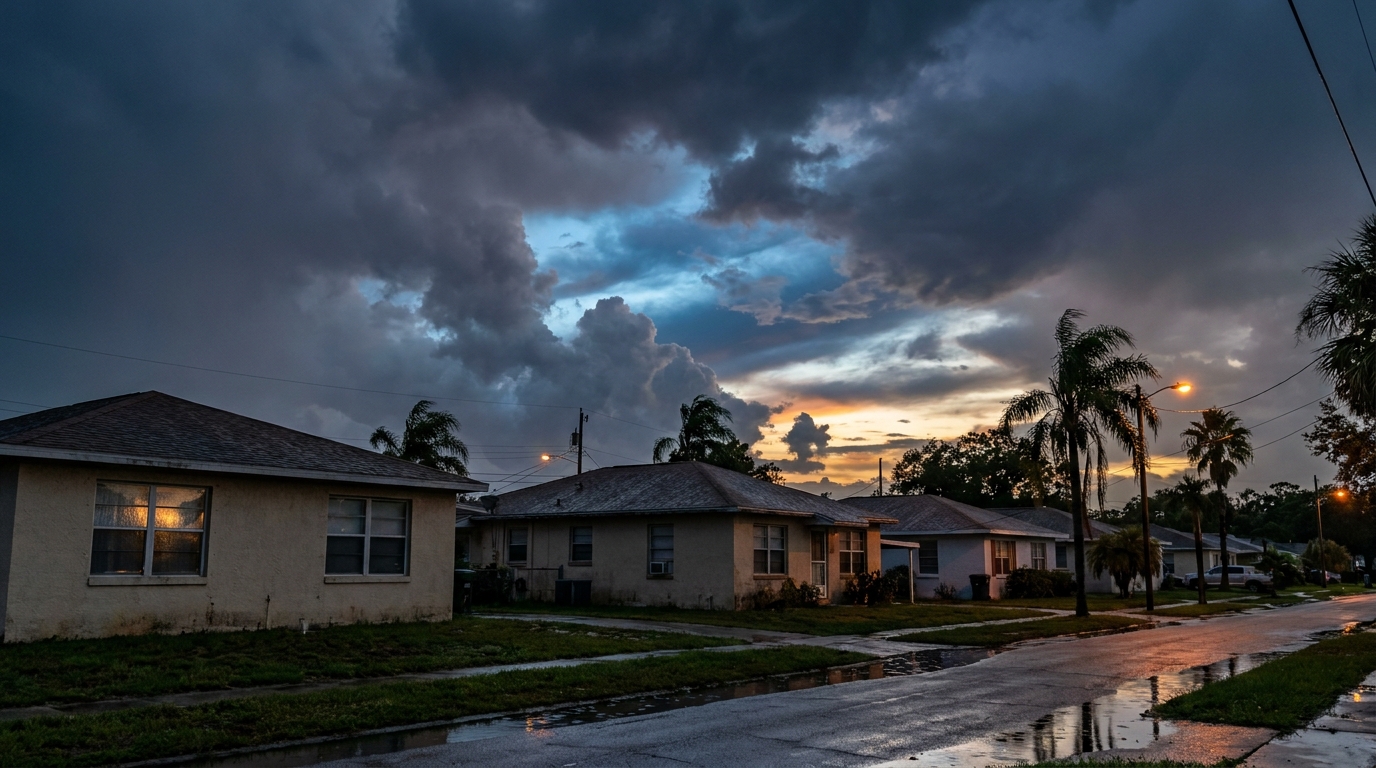
If a hurricane just tore through St Petersburg and your roof took a hit, here is the short version: get safe, document everything before you touch it, tarp it to stop water intrusion, notify your insurer in writing, and hire a licensed Florida roofing contractor to inspect and repair. Under Florida law, you have one year from the date of loss to report a new or reopened property insurance claim, so the clock starts the moment the storm passes.
The order matters. Skip documentation and your claim gets weaker. Skip the tarp and interior damage multiplies. Skip contractor vetting and you end up with a stop-work order or a denied claim. Here's how to do it right.
Step 1: Wait for the All-Clear, Then Inspect From the Ground
Do not climb onto a wet, wind-damaged roof. Period. Wait until local authorities lift shelter-in-place advisories and downed power lines have been reported. In Pinellas County, that typically means checking with the county emergency management updates before stepping outside.
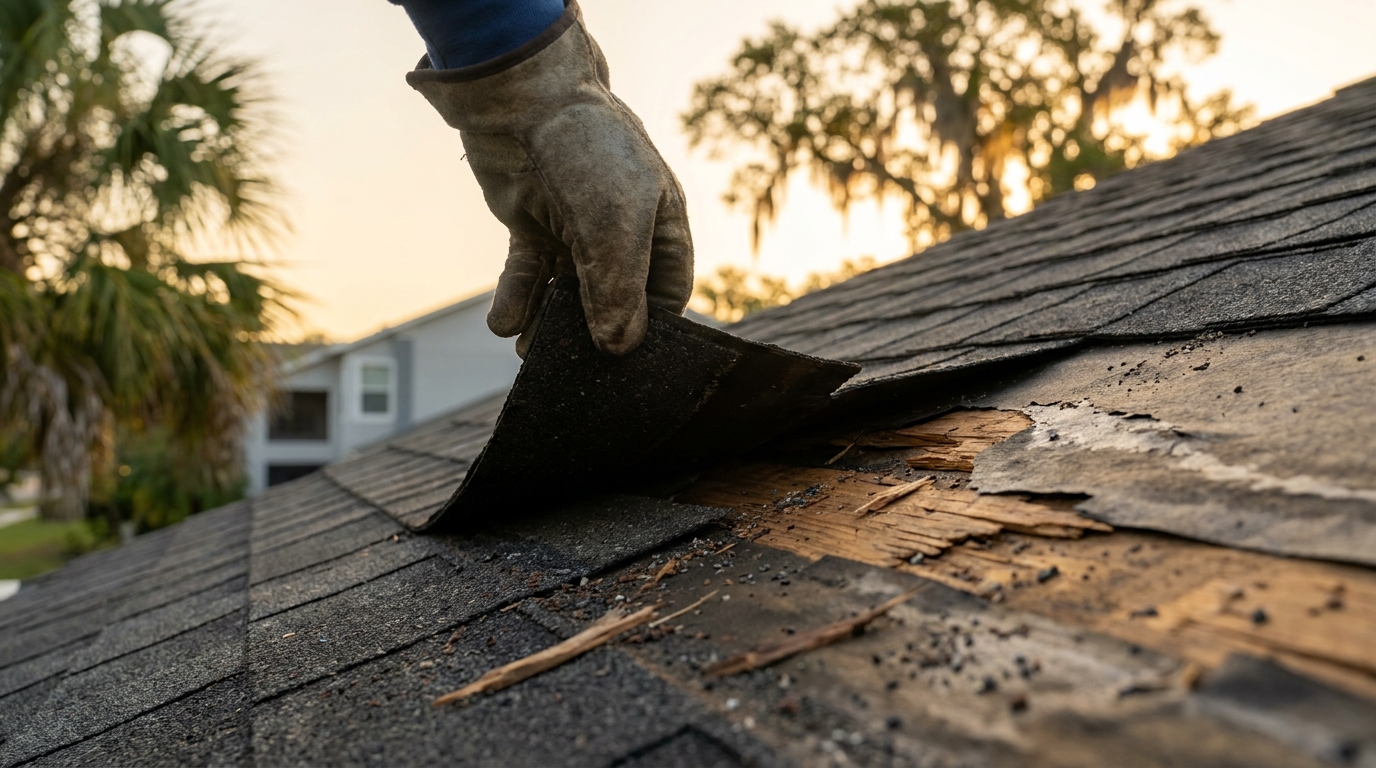
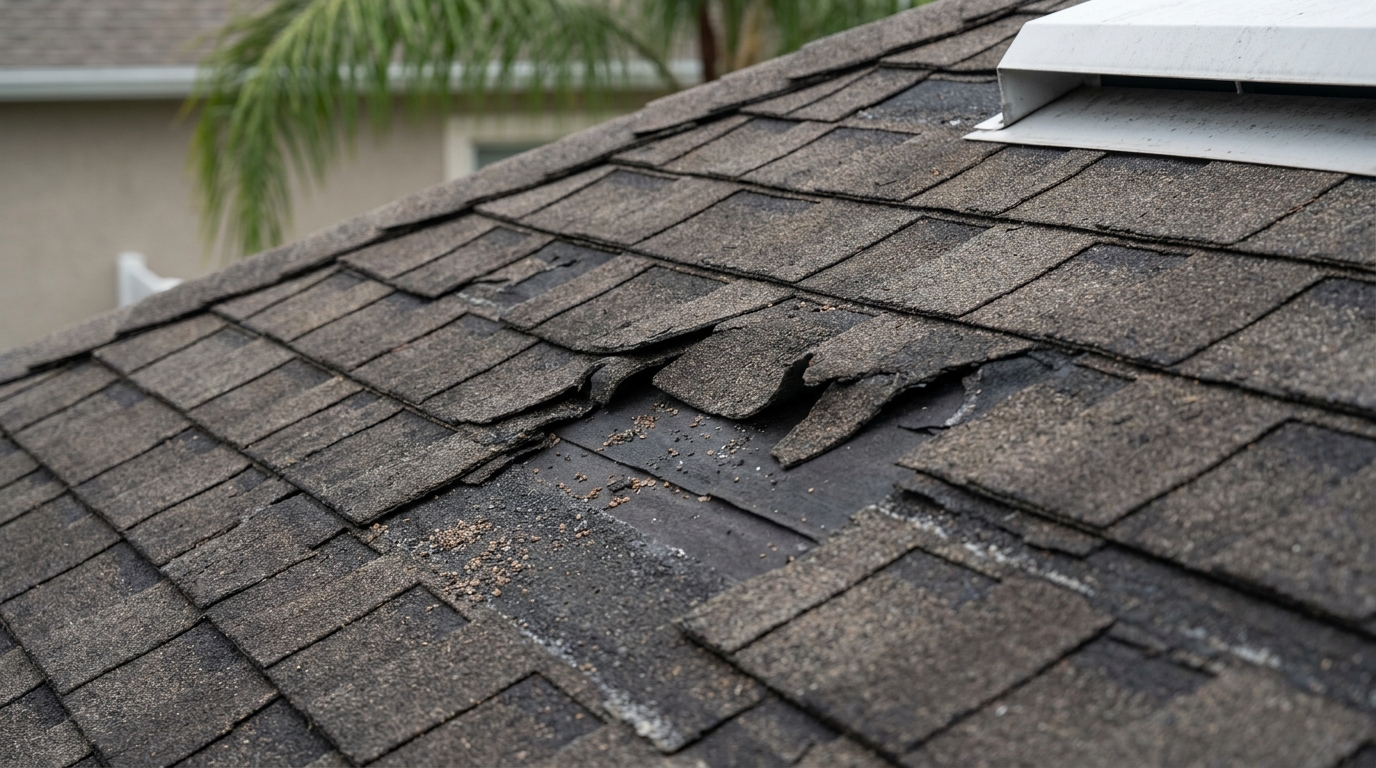
From the ground, walk the perimeter of your home. Look for missing shingles, exposed underlayment, displaced flashing, dented gutters, fallen limbs on the roof plane, and debris in the yard that used to be part of your house. If you're in a flood-prone area like Shore Acres or Coquina Key, also check for standing water against the foundation and around soffit vents.
Inside, look for ceiling stains, bubbling drywall, damp attic insulation, and daylight visible through the roof deck. Any of those means active water intrusion.
Step 2: Document Everything Before You Touch It
Photograph and video every angle of damage before any cleanup or temporary repair. This is the single most valuable thing you will do for your insurance claim.
- Wide shots of each side of the house showing overall damage
- Close-ups of missing shingles, torn flashing, punctures, and debris impact points
- Interior photos of every water stain, wet insulation patch, and damaged ceiling
- Photos of personal property damaged by water intrusion
- Time-stamped video walking the perimeter narrating what you see
Save everything to cloud storage. Adjusters and contractors will ask for it, and if a dispute arises months later, this evidence is your leverage.
Step 3: Emergency Tarping to Stop the Bleeding
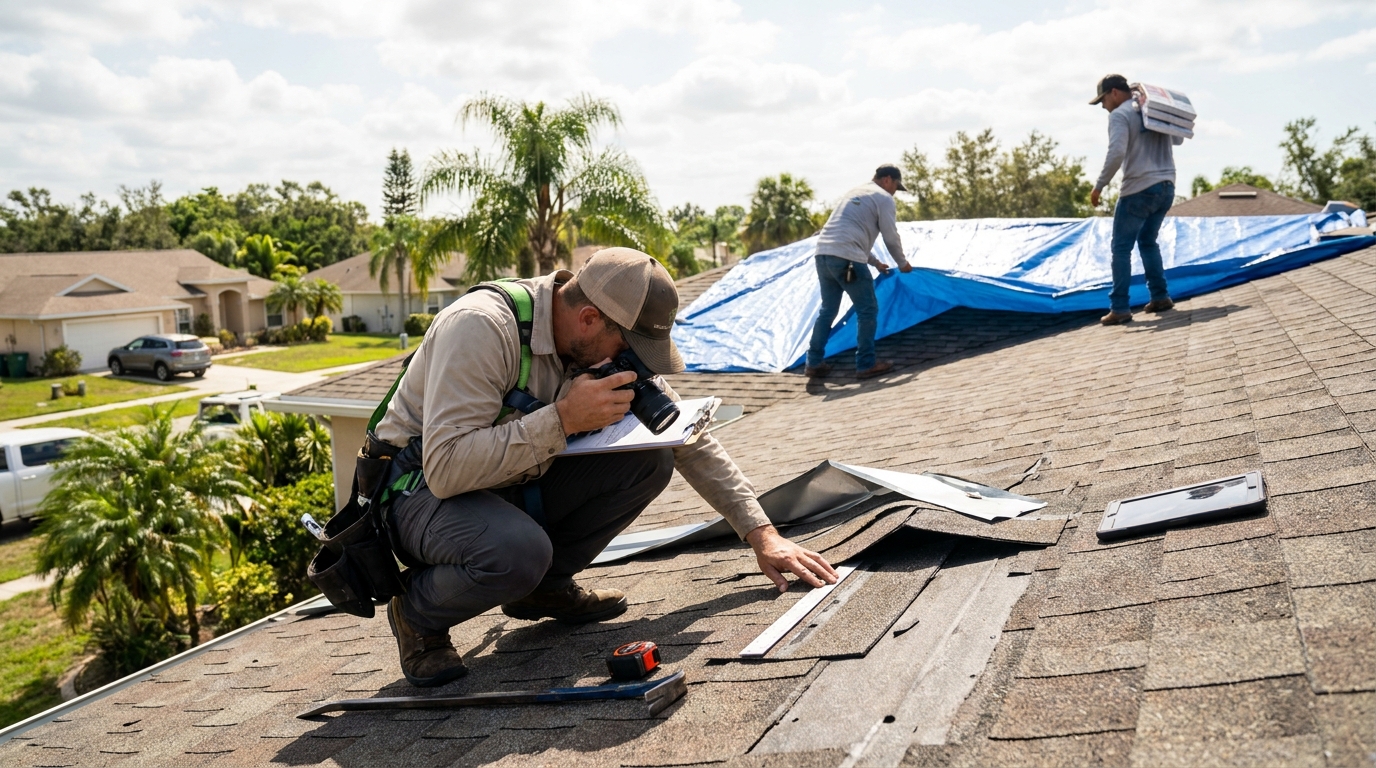
Once documented, get a tarp over any open areas immediately — water intrusion causes more long-term damage than the initial wind event in most Florida claims. In St Petersburg's climate, humidity plus a compromised roof deck means mold can start forming within 24 to 48 hours.
If you can safely tarp a small area yourself with weighted edges and no ladder acrobatics, do it. For anything larger or involving heights, call a licensed roofing contractor for emergency tarp service. Most Florida insurers reimburse reasonable emergency mitigation costs — keep the receipts.
SCM Roofing offers emergency tarping across Pinellas County and can typically respond faster than out-of-area storm chasers who show up after named storms.
Step 4: Notify Your Insurer in Writing — Mind the Florida Deadlines
Report the claim in writing as soon as you have documentation in hand. Under Fla. Stat. § 627.70132,. Supplemental claims for additional damage discovered later must be reported within 18 months of the date of loss.
Miss those windows and your claim can be barred outright. Your individual policy may also require prompt notice earlier than the statutory outer limit — the one-year rule is a maximum, not a minimum.
Once you notify, Fla. Stat. § 627.70131 requires the insurer to acknowledge your claim within 7 days and generally pay or deny it within 60 days of receiving notice. During a governor-declared state of emergency, that payment deadline may extend to 90 days. If factors beyond the insurer's control prevent compliance, the deadline can be tolled until those factors clear.
Keep written records of every communication, including email timestamps and adjuster names.
Step 5: Get a Licensed Florida Roofing Contractor Onsite
Hire a Florida-licensed roofer — not a door-knocker with an out-of-state plate — to conduct a full inspection and provide a written damage assessment. This document supports your claim and defines the scope of repair.
What to verify before signing anything:
- Active Florida contractor license (verify at the state DBPR website)
- General liability and workers' comp insurance certificates
- Physical local address, not just a P.O. box
- Written, itemized estimate — not a napkin number
- No requirement that you sign an Assignment of Benefits (AOB) before inspection
Storm chasers are the top complaint category after every Gulf Coast hurricane. They collect deposits, sub the work out to whoever is cheapest, and disappear when warranty claims arise. A local contractor like SCM Roofing lives with the work — they'll be reachable in Kenwood, Old Northeast, or Snell Isle five years from now if a repair fails.
Step 6: Understand the Permit Rules for Post-Hurricane Roof Work
Most post-hurricane roof repairs in St Petersburg require a building permit through the city's Development Services department. There is a narrow exception under Fla. Stat. § 553.844 that waives the permit requirement for like-for-like repair or replacement of roof coverings on single-family residential structures, provided the work is performed by a licensed contractor and meets all the statutory conditions.
That exception is genuinely narrow. Any work involving structural or framing changes, decking replacement, or anything beyond a straight like-for-like covering swap requires a standard building permit under the Florida Building Code. The exception also does not apply to commercial or multi-family properties.
Unpermitted work outside that exception can trigger stop-work orders, code enforcement fines, failed inspections, and requirements to obtain an after-the-fact permit or remove noncompliant work. A legitimate contractor will pull the permit as a matter of course.
Step 7: Coordinate the Repair and the Claim Together
Once the adjuster has visited and you have a scope of loss, share it with your contractor and reconcile any differences before signing off. If the insurer's scope misses damage your contractor documented, that's what the 18-month supplemental claim window in § 627.70132 exists for.
Do not sign a contract obligating you to a full replacement before the claim is settled. And do not accept the first check as final if visible damage exceeds it.
Frequently Asked Questions
How long do I have to file a hurricane roof claim in Florida?
. Your policy may impose a shorter prompt-notice requirement.
Do I need a permit for hurricane roof repair in St Petersburg?
Usually yes. Fla. Stat. § 553.844 waives the permit only for like-for-like roof-covering repair or replacement on single-family homes by a licensed contractor. Anything broader — decking, structural work, commercial properties — requires a permit through the local building department.
How fast does my insurer have to respond?
Within 7 days to acknowledge the claim, and generally within 60 days to pay or deny after receiving notice, under Fla. Stat. § 627.70131. That may extend to 90 days during a governor-declared state of emergency.
Should I sign an Assignment of Benefits?
Not without careful review. AOBs transfer your claim rights to the contractor and have driven significant litigation abuse in Florida. A reputable local roofer does not require one to inspect or provide an estimate.
The Bottom Line for St Petersburg Homeowners
The homeowners who come out of hurricane season whole are the ones who move in the right order: safety, documentation, mitigation, written insurer notice within Florida's statutory windows, and a licensed local contractor who pulls permits and stands behind the work. Skipping steps costs money, and under Florida's current claim deadlines, missed notice can cost the entire claim.
Homeowners in St Petersburg, FL who want post-hurricane roof damage handled by a licensed local team can reach SCM Roofing, LLC at https://scmroofingfl.com for a free inspection and estimate. This article is general guidance, not legal advice — for questions about a specific claim or policy, consult a licensed Florida attorney.