Sometimes yes, sometimes no — and in Florida the answer hinges on the cause of damage, the age of your roof, and how quickly you file. A homeowner's policy in St. Petersburg generally covers a new roof when the damage comes from a sudden, covered peril like a hurricane, windstorm, or hail event. It does not cover wear-and-tear, deferred maintenance, or a roof that simply aged out. Everything else — the paperwork, the deadlines, the code upgrades — flows from that basic distinction.
Here's what Florida law actually says, how the claim process works locally, and where homeowners most often trip up.
When Insurance Will (and Won't) Pay for a New Roof
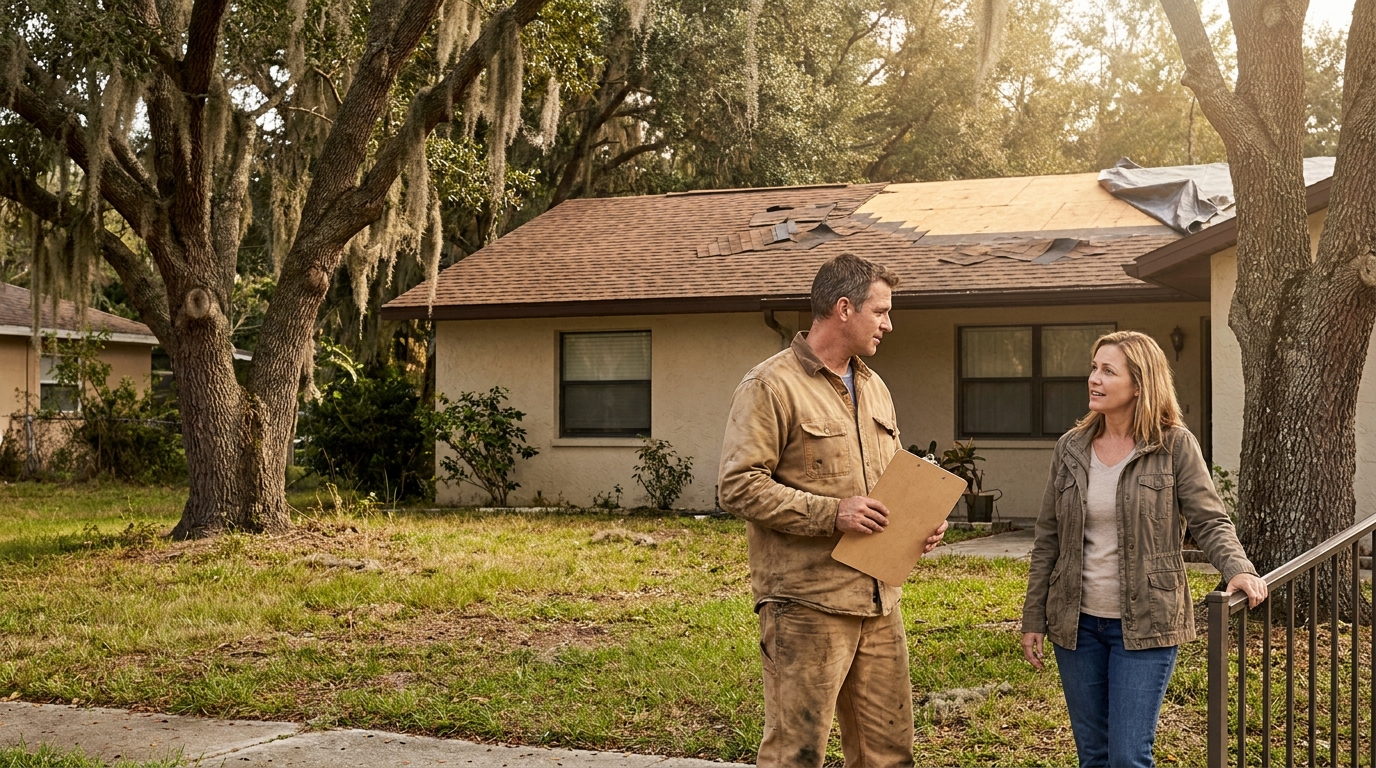
Insurance pays for a new roof when a covered peril causes damage significant enough that repair isn't practical or code-compliant. In St. Petersburg, that usually means named-storm wind, hail, or wind-driven debris — the kind of losses common along the Gulf Coast from June through November.
What's typically not covered:
- Gradual deterioration, granule loss from age, or leaks traced to old flashing
- Damage from lack of maintenance
- Cosmetic issues without functional impact
- Pre-existing damage the adjuster can document from prior inspections or aerial imagery
Florida law also limits how insurers can treat older roofs. Under Florida Statute § 627.7011, an insurer generally cannot refuse to issue or renew a homeowner policy solely because of roof age when the roof is under 15 years old. For roofs 15 years or older, homeowners may still keep coverage by demonstrating — through a qualifying inspection — that the roof has at least five years of remaining useful life, subject to the insurer's policy form and underwriting rules.
The 25% Rule and Why It Matters in Pinellas County
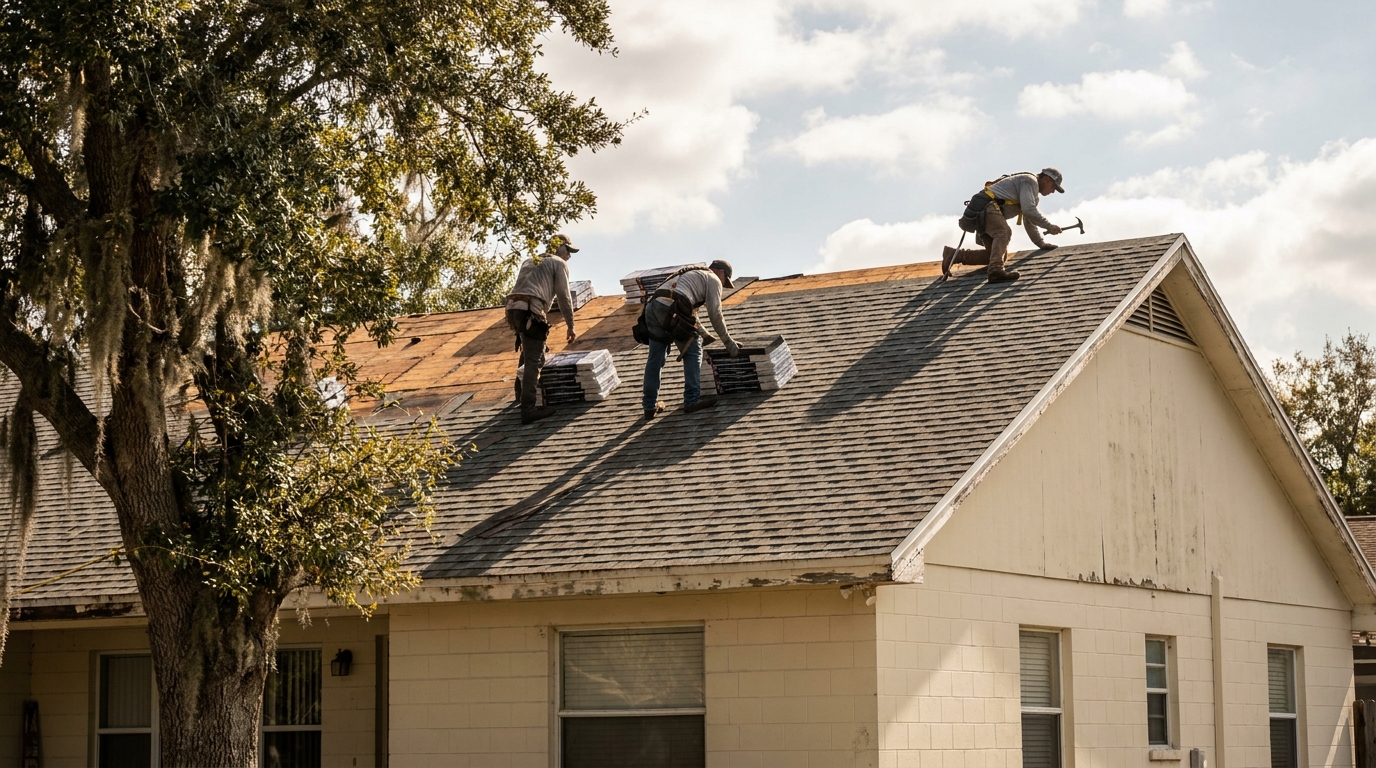
Under the Florida Building Code, if roof repair on a section exceeds 25% of that section, the affected portion generally must be brought up to current code. That single rule is why a wind claim over a Snell Isle bungalow or a Historic Kenwood two-story can escalate from a patch job to a full replacement.
There's an important carve-out.
Local enforcement runs through the St. Petersburg / Pinellas County building department, which issues the permit and determines whether a given repair triggers the 25% threshold. That determination can be the difference between a $4,000 repair check and a full replacement.
How to File a Roof Insurance Claim in St. Petersburg
File written notice of your claim within one year of the date of loss. Miss it and your claim is barred, no matter how legitimate the damage.
Here's the practical sequence we recommend:
- Document immediately. Photograph everything — from the ground, from inside the attic, and from any safe vantage point. Note the date of the storm.
- Prevent further damage. Tarp active leaks. Save receipts. Florida policies require reasonable mitigation.
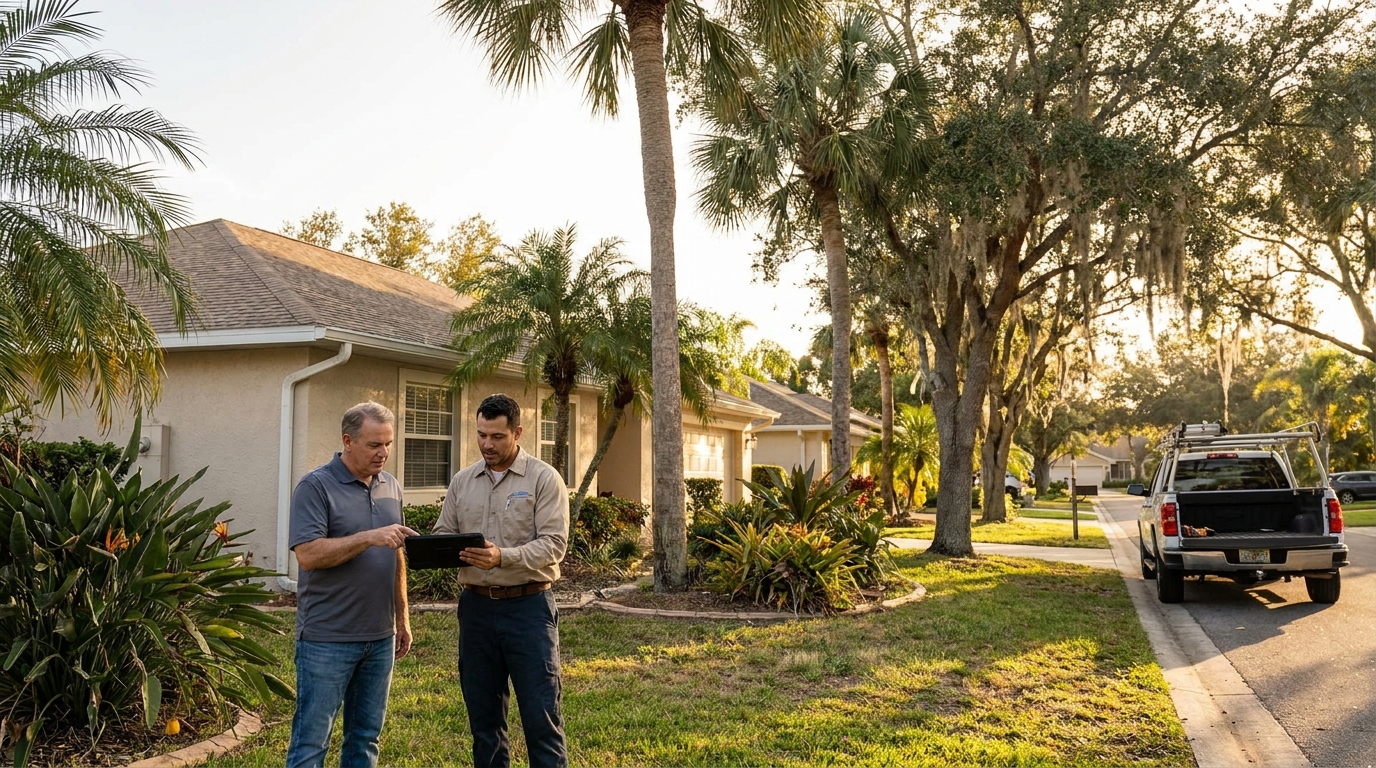
- Get a qualifying inspection. Under § 627.7011, insurers must accept a qualifying inspection from an authorized inspector — licensed contractors, roofers, home inspectors, or engineers — as evidence of roof condition. A written report from a licensed roofer often carries more weight with the adjuster than a homeowner's photos alone.
- File written notice with your carrier. Within one year of the loss. Keep proof of the submission date.
- Meet the adjuster on-site. Have your roofer present if possible. Discrepancies get resolved faster when both sides are looking at the same rafter.
- Review the scope of loss. Compare the insurer's estimate line-by-line against your contractor's. Missing items — code upgrades, underlayment, drip edge, disposal — are the most common causes of underpaid claims.
What a Roof Inspection Costs in St. Petersburg
Roof inspection pricing in the St. Petersburg market varies by inspector type and scope, so we won't quote a specific figure here. Many licensed roofing contractors — including SCM Roofing — offer a free inspection when the visit is tied to a potential claim or estimate. Standalone inspections from independent home inspectors or engineers typically cost more because of the written report and liability involved. If you need documentation for an insurer under § 627.7011, ask up front whether the inspection includes a signed report the carrier will accept.
The Most Common Reasons Roof Claims Get Denied
Denials cluster around a few predictable patterns:
- Late notice. Filed after the one-year deadline under § 627.70132.
- Wear-and-tear characterization. The adjuster attributes damage to age rather than a specific storm event.
- Pre-existing damage. Aerial imagery or prior inspection reports show the damage predated the claimed loss date.
- Maintenance exclusions. Rusted fasteners, rotten decking, or long-standing leaks flagged as neglect.
- Insufficient documentation. No photos, no mitigation records, no contractor report.
If a denial feels wrong, homeowners can file a complaint with the Florida Department of Financial Services, and the Florida Office of Insurance Regulation oversees insurer compliance with underwriting and claims statutes. A public adjuster or Florida attorney can also review the file. This article is a plain-language explainer, not legal advice.
Law and Ordinance Coverage — the Line Item Most Homeowners Miss
Check your declarations page for law and ordinance coverage, typically offered at 25% or 50% of dwelling limits. This is the endorsement that pays for code-required upgrades triggered by a covered loss — the exact scenario the 25% rule creates. Without it, a homeowner can end up covering the code-upgrade delta out of pocket even when the storm damage itself is covered.
Local Timing: File Before Hurricane Season Complicates Everything
If your roof is showing wear ahead of the June-through-November hurricane season, get it inspected in the spring. Once a named storm hits the Tampa Bay area, adjuster availability collapses, contractor schedules fill, and permit turnaround at the Pinellas County building department slows. Homeowners who documented their roof's pre-storm condition also have a much easier time proving that post-storm damage was, in fact, storm-caused.
FAQ
Does insurance cover roof replacement in St. Pete if my roof is over 15 years old?
It can. Florida Statute § 627.7011 allows homeowners with roofs 15 years or older to maintain coverage by demonstrating at least five years of remaining useful life through a qualifying inspection, subject to the insurer's underwriting rules. Storm damage claims on older roofs are evaluated on the damage itself, though depreciation may reduce the payout on an actual-cash-value policy.
How long do I have to file a roof insurance claim in Florida?
Supplemental claim deadlines may differ — check your specific policy language.
Will a small repair trigger a full roof replacement?
Only if the repair affects more than 25% of a roof section under the Florida Building Code — and even then,
Who inspects my roof for an insurance claim?
Licensed contractors, roofers, home inspectors, or engineers — insurers must accept a qualifying inspection from an authorized inspector under § 627.7011 as evidence of roof condition.
The Bottom Line
Insurance in St. Petersburg pays for a new roof when a covered peril causes the damage, the claim is filed within one year, and the homeowner documents the loss well enough to survive adjuster scrutiny. The traps are the deadlines, the 25% rule, and the wear-and-tear characterization. Handle those, and most legitimate claims land where they should.
Homeowners in St. Petersburg, FL who want a licensed local roofer to inspect the damage, document it for the carrier, and handle the code-compliance side of the work can reach SCM Roofing, LLC at https://scmroofingfl.com for a free inspection and estimate.