A compliant re-roof involves a licensed contractor pulling the permit, product-approved materials, a sealed roof deck, and two mandatory inspections. Anything less isn't a shortcut — it's a liability.
Here's what a well-run residential roof installation looks like in Naples in 2026, and what to look for when you're choosing who to hire.
What to Expect From a Naples Roof Installation in 2026
A permit application for roof work must include an Index Sheet listing Florida Product Approval numbers or Miami-Dade NOA numbers for all roofing materials, underlayment, and roof vents.
A qualified roof installer in Naples FL will handle the permit through the appropriate jurisdiction. Unincorporated Collier County properties go through the county's building department portal; homes inside the City of Naples limits apply through the Naples Building Department. Confirming which one applies to your parcel is the first practical step — the fee schedules and review timelines differ, and a property with a Naples mailing address may fall under either jurisdiction.
Wind Zones and Why They Drive the Whole Project
Naples sits in a Wind-Borne Debris Region, and wind load design pressures must be established for the specific parcel. Product design pressures for roofing materials must meet or exceed the design pressures required for that location. Wind design values are parcel-specific and depend on the building's risk category, exposure category, and location on the county wind zone map — obtain parcel-specific design criteria from the building department or a qualified design professional.
Every material on the roof — shingles, tile, metal panels, underlayments, fasteners — must carry Florida Product Approval documentation submitted with the permit application. A good installer knows the difference and doesn't over-spec or under-spec materials.
Homes in Port Royal, Aqualane Shores, or along Gulf Shore Boulevard tend to fall on the higher end of the wind-speed range. Properties further inland — toward Golden Gate Estates, for example — typically fall under a lower design category. Ask your installer which value they're designing to; it should be documented in the permit paperwork.
The Permit and Documentation Package
Naples roofing permits require more paperwork than most homeowners expect. A complete residential re-roof application in Collier County typically includes:
- A re-roof affidavit (required for all replacement permits)
- Florida Product Approval numbers for every roofing component, listed on a completed Index Sheet
- A Notice of Commencement (NOC) recorded before work begins on qualifying projects
- Proof of the contractor's active Florida roofing license
- Wind load and design pressure documentation supporting the fastening and attachment method
If your home sits seaward of the Coastal Construction Control Line (CCCL) — which affects parts of the barrier islands and the closest Gulf-front parcels — expect additional state-level review by the Florida Department of Environmental Protection. That review can add 4–8 weeks to the permitting timeline, so plan accordingly if you're trying to be buttoned up before hurricane season.
Sealed Decks, Tile Rules, and What Actually Gets Installed
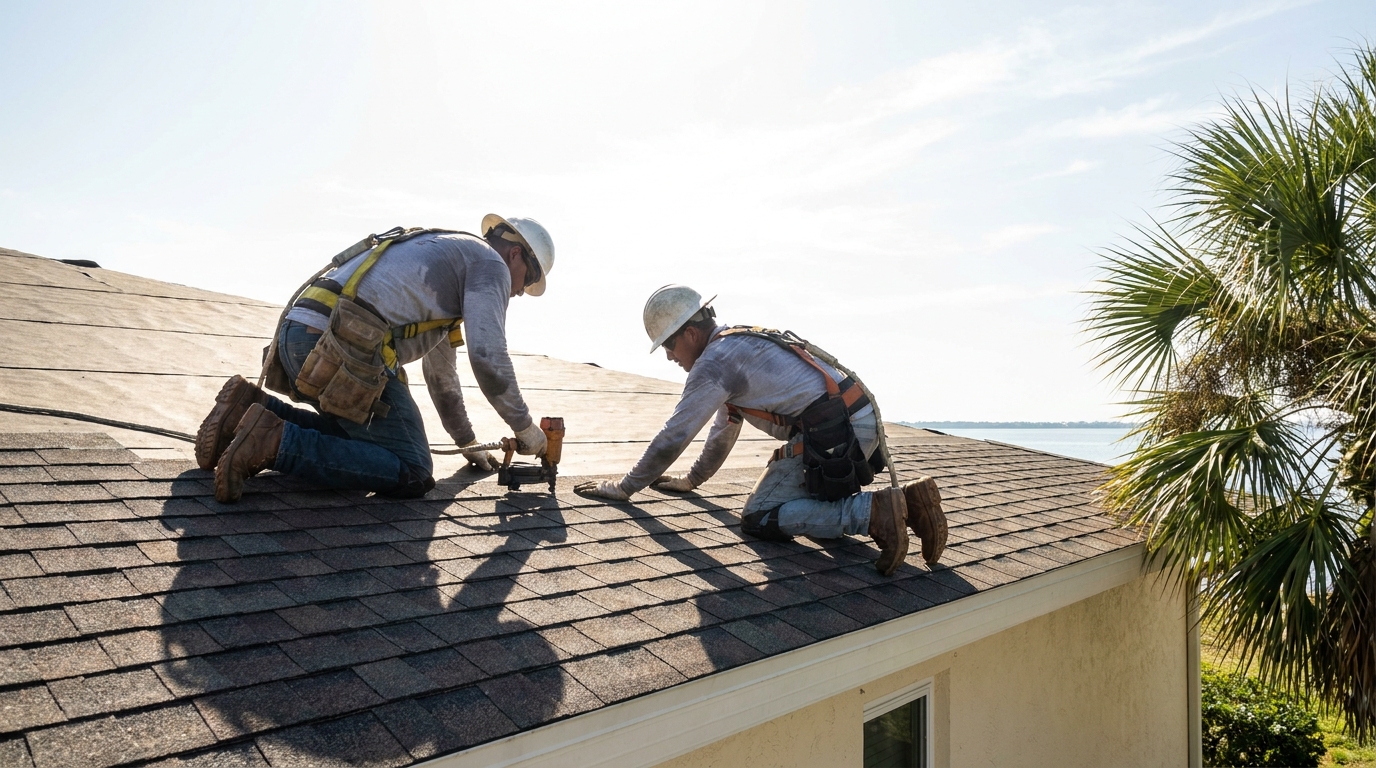
Sealed roof decks are required on all new installations and re-roofs in Naples. The purpose is to reduce water intrusion if wind strips shingles or tiles during a storm — a lesson written into the code after years of hurricane damage across Southwest Florida.
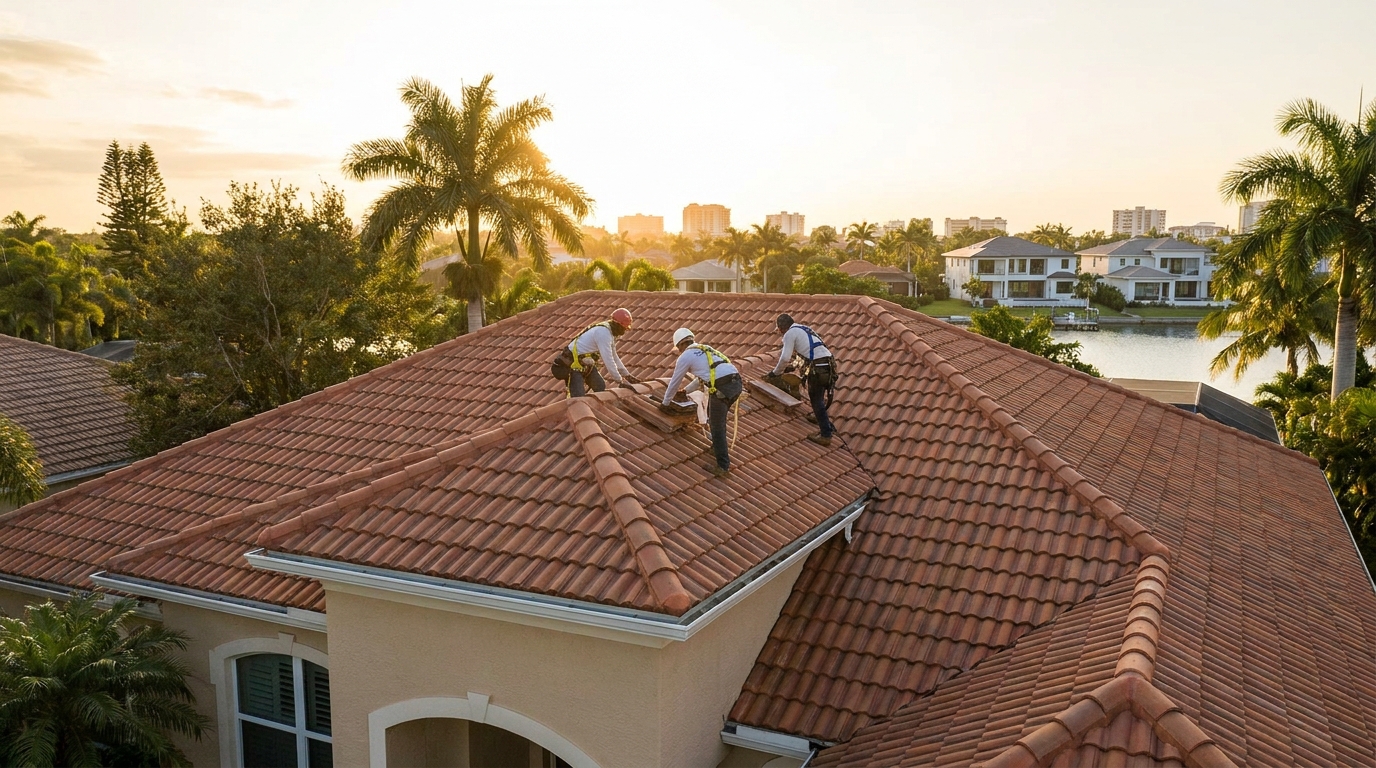
For tile roofs, a mechanically attached anchor sheet is required when re-roofing over an existing self-adhered membrane. This matters on the many tile-roofed homes in neighborhoods like Pelican Bay, Grey Oaks, and Vineyards, where re-roofing a tile system is more involved than a shingle tear-off.
Inspections: Two Are Required, Not One
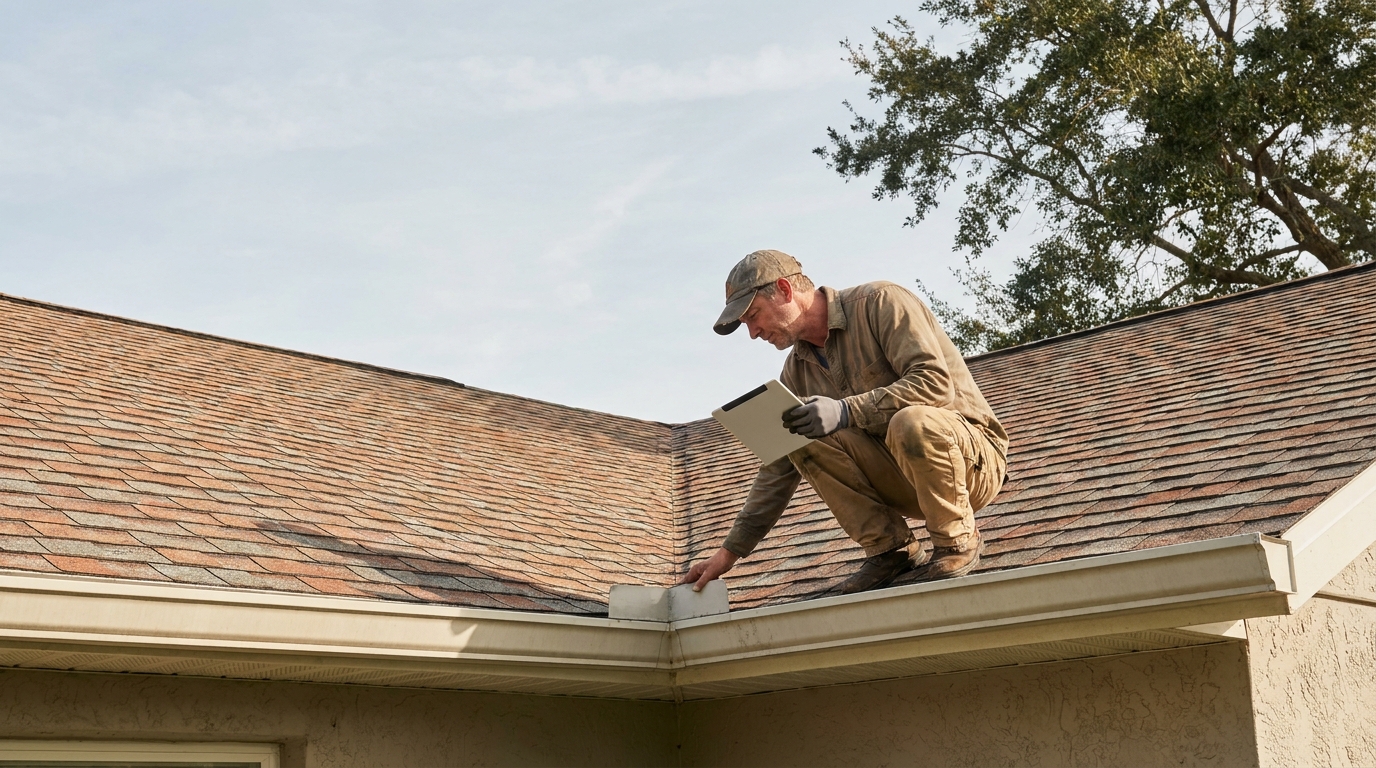
Roofing projects in Collier County require two inspections: a dry-in/rough-in inspection and a final inspection. The dry-in inspection verifies deck condition, fastener patterns, underlayment, and flashing before the finish roofing goes on. The final inspection covers the completed roof system — vents, flashings, penetrations, and product approval compliance.
Inspectors are noticeably strict on wind mitigation documentation and fastening. Missing paperwork or improper installation can delay final sign-off and, just as importantly, affect insurance wind mitigation credits that Naples homeowners rely on to offset premium costs.
How to Vet a Licensed Residential Roofer in Naples, FL
The single most important qualifier is a valid, active Florida roofing contractor license. Under Florida law, a person must be certified or registered to engage in roofing contracting. Only a licensed contractor can pull the permit, with limited exceptions that should be confirmed with the applicable building department before proceeding.
Beyond licensing, evaluate installers on:
- Local experience with Collier County permitting — the county building department and the Naples Building Department have their own rhythms
- Familiarity with Wind-Borne Debris Region product approvals — an installer should be able to name the specific product approval numbers for your material
- Clear scope on the sealed deck, underlayment, and flashing — not just the visible finish material
- A written plan for the two-stage inspection process and who schedules each one
- Wind mitigation documentation handed to you at closeout for your insurance carrier
SCM Roofing, LLC is one of the Naples home roofing contractors that handles this end-to-end — from permitting through wind mitigation paperwork — for homes across Collier County. With 25+ years of experience and a GAF Master Elite certification held by only about 2–3% of roofing contractors nationwide, SCM Roofing brings the kind of full-stack local knowledge that matters when most delays and cost overruns on Naples roof projects come from paperwork, not shingles. Customers have rated SCM Roofing 4.9 stars from 239 Google reviews as of April 2026, consistently praising the team's communication, quality materials, and professionalism.
Timing: When to Start a Roof Project in Naples
The best window for a Naples roof installation is typically the dry season, from late fall through spring, before the summer rainy pattern and the peak of Atlantic hurricane season. Snowbird season overlaps with that window, so scheduling fills up — contractors who are worth hiring tend to be booked several weeks out.
If your CCCL review is in play, add the 4–8 week state review on top of local permitting. Starting the conversation with an installer well before you need the roof done is more useful than trying to compress the timeline later.
Frequently Asked Questions
Do I need a permit for a residential re-roof in Naples?
Who is allowed to pull the roofing permit?
An active, validly licensed Florida roofing contractor, or a qualifying owner-builder under Florida Statute 489.103(7). Any owner-builder exceptions are limited in scope and should be confirmed directly with the applicable building department before proceeding.
What wind speed does my Naples roof need to be designed for?
Design wind speeds are parcel-specific and depend on the building's risk category, exposure category, and location on Collier County's wind zone map. Your installer should confirm the site-specific value on the permit documents; do not rely on countywide generalizations.
Do I need a Miami-Dade Notice of Acceptance for materials?
No. Collier County is not in the High Velocity Hurricane Zone. Standard Florida Product Approval documentation is what applies to Naples roofing permits, though all materials must meet the design pressures required for the specific parcel.
How long does the permitting process take?
It varies by jurisdiction (unincorporated Collier County vs. City of Naples) and by project. Homes seaward of the Coastal Construction Control Line require additional Florida DEP review that can add 4–8 weeks.
What is the 25% repair rule, and does it let me skip a permit?
No. Under Florida law, where a qualifying roof has at least 25% repaired, replaced, or recovered, only the affected portion must meet the current code edition — not the entire roof. This rule limits the scope of code-compliance work required, but it is not a permit exemption. A permit is still required for the work being performed.
Does my Naples roof project need to comply with HOA requirements in addition to county codes?
Yes, in many cases. Collier County communities with active HOAs often require architectural review approval of roofing materials, colors, and product specifications before work begins. A knowledgeable installer will coordinate that submission alongside the building permit process so both approvals are in hand before crews arrive.
The Bottom Line
A residential roof installation in Naples is a permitted, inspected, wind-engineered project — not a weekend job. The installers worth hiring treat the paperwork, product approvals, and two-stage inspection process as core parts of the work, because that's what protects the roof (and your insurance credits) when the next storm arrives.
Homeowners in Naples, FL who want this handled professionally can contact SCM Roofing, LLC at https://scmroofingfl.com or by calling (855) 726-7663 for a free estimate and a walkthrough of the permitting, wind-zone, and inspection requirements that apply to their specific address.