Hiring a residential roof installer in Sarasota, FL comes down to three things: a state-certified license you can verify,, and a contractor who understands what a Gulf Coast roof actually has to withstand. Everything else — shingle brand, warranty length, crew size — matters only after those fundamentals are locked in.
This guide walks through how the local process works in 2026, what the county requires, and how to evaluate a roofer before you sign anything.
Start With License Verification, Not Referrals
Every roofing contractor working on a Sarasota home must hold a Florida state-certified CCC (Roofing Contractor) or CBC (Building Contractor) license issued under Florida Statutes chapter 489. You can verify any contractor's status directly through the Florida Department of Business and Professional Regulation (DBPR) at myfloridalicense.com before signing a contract or letting a crew on your property.
A neighbor's recommendation is a fine starting point, but it isn't a substitute for pulling up the license number, checking that it's active, and confirming the license class matches the work. Unlicensed roofing work in Florida isn't a technicality — it exposes you to insurance denials, warranty voids, and liability if a worker is injured on your roof.
Sarasota County Permit Requirements in 2026
Roof repairs under 100 square feet may be exempt, but almost any substantive repair — and every full replacement — needs a permit before work starts.
The permit process involves in-progress and final inspections. Skipping the permit isn't a shortcut; unpermitted work is subject to stop-work orders, permit corrections, and code-enforcement proceedings through Sarasota County. It also complicates future home sales, since buyers' inspectors and title companies flag unpermitted structural work.
The HB 803 Exemption Coming July 1, 2026
Beginning July 1, 2026, HB 803 may allow some residential roofing or repair work under $7,500 on single-family homes to qualify for a permit exemption. The dollar threshold alone does not automatically confer the exemption — the owner or contractor must still satisfy Sarasota County's documentation and written-request procedures. Because this took effect very recently, county implementation details are still being clarified, and homeowners should confirm current procedures with Sarasota County Building and Permitting Services before assuming their project qualifies.
Coastal and Flood Zone Considerations
Homes in Sarasota's coastal high-wind and flood zones face additional documentation requirements during the permit process — particularly if the reroof qualifies as a substantial improvement. That can include flood compliance inspections and, in some cases, elevation certificates.
This matters across a lot of the Sarasota market: barrier island properties on Siesta Key and Longboat Key, older homes near the bayfront, and neighborhoods west of the Tamiami Trail all sit in wind and flood zones that trigger stricter review. A roofer who works Sarasota regularly will know which additional attachments the county wants and won't stall your project by submitting an incomplete application.
Older Homes and Asbestos Surveys
If your home was built before 1980, Sarasota County may require an asbestos survey before reroofing. That's a common situation in areas like Gulf Gate, parts of downtown Sarasota, and older mainland neighborhoods where mid-century housing stock is still the norm. Build the survey timeline into your project schedule — it isn't optional and can't be back-dated after tear-off begins.
What the Sarasota Roofing Installation Process Actually Looks Like
A typical residential roof installation in Sarasota moves through six stages:
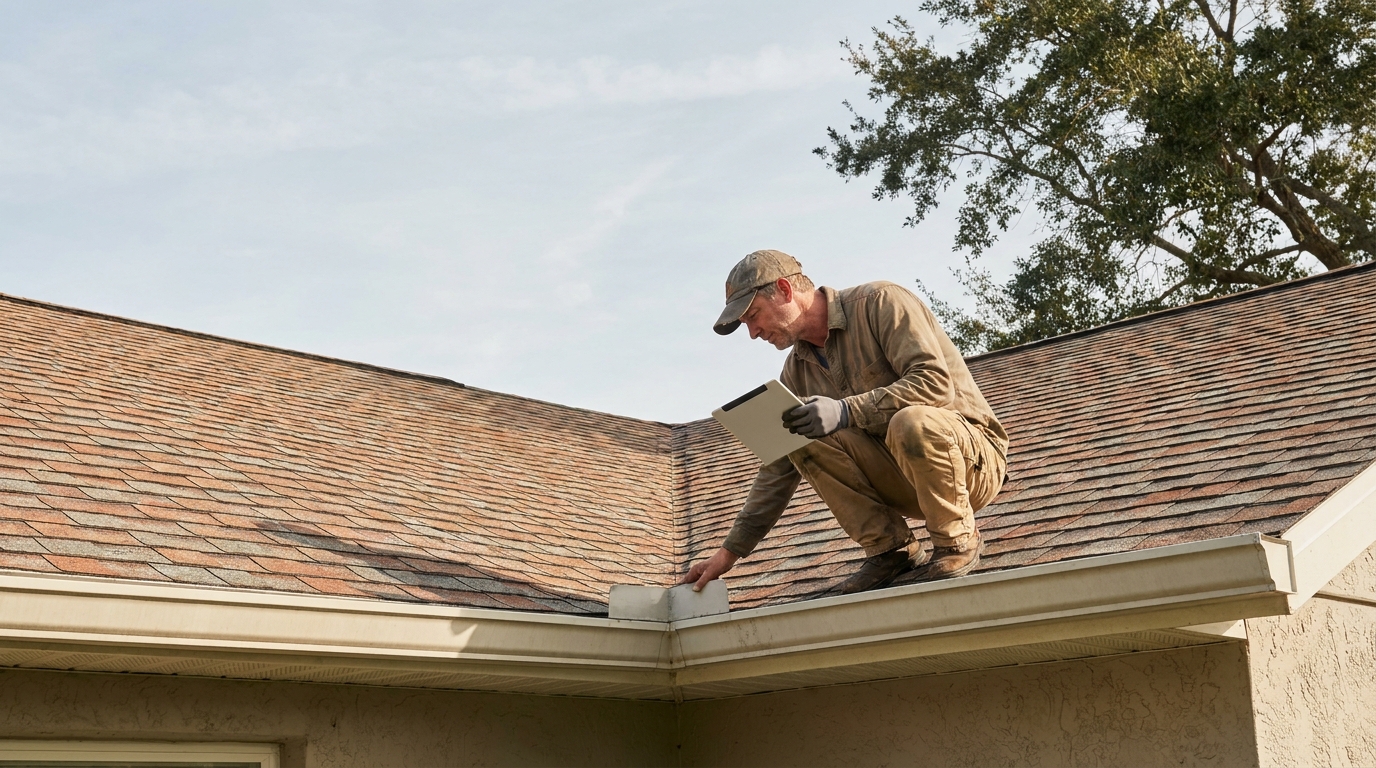
- Inspection and estimate. A licensed roofer measures the roof, documents existing conditions, and identifies deck damage risk.
- Permit application.
- Material delivery and tear-off. The old roof comes off down to the deck, and any rotted sheathing is replaced.
- Underlayment and secondary water barrier. Florida code requires specific underlayment systems for wind resistance — this step is where corner-cutting shows up years later.
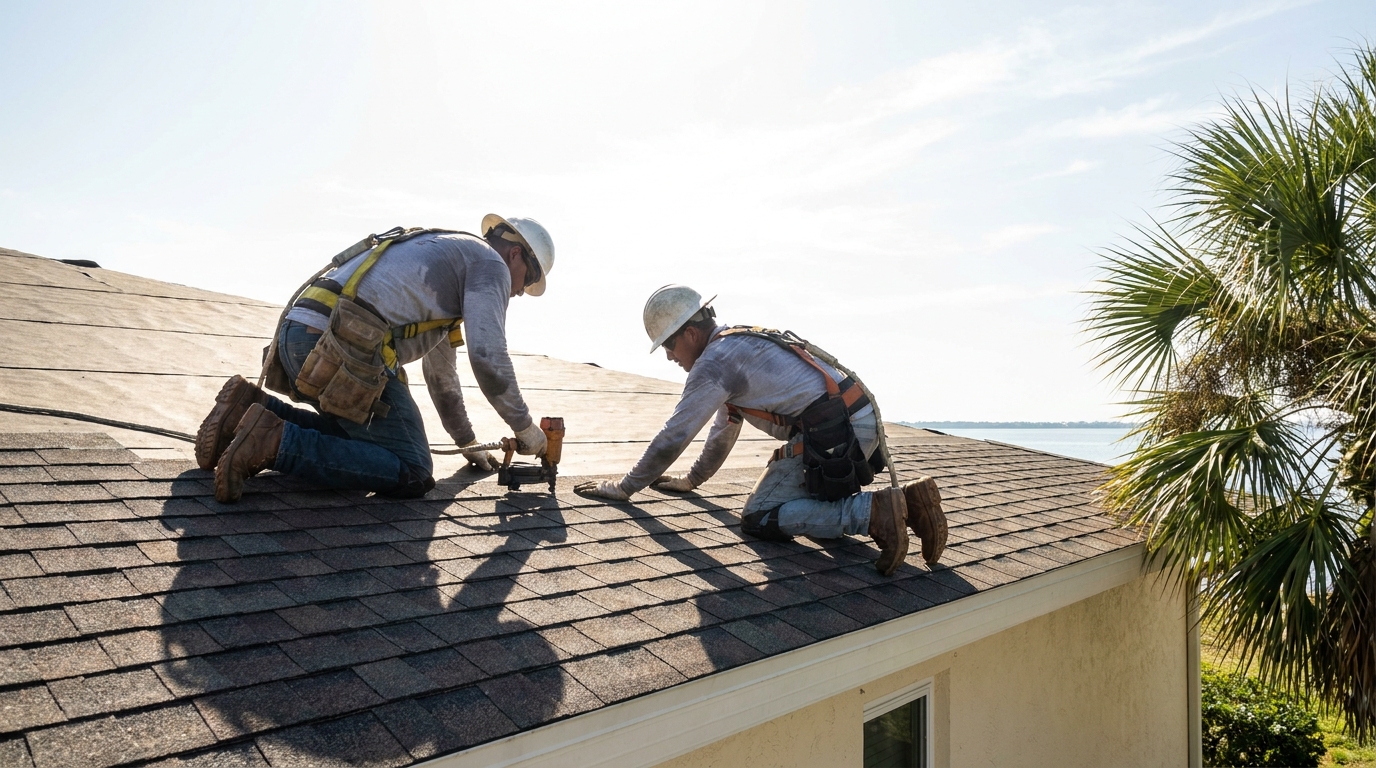
- Primary roof covering installation. Shingles, metal, or tile go on according to the manufacturer's Florida Product Approval specs.
- In-progress and final inspections. County inspectors verify the work at required stages before the permit is closed out.
Companies like SCM Roofing that handle the full permit and inspection sequence in-house tend to keep projects on schedule better than crews who treat paperwork as an afterthought.
How to Evaluate a Residential Roof Installer in Sarasota
Use these criteria, in this order:
- Active Florida CCC or CBC license verified through DBPR at myfloridalicense.com.
- Sarasota County permit history. Ask which recent addresses they've pulled permits at; a local roofer will name streets, not vague neighborhoods.
- Product Approval documentation. Every material used must have a current Florida Product Approval number for wind uplift and impact resistance.
- Written scope of work. Underlayment type, fastener pattern, flashing details, and deck replacement pricing should all be spelled out — not verbal.
- General liability and workers' comp certificates. Ask for current certificates naming you as certificate holder before work starts.
- Manufacturer certifications. Credentials like GAF Master Elite or comparable programs indicate a roofer has met a manufacturer's training and installation standards.
Timing Your Project Around Hurricane Season
The practical window for stress-free reroofing in Sarasota runs from late fall through early spring — after hurricane season winds down and before the summer rain and heat make tear-off logistics harder. Insurers and county inspectors are also less backlogged outside of storm response periods.
If your roof is already compromised heading into June, don't wait for a perfect calendar window. A tarped roof through a named storm is a far worse outcome than a mid-summer install with a licensed crew.
FAQ
Do I need a permit to replace my roof in Sarasota County?
Yes. Repairs under 100 square feet may be exempt.
How do I verify a Sarasota roofer's license?
Check the contractor's CCC or CBC license through the Florida DBPR at myfloridalicense.com. The license must be active and issued under Florida Statutes chapter 489 before any work or permit application.
What happens if a roofer works without a permit?
Unpermitted work in Sarasota County is subject to stop-work orders, required permit corrections, and code-enforcement proceedings. It also creates problems at resale and can void insurance claims tied to the roof.
Will HB 803 let me skip a permit for a small repair after July 1, 2026?
Possibly. Beginning July 1, 2026, some residential work under $7,500 on single-family homes may qualify for exemption, but only if you satisfy Sarasota County's documentation and written-request process. Confirm current procedures with the county before assuming your project qualifies.
Do coastal Sarasota homes need extra paperwork?
Often yes. Homes in flood zones or coastal high-wind areas may require additional flood compliance inspections and elevation certificates, especially when the project qualifies as a substantial improvement.
The Bottom Line
A good residential roof in Sarasota is 20% shingle choice and 80% installation discipline, permit compliance, and local code knowledge. Verify the license, confirm the permit path, and hire a contractor who treats coastal and flood-zone documentation as routine — not as a surprise.
Homeowners in Sarasota, FL who want this handled professionally can reach SCM Roofing, LLC at https://scmroofingfl.com for a free estimate and a walk-through of the permit and installation process for your specific property.