The right way to choose a residential roof installer in Bradenton is to start with two verifications before you ever discuss price: confirm the contractor holds an active Florida license and confirm they will pull a Manatee County permit for your specific address. Everything else — shingle brand, warranty length, crew size — matters, but it matters less than those two gatekeeping steps. Gulf Coast weather, flood-zone overlays, and Florida's permit rules make Bradenton a market where the wrong installer can create problems that outlast the roof itself.
Here's how to evaluate residential roofing installers in Bradenton, FL the way a careful homeowner should.
Start With License and Insurance Verification
Before you sign anything, verify the contractor through the Florida Department of Business and Professional Regulation (DBPR) license search. Unlicensed contracting for roofing work is prohibited under Florida Statutes § 489.127, and hiring an unlicensed contractor can result in fines — plus you inherit the liability if a worker is injured on your property or the work fails inspection.
A legitimate roof installer will readily provide:
- An active Florida Certified Roofing Contractor license number
- Proof of general liability insurance
- Workers' compensation coverage (or a valid exemption)
- A Manatee County business tax receipt where applicable
If a contractor hesitates to hand over these documents, treat that as the answer. Reputable Bradenton installers, including SCM Roofing, LLC, expect this question and have the paperwork ready. SCM Roofing's owner, Scott Marone, holds both a Florida State General Contractor's license and a Roofing Contractor's license (CCC1331132), and the company brings more than 25 years of industry experience to every project.
Confirm They'll Pull the Manatee County Permit
Most residential roofing replacement and substantial repair work in Bradenton requires a building permit issued through Manatee County Development Services, and that permit should be pulled by your Florida-licensed roofing or general contractor — not by you. Manatee County issues roofing permits under either a 'Roof Express' process or a 'Roof Standard' process depending on project scope and qualifications. The Roof Standard process always requires Florida Product Approval documents; other items such as a notice to the building official or building plans may be conditionally required. Contact Development Services before work begins to confirm what your specific project requires.
Be aware that a 9th Edition 2026 Florida Building Code is referenced for some jurisdictions with an effective date of December 31, 2026 — confirm the applicable edition with the Manatee County permitting authority for your specific application.
Be cautious of any installer who suggests skipping the permit to "save time" or "save money." Unpermitted roofing work can lead to stop-work orders, correction requirements, fines, and serious complications when you try to sell the home or file an insurance claim after a storm.
What About the New HB 803 Exemption?
It sounds like relief for small repairs — but read the exclusions carefully before assuming it applies to your roof.
The sub-$7,500 exemption does not apply to:
- Structural work of any kind
- Properties located partially or entirely in a flood hazard area as defined by the Florida Building Code
- Electrical, plumbing, mechanical, or gas work components
For most Bradenton roof projects — especially anything touching decking, trusses, or a home in a flood zone — the standard permit process still applies.
Understand How Flood-Zone Status Changes the Rules
Large portions of Bradenton and coastal Manatee County sit within FEMA-designated flood hazard areas, which is why the HB 803 exemption carveout matters so much locally. Flood-zone status is parcel-specific: if any part of your property lies in a mapped flood hazard area, your roofing project may be subject to additional floodplain review or permit conditions beyond the standard roofing permit — and the standard permit requirement applies regardless of project cost.
Confirm your property's flood status with Manatee County Development Services before assuming any exemption applies. The Manatee County Property Appraiser parcel search can also help you identify your parcel for flood-zone and jurisdiction confirmation. A qualified Manatee County roofing installer should know how to look this up and factor it into the scope. Additional wind-zone or coastal engineering review requirements may also apply to properties closer to the Gulf — another reason local experience matters more than a low bid from someone driving in from out of county.
Note that the permit issuer and local process differ depending on whether your property is in unincorporated Manatee County or within the City of Bradenton. Confirm your parcel's jurisdiction with the relevant building department before work begins.
Weigh the Owner-Builder Route Carefully
Florida allows a narrow owner-builder exception: a property owner may act as their own contractor for an owner-occupied single-family home if they personally apply for the permit, supervise the work, and accept full legal responsibility. It's legal, but it's not casual.
You take on liability for the crew, the code compliance, and any defects. For most Bradenton homeowners — particularly those in flood zones or planning to sell within a few years — hiring a licensed home roofing contractor in Bradenton is the cleaner path. Confirm eligibility directly with the county before proceeding under the owner-builder route.
Evaluate Local Experience, Not Just National Credentials
National shingle-manufacturer certifications are useful signals, but they don't replace local knowledge. A Bradenton roof has to handle summer humidity, afternoon thunderstorms, salt air, and the annual hurricane season that runs June through November. Ask any installer you're considering:
- How many roofs have you installed in Manatee County specifically?
- How do you handle wind-mitigation documentation for insurance credits?
- What's your process if we're in a FEMA flood hazard area?
- Which underlayment and fastening pattern do you recommend for our wind zone, and why?
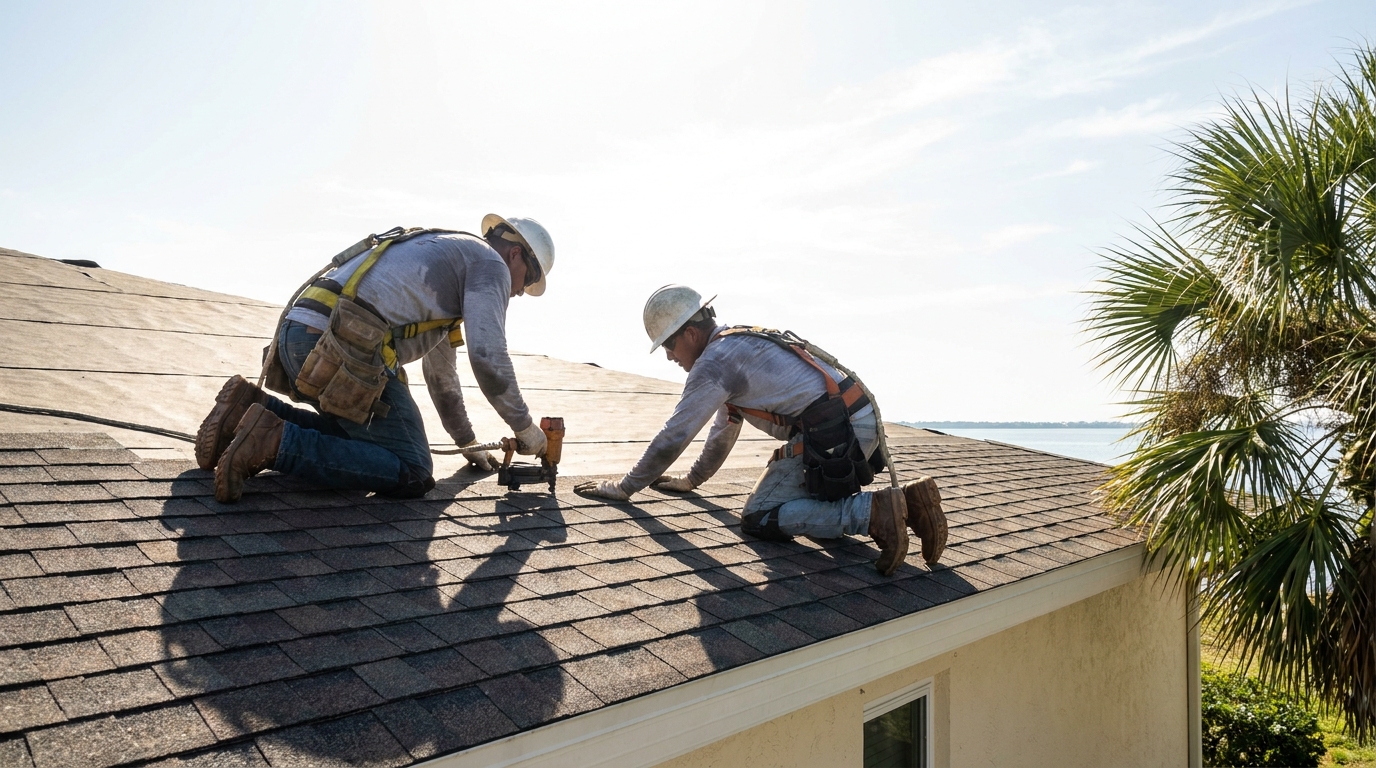
An installer who answers those questions confidently — with specifics about Manatee County code and the Florida Building Code — is showing you the depth of experience that matters when a named storm is forming in the Gulf. SCM Roofing, LLC holds GAF Master Elite Certified status, a distinction earned by roughly 2–3% of roofing contractors nationwide, and installs architectural shingles using six nails per shingle as required in Florida's high-wind zones. The company has earned a 4.9-star rating from 239 Google reviews as of April 2026, with customers consistently praising professional installation and reliable communication.
Get the Scope in Writing Before You Sign
A defensible contract for Bradenton residential roof installation should spell out:
- The permit number (or a commitment that the contractor will pull it)
- Tear-off scope and disposal responsibility
- Decking replacement pricing per sheet
- Underlayment type and fastening specifications
- Shingle or roofing system, color, and warranty terms
- Payment schedule tied to milestones, not a large upfront deposit
- Cleanup and magnetic-sweep for nails
Vague contracts are where disputes start. Specific contracts are how professional installers work. SCM Roofing conducts a full magnetic sweep of the yard and driveway for nails and hauls away all debris at the completion of every shingle roof installation.
Timing: Plan Around Hurricane Season
The best window to schedule non-emergency roof work in Bradenton is generally outside the peak of hurricane season and before the summer rain pattern sets in. Reputable installers book out quickly in spring and early summer, so if your roof is nearing the end of its life, get inspections on the calendar well before June. SCM Roofing recommends scheduling roof inspections twice per year — once before hurricane season in June and once after it ends in November.
After a storm, be especially wary of door-to-door "storm chaser" crews with out-of-state plates. Verifying contractor license status through the Florida DBPR is your best filter — if they're not in the system with an active Florida license, they shouldn't be on your roof.
Frequently Asked Questions
Do I need a permit for a full roof replacement in Bradenton?
Yes, in nearly all cases. Most residential roofing replacement and substantial repair projects in Manatee County require a building permit pulled by a Florida-licensed contractor. Manatee County issues permits under a Roof Express or Roof Standard process depending on project scope. Contact Manatee County Development Services to confirm requirements for your specific address.
Does HB 803 mean I can skip the permit on small roof repairs?
Not if your property is in a flood hazard area, and not for any structural component. Splitting one project into smaller scopes to avoid the threshold is prohibited.
How do I verify a roofing contractor's license in Manatee County?
Use the Florida Department of Business and Professional Regulation (DBPR) official license search to confirm a contractor holds an active Florida Certified Roofing Contractor license before signing any contract. The DBPR can also confirm compliance status and accept complaints about unlicensed activity. Suspected unlicensed contracting should also be reported to the local building department.
What happens if my roofer does unpermitted work?
You may face stop-work orders, correction requirements, fines, and problems with insurance claims and property sales. The homeowner — not just the contractor — often bears the consequences, which is why permit verification is non-negotiable.
Which Florida Building Code edition applies to my Bradenton roofing permit in 2026?
A 9th Edition 2026 Florida Building Code is anticipated with a referenced effective date of December 31, 2026. Confirm the applicable edition with Manatee County Development Services at the time you apply, as it depends on when your application is filed.
What does a professional roof inspection in Bradenton cover?
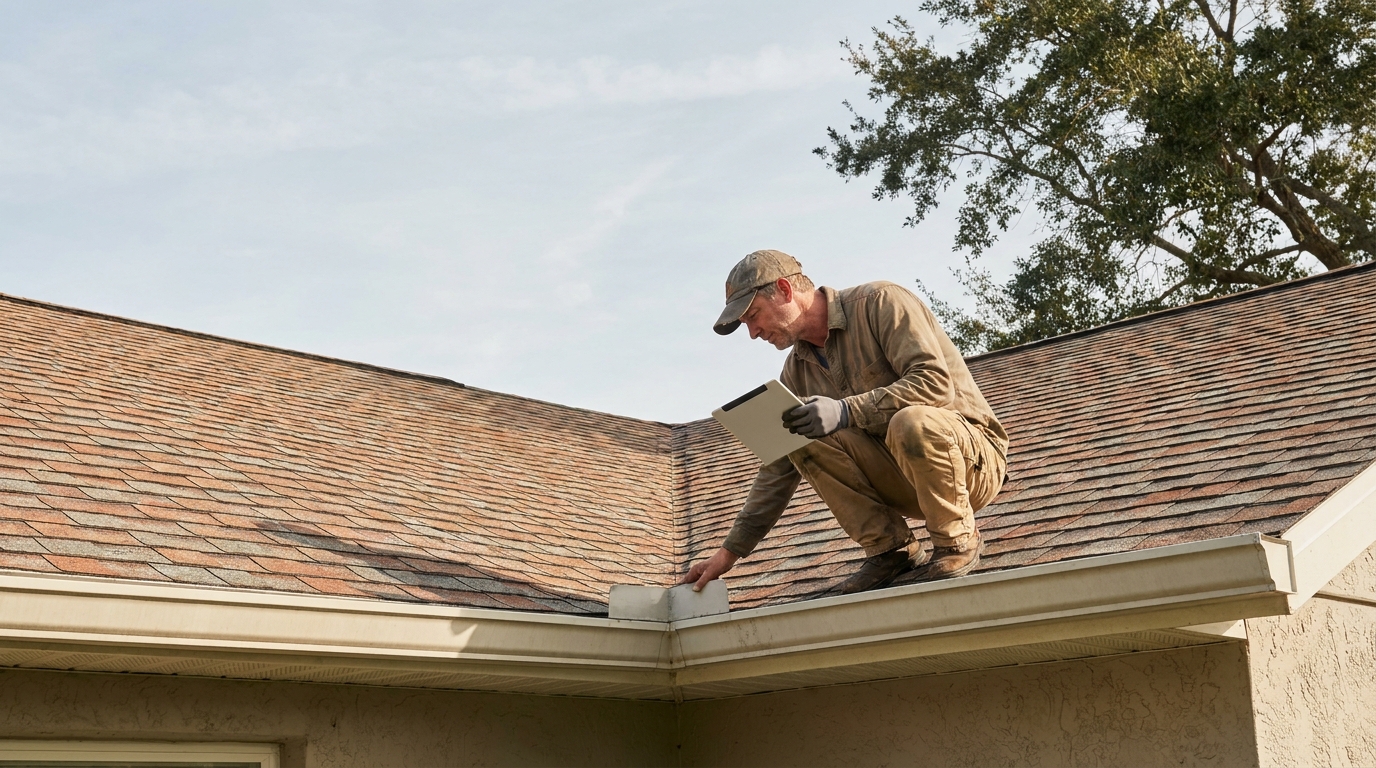
A thorough inspection should include a structural assessment, roofing material condition review, past workmanship review, and an attic and interior check — followed by photo documentation and a written report with prioritized repair recommendations. SCM Roofing, LLC offers free roof inspections with no obligation. Scheduling one before hurricane season each June is a practical way to catch issues before storm conditions expose them.
The Bottom Line for Bradenton Homeowners
Choosing a roof installer in Bradenton comes down to disciplined vetting: verify the Florida license through the DBPR, confirm they'll pull the permit under the correct Manatee County process, check your flood-zone status, and get everything in writing. The installers who welcome that scrutiny are the ones worth hiring.
Homeowners in Bradenton, FL who want this handled professionally — from permit paperwork through final inspection — can reach SCM Roofing, LLC at (855) 726-7663 or https://scmroofingfl.com for a free estimate and a straightforward walkthrough of what your specific roof and address require.
"