After a hurricane hits the Gulf Coast, the right commercial roofer in Tampa is one who holds an active Florida state-certified roofing license (CCC), carries both general liability and workers' compensation insurance, has documented flat-roof and low-slope experience (TPO, modified bitumen, metal), and will coordinate directly with your insurance adjuster on scope and pricing. Everything else — pricing, timeline, warranty — flows from those four filters.
The days after a storm are chaotic. Property managers in Westshore, Ybor City, and along the Gandy corridor field cold calls from crews with out-of-state plates before the wind even dies down. This guide walks you through the commercial-specific vetting criteria that separate a legitimate contractor from a storm-chaser — and what to insist on before signing anything.
Why is vetting a commercial roofer different after a Florida hurricane?
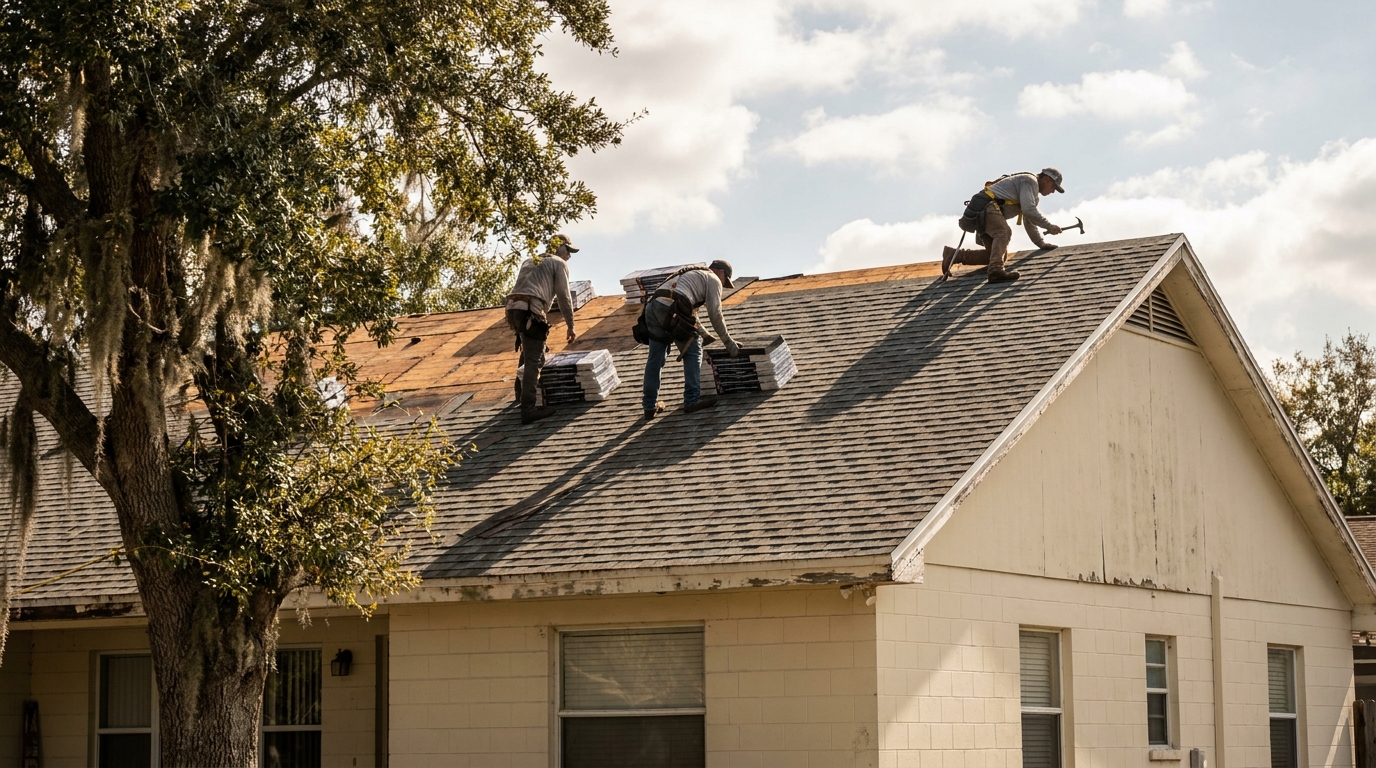
Commercial roof damage after a hurricane involves large square footage, specialized flat-roof systems, tenant business interruption, and multi-party insurance claims — none of which a residential shingle crew is equipped to handle. In Florida's post-storm environment, unlicensed "storm-chasers" flood affected zones like Tampa within 48 hours, and choosing wrong can void warranties, delay claims, and leave you personally liable for uninsured work.
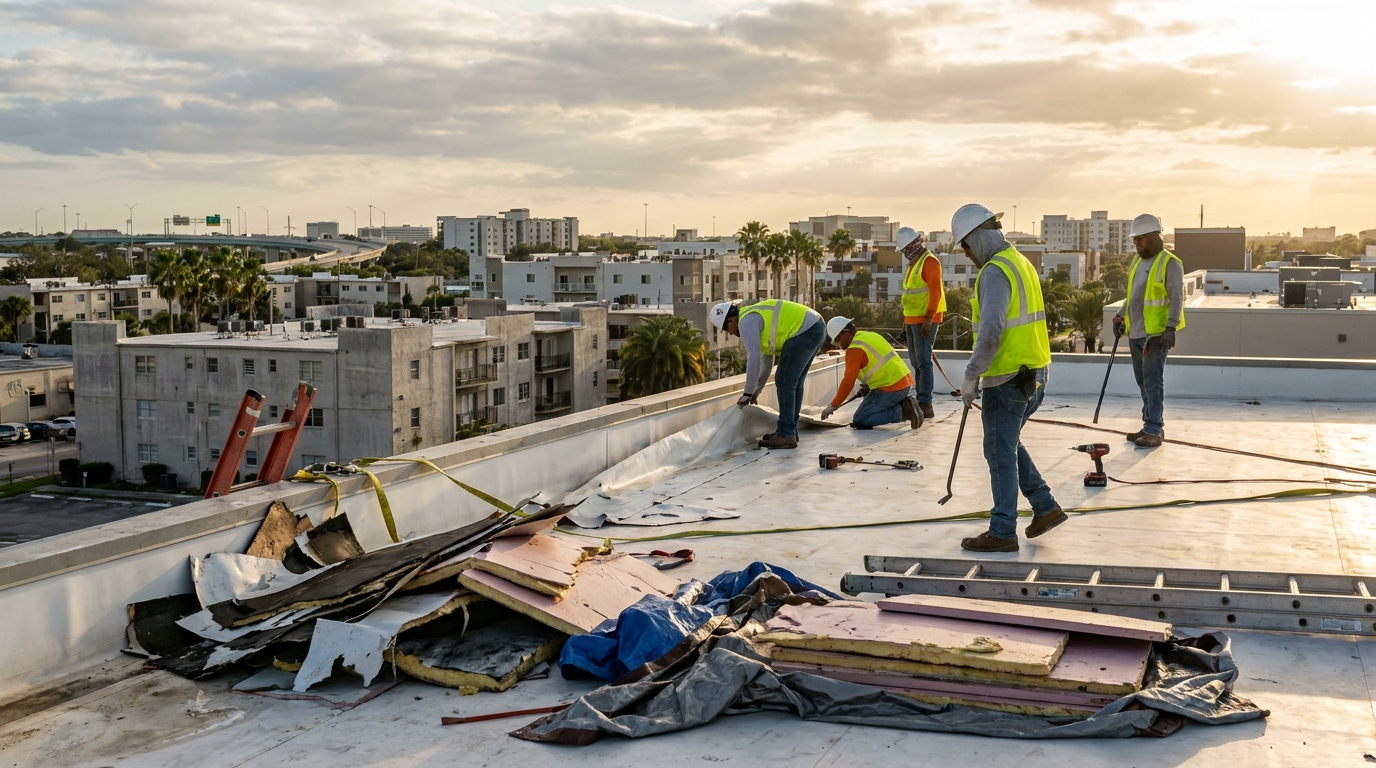
Commercial buildings in Tampa often carry TPO, EPDM, modified bitumen, or standing-seam metal systems over occupied space — restaurants, medical offices, warehouses near the Port of Tampa. A leak isn't just water damage; it's business interruption, tenant claims, and equipment loss. The contractor you pick has to understand that stack.
What licensing and insurance must a Tampa commercial roofer carry?
In Florida, any contractor performing commercial roofing work must hold a state-issued Certified Roofing Contractor license (CCC#) issued by the Florida Department of Business and Professional Regulation (DBPR). They must also carry general liability insurance, workers' compensation coverage for every crew member on your roof, and pull permits through Hillsborough County or the City of Tampa building department.
Verify the license yourself at MyFloridaLicense.com — takes 30 seconds. A local-only "registered" license (RC) is not sufficient for most commercial scopes. SCM Roofing, LLC operates under Florida state certification and is one of the Tampa-area contractors carrying GAF Master Elite status, a designation held by roughly 3% of roofing contractors nationwide according to GAF.
Ask for a Certificate of Insurance (COI) naming your property as the certificate holder — not a screenshot, not a photo, an actual COI emailed from the insurer or agent. If a workers' comp exemption is claimed, ask who's climbing on your roof and how they're covered if they fall.
How should the contractor coordinate with my insurance adjuster?
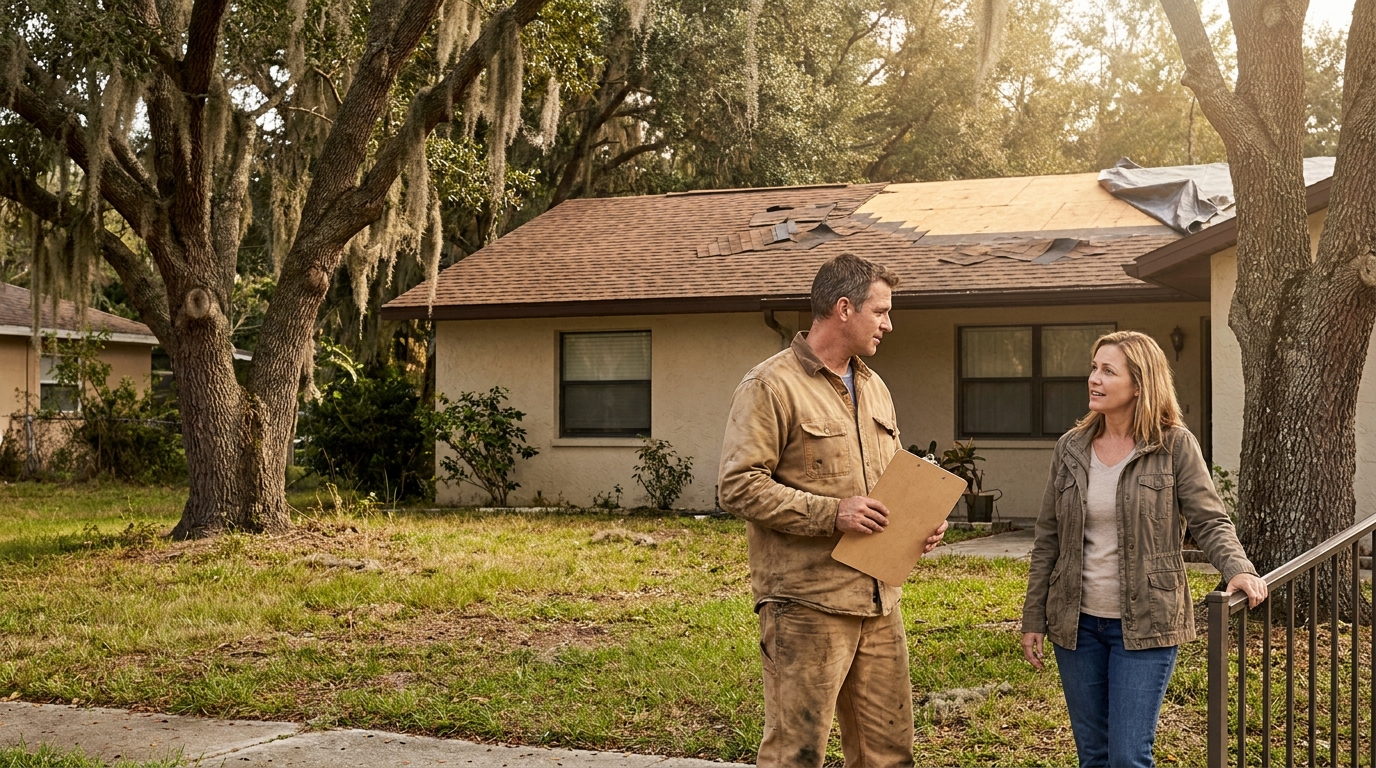
A qualified commercial roofer meets your insurance adjuster on-site, walks the roof together, documents damage with drone imagery and moisture scans, and submits a written scope using Xactimate or a comparable estimating platform the carrier recognizes. They negotiate scope and supplements directly with the adjuster — but they do NOT act as a public adjuster or promise to "handle your claim," which is illegal in Florida for unlicensed parties.
Florida Statute 626.854 restricts public-adjusting activity to licensed public adjusters. A roofer who says "we'll get your whole roof paid for, don't worry about the claim" is either misinformed or crossing a legal line — walk away. What a reputable commercial contractor DOES do is provide accurate scope documentation, meet the adjuster, and supplement for legitimate code-required upgrades under Florida Building Code Chapter 15.
What commercial-specific experience should I look for?
Look for documented experience on the specific roof system your building uses — TPO, PVC, EPDM, modified bitumen, or standing-seam metal — plus references from at least three Tampa-area commercial properties of similar size and system type. General residential roofers, even excellent ones, rarely have the manufacturer certifications (Carlisle, GAF, Firestone, Johns Manville) required to issue enforceable no-dollar-limit warranties on commercial systems.
Ask directly: "What's the last three flat-roof replacements you've done in Hillsborough County, and can I call those property managers?" A commercial contractor with real chops will name buildings and hand you numbers. One who deflects is telling you something.
What should the written proposal include?
A legitimate commercial roofing proposal in Tampa should be a line-item written contract — not a one-page handshake — covering scope, materials with manufacturer and specification, tear-off vs. recover approach, decking replacement pricing per sheet, flashing and edge-metal details, permit fees, warranty terms (labor and manufacturer), payment schedule tied to milestones, and a clear change-order process.
| Proposal Element | What to Verify | Red Flag |
|---|---|---|
| License number | Active CCC# on FloridaLicense.com | RC-only or no number listed |
| Insurance | COI emailed direct from carrier | "We'll send it later" |
| Payment schedule | Milestone-based, deposit under 25% | Full payment upfront |
| Warranty | Written manufacturer + labor terms | Verbal promise of "lifetime" |
| Permit | Contractor pulls in their name | Asked to pull owner-builder permit |
| Scope format | Xactimate or itemized line items | Lump-sum only |
One SCM Roofing customer summarized what to look for well when they wrote that the "contract was not one-sided" and customer service answered every question — that's the tone a commercial buyer should demand from any bidder.
How do I spot storm-chasers and out-of-state operators?
Storm-chasers typically arrive within 48 hours of a hurricane, drive out-of-state or rental vehicles, knock doors unsolicited, pressure you to sign an "Assignment of Benefits" or contingency contract on the spot, offer to waive your insurance deductible (a felony under Florida Statute 817.234), and cannot produce a Florida CCC license or a Tampa business address you can visit.
Florida's 2026 and 2026 AOB reforms limited some of the worst abuses, but the sales tactic hasn't gone away. If a contractor won't leave the proposal for you to review overnight, they're not the contractor you want on a $200,000 commercial re-roof. Legitimate Tampa firms — SCM Roofing among them — have local offices, verifiable review histories (SCM's Google profile shows a 4.9-star rating across 239 reviews), and no problem giving you time to think.
What's a realistic post-hurricane timeline in Tampa?
Expect 2-6 weeks from initial inspection to project start for most commercial re-roofs after a major Tampa hurricane, driven by adjuster availability, permit turnaround at the City of Tampa or Hillsborough County, and material lead times on TPO membrane and insulation. Actual installation on a mid-size commercial building typically runs 1-3 weeks depending on square footage, tear-off complexity, and weather windows during Florida's summer storm pattern.
Anyone promising a start next week during peak post-storm demand is either lying or bumping another customer to take yours — both are warnings.
Frequently Asked Questions
How soon after a hurricane should I have my commercial roof inspected?
Schedule a professional inspection within 7-14 days of the storm, once conditions are safe. Most Florida commercial property policies require prompt notice of loss, and delayed reporting can weaken your claim. Get a licensed Florida roofing contractor on the roof with drone imagery and moisture readings before signing anything, and document all interior damage with dated photos immediately.
Can a residential roofer handle my commercial building in Tampa?
Generally no — commercial low-slope systems like TPO, PVC, EPDM, and modified bitumen require different tools, manufacturer certifications, and installation training than residential shingle work. A residential contractor without commercial manufacturer credentials cannot issue enforceable system warranties on flat roofs. Verify the contractor has installed your specific membrane type on similar-sized Hillsborough County commercial buildings within the past two years.
Is it illegal for a Florida roofer to waive my insurance deductible?
Yes. Under Florida Statute 817.234, it is a third-degree felony for a contractor to offer to pay, waive, or rebate a property insurance deductible as an inducement to sign a contract. Any roofer offering to "eat your deductible" is committing insurance fraud and exposing you to potential claim denial. Report the offer to the Florida Department of Financial Services.
What is GAF Master Elite and does it matter for commercial work?
GAF Master Elite is a manufacturer certification held by roughly the top 3% of GAF-credentialed roofing contractors nationwide, based on licensing, insurance, reputation, and ongoing training standards set by GAF. For commercial buildings using GAF systems, Master Elite status is required to offer certain enhanced no-dollar-limit warranties. SCM Roofing holds this certification, which several customer reviews specifically cite as a reason for selection.
Do I need permits for hurricane roof repairs in Tampa?
Yes, in nearly all cases. The City of Tampa and Hillsborough County require permits for commercial roof replacement and most significant repairs, with inspections tied to Florida Building Code Chapter 15 requirements for high-velocity hurricane zones and wind uplift resistance. Your contractor should pull the permit in their license name — never yours as an owner-builder — and provide the permit number before work starts.
How many bids should I get for a commercial re-roof after a hurricane?
Get three written proposals from licensed Florida commercial roofing contractors with verifiable local references. Compare scope line-by-line, not just bottom-line price — a low bid that skips decking replacement, edge metal, or code-required upgrades is not actually cheaper. Post-hurricane, insurance-approved scope should be the baseline all bidders price against, which makes apples-to-apples comparison much easier.
Closing thought
The pattern that keeps Tampa commercial property owners out of trouble after a hurricane is boring: verify the license, verify the insurance, insist on a written scope, and give yourself 48 hours before signing anything. Storms create urgency; contracts should not. Tampa property managers who want a licensed, GAF Master Elite commercial contractor to walk their roof and coordinate directly with their adjuster can reach SCM Roofing, LLC at https://scmroofingfl.com to start that conversation.