When to Call a Professional vs DIY Roof Repairs
You notice a water stain on your ceiling after a heavy Tampa rainstorm. Your first instinct is probably to climb up there and fix it yourself. It's a reasonable impulse — roofing repairs can look straightforward from the ground, and the cost savings are real.
But the roof repair decision isn't always simple. The wrong call can turn a minor fix into a major structural problem, or land you in the emergency room. This guide breaks down exactly when DIY roofing is reasonable and when professional roof repair is the only responsible choice.
The Baseline Rule: Understand What You're Actually Dealing With
Most homeowners see a symptom — a missing shingle, a drip, a dark spot — not the underlying cause. That gap between symptom and cause is where DIY repairs most often fail.
A single missing shingle might mean exactly that. Or it might mean compromised decking beneath, flashing failure at a nearby penetration, or the early stages of systemic wind damage. You can't know without a proper inspection, and that alone is reason enough to call before you climb.
What a Professional Sees That You Probably Won't
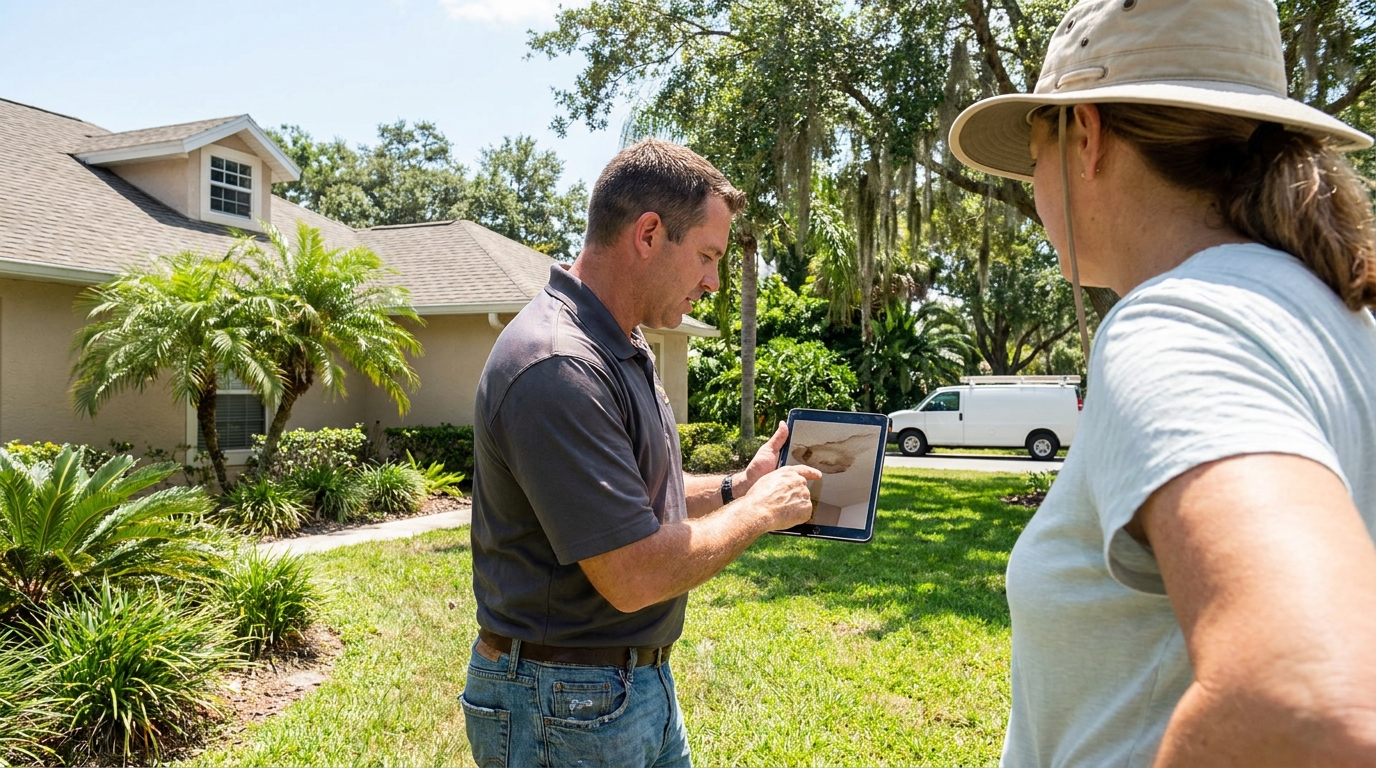
Licensed roofers are trained to read a roof the way a physician reads an X-ray. They look at granule loss patterns, nail pop distribution, ridge line deflection, and flashing integrity — details that don't register as problems to an untrained eye.
In Tampa specifically, the combination of intense UV exposure, hurricane-season wind loading, and heavy tropical rainfall creates damage patterns that differ significantly from what you'd see in other climates. Local experience matters here.
When DIY Roof Repair Is Reasonable
There is a real category of minor roof maintenance that handy homeowners can handle safely. Here's where DIY makes sense:
Clearing Gutters and Roof Debris
Removing leaves, branches, and debris from gutters and low-slope areas is legitimate DIY territory. Use a stable ladder, wear non-slip footwear, and keep both feet on the ladder — not on the roof surface itself.
Applying Roof Sealant Around Small Penetrations
If you have clear visual access to a small gap around a pipe boot or vent flashing and the surrounding material is in good condition, a quality rubberized sealant can be a reasonable temporary fix. Emphasize: temporary. This buys time, not a permanent solution.
Replacing a Single Clearly Isolated Shingle
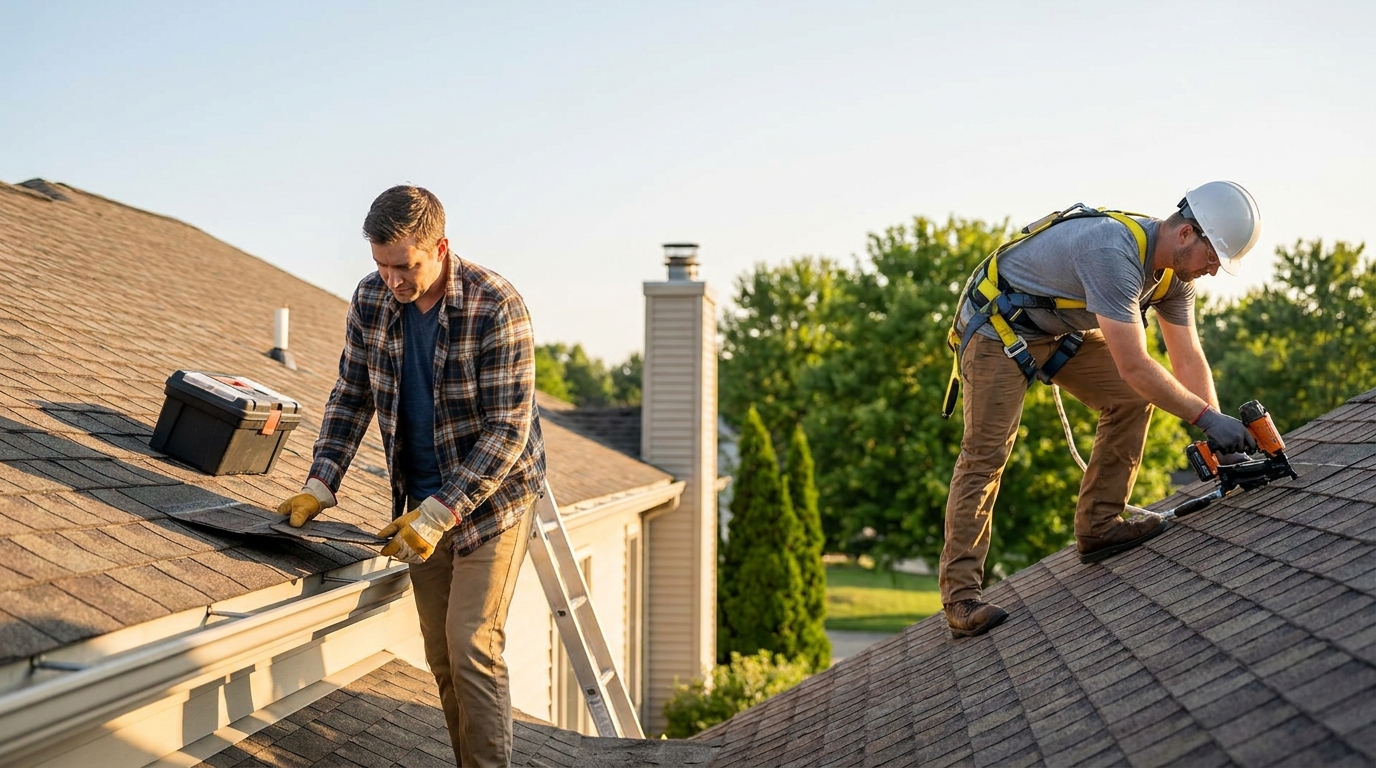
On a low-pitch roof with good access, replacing one visibly damaged shingle is manageable for someone comfortable with basic tools. You'll need to match the existing shingle type and weight, use the correct nail pattern, and seal properly. Even here, improper installation voids manufacturer warranties on adjacent shingles.
The Hard Limit on All DIY Roof Work
If you're not comfortable on a ladder, if the pitch is steep, if the damage is near the ridge or a valley, or if there's any chance of wet or dew-covered shingles — stop. DIY roofing safety depends entirely on honest self-assessment. Falls from roofs are among the leading causes of serious injury in home improvement work.
When You Need to Call a Roofer — No Exceptions
The following situations require professional roof repair. Attempting these yourself risks your safety, your home's structural integrity, and your insurance coverage.
Any Damage Following a Storm
After a significant Tampa storm — especially during hurricane season — the damage you see is rarely the full picture. Wind uplift, impact from debris, and pressure differentials can compromise the roof deck and underlayment without producing obvious surface signs. A licensed inspector needs to assess this before any repair work begins.
Active Leaks or Interior Water Damage
If water is getting inside, the breach point is often not directly above where you see the stain. Water travels along rafters, sheathing, and insulation before dripping. Finding the actual entry point requires experience, and misdiagnosing it means the repair won't work. Contact SCM Roofing, LLC for a professional assessment.
Flashing Repair or Replacement
Flashing — the metal sealing around chimneys, skylights, vents, and roof-to-wall intersections — is where the majority of leaks originate. Proper flashing installation requires understanding step flashing, counter flashing, and waterproofing sequences. Done wrong, it creates a more reliable leak path than if left alone.
Any Work on a Steep-Slope Roof
Steep-slope roofs require professional roofers to use fall arrest systems, roof jacks, and specific footing techniques. Most residential roofs in Tampa fall into this category. At these pitches, professional roofers use fall arrest systems, roof jacks, and specific footing techniques. This is not improvised safety equipment — it's engineered protection. Work at these heights without it is genuinely dangerous.
Damage Covering More Than a Few Square Feet
Once you're looking at anything beyond an isolated shingle or two, you're likely dealing with underlayment, decking, or systemic issues that require a full assessment and potentially a permitted repair. Tampa-Hillsborough County has specific building code requirements for roofing work. Permitted repairs protect you at resale and ensure the work meets wind mitigation standards.
Signs of Structural Deflection
If your roofline shows sagging, soft spots when walked on, or visible waviness in the decking, this is a structural issue — not a surface repair. Get a professional inspection immediately. This category is never a DIY situation.
The Real Cost Comparison: DIY vs Professional Roof Repair
It's tempting to frame this as money saved versus money spent. The math is more complicated than that.
A botched DIY repair that leads to water intrusion can cause mold growth, rotted decking, and damaged insulation — turning a few hundred dollars of roofing work into a multi-thousand-dollar remediation project. Insurance companies also scrutinize claims more closely when unpermitted or unprofessional work is involved in the damage chain.
Professional roof repair, done correctly the first time, is almost always the more cost-effective path when the scope involves anything beyond basic maintenance.
What to Look for When Hiring a Roofer in Tampa
If you've decided — correctly — to call a professional, here's what separates a reliable contractor from one you'll regret hiring.
- Florida state licensing: Verify the contractor holds a current Florida Certified Roofing Contractor license. This is non-negotiable.
- GAF Master Elite certification: This manufacturer designation indicates advanced installation training and the ability to offer enhanced warranty coverage. Few contractors qualify.
- Clear, non-one-sided contracts: A legitimate contractor provides a written contract that protects both parties, outlines scope, materials, and timeline explicitly.
- Documented inspection process: You should receive photos and a written explanation of what needs repair and why — not just a dollar figure.
- Local references and verifiable reviews: Tampa homeowners should look for contractors with a documented track record in this specific market.
SCM Roofing, LLC holds GAF Master Elite certification — one of the factors a recent customer specifically called out when comparing multiple bids. As that customer noted, they reviewed the contract carefully and found it was "not one-sided," which matters when you're making a significant investment in your home.
Frequently Asked Questions: Roof Repair Decisions in Tampa
Can I patch a roof myself to stop a leak temporarily?
A temporary patch with roofing cement or a tarp can limit immediate damage while you wait for a professional. It is not a substitute for proper repair. Be honest with your insurer about what was done and when.
Will my homeowner's insurance cover professional roof repairs in Tampa?
Coverage depends on your policy and the cause of damage. Storm and wind damage is typically covered; wear and maintenance issues generally are not. A licensed roofing contractor can document damage in ways that support the claims process. DIY repairs can complicate or void coverage.
How do I know if damage is storm-related or just wear?
This is exactly the kind of determination that requires a trained inspector. Storm damage often appears as granule loss patterns, cracked tabs along a directional axis, or impact marks on soft metals like flashing and gutters. Wear presents differently. A professional assessment is the only reliable answer.
Is it safe to walk on my roof to inspect it?
Generally, no — unless you have roofing experience, proper footwear, and fall protection. For most homeowners, binocular inspection from the ground, combined with attic inspection from inside, is safer and often more informative than walking the surface. If you need someone on the roof, let a professional do it.
How long does a professional roof repair typically take?
Minor repairs — isolated shingle replacement, small flashing repairs — are often completed in a few hours. More involved work depends on scope. A well-organized crew handles most residential repairs efficiently; one customer wrote that the installation team "arrived when they said and worked meticulously together from the start to the finish."
Does DIY roof repair affect my homeowner's insurance policy long-term?
Yes, it can. Unpermitted or improperly documented DIY repairs may be flagged during policy renewals or claims reviews. Some insurers in Florida will reduce coverage or deny claims if prior non-professional work contributed to the damage. Keeping a record of any DIY maintenance — and its scope — protects you if questions arise later.
How soon after a Tampa storm should I have my roof inspected?
As soon as safely possible — ideally within a few days. Many insurance policies require timely reporting of storm damage, and delays can complicate the claims process. Even if no obvious damage is visible from the ground, a professional inspection after a significant storm is the only reliable way to rule out concealed underlayment or deck damage.
Making the Right Roof Repair Decision
The honest answer to when to call a roofer versus DIY comes down to two questions: Is this work within your actual skill set, and is it safe to do without professional equipment and training?
For most roof damage scenarios — especially in Tampa's storm-prone environment — the answer points toward professional roof repair. The risk profile of getting it wrong is simply too high, and the cost difference is smaller than most homeowners expect once you account for materials, time, and the possibility of compounding the original problem.
DIY roofing safety is real, but it depends on honest limits. Cleaning gutters? Reasonable. Resealing a pipe boot on a walkable low-slope roof? Manageable. Anything involving active leaks, storm damage, steep pitches, or structural concerns? That's a professional's job.
Tampa homeowners who want a professional assessment can reach SCM Roofing, LLC at scmroofingfl.com or by calling (855) 726-7663 for a free estimate. They cover Tampa and surrounding areas, hold GAF Master Elite certification, and have earned a 4.9-star rating across 239 Google reviews as of April 2026 from local homeowners who went through exactly this decision.
"