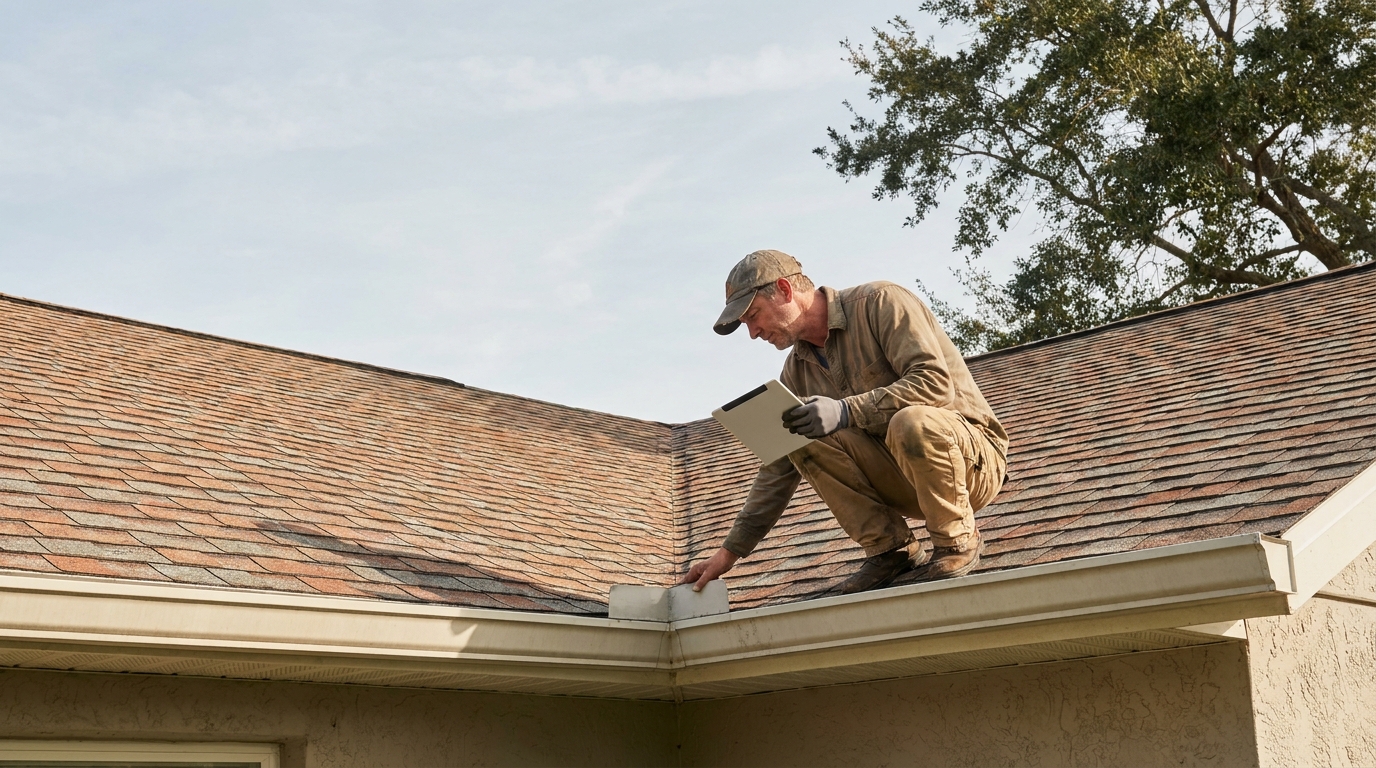
If your Tampa roof only leaks after heavy rain, the culprit is almost always compromised flashing, cracked or lifted shingles, clogged valleys, or worn pipe boot seals — not the roof field itself. Wind-driven Gulf Coast downpours force water sideways and upward under materials that hold up fine in lighter weather, which is why the leak seems to appear from nowhere. Identifying the entry point quickly is the difference between a minor repair and interior drywall, insulation, and framing damage.
What are the most common causes of roof leaks in Tampa, FL after heavy rain?
The most common causes are failed flashing around chimneys, skylights, and wall junctions; cracked or missing shingles from wind uplift; deteriorated pipe boots and vent seals; clogged or undersized valleys; and backed-up gutters that force water under the drip edge. Tampa's tropical downpours and 60+ mph gusts expose weaknesses that stay hidden in calmer weather.
Flashing failure is the number-one leak source we see across Hillsborough County. Aluminum and galvanized flashings expand and contract daily under Florida sun, eventually pulling away from sealant beds. When a sideways rain hits, water runs behind the flashing and drips into the attic several feet from the actual entry point.
Pipe boots — the rubber collars around plumbing vents — are the second-most common failure. Standard neoprene boots typically crack within 8 to 12 years in Tampa's UV-heavy climate, well before the shingles themselves fail. SCM Roofing, LLC replaces dozens of these every rainy season, often on roofs that otherwise look fine from the ground.
Why does my Tampa roof only leak during heavy rain and not light showers?
Heavy rain in Tampa is almost always wind-driven, meaning water travels horizontally and upward under shingles, flashing, and drip edges. Light showers fall vertically and shed normally. Additionally, high-volume rain overwhelms clogged gutters, undersized valleys, and marginal underlayment gaps that handle small amounts of water without complaint.
This is why homeowners in South Tampa, Seminole Heights, and Carrollwood often go months between leaks — then experience three in a single August afternoon. The roof isn't suddenly failing; the storm is simply testing it in a way a drizzle never does.
Where do Tampa roof leaks usually originate?
Roof leaks in Tampa typically originate at penetrations and transitions rather than in the open shingle field. The top entry points are chimney flashing, plumbing vent boots, skylight perimeters, valley intersections, roof-to-wall junctions, and the drip edge along eaves and rakes. Attic leaks often appear several feet from the actual entry due to water tracking along rafters.
| Leak Source | Typical Age at Failure | Repair Urgency |
|---|---|---|
| Pipe boot seal | 8–12 years | High — replace within days |
| Step/chimney flashing | 15–20 years | High — active leak likely |
| Cracked or lifted shingles | After any storm | Medium — tarp then repair |
| Clogged valley or gutter | Any age | Low–Medium — clear immediately |
| Skylight perimeter seal | 10–15 years | High — reflash, don't recaulk |
| Worn underlayment | 20+ years | Reroof consideration |
How does Tampa's climate accelerate roof leaks?
Tampa's climate combines intense UV exposure, near-constant humidity, salt air from the Gulf, and roughly 50 inches of rainfall annually — with most of it falling in violent afternoon storms between June and September. This punishes asphalt shingles, dries out sealants, corrodes metal flashings, and degrades rubber boots two to three times faster than in temperate climates.
Hurricane season, which the National Hurricane Center defines as June 1 through November 30, adds pressure differentials that lift shingles from their adhesive strips. Even a tropical storm that never makes landfall can loosen enough tabs to cause leaks during the next ordinary downpour. Roofs in coastal areas like Davis Islands and Bayshore Beach see additional salt corrosion on fasteners and flashings.
Can I temporarily stop a roof leak during a Tampa storm?
Yes — for an active leak, place a bucket under the drip, poke a small hole in any bulging ceiling to relieve water pressure, and move belongings clear. Do not go on the roof during a storm. Once weather clears, a heavy-duty tarp secured with 2x4 furring strips over the suspected area buys time until a licensed roofer can inspect and repair properly.
Avoid consumer-grade roof sealants and spray products applied to wet surfaces — they trap moisture and complicate the eventual repair. Document everything with photos and video before any temporary work; this matters for homeowner's insurance claims, which in Florida must generally be filed within one year of the date of loss under state statute.
When should Tampa homeowners call a roofer for a leak?
Call a licensed Florida roofing contractor immediately if you see active dripping, water stains spreading on ceilings or walls, sagging drywall, or daylight through the attic decking. Also call if shingles are visibly missing, curled, or scattered in the yard after a storm. Waiting even a few weeks in Tampa's humidity invites mold, rotted decking, and insulation damage that dwarfs the original repair cost.
Florida requires roofing work to be performed by a state-licensed contractor (CCC or CGC license), and Hillsborough County requires permits for most repairs beyond minor patching. SCM Roofing, LLC handles the permitting, inspection coordination, and manufacturer warranty documentation as part of standard repair work — important because uninsured or unlicensed work can void both your homeowner's policy and any remaining shingle warranty.
What should you look for in a Tampa roof leak repair company?
Look for a Florida state license, active general liability and workers' compensation insurance, manufacturer certifications like GAF Master Elite, verifiable local reviews, transparent written estimates, and a willingness to show you photos of the actual damage before quoting. Avoid door-knockers after storms, contractors demanding full payment upfront, and anyone unwilling to pull required Hillsborough County permits.
SCM Roofing, LLC holds GAF Master Elite certification — a designation held by roughly 2% of roofing contractors nationwide — and carries a 4.9-star average across 239 Google reviews. One recent reviewer noted the company was "GAF Master Elite Certified" and stood out for reasonable pricing and a contract that wasn't "one-sided," a fair summary of what Tampa homeowners should demand from any contractor working on their home.
Frequently Asked Questions
How much does emergency roof leak repair cost in Tampa?
Emergency roof leak repairs in Tampa typically range from $400 to $1,500 for common issues like pipe boot replacement, flashing resealing, or shingle repair. More complex repairs involving chimney reflashing, decking replacement, or skylight resealing generally run $1,500 to $4,000. After-hours or tarp-only emergency service adds $250 to $600. Always get an itemized written estimate before authorizing work.
Will my Tampa homeowner's insurance cover a roof leak?
Florida homeowner's insurance generally covers sudden, accidental damage from a named storm, wind event, or falling object — but not gradual wear, poor maintenance, or long-term leaks. Under current Florida statute, you must file a claim within one year of the date of loss. Document damage immediately with photos, and get a professional inspection report before contacting your insurer.
How long can I wait to fix a leaking roof in Tampa?
You should address any active roof leak within 24 to 72 hours in Tampa's climate. High humidity accelerates mold growth in wet insulation and drywall within 48 hours, and repeated afternoon storms during summer months compound damage rapidly. Delaying repair often turns a $500 flashing job into a multi-thousand-dollar decking and drywall replacement.
Can a roof leak in one spot but the damage appear elsewhere?
Yes — this is extremely common. Water enters at a penetration or flashing, then travels along rafters, decking seams, or truss chords before dripping into the attic or through a ceiling. A stain in your living room may originate from a pipe boot 15 feet away. This is why probing the roof from above requires experience, not guesswork.
Do I need a permit to repair a roof leak in Hillsborough County?
Minor repairs under 100 square feet or single-shingle replacements typically do not require a permit in Hillsborough County, but any repair involving decking replacement, structural work, or replacement of more than 25% of the roof section generally does. Florida's 25% rule may also trigger full-roof replacement requirements. A licensed contractor will determine and pull required permits.
Why does my roof leak return after being repaired?
Recurring leaks after repair usually mean the original entry point was misdiagnosed, or a second failure point exists nearby. Contractors who apply sealant to symptoms rather than reflashing or replacing failed components create temporary fixes that fail in the next heavy rain. Insist on a repair scope that identifies the source, not just the drip location, and get a written repair warranty.
Getting the leak handled
A roof leak that only shows up in heavy Tampa rain is your home telling you a specific component has failed — usually flashing, a pipe boot, or a valley — and the storm is exposing it. Left alone through a Gulf Coast summer, that small failure compounds fast. Readers in Tampa who want the leak diagnosed and repaired by a licensed, GAF Master Elite–certified team can reach SCM Roofing, LLC at https://scmroofingfl.com to schedule an inspection.