If your Tampa roof is showing widespread granule loss, sagging decking, daylight through the attic, repeat leaks in different spots, or it's crossed the 20-year mark on asphalt shingles, you're past the repair threshold. In Gulf Coast conditions, patching a roof with any two of these signs typically costs more over 24 months than replacement would have — and leaves you exposed heading into hurricane season.
Tampa homeowners tend to hear the same advice from every contractor who walks the roof: "we can patch that." Sometimes that's true. Often it's the answer that sells the smallest invoice today and the biggest one 18 months from now. The harder question — the one worth answering honestly — is whether your roof has crossed the point where repair dollars stop earning their keep.
Below are the five signs that move a roof from the repair column into the replacement column in the Tampa market. Each one is framed as a tipping point, not a symptom. When you see one clearly, replacement is usually the cheaper long-term move. When you see two, it almost always is.
Sign 1: Is widespread granule loss a repair or a replacement issue in Tampa?
Widespread granule loss is a replacement issue, not a repair issue. Once the ceramic granules that shield asphalt shingles from UV are gone across large sections of the roof, the asphalt underneath cooks in Tampa's sun and fails within one to three years. Spot repairs cannot restore UV protection to shingles that have already lost it.
You'll see this as bald, shiny patches on the shingles themselves and heavy sediment in your gutters and downspout splash zones. In neighborhoods like Seminole Heights and South Tampa, where mature oak canopies alternate with brutal afternoon exposure, we at SCM Roofing see granule loss accelerate on the south and west slopes years before the north side shows wear.
If more than a third of the field is losing granules, replacement is the economically rational call. Patching healthy-looking sections while the rest of the roof degrades on the same timeline just delays the inevitable — and usually by less than you'd hope.
Sign 2: When does a sagging or spongy roof deck mean replacement is unavoidable?
A sagging roofline or spongy feel underfoot means the plywood decking beneath your shingles has absorbed moisture and lost structural integrity. At that point, no shingle repair — no matter how skilled — solves the problem. The decking itself has to come off and be replaced, which means the roof covering comes off with it.
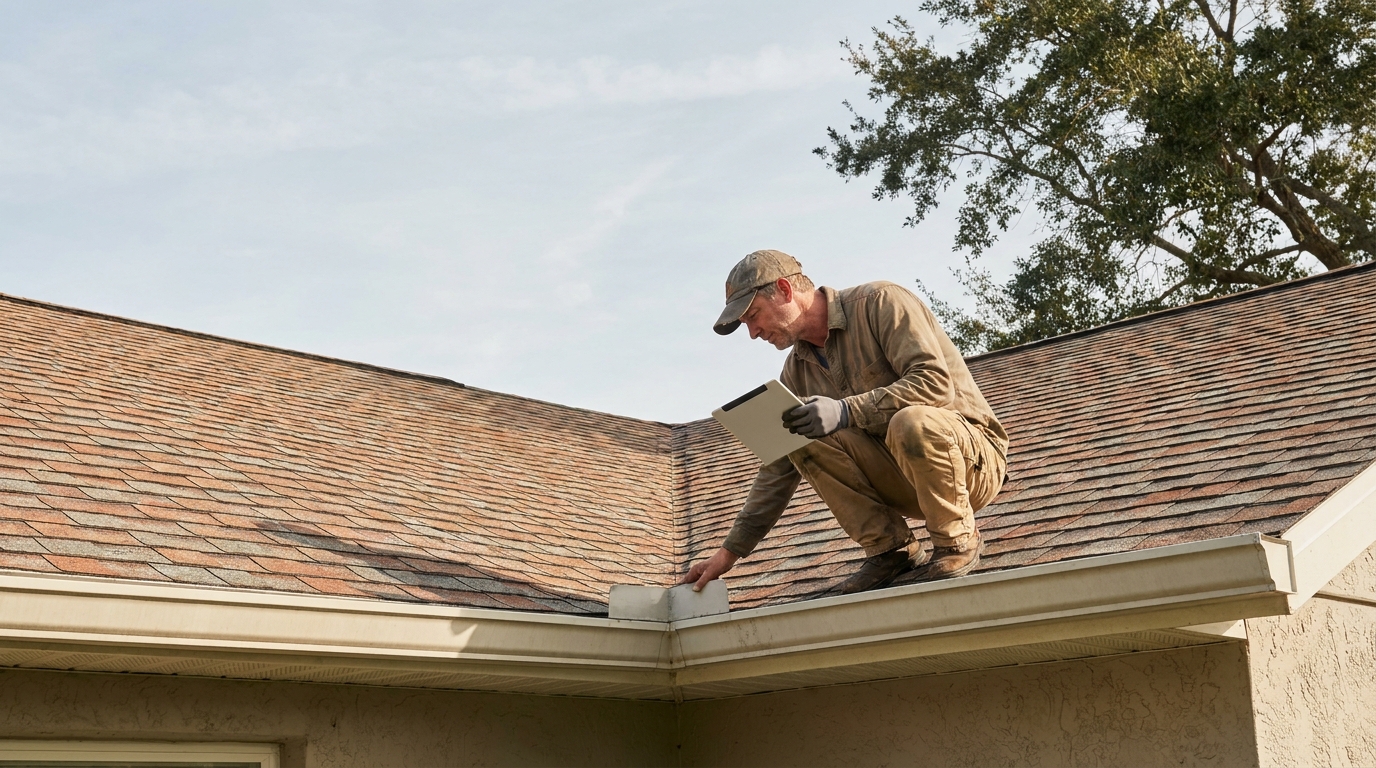
In Tampa's humidity, decking rot is often invisible from the ground until it's advanced. Warning signs include visible dips between rafters, shingles that look wavy in raking light, and a soft, trampoline-like feel when a roofer walks the surface. Once decking fails, insurance carriers in Florida will frequently decline to renew coverage on repairs alone — they want the full assembly restored.
This is the sign that makes the decision for you. If a licensed roofer confirms sagging decking, you're replacing the roof; the only remaining question is when.
Sign 3: Does daylight in the attic always mean the roof is past repair?
Daylight visible through your attic boards almost always means the roof is past repair. If light is getting in, water is getting in — and in Tampa, where afternoon storms drop inches of rain in an hour, even pinhole openings translate to insulation damage, mold, and drywall staining within a single wet season.
Small, isolated gaps around a single vent or pipe boot can sometimes be flashed and sealed. But diffuse light through multiple areas of the decking or along the ridge indicates systemic breakdown of the underlayment, fasteners, and flashing. That's not a patch job — that's a compromised weather barrier.
Homeowners in Tampa often discover this after climbing into the attic to check for a suspected leak. If you see light in more than one location, stop looking for the leak and start pricing a replacement. The underlying membrane has failed as a system.
Sign 4: How many leaks in different spots justify replacing instead of repairing?
Two or more active leaks in separate areas of the roof — especially leaks that appear after routine rain rather than only during hurricanes — signal a system at end of life. A single leak is a repair. Multiple leaks in different locations mean the failure points are distributed, and chasing them one at a time typically costs more over two years than replacing the roof outright.
The math is straightforward. A qualified Tampa repair on flashing, boot, or valley work commonly runs $500 to $1,500 per incident. When you're paying that three or four times in a rolling 18-month window, you've spent a meaningful fraction of a replacement without gaining any warranty, any insurance benefit, or any new service life.
The tipping point isn't a leak — it's the pattern. If your ceiling stain map looks like more than one dot, the roof is telling you what it needs.
Sign 5: When does age alone justify replacing a Tampa roof?
Age alone justifies replacement when an asphalt shingle roof passes 20 years in Tampa, a tile roof passes 40, or a metal roof passes 40 to 50 — even if it looks acceptable from the driveway. Gulf Coast UV, salt air, and hurricane cycling shorten every manufacturer's stated lifespan, and Florida insurers increasingly refuse to write or renew policies on shingle roofs older than 20 years regardless of condition.
The insurance piece is the practical trigger for most Tampa homeowners. Citizens Property Insurance and most private carriers now inspect roof age at renewal, and a roof that's still "functional" on paper can still cost you your policy. Replacing before that letter arrives is usually cheaper than replacing after it.
If your roof was installed before 2026 and hasn't been replaced since, you're almost certainly at or past the useful-life threshold — hurricane exposure over that period does more damage than most homeowners realize.
Repair vs. replacement: how the economics compare in 2026
The clearest way to make the decision is to lay out the two-year total cost of ownership side by side. Below is how the tradeoff typically breaks down for a Tampa home when one or more of the five signs above is present.
| Situation | Repair Path (2-year cost) | Replacement Path | Better Long-Term Call |
|---|---|---|---|
| Isolated leak, roof under 15 yrs | $500–$1,500 | $14,000–$25,000+ | Repair |
| Widespread granule loss | $2,000–$4,000 (cosmetic only) | $14,000–$25,000+ | Replacement |
| Sagging decking confirmed | Not viable | $16,000–$28,000+ | Replacement |
| Multiple leaks, different areas | $3,000–$6,000+ likely recurring | $14,000–$25,000+ | Replacement |
| Roof age 20+ years | Repairs may void insurability | $14,000–$25,000+ | Replacement |
Ranges reflect typical Tampa-market pricing for standard architectural shingle and are influenced by roof pitch, decking condition, and Florida code compliance for secondary water barriers under the Florida Building Code.
Why the Tampa climate changes the repair-versus-replace math
Tampa roofs live harder lives than the national average. Sustained humidity accelerates decking rot, salt-laden air from the Gulf corrodes fasteners and flashing, and named-storm activity between June 1 and November 30 stress-tests every seam annually. A shingle rated for 25 years in a dry inland climate frequently delivers 17 to 20 here.
That's why SCM Roofing recommends the tipping-point framework rather than a symptom checklist. Any single sign above, viewed in isolation, might tempt a patch. Viewed against Tampa's climate reality — and the insurance market's growing intolerance for aging roofs — the same sign usually points to replacement as the lower-cost path over 24 to 36 months.
Timing matters too. Scheduling replacement work before June 1, when hurricane season opens, protects both the project timeline and your insurance position heading into the highest-risk months.
Frequently Asked Questions
How do I know if my Tampa roof is failing versus just aging normally?
A failing roof shows structural or systemic issues: sagging decking, multiple leaks, daylight through the attic, or widespread granule loss. Normal aging looks like minor color fade, occasional lifted shingles after a storm, or a single flashing repair. If two or more of the five tipping-point signs are present at once, the roof has moved from aging to failing and repair economics no longer work.
Can I just replace one section of my Tampa roof instead of the whole thing?
Sectional replacement is rarely cost-effective on a Tampa home. New shingles won't match the weathered color of adjacent sections, warranty coverage typically won't extend to partial work, and Florida Building Code often requires secondary water barrier upgrades that make a full replacement only marginally more expensive per square than a large sectional. Most reputable Tampa roofers will only recommend sectional work on additions or clearly separated roof planes.
Will my homeowners insurance cover a roof replacement in Tampa?
Homeowners insurance in Florida generally covers replacement when damage is caused by a sudden covered event like a hurricane or windstorm — not gradual wear, age, or deferred maintenance. Policy specifics vary by carrier, and many Florida insurers now cap coverage on older roofs or require inspection at renewal. Review your declarations page and speak with your carrier before assuming coverage will apply.
How long does a roof replacement take in Tampa?
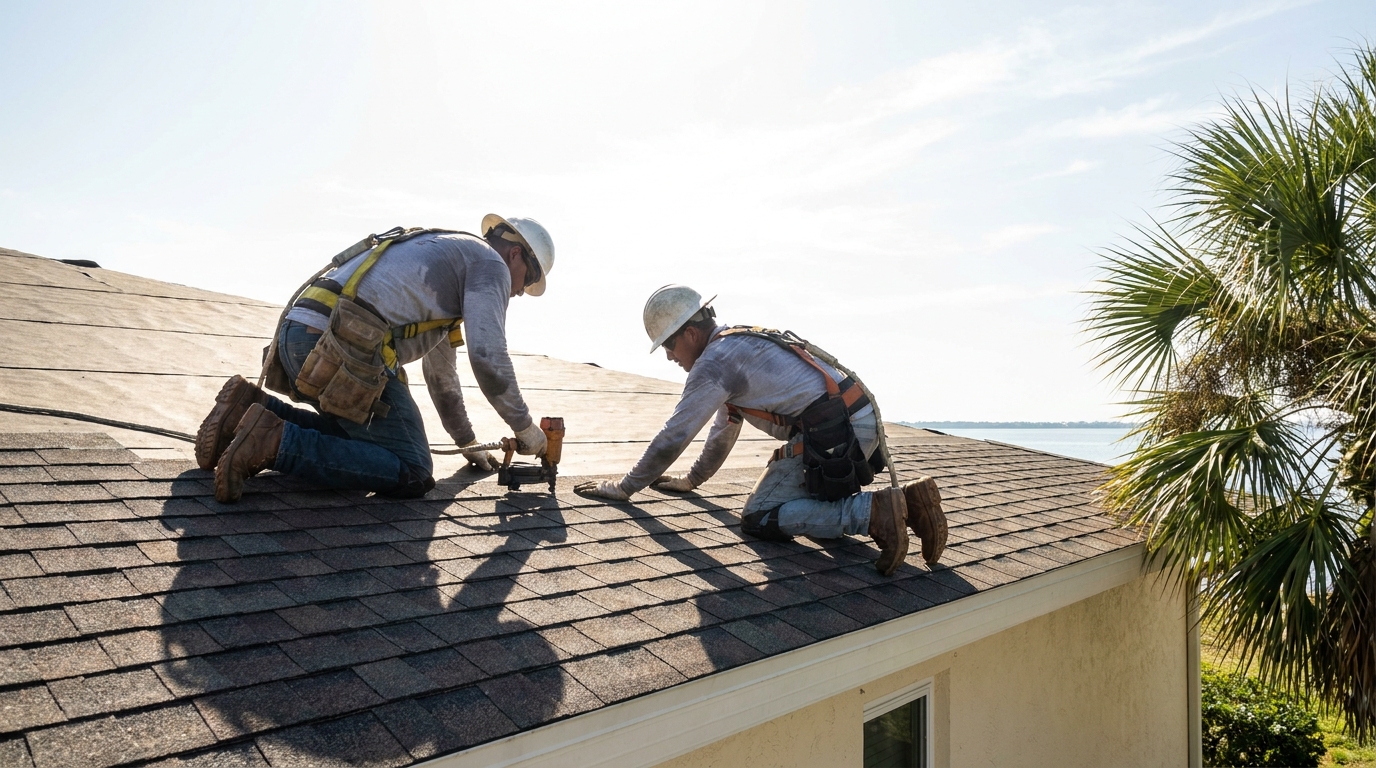
Most single-family asphalt shingle replacements in Tampa are completed in one to three days once materials are on site and permits are pulled. Tile and metal projects run longer — typically three to seven days. Weather delays during summer thunderstorm afternoons and permit processing through the City of Tampa or Hillsborough County can extend the total project window to two or three weeks from contract signing to final inspection.
What's the best time of year to replace a roof in Tampa?
The best window for roof replacement in Tampa is generally February through May, before hurricane season begins June 1 and before summer afternoon storms make daily work windows unpredictable. Late fall — October and November — is a strong secondary window once peak storm risk fades. Scheduling in these windows also tends to secure better crew availability than the post-storm rush periods.
How do I choose a roofer for a replacement in Tampa?
Look for a Florida-licensed roofing contractor with local Tampa-area references, manufacturer certifications like GAF Master Elite, transparent written contracts, and clear proof of workers' compensation and liability insurance. SCM Roofing carries a 4.9-star rating across 239 Google reviews, with customers consistently highlighting communication, cleanup, and installation quality — the operational markers that separate roofers who stand behind the work from those who don't.
Making the call
The five signs above aren't a symptom list — they're decision thresholds. Cross one clearly and repair becomes a delaying tactic; cross two and it becomes an expensive one. In the Tampa market, where climate, insurance rules, and hurricane exposure all compress a roof's useful life, honest math usually favors replacement earlier than homeowners expect.
Readers in Tampa who want a straight assessment — repair when repair makes sense, replacement when it doesn't — can reach SCM Roofing at https://scmroofingfl.com to schedule an inspection and get a written evaluation of where their roof actually sits on the timeline.