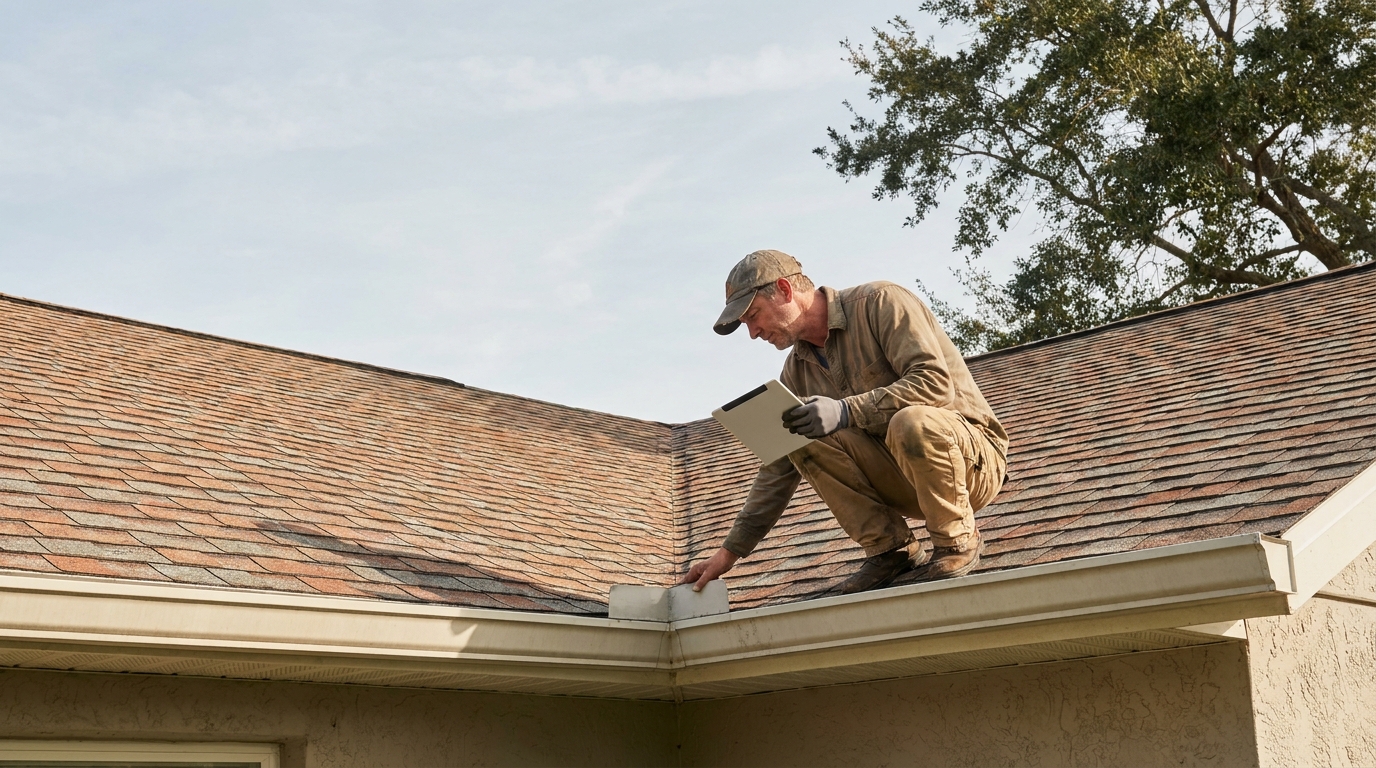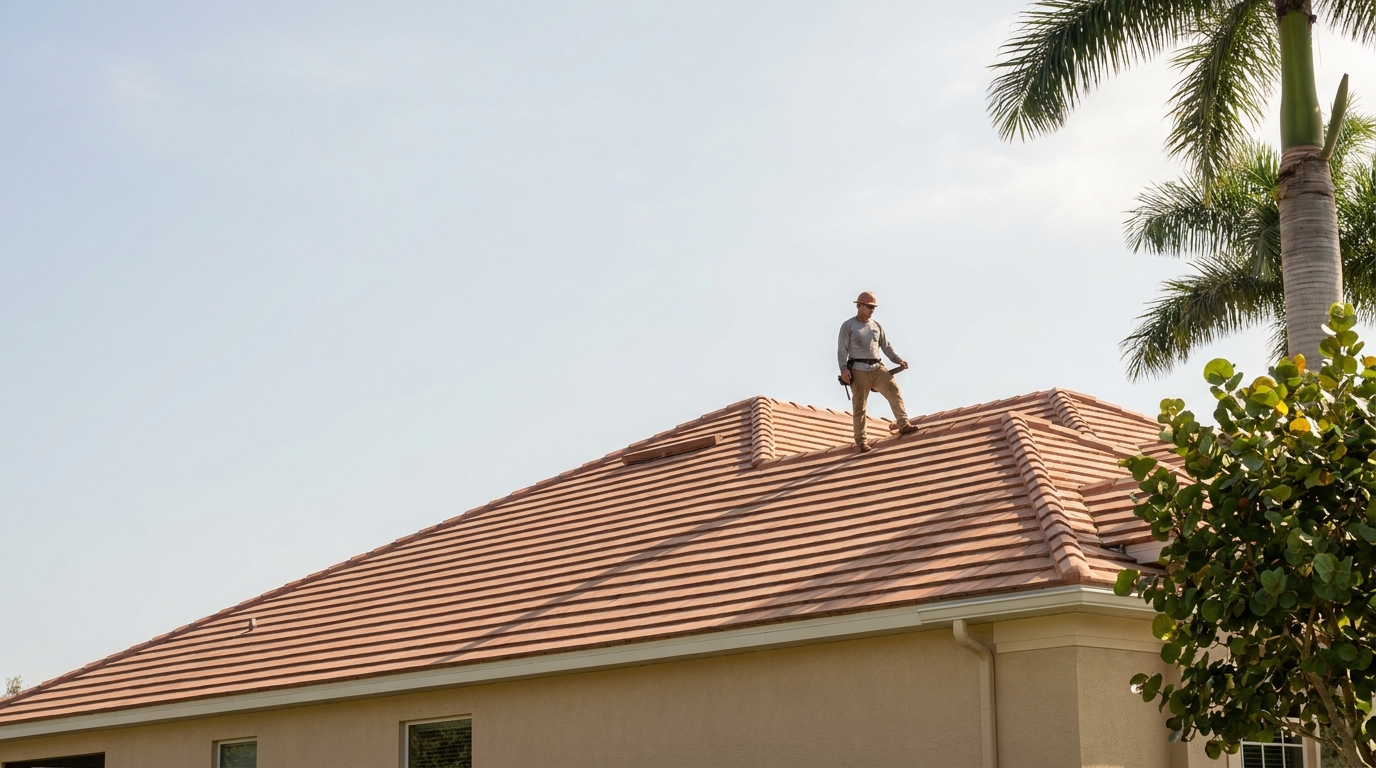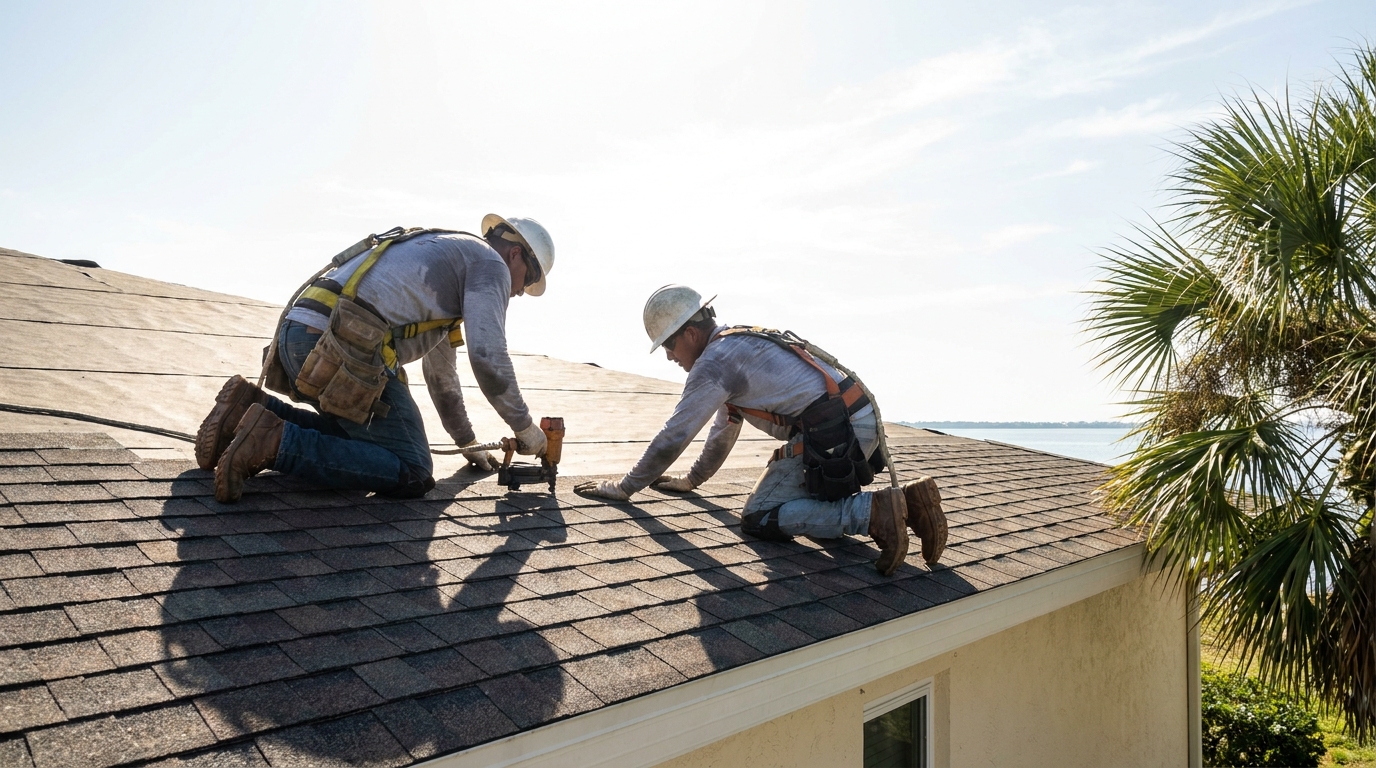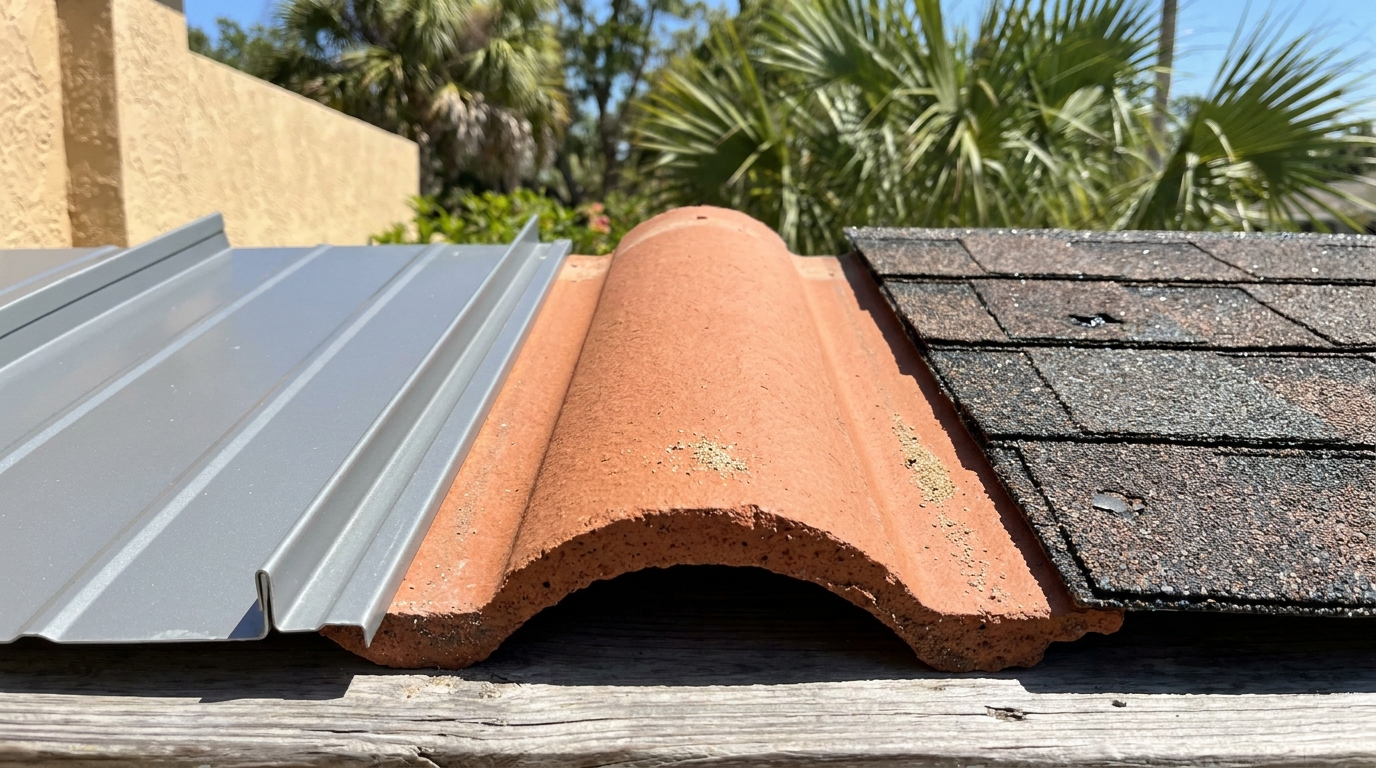
For coastal homes in Clearwater, the strongest roofing choices are standing-seam metal, concrete or clay tile, and high-wind rated architectural asphalt shingles. Metal wins on longevity and wind resistance, tile excels on heat rejection and lifespan, and shingles remain the most cost-effective option when installed to Florida's high-wind fastening schedule. Every choice must carry Florida Product Approval and be installed to the 8th Edition (2026) Florida Building Code.
Clearwater's roofs live a hard life. Salt-laden air off the Gulf, near-daily summer humidity, afternoon thunderstorms, and the ever-present possibility of a named storm all conspire against a roof assembly. Choosing the right material is less about aesthetics and more about matching the product to the exposure — and to what Pinellas County will actually permit.
What roofing code applies to homes in Clearwater in 2026?
Residential roofs in Clearwater and Pinellas County are governed by the Florida Building Code, 8th Edition (2026), which remains in force through 2026. The 9th Edition (2026) becomes effective December 31, 2026. Key roof provisions live in FBC Residential §R301.2.1 (wind design), §R301.2.1.2 (wind-borne debris region), and Chapter 15 of the Building Code covering roof assemblies.
What this means practically: whether you're replacing a roof in Island Estates, Sand Key, or an inland neighborhood near Countryside, your material must carry Florida Product Approval and be installed exactly to the approved evaluation report — fastener count, pattern, underlayment, edge metal, everything. At SCM Roofing, we build every reroof submittal around that approval document because inspectors in both the City of Clearwater and unincorporated Pinellas will ask for it.
How do salt air and humidity change the material equation?
Coastal exposure accelerates corrosion on metal fasteners and flashings, degrades organic materials faster through constant moisture cycling, and encourages algae growth on north-facing slopes. The closer your home sits to the Gulf or Clearwater Harbor, the more the material's corrosion resistance and moisture tolerance matter — often more than the sticker price on the shingle bundle.
Homes west of the Intracoastal — Clearwater Beach, Sand Key, Island Estates — sit in the harshest salt exposure zone in the county. Inland neighborhoods still see humidity and UV punishment, but the corrosion clock runs slower. That distinction should drive fastener metallurgy (stainless versus galvanized), flashing selection, and whether a metal roof gets an aluminum or coated-steel panel.
Tile vs metal roof in Clearwater: which handles coastal conditions better?
Both are excellent coastal choices, but they solve different problems. Concrete and clay tile shrug off UV, resist salt corrosion (the tile itself is inert), and commonly last 50 years or more. Standing-seam aluminum or coated-steel metal delivers superior wind performance, sheds water fast, and weighs a fraction of tile — which matters on older Clearwater homes not framed for tile loads.
Weight and structural fit
Concrete tile runs roughly 900-1,100 pounds per square (100 sq ft); clay is similar. Metal panels weigh 50-150 pounds per square. Many mid-century Clearwater homes in areas like Belleair or older parts of Dunedin-adjacent Clearwater were framed for shingle loads only. Switching to tile can require an engineered structural upgrade; metal usually does not.
Wind performance
Standing-seam metal, when installed with the clip spacing and substrate attachment in its Florida Product Approval, routinely achieves the highest uplift ratings available for residential roofing. Tile can match it, but the fastening or foam-adhesion system must be specifically approved for the site's design wind speed — and coastal Pinellas frequently pushes into the higher-wind design zones.
Are impact-resistant shingles worth it in Clearwater, Florida?
Impact-rated (Class 4) asphalt shingles are worth considering for hail and wind-driven debris, but Florida's code-mandated impact protection under FBC Residential §R301.2.1.2 focuses on openings — windows and doors — not the roof covering itself. Class 4 shingles are a durability and insurance-discount play, not a code requirement for the roof surface.
That said, for coastal Clearwater homes within a mile of the mean high-water line where the wind speed threshold triggers wind-borne debris protection, upgrading to a Class 4 shingle alongside code-required opening protection is a sensible package. It's the sort of layered decision our team walks homeowners through during an estimate.
Which roofing material lasts longest in Clearwater's hot, humid climate?
In Clearwater's climate, expected service life stacks up roughly like this: clay tile 50+ years, concrete tile 40-50 years, standing-seam metal 40-50 years, architectural asphalt shingles 20-25 years — assuming code-compliant installation and reasonable maintenance. Salt exposure and roof pitch can shorten any of these; underlayment quality often determines whether you hit the high or low end of the range.
| Material | Typical Lifespan (Coastal FL) | Wind Performance | Salt-Air Tolerance | Relative Cost |
|---|---|---|---|---|
| Architectural Asphalt Shingle | 20-25 years | Good with high-wind nailing | Moderate | $ |
| Class 4 Impact-Rated Shingle | 25-30 years | Very good | Moderate | $$ |
| Standing-Seam Metal (Aluminum) | 40-50 years | Excellent | Excellent | $$$ |
| Concrete Tile | 40-50 years | Excellent (approved system) | Excellent | $$$ |
| Clay Tile | 50+ years | Excellent (approved system) | Excellent | $$$$ |
What should Clearwater homeowners look for in a roofing contractor?
Look for a Florida-licensed roofing contractor with manufacturer certifications (GAF Master Elite is a strong signal), documented experience pulling permits with the City of Clearwater and Pinellas County, clear product-approval paperwork with every proposal, and reviews that describe communication and cleanup — not just price. Ask to see the Florida Product Approval number for the exact system being installed.
SCM Roofing holds GAF Master Elite certification, which is held by a small percentage of roofers nationally and requires ongoing training and financial vetting. Our 4.9-star rating across 239 Google reviews reflects the way our crews actually work on Clearwater roofs — one recent reviewer noted the crew "worked meticulously together from the start to the finish," and another highlighted that the contract "was not one-sided." Those are the kinds of specifics worth looking for in any contractor you interview.
When is the best time of year to reroof in Clearwater?
The most predictable window for reroofing in Clearwater runs from late fall through early spring — roughly November through May — when hurricane season has closed, humidity is lower, and afternoon storms are less disruptive to tear-off and dry-in schedules. Scheduling ahead of the June 1 hurricane season start is the single most common request we field from Pinellas homeowners.
Frequently asked questions
Do I need a permit to replace my roof in Clearwater, FL?
Yes. A roof replacement in Clearwater or unincorporated Pinellas County requires a building permit, plans that reference the Florida Product Approval for the roofing system, and inspections during and after installation. Both the City of Clearwater and Pinellas County enforce the 8th Edition (2026) Florida Building Code, and unpermitted roofs can create insurance and resale problems down the line.
Are metal roofs noisier than shingles during Clearwater's summer storms?
Modern standing-seam metal roofs installed over solid decking with quality underlayment are not meaningfully louder than shingle roofs inside a finished attic. The stereotype comes from metal panels installed on open purlins, like a barn. On a code-compliant residential deck with proper underlayment and insulation, rainfall on metal sounds much like rainfall on any other Florida roof.
Does homeowners insurance in Pinellas County reward certain roofing materials?
Insurance carriers in Florida often factor roof age, shape, and wind-mitigation features into premiums through the state's uniform wind mitigation inspection form. Impact-rated coverings, secondary water barriers, and stronger deck attachment can all reduce premiums. Specific credits vary by carrier, so ask your insurer for a mitigation credit worksheet before you finalize material selection.
How close to the Gulf triggers stricter roofing requirements?
Florida's wind-borne debris region generally applies within one mile of the coastal mean high-water line where design wind speeds hit 130 mph or greater, per FBC Residential §R301.2.1.2. Much of coastal Clearwater — Clearwater Beach, Sand Key, Island Estates, and nearby mainland areas — falls into that region, which mandates protected openings and heightens the scrutiny on roof fastening and product approvals.
Can I install a tile roof on a home originally built for shingles?
Sometimes, but only after a structural engineer evaluates the framing. Concrete and clay tile weigh roughly 900-1,100 pounds per square versus about 250 pounds for architectural shingles. Many Clearwater homes built for shingles will need rafter reinforcement, additional collar ties, or engineered upgrades before tile is code-approvable. A reputable roofer will insist on that evaluation rather than skipping it.
Is a flat or low-slope roof a good idea in coastal Clearwater?
Low-slope sections are common on Florida-style homes and can perform well with a modified bitumen, TPO, or PVC membrane installed to Florida Product Approval. The key issues in Clearwater are drainage — standing water accelerates failure — and adhesion in high-wind zones. For coastal properties, a fully-adhered membrane over a well-drained deck typically outlasts a mechanically-attached system on the same building.
The bottom line for coastal Clearwater homeowners
There is no single winner among coastal roofing materials — there's a right match for your home's structure, exposure, budget, and how long you plan to stay. Metal and tile deliver the longest service life and highest wind performance; a high-wind architectural shingle system, properly installed, remains a legitimate choice for many inland and mid-priced homes. What separates a good outcome from a bad one is almost always the installation and the paperwork behind it, not the material category.
Homeowners in Clearwater who want this evaluated professionally — with product approvals, permit-ready details, and honest guidance about what fits their home — can reach SCM Roofing at https://scmroofingfl.com to schedule an on-site assessment.