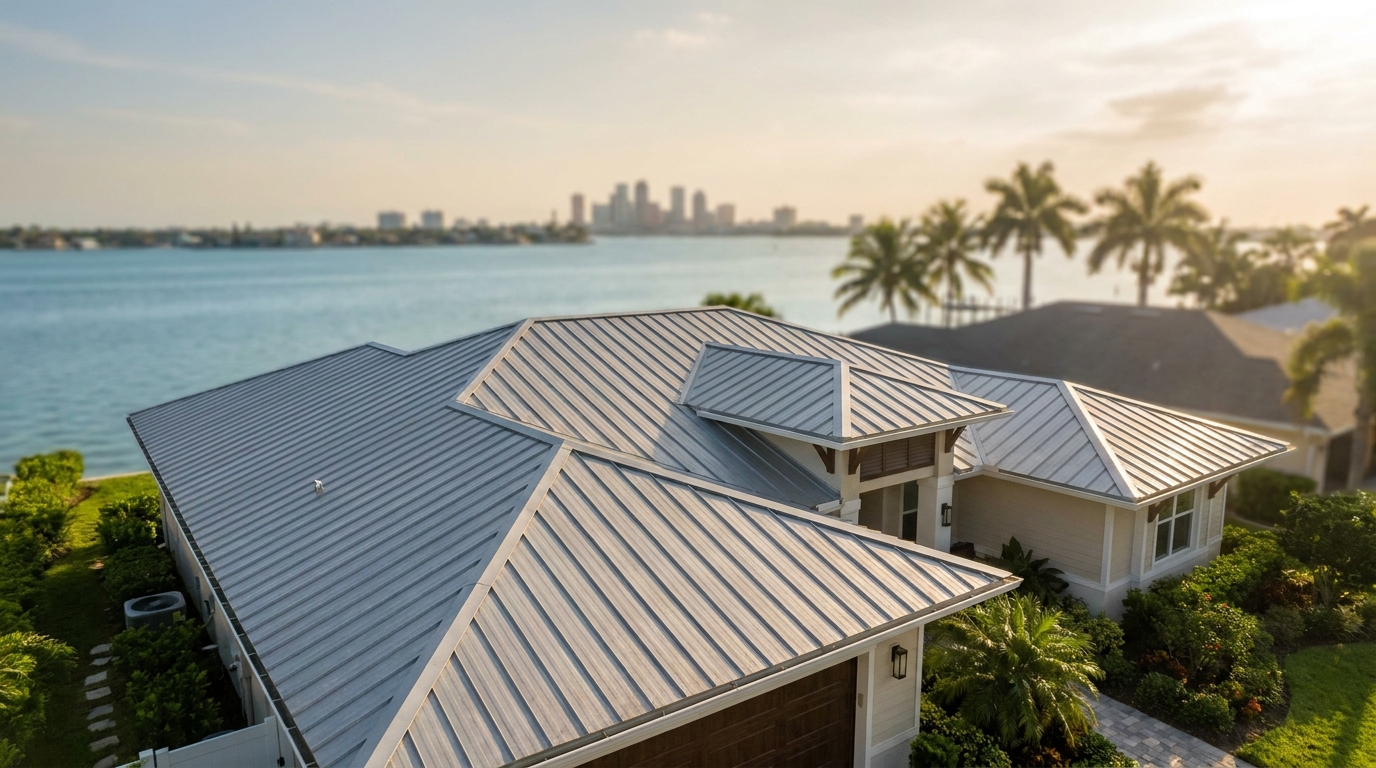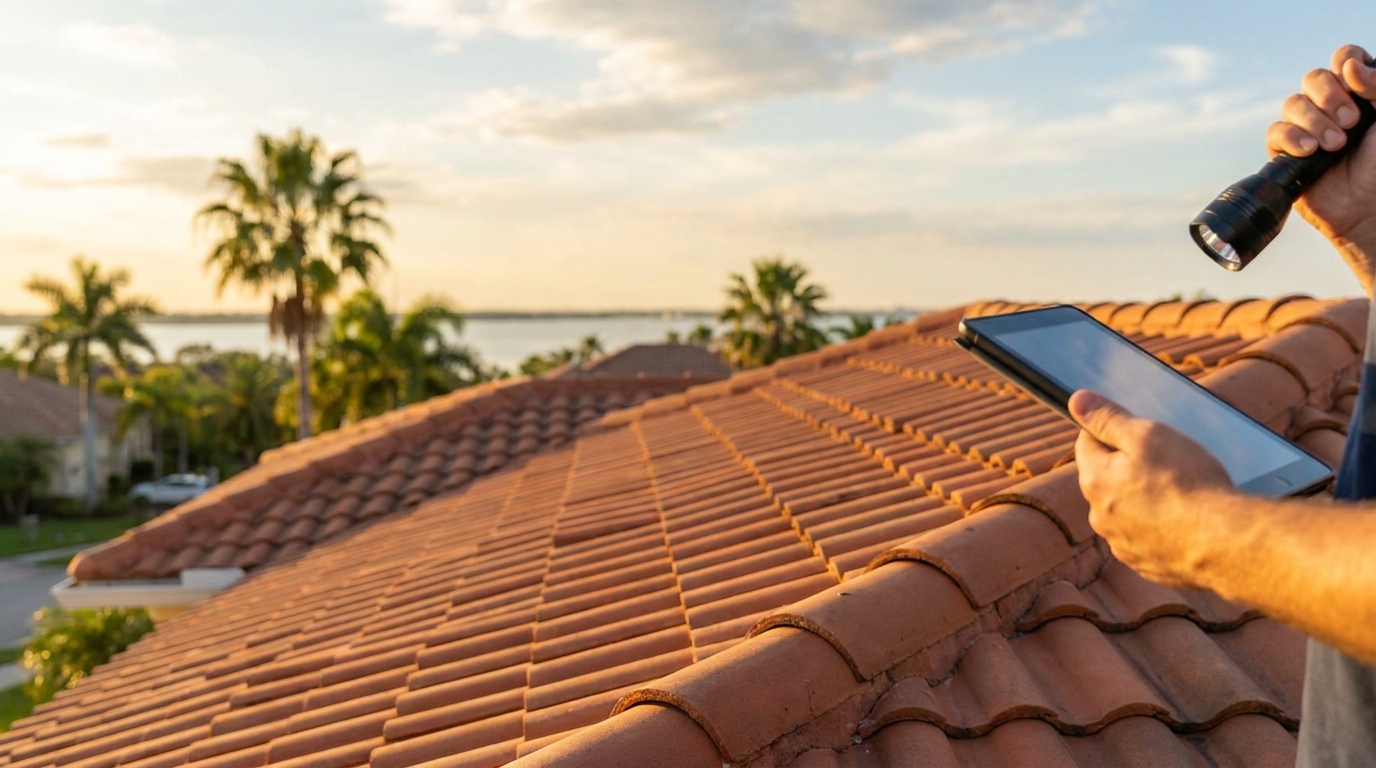
If you've ever watched a Tampa thunderstorm dump two inches of rain in twenty minutes, you already understand why gutters matter here. The roof sheds the water. The gutters decide where it goes. When those two systems aren't designed together, you get fascia rot, soffit staining, foundation erosion, and — in older neighborhoods like Seminole Heights or Hyde Park — water finding its way into crawl spaces and stucco walls that were never built to handle it.
This guide walks through how gutter installation and roof integration should actually be approached on a Tampa home, what to specify when you're getting estimates, and how to time the work around our weather.
Why Roof and Gutter Integration Matters More in Tampa
Tampa averages roughly 50 inches of rain a year, most of it concentrated between June and September. Add tropical systems, daily summer downpours, and a saturated subtropical air mass that keeps everything damp, and you have a climate that punishes any weak point in your drainage path.
Gutters that were sized, pitched, or attached without considering the roof above them tend to fail in three predictable ways:
- Overshooting. Steep roof pitches and high-volume valleys throw water past undersized gutters during heavy rain.
- Separation. Hangers driven into rotted fascia or installed without accounting for drip-edge flashing pull loose in the first real storm.
- Backflow under shingles. When drip edge and gutter aprons aren't coordinated, water wicks behind the gutter and into the roof deck — a slow-motion failure most homeowners don't notice until the soffit sags.
This is why we treat gutter installation as part of the roofing system, not a bolt-on afterthought. The flashing details where the shingles meet the gutter are where most leaks start.
What Proper Roof and Gutter Integration Looks Like
Drip edge and gutter apron coordination
Florida Building Code requires drip edge along eaves and rakes on shingle roofs. Done right, the drip edge directs water off the deck and into the gutter — not behind it. On a re-roof, this is the moment to replace or upgrade gutters, because the flashing sequence is exposed and the integration can be done cleanly.
Correctly sized gutters and downspouts
The standard 5-inch K-style gutter with 2x3 downspouts is fine for many homes, but Tampa's rainfall intensity often justifies 6-inch gutters with 3x4 downspouts — especially on two-story homes, homes with large roof planes, or properties in flood-aware areas like parts of South Tampa where every gallon you can move quickly off the lot matters.
Proper pitch and hanger spacing
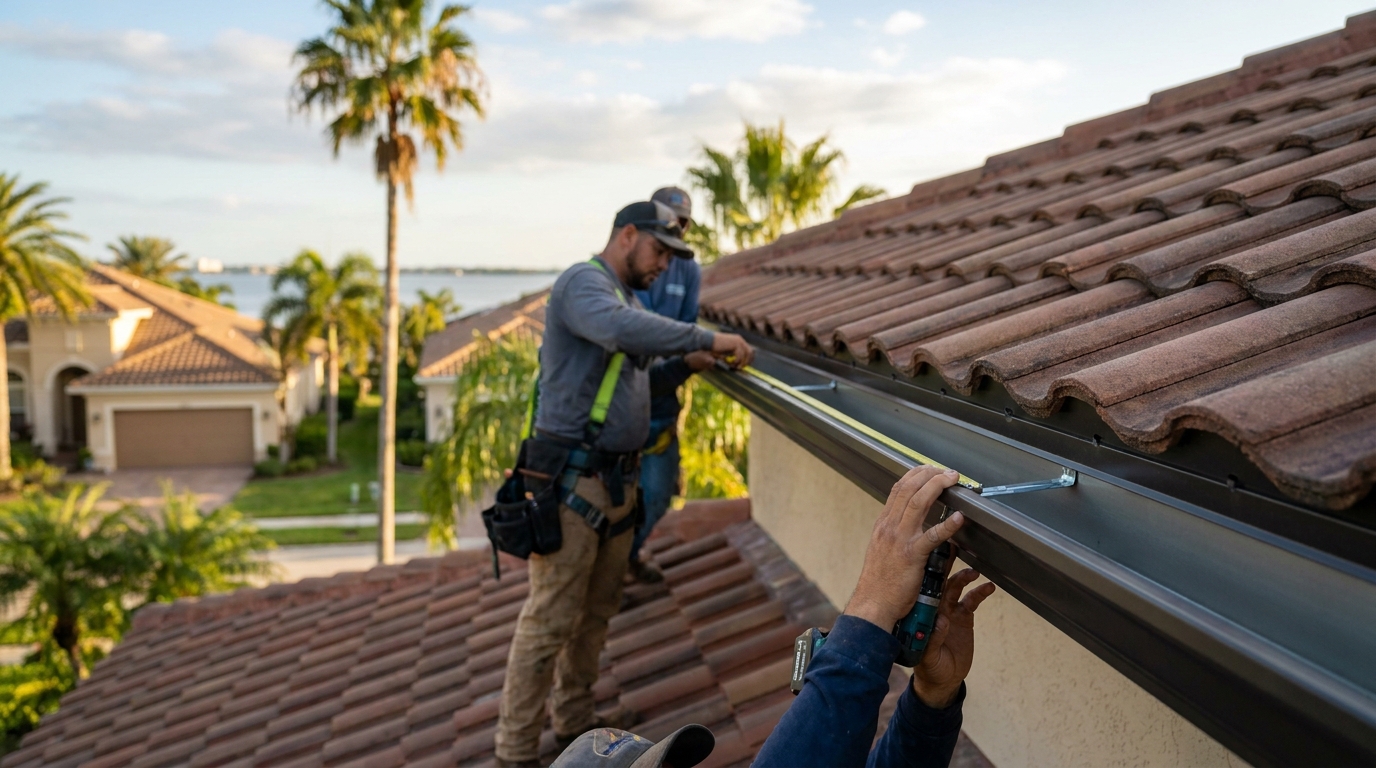
Gutters need roughly a quarter-inch of fall per 10 feet of run, with hidden hangers placed every 24 to 36 inches. In our wind environment, we tighten that spacing — closer hangers mean fewer failures when a summer squall rolls off the Gulf.
Seamless gutter systems
Seamless aluminum gutters, formed on-site to the exact length of each run, are the standard we recommend for Tampa homes. Fewer seams means fewer failure points, and aluminum holds up well to our salt air, particularly for homes closer to the bay or in coastal-adjacent neighborhoods. For homes near the water, a heavier-gauge aluminum or a coated finish is worth specifying.
When to Install or Replace Gutters in Tampa
The honest answer: before hurricane season, not during it. The Atlantic season runs June 1 through November 30, and the practical window for comfortable gutter and roofing work in Tampa is roughly January through May. Once the daily afternoon storms set in, scheduling gets tighter and weather delays multiply.
If you're already planning a re-roof, do the gutters at the same time. You'll save on labor, get a cleaner flashing integration, and avoid paying twice to stage a crew on your house. If your roof has another five to ten years left but the gutters are sagging, leaking at seams, or pulling away from fascia, replacing the gutters alone is reasonable — just make sure whoever installs them inspects the drip edge and fascia condition first.
Permits, Code, and What Tampa Homeowners Should Know
Roofing work in the City of Tampa and across Hillsborough County requires permits pulled through the local building department, and inspections are part of the process. Gutter replacement on its own typically does not require a separate permit, but if gutter work is tied to a re-roof, fascia replacement, or structural repair, it falls under the broader roofing permit. A licensed Florida roofing contractor handles this paperwork as part of the job — if a contractor offers to skip the permit to save you money, that's a signal to walk away. Unpermitted work creates problems at resale and can void manufacturer warranties.
Common Gutter Mistakes We See on Tampa Homes
- Downspouts dumping at the foundation. Extensions or splash blocks should carry water at least four to six feet away, further on lots with poor drainage.
- Undersized systems on large roofs. A sprawling single-story ranch in Carrollwood with one downspout per side will overflow in any real storm.
- Gutter guards installed without thought. Some guard systems are excellent; others trap debris on top and cause overflow. The roof pitch and tree cover should drive the choice.
- Mixing materials carelessly. Steel fasteners on aluminum gutters in salt air will corrode and stain. Specify aluminum or stainless hardware.
Frequently Asked Questions
How long do seamless aluminum gutters last in Tampa?
Properly installed seamless aluminum gutters typically last 20 to 30 years in our climate. Lifespan depends heavily on installation quality, proximity to salt air, and how often debris is cleared.
Should I replace my gutters when I replace my roof?
If your gutters are more than 15 years old or showing seam leaks, yes. Doing both at once allows proper drip-edge and gutter-apron integration, which is the single biggest factor in long-term performance.
Are gutter guards worth it in Tampa?For homes under oak canopy in neighborhoods like Temple Terrace or older parts of South Tampa, well-chosen guards reduce cleaning frequency significantly. For homes with little tree cover, the cost-benefit is weaker.What gutter size do I need?
Most Tampa homes do well with 6-inch seamless gutters and 3x4 downspouts, especially with steep roof pitches or large drainage planes. A roofer should calculate this based on your roof's square footage and pitch, not default to a standard size.
A Final Word for Tampa Homeowners
Gutters look simple from the ground, but their performance depends almost entirely on how they're integrated with the roof above them. The flashing details, the drip edge, the hanger spacing, the downspout sizing — these are the decisions that determine whether your system handles a 2 a.m. August downpour or sends water into your soffits.
Homeowners in Tampa who want this handled as a single, coordinated roofing system can reach SCM Roofing, LLC at https://scmroofingfl.com for a free estimate. SCM Roofing is GAF Master Elite Certified and works across Hillsborough County, and its 4.9-star rating across more than 230 Google reviews reflects the kind of communication and installation quality homeowners tend to mention — one recent reviewer described the crew working "like a well oiled machine" from start to cleanup. Whether you're planning a full re-roof or just trying to get your drainage right before the next rainy season, it's worth talking to a contractor who treats gutters and roofing as one job.