Why Tampa Bay's Salt Air Requires Special Roofing Considerations
If you live within a few miles of Tampa Bay, Old Tampa Bay, or the Gulf, your roof is working harder than most homeowners realize. The same salt-laden breeze that makes waterfront living appealing is steadily attacking your roofing system — corroding fasteners, degrading underlayment adhesives, and shortening the lifespan of materials that would last decades in an inland climate.
This isn't a scare tactic. It's a physics problem. And understanding it can save you from a premature replacement or a claim denial when the next storm rolls through.
What Salt Air Actually Does to Your Roof
Salt air roof damage works slowly and quietly. Sodium chloride particles carried in coastal air settle on every exposed surface — shingles, metal flashing, ridge vents, gutters, and the nails holding everything together. Once moisture is introduced, which happens constantly in Tampa's humid subtropical climate, electrochemical corrosion accelerates.
The fasteners are usually the first to go. Standard galvanized roofing nails can corrode significantly faster in a marine environment than their rated lifespan suggests. When nails corrode, they lose holding strength. When holding strength fails, shingles lift in high winds — and Tampa gets plenty of those.
Flashing is the second casualty. Most residential roofing systems use aluminum or galvanized steel flashing around chimneys, pipe boots, skylights, and wall intersections. In a coastal roofing Tampa Bay context, those materials corrode at an accelerated rate compared to inland installations. By the time you notice a leak, the underlying corrosion has often been developing for a year or more.
Asphalt shingles themselves aren't immune either. The granule surface that protects the asphalt layer can degrade faster when repeatedly exposed to salt deposits, UV radiation, and the high-humidity cycles common to this part of Florida. The result is premature granule loss, faster aging, and reduced wind resistance — exactly what you don't want heading into hurricane season.
How Close Is Too Close? Understanding Salt Exposure Zones
Florida's building codes and roofing industry standards recognize distinct exposure zones based on proximity to saltwater. The general guidance from roofing material manufacturers identifies a high-velocity, high-salt-exposure zone within roughly one mile of tidal waters.
If your home is in Ballast Point, Bayshore Beautiful, Davis Islands, Shore Acres, or anywhere along the Hillsborough Bay shoreline, you're squarely in the high-exposure category. But salt air doesn't stop at one mile. Depending on prevailing winds and storm patterns, properties several miles inland can still experience measurable salt deposition — especially in neighborhoods like Carrollwood or Temple Terrace during periods of strong onshore flow.
The practical takeaway: your distance from the water matters, but it's not a clean line. If you're anywhere in the broader Tampa Bay coastal corridor and your roof is more than fifteen years old, a professional inspection should factor in salt exposure as part of the assessment.
Corrosion-Resistant Roofing Materials Worth Considering
Choosing the right roofing materials for a marine environment isn't just about durability ratings — it's about matching the product to the specific conditions your roof will face over its full lifespan.
Architectural Asphalt Shingles with Enhanced Wind Ratings
Not all asphalt shingles are equal. For coastal Tampa Bay installations, look for shingles rated to at least 130 mph wind resistance with SBS (styrene-butadiene-styrene) polymer modification. These deliver better flexibility through temperature swings and improved adhesion in high-humidity conditions. GAF's Timberline HDZ line, for example, carries wind warranties that make them appropriate for Florida's high-wind zones.
The granule composition also matters. Algae-resistant granules are worth specifying in Tampa's climate — not just for aesthetics, but because algae growth accelerates shingle degradation in humid salt-air environments.
Metal Roofing
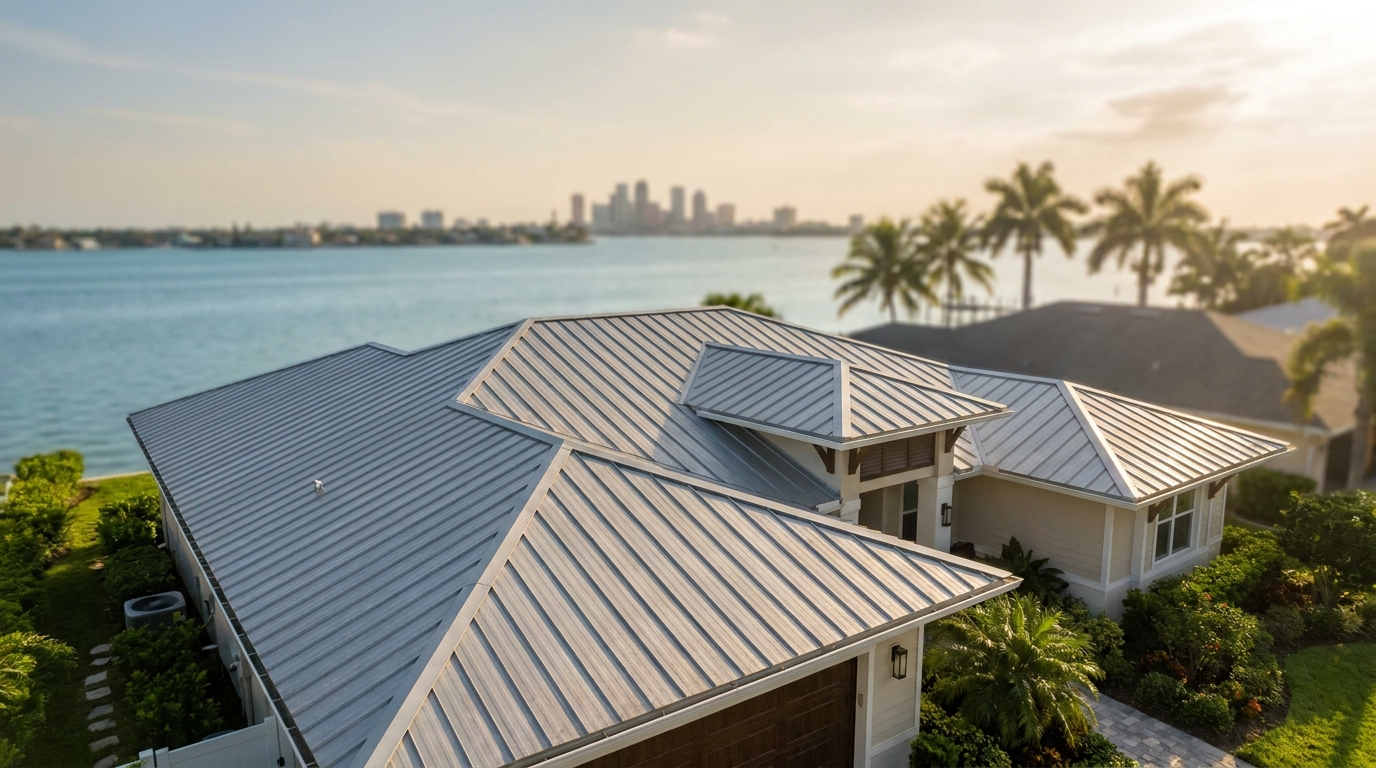
Properly specified metal roofing is a legitimate long-term solution for coastal Tampa Bay homes. The key phrase is "properly specified." Bare galvanized steel is a poor choice near saltwater. What performs well in marine environments is Galvalume-coated steel, aluminum with appropriate Kynar 500 or PVDF coatings, or copper in premium applications.
Standing seam metal roofs eliminate exposed fasteners entirely — removing one of the primary corrosion entry points. They're also excellent performers in high-wind events when correctly installed with concealed clip systems.
Tile Roofing
Concrete and clay tile are genuinely well-suited to coastal Florida, which is part of why they're so common in the Tampa market. The tile itself resists salt corrosion effectively. The vulnerability in tile systems is the underlayment and the metal components — ridge caps, hip flashings, and fasteners. Specifying stainless steel fasteners and high-performance synthetic underlayment underneath tile is non-negotiable in a coastal roofing Tampa Bay installation.
Fasteners, Flashing, and the Details That Determine Longevity
Here's where marine environment roofing separates from standard residential work. A contractor who doesn't account for salt exposure in their material specification is going to produce a roof that underperforms — regardless of how quality the shingles themselves are.
Stainless steel or hot-dipped galvanized fasteners should be standard in coastal installations, not upgrades. The same goes for flashing — aluminum is adequate inland; stainless or copper performs better near saltwater.
Ridge vent selection also matters. Some plastic ridge vent systems trap salt deposits and moisture in ways that accelerate degradation of the surrounding shingle field. Contractors experienced with coastal roofing Tampa Bay work know which products hold up and which ones don't after a few seasons of salt exposure.
SCM Roofing, LLC — a GAF Master Elite certified contractor serving the Tampa area — has direct experience with these variables. One customer noted that the team "showed pictures and plans for what our roof needed" before work began, which is exactly the kind of documented, transparent process a marine-environment installation requires.
Inspection Intervals Are Different on the Coast
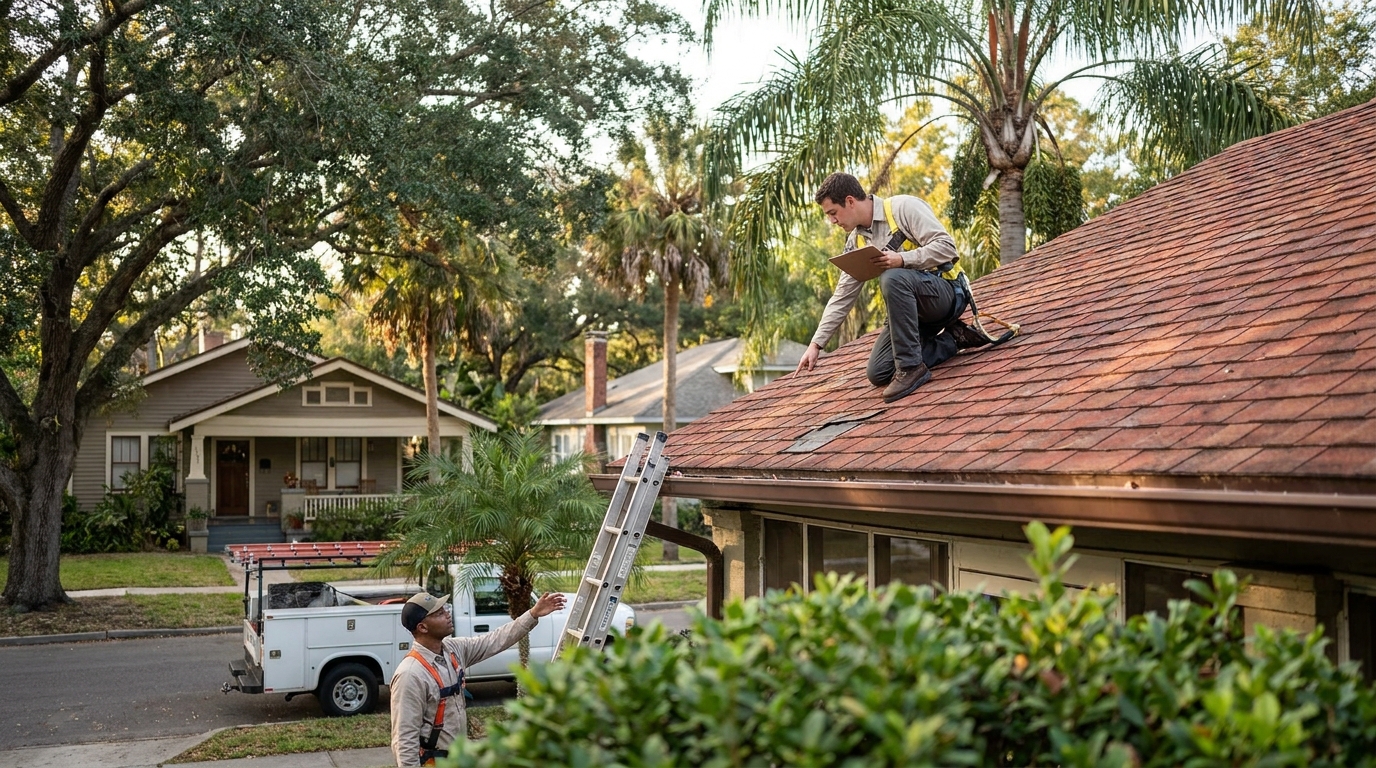
Standard roofing guidance recommends professional inspection every three to five years. For Tampa Bay coastal properties, that interval should compress to every two to three years — and after any tropical system, regardless of whether you noticed interior damage.
What you're looking for between professional inspections: dark streaking or staining on shingle surfaces, rust-colored streaks near flashing and vents (a sign of fastener corrosion), soft spots in the decking that telegraph through the shingles when walked, and granule accumulation in gutters that exceeds normal levels for the shingle's age.
None of these are definitive proof of failure on their own. They're signals that a qualified inspector should evaluate before minor corrosion becomes a structural or water intrusion problem.
Frequently Asked Questions: Coastal Roofing in Tampa Bay
How much faster does salt air shorten roof lifespan in Tampa compared to inland Florida?
There's no universal number because it depends heavily on materials, installation quality, and exact proximity to saltwater. What's well-documented is that improperly specified roofing near marine environments can fail ten or more years earlier than the manufacturer's rated lifespan suggests. Correct material selection and installation largely closes that gap.
Is my homeowner's insurance affected by coastal roof deterioration?
Florida insurers remain highly selective about roof age and condition. As of 2026, many carriers require professional inspection documentation for roofs over fifteen years old and may decline coverage or require replacement for roofs showing advanced deterioration. Coastal corrosion damage that goes unaddressed can accelerate the timeline to that threshold.
Do I need a permit for roof replacement in Tampa?
Yes. Hillsborough County and the City of Tampa both require permits for roof replacement. This is worth confirming with your contractor before work begins — unpermitted work creates complications with insurance claims and future property sales. Any reputable contractor will pull the permit as standard practice.
What's the difference between a repair and a full replacement for salt-damaged roofing?
If corrosion damage is isolated — a section of flashing, a few fastener failures — targeted repair makes sense. When corrosion is systemic, especially when fastener failure is widespread or underlayment adhesion has been compromised across large sections, repair becomes a recurring cost rather than a solution. A qualified inspection will clarify which situation you're in.
Does the direction my roof faces affect salt air exposure?
Yes. Roof planes facing southwest and west tend to receive more direct exposure from Gulf and bay-driven onshore winds. These elevations typically show earlier signs of salt air roof damage than north-facing planes on the same structure. A complete inspection should assess all elevations, not just the most visible side from the street.
Can a new roof installed in a coastal zone still carry its full manufacturer warranty?
Yes, provided the installation meets the manufacturer's coastal specifications. Most major manufacturers require corrosion-resistant fasteners, approved underlayment, and in some cases specific flashing materials for warranty validity in marine environments. Hiring a certified contractor — such as a GAF Master Elite installer — ensures those specifications are documented and followed, keeping your warranty intact from day one.
How do I know if a roofing contractor has genuine coastal experience versus general Tampa Bay experience?
Ask directly: what fastener grade do they specify on properties within one mile of saltwater, and what flashing material do they default to near the coast? Contractors with real marine environment experience answer without hesitation. Those without it often default to standard inland specs. Certifications like GAF Master Elite signal a higher baseline, but the material questions confirm applied coastal knowledge.
What to Ask a Roofing Contractor Before Hiring for Coastal Work
Not every contractor who works in Tampa has specific experience with coastal roofing considerations. Before you sign a contract, ask directly whether they specify corrosion-resistant fasteners as standard practice on coastal properties, what flashing material they use near saltwater, and whether their material specifications account for Florida's high-velocity hurricane zone requirements.
A contractor who looks uncertain at those questions — or who responds with "we use whatever the manufacturer includes" — deserves follow-up. The hardware bundled with standard shingle packages is not always appropriate for a marine environment.
One customer who compared multiple contractors before choosing wrote that SCM Roofing stood out in part because of their GAF Master Elite certification and outstanding customer service — noting that the team "answered all my questions and concerns" and that "the contract was not one-sided," reflecting the kind of transparency that matters when specifying materials for a demanding coastal environment.
Closing Thoughts
Tampa Bay's coastal environment is one of the more demanding roofing contexts in the continental United States. The combination of salt air, high humidity, intense UV exposure, and regular tropical weather events creates conditions that punish underspecified installations and reward contractors who understand the nuances of marine environment roofing.
Getting your roof replaced or repaired correctly the first time — with the right materials, the right fasteners, and the right installation process — is genuinely less expensive than discovering five years later that corrosion has been working through your system since day one.
Tampa homeowners who want a professional assessment from a contractor with specific experience in coastal roofing can reach SCM Roofing, LLC at scmroofingfl.com for a free estimate. Their 4.9-star rating across 239 Google reviews reflects a consistent track record worth evaluating.