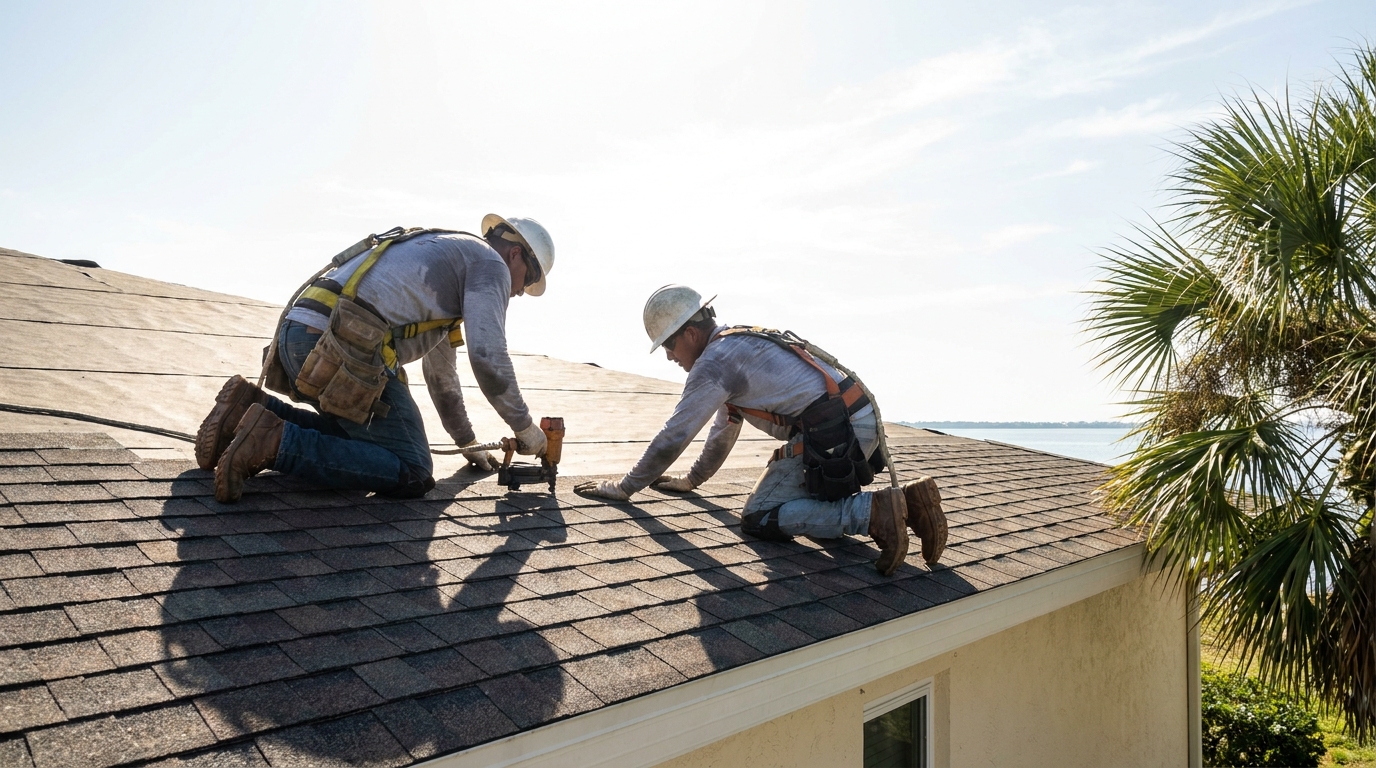
Most St. Petersburg homeowners financing a new roof choose between a home equity loan or HELOC, an unsecured home-improvement personal loan, contractor-arranged financing through a lender partner, or, where available, PACE assessment financing. Secured options (equity-based) generally carry the lowest rates but attach to your home; unsecured and contractor-arranged loans close faster but cost more over the life of the loan.
A new roof is one of the largest single expenses a Florida homeowner will face — and in a coastal wind-borne debris zone like Pinellas County, it's rarely optional for long. Below is a plain-English walk-through of the financing paths available, the rules that govern them under Florida law, and what to compare before you sign anything.
How much does a new roof cost for a house in St. Petersburg, and how much financing do you actually need?
Reroof costs in St. Petersburg vary widely by material, roof complexity, and code-required upgrades — but the financed amount should also cover permit fees, tear-off, decking replacement where nailing patterns fail inspection, and any secondary water barrier required under the Florida Building Code. Get a written scope before you size the loan.
Asphalt shingle reroofs on a typical single-family home in neighborhoods like Shore Acres, Old Northeast, or Kenwood generally sit at the lower end. Metal, tile, and steep or multi-facet roofs cost more. Because coastal Pinellas properties sit in a High-Velocity Hurricane-adjacent wind zone, expect line items for hurricane straps, upgraded underlayment, and enhanced fastening — all of which are inspected by the City of St. Petersburg Building Department before final approval.
At SCM Roofing, we build financing conversations around the full permitted scope, not a stripped estimate, so the loan amount actually matches the finished job. A common mistake is financing only the shingles and getting surprised by decking, disposal, or code-upgrade charges at closeout.
What are the main residential roofing financing options in St. Petersburg, FL?
The four financing paths most St. Petersburg homeowners use are: home equity loans and HELOCs, cash-out refinances, unsecured home-improvement personal loans, and contractor-arranged financing through a lender partner. PACE (Property Assessed Clean Energy) financing may also be available depending on local program adoption in Pinellas County.
Home equity loans and HELOCs
Secured by your home. Typically the lowest rates because the lender has collateral. Interest may be tax-deductible when proceeds are used for substantial home improvements — confirm with a tax professional. Closing takes longer (often several weeks) and requires an appraisal.
Cash-out refinance
Replaces your existing mortgage with a larger one. Makes sense only if current rates are near or below your existing rate. Otherwise you re-price your entire mortgage to pay for a roof — rarely a good trade in a high-rate environment.
Unsecured personal loans
Fast (often funded within days), no lien on your home, but higher rates and shorter terms. Good for smaller reroofs or homeowners who don't want to attach the debt to the property.
Contractor-arranged financing
Many roofing contractors, including SCM Roofing, work with third-party lenders that specialize in home-improvement loans. These programs are convenient — application and approval often happen the same day the estimate is signed — but Florida law requires specific disclosures about them, which we cover below.
PACE financing
PACE funds qualifying improvements (including certain roof replacements) through a special assessment on your property tax bill rather than a conventional loan. Availability depends on local program adoption; confirm current PACE availability with Pinellas County before assuming it's an option.
What do contractor financing programs actually cost?
Contractor-arranged roofing financing in Florida can range from promotional same-as-cash offers with deferred interest if unpaid at expiration up through fixed-rate installment loans at higher APRs, depending on credit score, term length, and loan amount. Always compare the APR — not the monthly payment — against a home equity option.
Here's a general framework for comparing the main paths:
| Option | Secured by home? | Typical rate profile | Time to fund | Best fit |
|---|---|---|---|---|
| Home equity loan / HELOC | Yes | Lowest | 2–6 weeks | Larger reroofs, homeowners with equity |
| Cash-out refinance | Yes | Depends on current mortgage rate | 3–6 weeks | Only if refi rate beats existing rate |
| Unsecured personal loan | No | Mid to high | 1–7 days | Smaller jobs, no-lien preference |
| Contractor-arranged financing | Usually no | Promo 0% to high teens APR | Same day to a few days | Speed and convenience at signing |
| PACE (where available) | Tax assessment lien | Fixed, longer term | Varies | Qualifying storm-hardening / efficiency scope |
What does Florida law require contractors to disclose about financing?
Under Fla. Stat. § 489.147, any contractor who arranges or offers financing in connection with home improvement work must clearly disclose the financing source, the terms, and whether the contractor is acting as a contractor, a lender, or a broker/arranger. These disclosures must appear in sales materials and in the contract itself.
Read the contract. If a roofer offers to "handle the financing," they should be able to point you to written language identifying the actual lender, the APR, the payment schedule, and the contractor's role. Vague answers here are a red flag.
Federal Truth in Lending Act rules (Regulation Z) also apply when the financing is a consumer-purpose credit transaction. That means required disclosures of APR, finance charges, payment schedule, and — for loans secured by your principal dwelling — a right of rescission. Those obligations generally sit with the lender, not the contractor, but you should still receive them in writing before funds disburse.
How does Florida's lien law protect you when a lender pays the contractor?
Under Fla. Stat. § 713.3471, when loan proceeds are disbursed directly to you or jointly to you and another party, you must obtain lien releases from any lienor who served a Notice to Owner before you pay the contractor. This protects you against "double-payment" exposure — paying the contractor while a subcontractor or supplier still holds lien rights against your home.
In practice: if you receive a Notice to Owner from a subcontractor or material supplier during the job, do not release loan draws to the contractor without a matching lien release from that lienor. This one step prevents the most common financing-related dispute in Florida residential construction.
What should St. Petersburg homeowners compare before signing?
Compare APR (not monthly payment), total finance charge over the full term, prepayment penalties, promotional-rate expiration terms, and whether the loan is secured by your home. Then verify the roofer's Florida license, the permit scope, and that the financing contract identifies the lender and the contractor's role per Fla. Stat. § 489.147.
A few practical checks:
- APR vs. teaser rate. A 0% promo that reverts to a high rate if unpaid at expiration is not a 0% loan.
- Total cost. Multiply the monthly payment by the number of payments. That's what the roof actually costs you.
- License and permit. Roofing work in St. Petersburg requires a Florida-licensed roofing contractor and a City of St. Petersburg building permit. Financing does not waive either.
- Contract clarity. The contract should name the lender, the APR, the payment schedule, and identify the contractor's role.
- Lien releases. Track Notices to Owner and require matching releases before authorizing draws.
The best residential roofing companies near you will walk you through all of this without pressure. SCM Roofing's reviewers repeatedly highlight clear communication and a contract that isn't one-sided — That's the standard to hold any financed roofing job to.
Frequently asked questions about financing a roof in St. Petersburg
Is contractor-arranged roofing financing regulated in Florida?
Yes. Fla. Stat. § 489.147 requires contractors who arrange or offer financing for home improvement work to disclose the financing source, the terms, and whether the contractor is acting as a contractor, lender, or broker/arranger — in sales materials and in the contract. Federal Regulation Z disclosures (APR, finance charge, payment schedule) also apply to most consumer-purpose loans, though those obligations sit with the lender.
Can I use a HELOC to pay for a new roof in St. Petersburg?
Yes. A home equity line of credit is one of the lower-cost ways to finance a reroof because it is secured by your home. Expect an appraisal, several weeks to close, and variable-rate exposure on most HELOC products. Interest may be deductible when proceeds are used for substantial improvements to the securing home — confirm with a tax professional.
Does PACE financing work for roof replacements in Pinellas County?
PACE can fund qualifying roof replacements through a special assessment on your property tax bill, but availability depends on whether the local program has been adopted and is active in your area. Confirm current PACE availability with Pinellas County before treating it as an option, since program participation and eligible scopes change.
What is a Notice to Owner and why does it matter for my roof loan?
A Notice to Owner is a written notice from a subcontractor or supplier telling you they are providing labor or materials on your job and may claim a lien if unpaid. Under Fla. Stat. § 713.3471, when loan proceeds disburse, you must collect lien releases from any noticed lienor before paying the contractor to avoid double-payment liability.
Do I still need a permit if my roof is financed?
Yes. Financing has no effect on permitting. Roofing work in St. Petersburg requires a Florida-licensed roofing contractor and a City of St. Petersburg Building Department permit, with inspections performed under the Florida Building Code. If a contractor offers to skip the permit because the job is financed or paid in cash, walk away.
Should I choose the loan with the lowest monthly payment?
No. Choose based on APR and total finance charge over the full term, then confirm the payment fits your budget. A low monthly payment often means a longer term and thousands more in interest. Also check for deferred-interest promotional terms, prepayment penalties, and whether the loan is secured by your home.
Closing thoughts
Financing a roof in St. Petersburg is less about finding the cheapest headline rate and more about matching the loan structure to your equity position, timeline, and appetite for attaching debt to your home — while making sure the contractor's paperwork complies with Florida disclosure and lien-law requirements. Get the full permitted scope in writing, compare APRs (not monthly payments), and track Notices to Owner through closeout.
Homeowners in St. Petersburg who want a written scope, a clear financing conversation, and a contract that spells out the lender relationship can reach SCM Roofing at https://scmroofingfl.com to get started.