If your roof leaks every time it rains in Tampa, the cause is almost never a single storm-damaged shingle — it's a chronic failure point that opens under pressure and closes when things dry out. The fastest path forward is a two-step response: contain the water inside (buckets, plastic sheeting, a small relief hole in a bulging ceiling), then get a licensed Florida roofing contractor on the roof to trace the leak back to its actual source, which is often several feet uphill from the drip.
Below is a Tampa-specific triage guide — what's likely causing the repeat leak, what to do in the next hour, and when the situation crosses into emergency territory.
Why does your roof leak every single time it rains in Tampa?
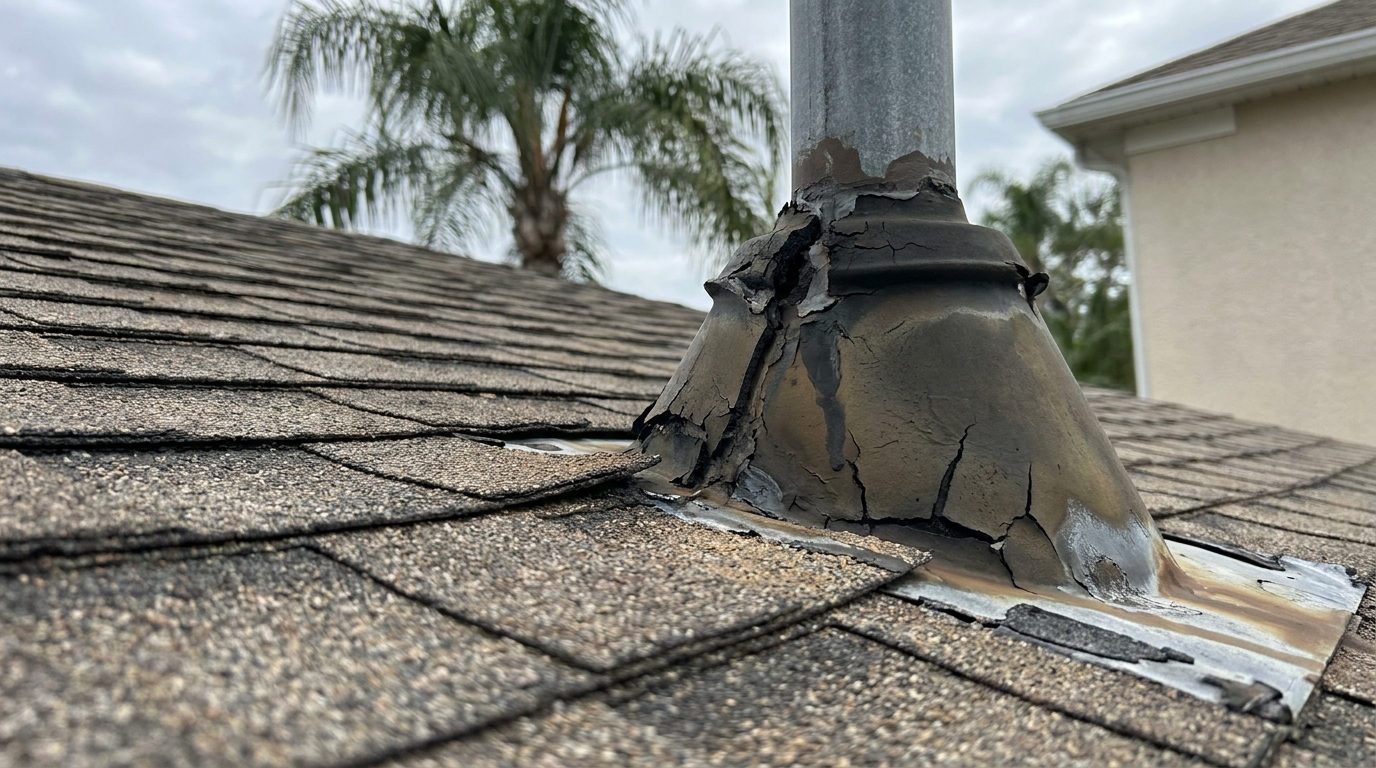
A roof that leaks with every rain event has a persistent breach — not storm damage. The most common culprits in Tampa are failed pipe boot flashings, cracked sealant around roof penetrations, lifted or corroded valley metal, nail pops under shingles, and clogged or backpitched gutters causing water to wick under the drip edge. Tampa's daily summer downpours expose these weak points fast.
The Tampa climate factor
Tampa averages roughly 50 inches of rain a year, per the National Weather Service, with the bulk falling between June and September as afternoon convective storms. That means a marginal roof gets stress-tested nearly every day for four months. Add year-round humidity above 70% and the UV load on the Gulf Coast, and rubber pipe boots that would last 15 years up north often crack in 8-10 here.
Common failure points we see across Hillsborough County
- Pipe boot flashings — the neoprene collar around plumbing vents. Cracks radiate from the pipe and let water in with every rain.
- Valley leaks — where two roof planes meet. Debris dams up, water backs up under shingles.
- Chimney and skylight flashing — old sealant fails, step flashing corrodes.
- Ridge vents and exposed nail heads — sealant shrinks, nails back out.
- Tile roof underlayment — common in South Tampa and Davis Islands, where 20+ year-old tile roofs often have failed underlayment even though the tile looks fine.
What should you do in the first hour of a recurring leak?
Get water contained and photographed, then call a licensed roofer. Move belongings, put a bucket under the drip, lay a tarp or plastic sheet across the floor, and if the ceiling is bulging, poke a small hole with a screwdriver over the bucket to release the water — a controlled drip is far better than a collapsed drywall section. Photograph everything for insurance.
Emergency triage checklist
- Kill power to any affected rooms at the breaker if water is near light fixtures or outlets.
- Move furniture and electronics out of the drip zone; cover what you can't move.
- Contain the drip with buckets, towels, and plastic sheeting.
- Relieve bulging ceilings with a small punctured hole over a bucket.
- Photograph the interior damage, the ceiling stains, and the exterior of the roof from the ground.
- Call a licensed Florida roofing contractor — do not go on a wet roof yourself.
When does a recurring roof leak become an emergency?
A recurring leak becomes an emergency when water reaches electrical wiring, when ceiling drywall is sagging, when insulation is saturated, or when the leak has been active long enough that mold is likely — Florida's humidity means mold can establish in 24-48 hours on wet drywall. At that point, tarping is a same-day priority, not a next-week appointment.
Homeowners in flood-prone areas near the Hillsborough River, Bayshore Boulevard, or the Westshore district should also treat repeat leaks as urgent because saturated attic insulation loses its R-value fast, and Tampa's cooling load is punishing on a compromised roof.
Who should Tampa homeowners actually call?
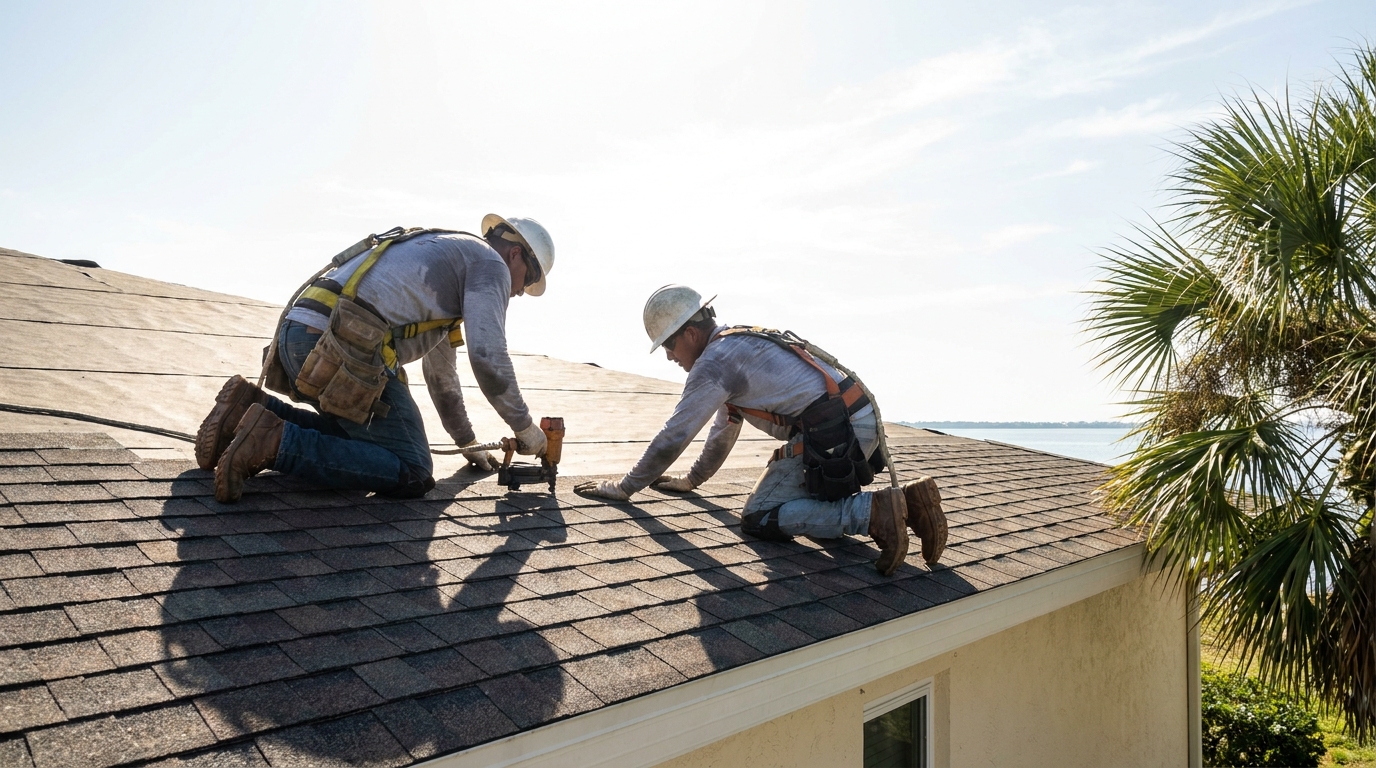
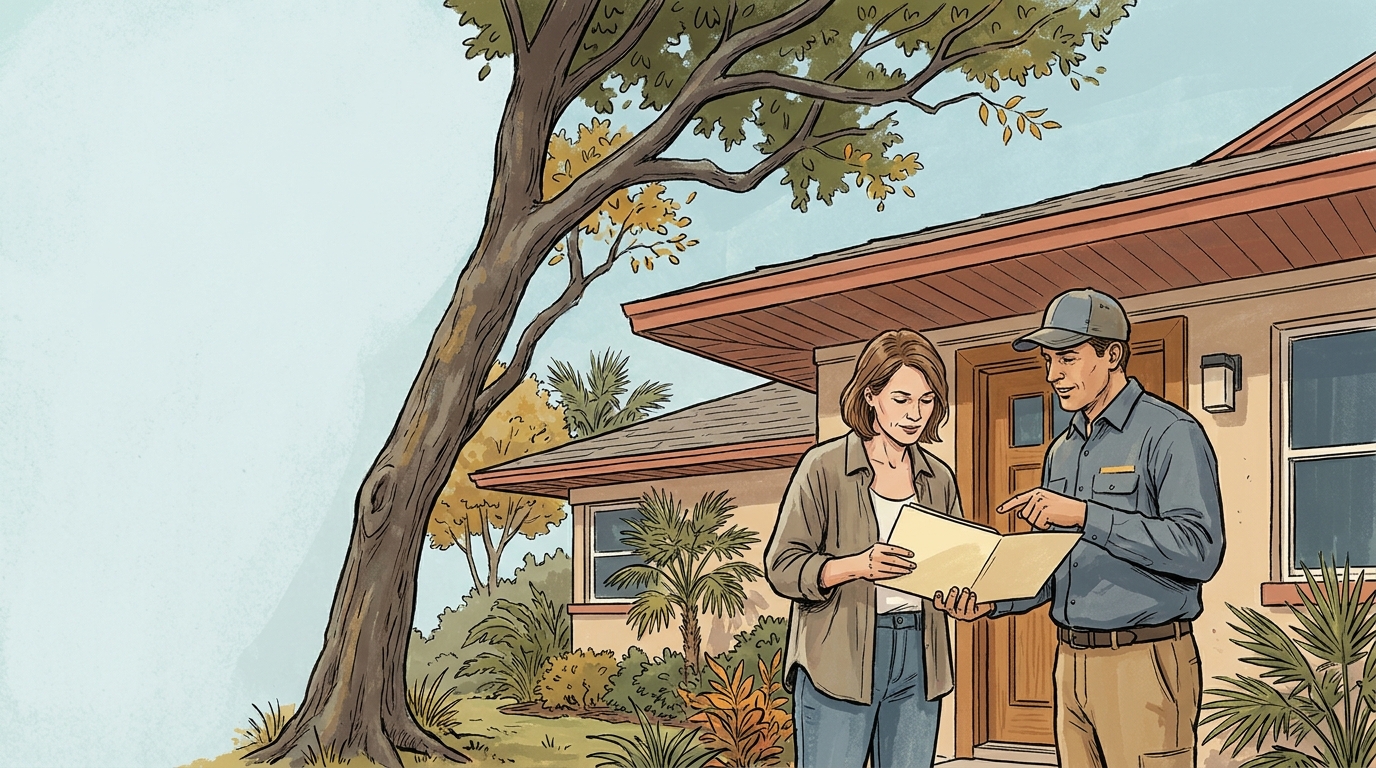
Call a Florida state-licensed roofing contractor — look for a CCC license number (Certified Roofing Contractor) issued by the Florida Department of Business and Professional Regulation. Avoid unlicensed handymen and out-of-state storm chasers who appear after named storms. A legitimate Tampa roofer will pull a Hillsborough County permit for any repair beyond minor sealant work and carry both general liability and workers' comp insurance.
SCM Roofing, LLC is a Tampa-based residential roofing contractor that handles recurring leak diagnosis, emergency tarping, and full repairs across Hillsborough and Pinellas counties. The company is GAF Master Elite Certified — a designation held by roughly the top 2% of roofing contractors nationally, per GAF — and carries a 4.9-star rating across 239 Google reviews. One recent reviewer described the team as delivering "honesty and kindness in the home repair industry," and multiple reviews highlight quick estimate turnaround and thorough cleanup after the work is done.
What does a proper leak diagnosis and repair cost in 2026?
In the Tampa market as of 2026, most recurring leak repairs fall into predictable ranges depending on the source. A simple pipe boot replacement runs a few hundred dollars; valley or flashing repairs run higher; underlayment failures on tile roofs are the most expensive because tiles must be lifted and reset. A proper diagnosis often includes an attic inspection — the leak entry point on the roof is rarely directly above the drip inside.
| Repair Type | Typical Tampa Range (2026) | Usual Timeline |
|---|---|---|
| Pipe boot / vent flashing replacement | $250 - $600 | Same day |
| Sealant and nail-pop repair | $300 - $750 | Same day |
| Valley metal repair | $600 - $1,800 | 1-2 days |
| Chimney or skylight reflash | $800 - $2,500 | 1-2 days |
| Tile underlayment section repair | $1,500 - $5,000+ | 2-5 days |
| Emergency tarp (per square) | $300 - $800 | Same day |
How do you prevent this from happening again before the next Tampa rainy season?
Schedule a roof inspection every 12-18 months, ideally in April or May before Tampa's rainy season begins June 1 and before the peak of Atlantic hurricane season. Keep gutters and valleys clear of oak and palm debris, replace pipe boots proactively at year 8-10, and re-seal exposed nail heads on ridge caps and pipe collars. Trim any branches within six feet of the roof deck.
Tampa's Florida Building Code (7th Edition) also requires that when more than 25% of a roof is repaired or replaced, the entire roof must generally be brought up to current code — so a series of "just patch it" repairs can eventually trigger a full replacement obligation. Diagnosing the actual source once is almost always cheaper than three rounds of guesswork.
Frequently Asked Questions
Why does my roof only leak sometimes even though rain is the trigger?
Wind direction and rain intensity matter. A leak driven by wind-blown rain from the north may stay dry during a calm south-facing shower. Volume matters too — light rain can be absorbed by underlayment and dry out, while a heavy Tampa afternoon storm overwhelms the same spot. The leak is still there; the conditions just have to align to expose it.
Can I go on my roof to look for the leak myself?
No — especially not on a wet roof, and not without fall protection. Tampa roof pitches, tile surfaces, and afternoon lightning risk make DIY roof inspection genuinely dangerous. Ground-level photos with a zoom lens or a drone are safer. A licensed roofer with harness gear and moisture-meter tools will find the source faster and without risking a hospital visit.
Does homeowners insurance cover a recurring roof leak in Florida?
Usually only if the leak stems from a sudden covered event like a windstorm. Chronic wear-and-tear leaks — failed pipe boots, aged sealant, worn underlayment — are typically excluded as maintenance issues under most Florida policies. Document any storm that preceded the first leak, keep repair receipts, and ask your carrier directly. Coverage rules vary by policy and carrier in Florida.
How fast can a Tampa roofer get out for an active leak?
Reputable Tampa roofing contractors typically respond to active leaks within 24-48 hours, and often same-day during dry weather. During named storm events, response times stretch because tarping demand spikes across Hillsborough and Pinellas counties. Calling early in the day and having photos ready helps you get scheduled faster. SCM Roofing, LLC handles emergency leak calls across the Tampa area.
Will a tarp really hold up in Tampa weather?
A properly installed tarp with furring strips and roofing nails will hold up for 30-90 days in Tampa conditions — long enough to schedule a permanent repair. Cheap blue tarps thrown over a roof and weighted with bricks will not survive a single afternoon thunderstorm. Ask for a professional tarp installation if the leak can't be permanently fixed within a week.
How do I know if I need a repair or a full roof replacement?
Age and failure pattern are the deciding factors. A shingle roof under 15 years old with one leak source is usually a repair. A 20+ year old roof with multiple leak points, granule loss in gutters, or widespread underlayment failure is a replacement candidate. A licensed roofer can pull an attic inspection and moisture readings to give you a straight answer rather than a guess.
The bottom line
A roof that leaks every time it rains in Tampa is telling you something specific: there's a persistent breach that Tampa's daily summer storms are exploiting. Contain the water inside, document the damage, and get a licensed Florida roofer up there to trace the leak to its actual source before the next thunderstorm rolls off the Gulf. Tampa homeowners who want this handled professionally can reach SCM Roofing, LLC at https://scmroofingfl.com to schedule a diagnosis and repair.