In St. Petersburg's salt-heavy, sun-drenched, storm-prone climate, a residential roof typically lasts 12–18 years for a standard 3-tab asphalt shingle, 18–25 years for architectural shingles, 25–40 years for metal, and 40–50+ years for concrete or clay tile. That's meaningfully shorter than the manufacturer's advertised lifespan — because Pinellas County weather is harder on roofs than almost anywhere in the continental U.S.
If your roof is approaching the low end of its material's range, it's time to plan. If it's past the high end, you're on borrowed time — and Florida insurers know it.
Why do roofs in St. Petersburg wear out faster than the manufacturer says?
St. Petersburg roofs face four punishing forces at once: salt air off Tampa Bay and the Gulf, near-year-round UV exposure, sustained humidity above 70%, and an active June-through-November hurricane season. Manufacturer lifespan estimates are based on average U.S. conditions — Pinellas County is not average, so real-world lifespans typically run 20–30% shorter.
Salt corrodes metal flashing, fasteners, and nail heads. UV bakes the oils out of asphalt shingles, causing granule loss and brittleness. Humidity feeds algae and mold under and between shingles. And tropical systems — from afternoon microbursts to named storms — flex, lift, and stress every seam. A shingle roof advertised as "30-year" in Ohio is realistically an 18-to-22-year roof in Historic Kenwood or Snell Isle.
At SCM Roofing, LLC, we've inspected thousands of Pinellas roofs and see the same pattern: the coastal side of the home — the side facing the Gulf or Bay — almost always fails first. That's the salt-and-wind exposure doing exactly what physics predicts.
How long does each roofing material actually last in St. Petersburg?
Realistic St. Petersburg lifespans by material: 3-tab asphalt shingles last 12–18 years, architectural (dimensional) shingles 18–25 years, standing-seam metal 25–40 years, concrete tile 40–50 years, and clay tile 50+ years. Flat/low-slope modified bitumen or TPO systems typically deliver 15–20 years. These ranges assume proper installation, adequate ventilation, and routine maintenance.
| Roof Type | Manufacturer Rating | Realistic St. Pete Lifespan | Primary Failure Mode |
|---|---|---|---|
| 3-tab asphalt shingle | 20–25 years | 12–18 years | UV brittleness, granule loss |
| Architectural shingle | 30 years | 18–25 years | Wind uplift, algae streaking |
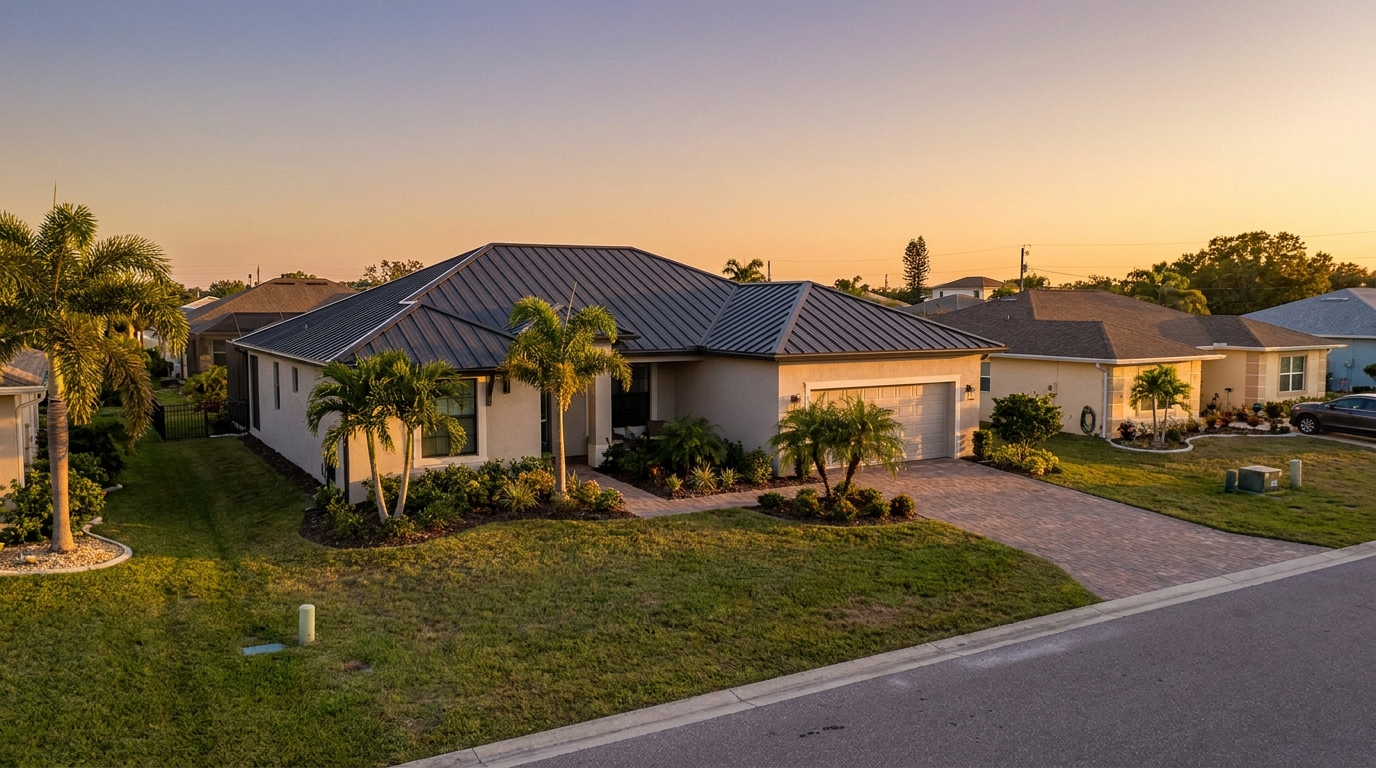
| Standing-seam metal | 50 years | 25–40 years | Salt corrosion at fasteners |
| Concrete tile | 50 years | 40–50 years | Underlayment failure (not the tile) |
| Clay tile | 75+ years | 50+ years | Underlayment failure, cracked tiles |
| Flat (TPO/modified bitumen) | 20–25 years | 15–20 years | Seam separation, ponding |
An important note on tile: the tiles themselves outlast the underlayment beneath them by decades. Most "tile roof replacements" in St. Pete are actually re-underlayment jobs where the original tiles are lifted, salvaged, and re-set over new waterproofing.
What St. Petersburg-specific factors shorten roof life the most?
Proximity to open water, poor attic ventilation, and hurricane exposure are the three biggest lifespan-shorteners in St. Petersburg. Homes within a mile of Tampa Bay, Boca Ciega Bay, or the Gulf lose 3–7 years of typical roof life to salt corrosion. Poorly ventilated attics — common in older bungalows — cook shingles from below, cutting another 3–5 years.
- Salt air: Waterfront neighborhoods like Snell Isle, Shore Acres, Coquina Key, and Pass-a-Grille see the fastest metal fastener corrosion.
- Tree canopy: The oak-shaded streets of Old Northeast and Historic Kenwood trap moisture on shingles and drop debris that holds it there — accelerating algae and rot.
- Attic ventilation: Many pre-1970 St. Pete homes lack ridge vents. Attic temps regularly exceed 140°F, aging shingles from the underside.
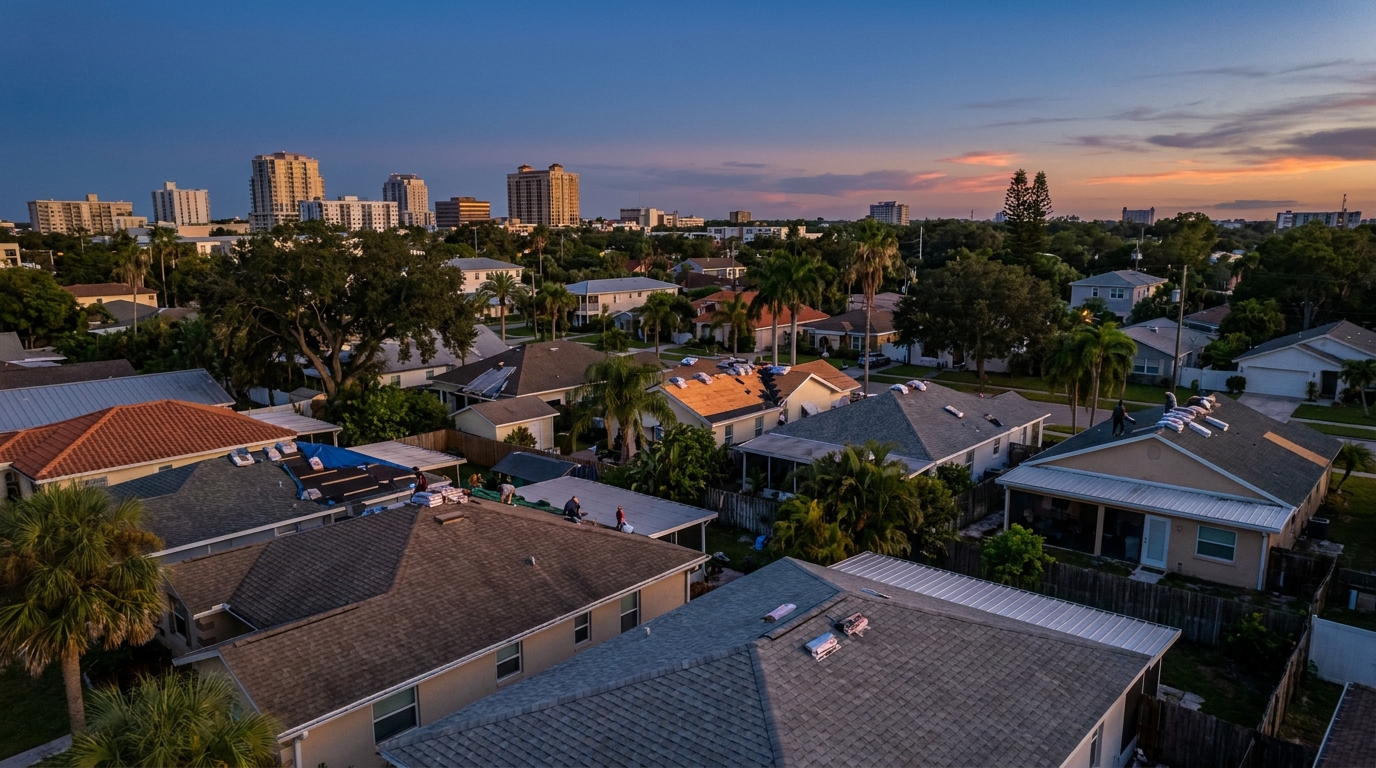
- Storm cycles: Even glancing tropical systems flex fasteners loose. After Hurricane seasons like 2026's, we routinely find lifted shingles on roofs that "looked fine" from the street.
- Improper prior installation: Nails driven too high, too low, or overdriven cut lifespan in half regardless of material quality.
When should St. Petersburg homeowners replace their roof in 2026?
Replace your St. Petersburg roof when it hits any of these thresholds: shingle roofs older than 15 years, tile roofs with underlayment older than 25 years, visible granule loss in gutters, curling or cupping shingles, daylight visible in the attic, or a denied/non-renewed homeowners insurance policy citing roof age. In Florida, insurance drives the timeline as much as the roof itself.
Since Florida insurers tightened underwriting standards, many carriers now refuse to write or renew policies on shingle roofs older than 15 years — even if the roof is functionally sound. Some require a wind-mitigation inspection and a roof condition form (typically the Uniform Mitigation Verification Inspection Form) before renewal. That single document has forced more St. Pete replacements than actual leaks.
Practical timing tip: schedule replacement between December and April. Pinellas County's rainy season starts in June, hurricane season peaks August–October, and reputable crews book out fast once named storms form in the Atlantic. A winter replacement gets you a shorter job, better crew availability, and a fully sealed roof before the next storm cycle.
What permits and codes apply to a roof replacement in St. Petersburg?
Every residential roof replacement in St. Petersburg requires a permit from the City of St. Petersburg Development Services (or Pinellas County for unincorporated areas) and must comply with the Florida Building Code, currently in its 8th Edition. Any roof with more than 25% damage generally must be brought fully up to current code, including secondary water barrier and enhanced fastening.
Key Florida-specific code requirements include a peel-and-stick or self-adhered secondary water barrier, ring-shank nails at prescribed spacing for high-velocity wind zones, and hurricane-rated shingles or tiles with tested uplift ratings. Only a Florida-licensed roofing contractor (CCC license) can pull the permit. SCM Roofing, LLC is GAF Master Elite Certified — a designation held by roughly 3% of roofing contractors nationwide — and handles permitting and final inspection as part of every replacement.
How can you stretch your roof's lifespan in St. Pete's climate?
You can add 3–7 years to a St. Petersburg roof with three habits: annual professional inspections, twice-yearly gutter and debris cleaning, and prompt repair of any lifted shingle, cracked tile, or damaged flashing. Post-storm inspections after any named tropical system are non-negotiable — small lifts become leaks within one rainy season.
Also worth doing: install algae-resistant shingles when replacing (the black streaks on St. Pete roofs are Gloeocapsa magma, a cyanobacterium that feeds on limestone filler in shingles), ensure ridge and soffit ventilation is balanced, and trim overhanging branches back at least 6 feet from the roof plane. Homeowners with SCM Roofing, LLC's 4.9-star rated inspection service — 239 Google reviews and counting — often catch fastener corrosion and underlayment issues years before they become emergencies.
Frequently Asked Questions
Does living near the water really shorten a roof's life in St. Petersburg?
Yes — measurably. Homes within a mile of Tampa Bay, Boca Ciega Bay, or the Gulf typically lose 3–7 years of roof life to salt-air corrosion of metal fasteners, flashing, and vent boots. Waterfront St. Petersburg neighborhoods like Snell Isle, Shore Acres, and Pass-a-Grille see accelerated wear on the water-facing slope, which almost always fails first.
Can a shingle roof in St. Petersburg really last 30 years like the warranty says?
Almost never in this climate. Manufacturer 30-year ratings are based on average U.S. conditions. In St. Petersburg's combination of UV, humidity, salt air, and storms, architectural shingles realistically last 18–25 years, and 3-tab shingles 12–18 years. The warranty may run 30 years, but functional lifespan and insurability run out well before that.
Will my insurance company force me to replace my roof at 15 years?
Many Florida insurers now decline to renew homeowners policies on shingle roofs older than 15 years, or require a passing wind-mitigation and roof-condition inspection to continue coverage. Tile and metal roofs generally get longer runway. Check your policy's roof-age clause — insurance-driven replacements have become the leading reason St. Pete homeowners replace roofs that are still watertight.
How do I know if my roof needs replacement or just repair?
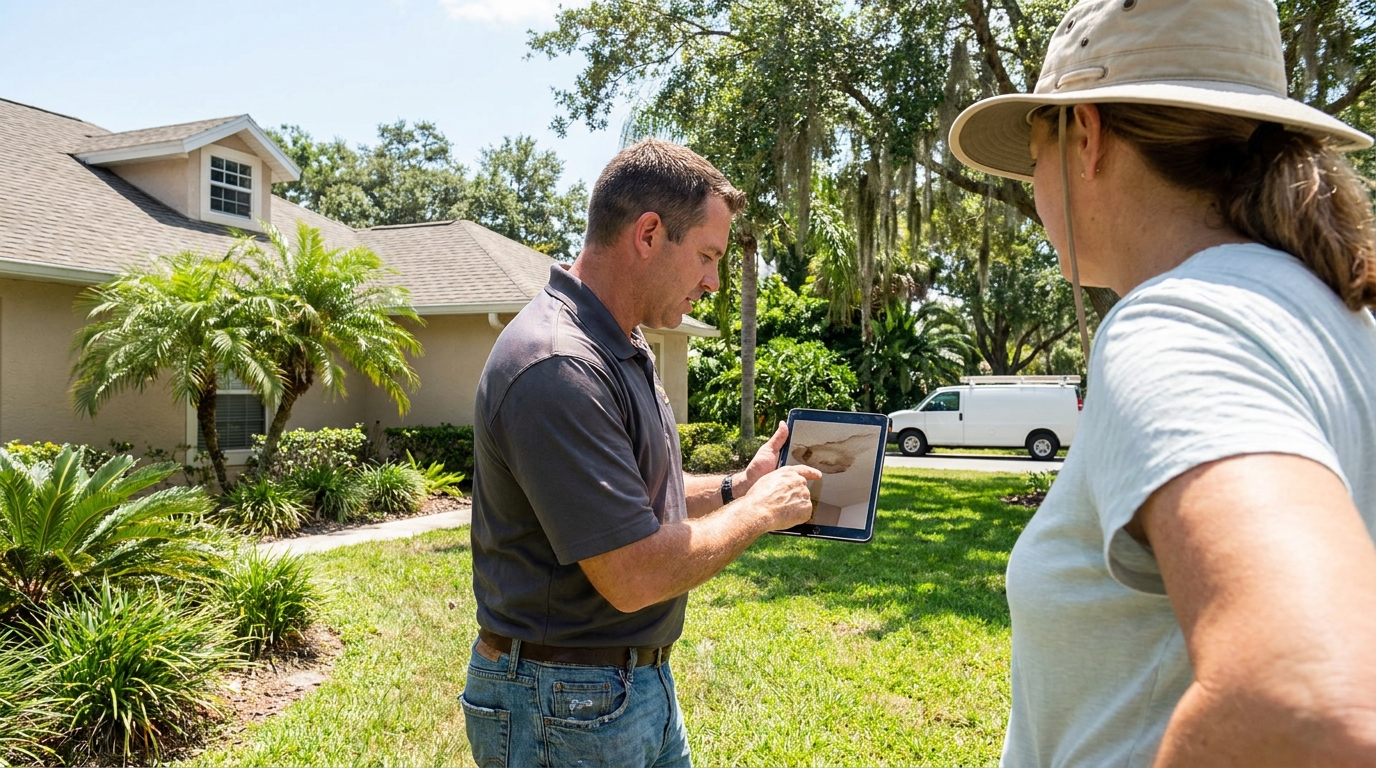
Repair if damage is localized — a few missing shingles, a leaking pipe boot, cracked tiles in one area — and the overall roof is under 12 years old for shingles or 25 years for tile. Replace if you see widespread granule loss, curling across multiple slopes, sagging, daylight in the attic, or if the roof is past its realistic lifespan. A professional inspection settles it.
What's the best month to replace a roof in St. Petersburg?
December through April is ideal in St. Petersburg. The rainy season starts in June, hurricane season peaks August through October, and afternoon thunderstorms make summer installations slower and riskier. Winter and early spring offer drier weather, better crew availability, and lower risk of a partially opened roof being caught by a sudden storm.
Does a new roof actually lower my homeowners insurance in Florida?
Yes, usually significantly. A new roof with a completed wind-mitigation inspection can reduce Florida homeowners premiums by 20–40%, depending on features like secondary water barrier, hurricane clips, and shingle uplift rating. The savings often recoup a meaningful share of the replacement cost over 5–10 years, on top of restoring insurability itself.
The bottom line for St. Petersburg homeowners
Your roof will not last as long as the box it came in promises — and in St. Petersburg, that's not a defect, it's the climate. Plan on 12–18 years for basic shingles, 18–25 for architectural, and 25+ for metal or tile, and treat the 15-year mark as your "start planning" alarm regardless of what the roof looks like from the driveway.
St. Petersburg homeowners who want a straight answer on where their roof actually stands can reach SCM Roofing, LLC at https://scmroofingfl.com for a no-cost inspection. As a GAF Master Elite Certified contractor with a 4.9-star rating across 239 Google reviews, our team can tell you honestly whether you have five more years or five more months — and what the insurance-and-storm calendar means for your timing.